




About 20 minutes southeast of Kenora, just across the Manitoba border in Ontario. Whitewater rapids over glacier-carved rock, three sandy beaches, and a family campground that Manitobans have been driving to for generations.
If you want to read what our actual day there looked like — with Kenora, a giant fish, and two lakes on the way home — that is in our Kenora and Rushing River day trip story.
Where It Is
Rushing River Provincial Park sits about 20 kilometres — roughly a 20-minute drive — southeast of Kenora, Ontario, along Highway 71. From Winnipeg it is around two and a quarter hours east on the Trans-Canada Highway, which means it is genuinely doable as a day trip even though it is in another province. You cross out of Manitoba, through a stretch of Ontario’s rock and pine, and the park is waiting just past the city.
The park is small by provincial-park standards — about 340 hectares — but it packs a lot into that space. It sits at the mouth of the Rushing River, right where the river spills out of Dogtooth Lake, and it shares a boundary with the much larger Eagle-Dogtooth Provincial Park to the east.
The Rapids: Glacier-Carved Rock and Whitewater
The first thing you notice — before you have even parked — is the sound. Water, everywhere.
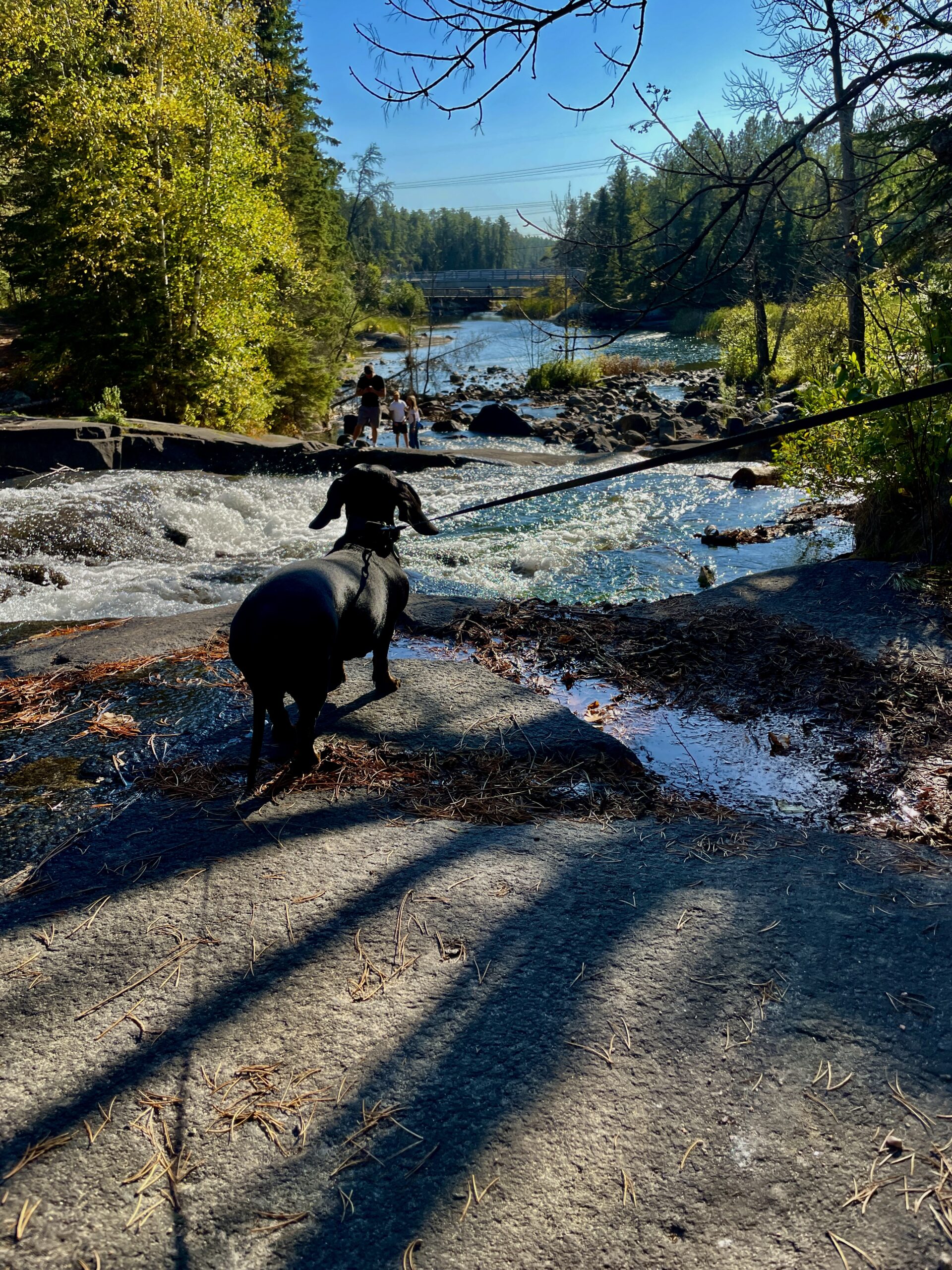
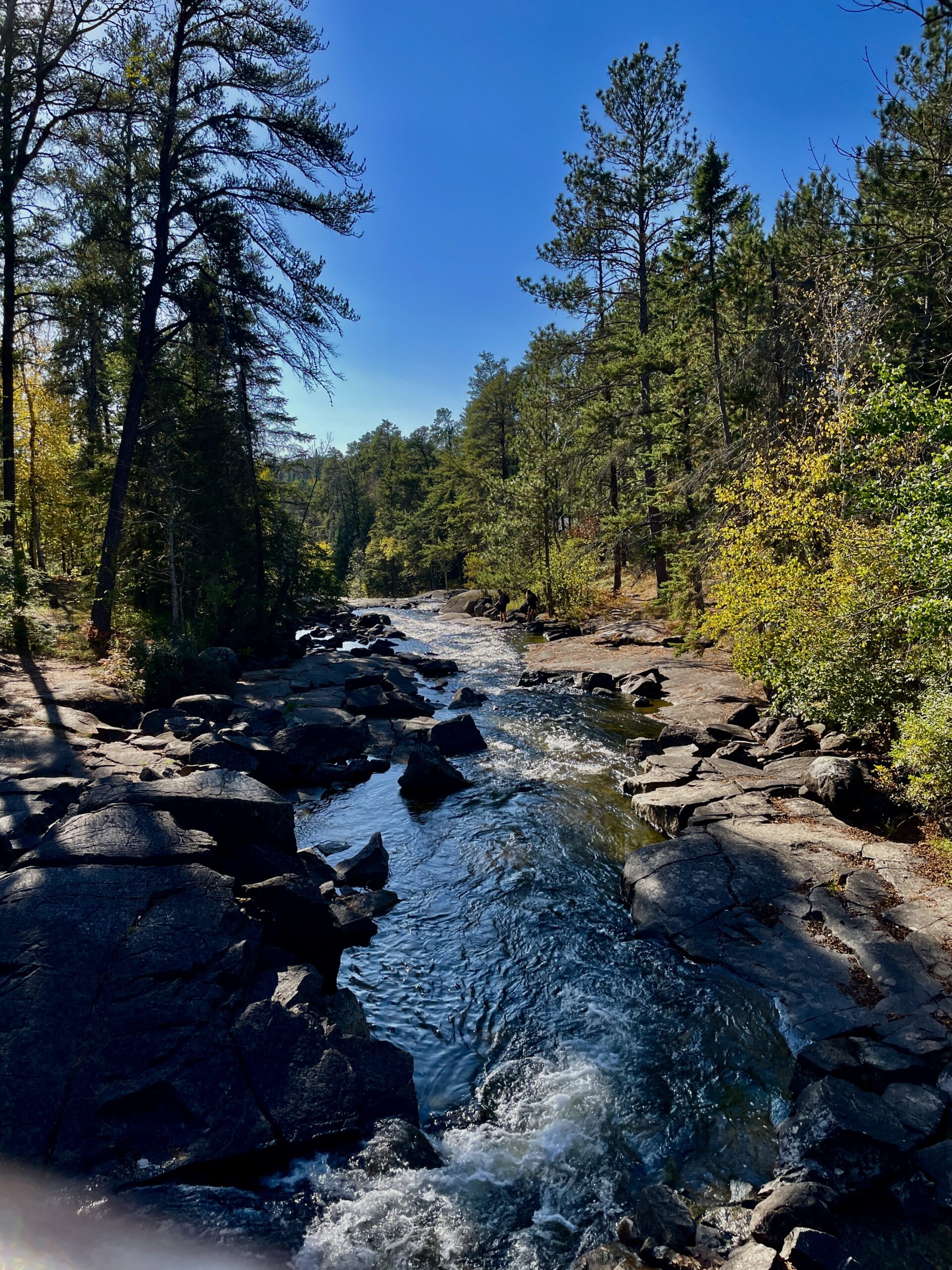
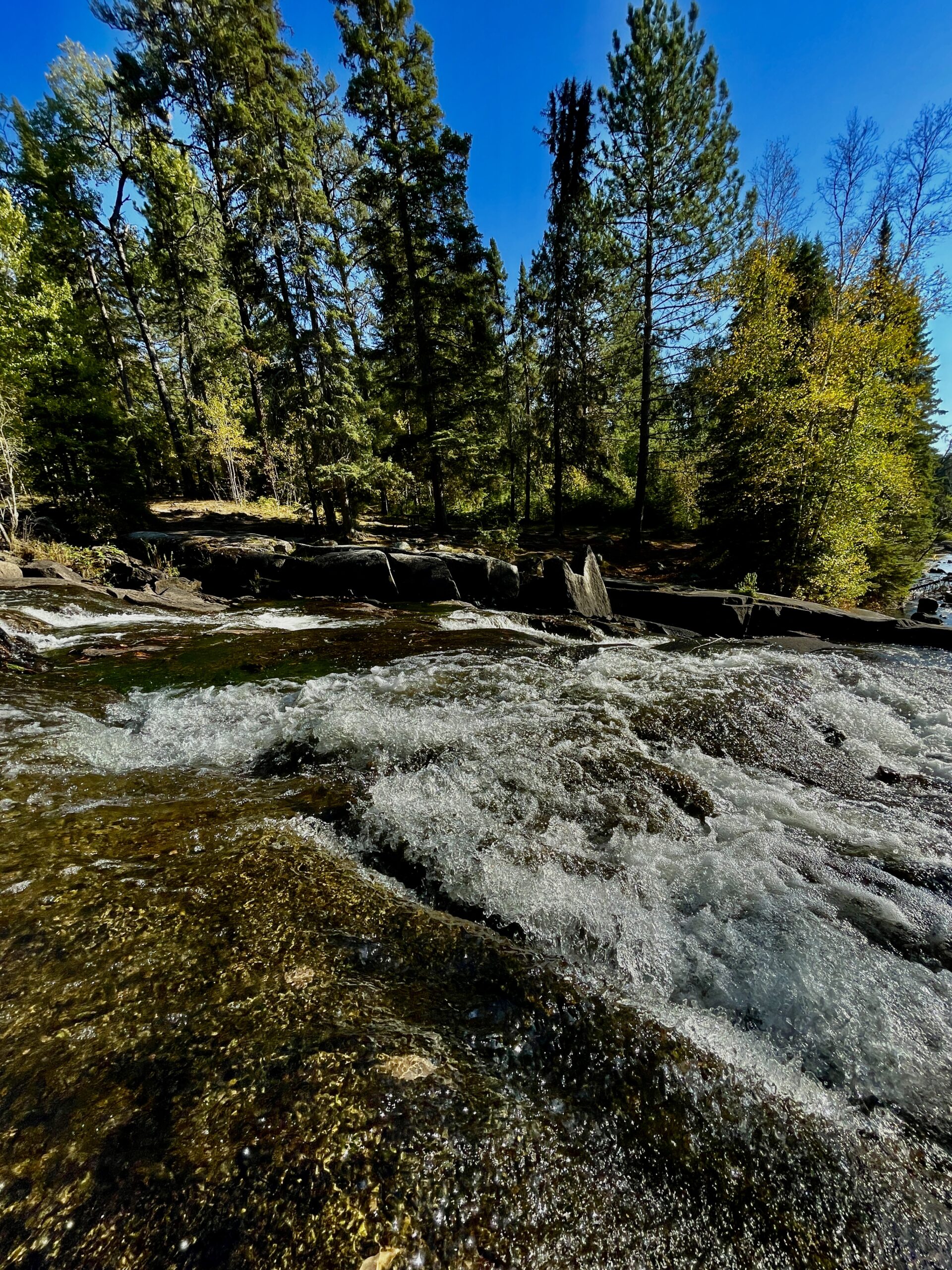
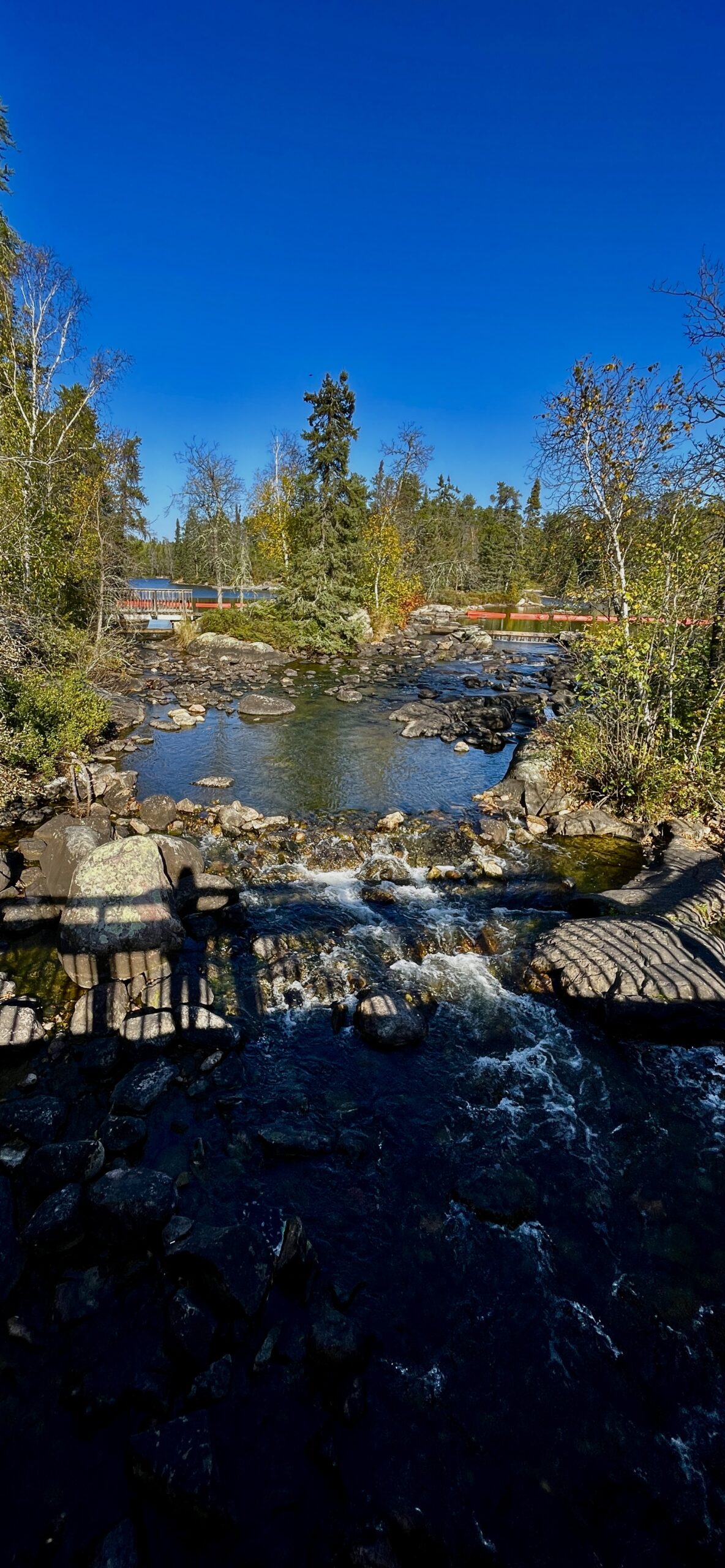
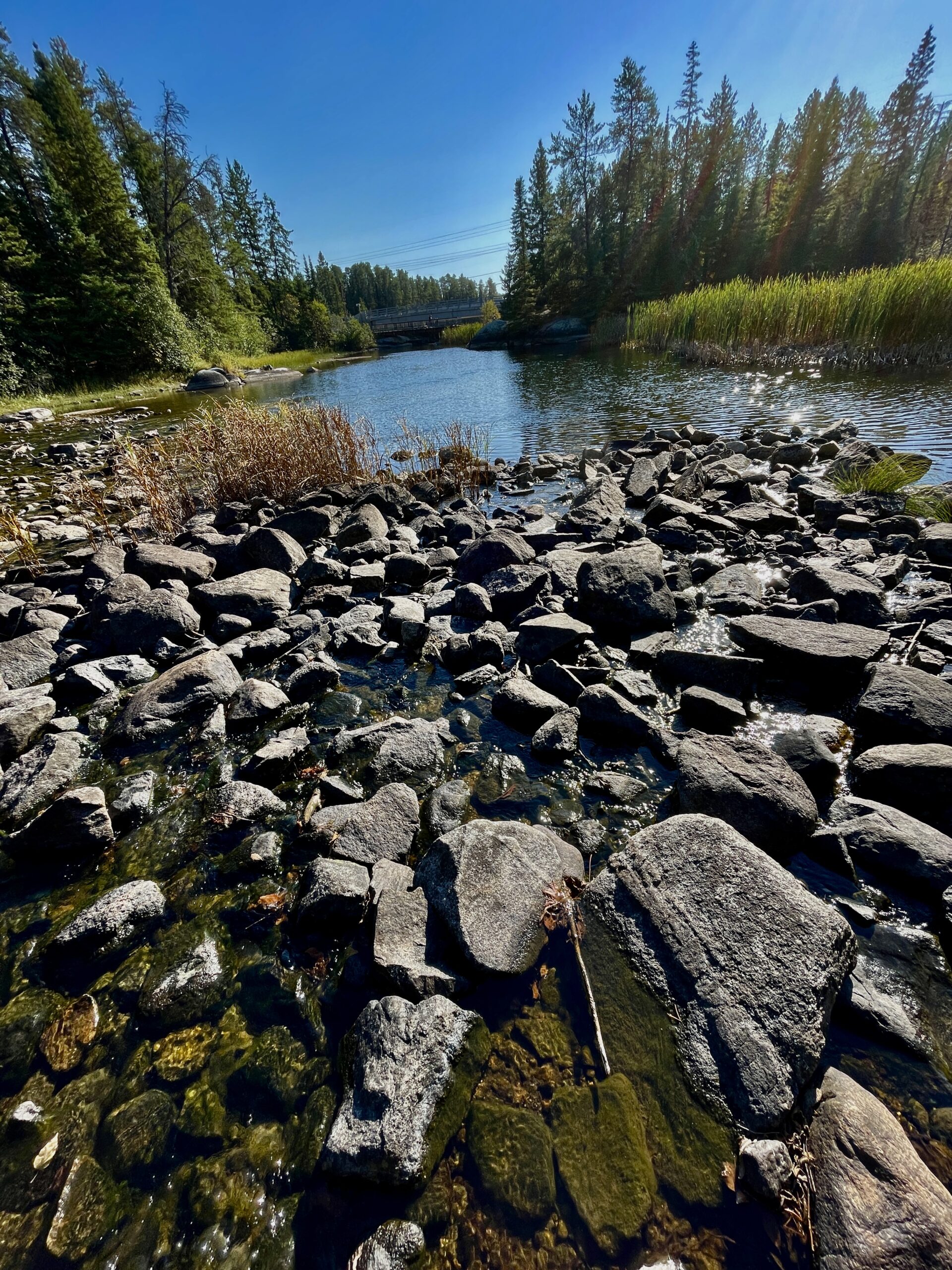
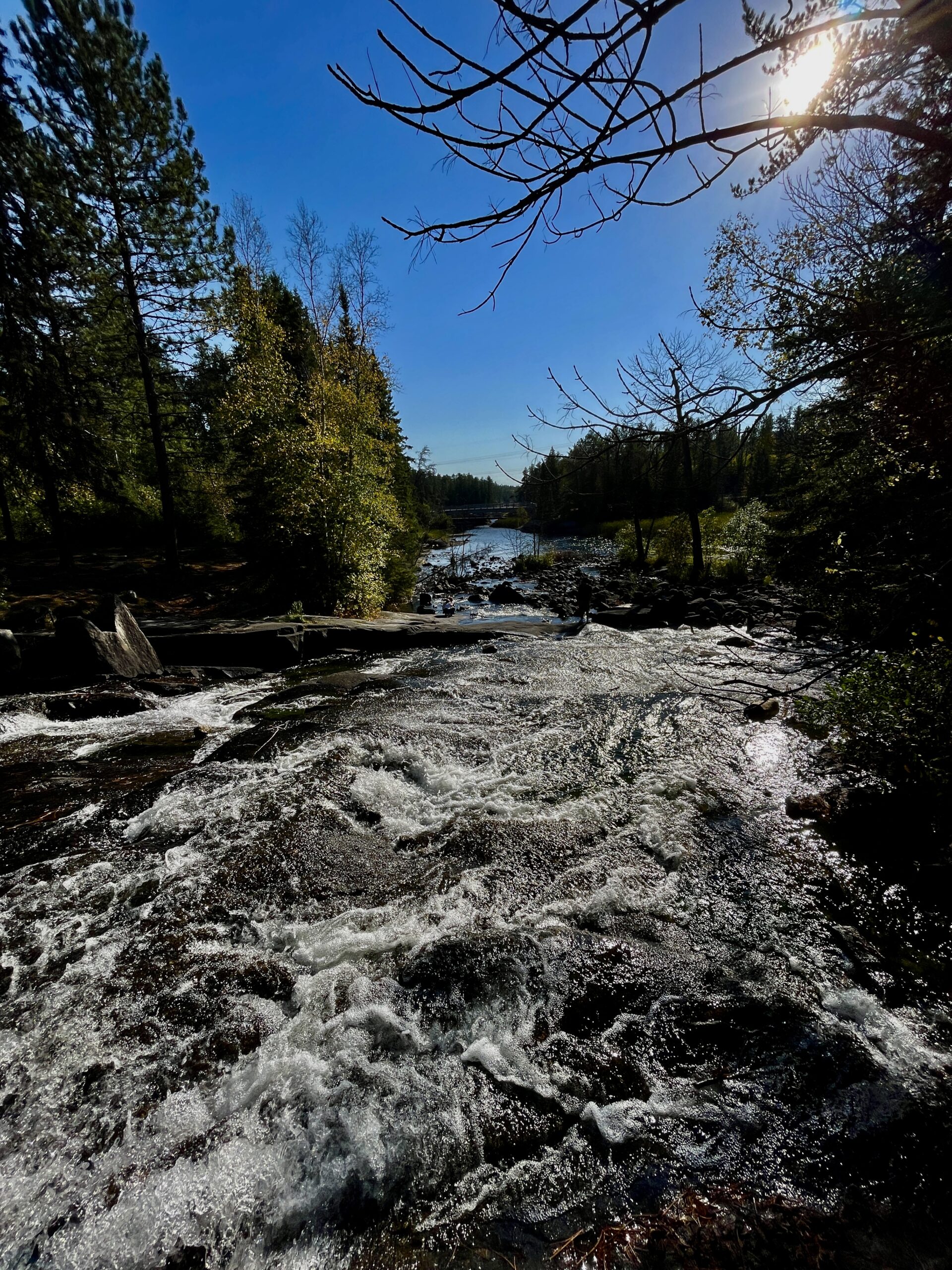
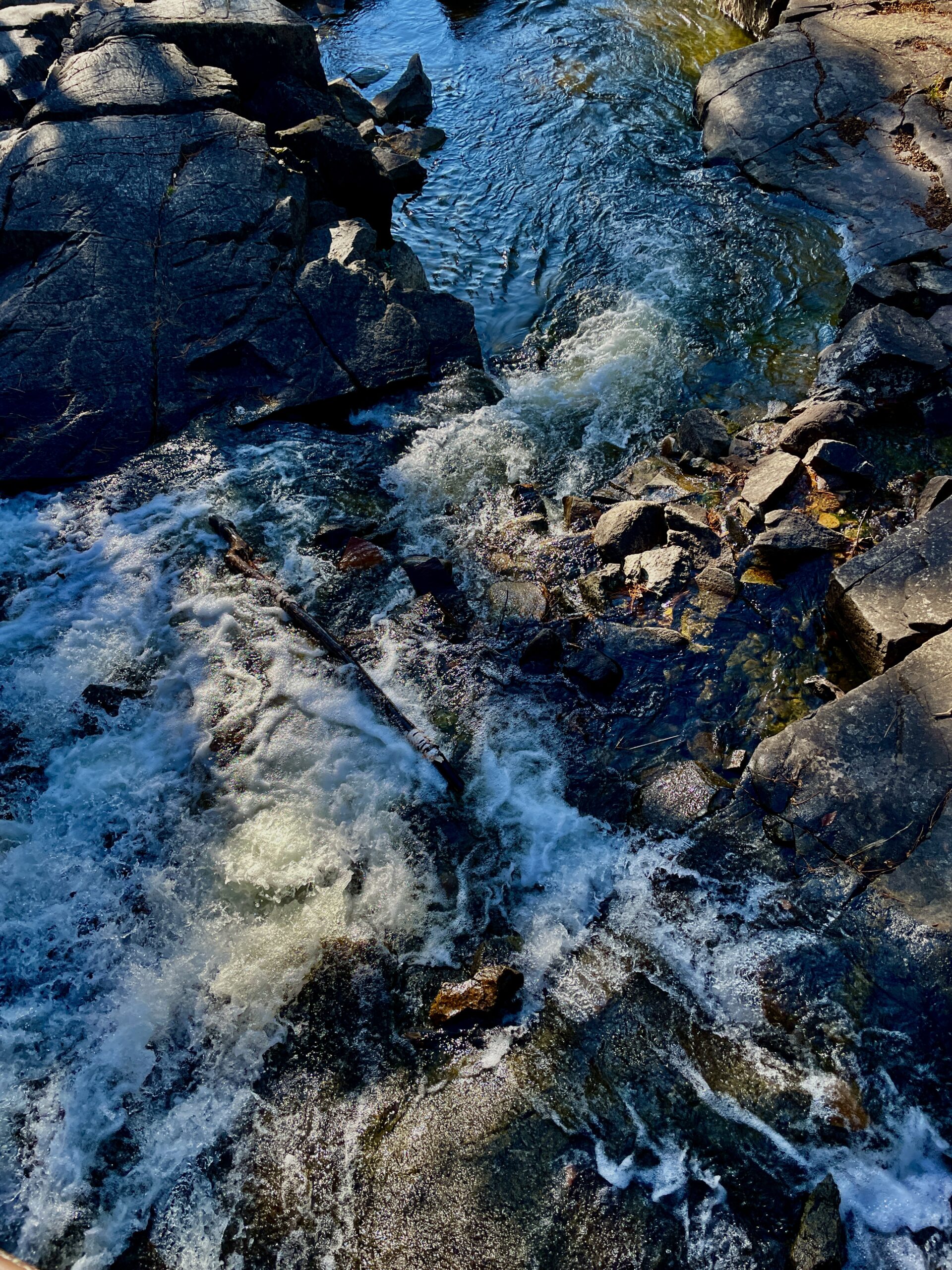
The headline feature of Rushing River is exactly what the name promises: a run of whitewater rapids where the water of Dogtooth Lake tumbles down over smooth rock and on toward Blindfold Lake below. The rock here was shaped by glaciers, grooved and polished over thousands of years, so the water doesn’t just fall — it slides and braids and pools across the bedrock in a way that is genuinely mesmerizing to watch. A little red footbridge crosses the river near the day-use area and gives you a perfect view of the whole thing.
The day-use area, right along the river, is one of the most popular picnic spots in the whole region — for locals and for travellers passing through on the highway alike. It is the kind of place where you can spread out for a few hours, let the kids (and the dog) explore the rock, and not feel rushed.
Beaches and Swimming
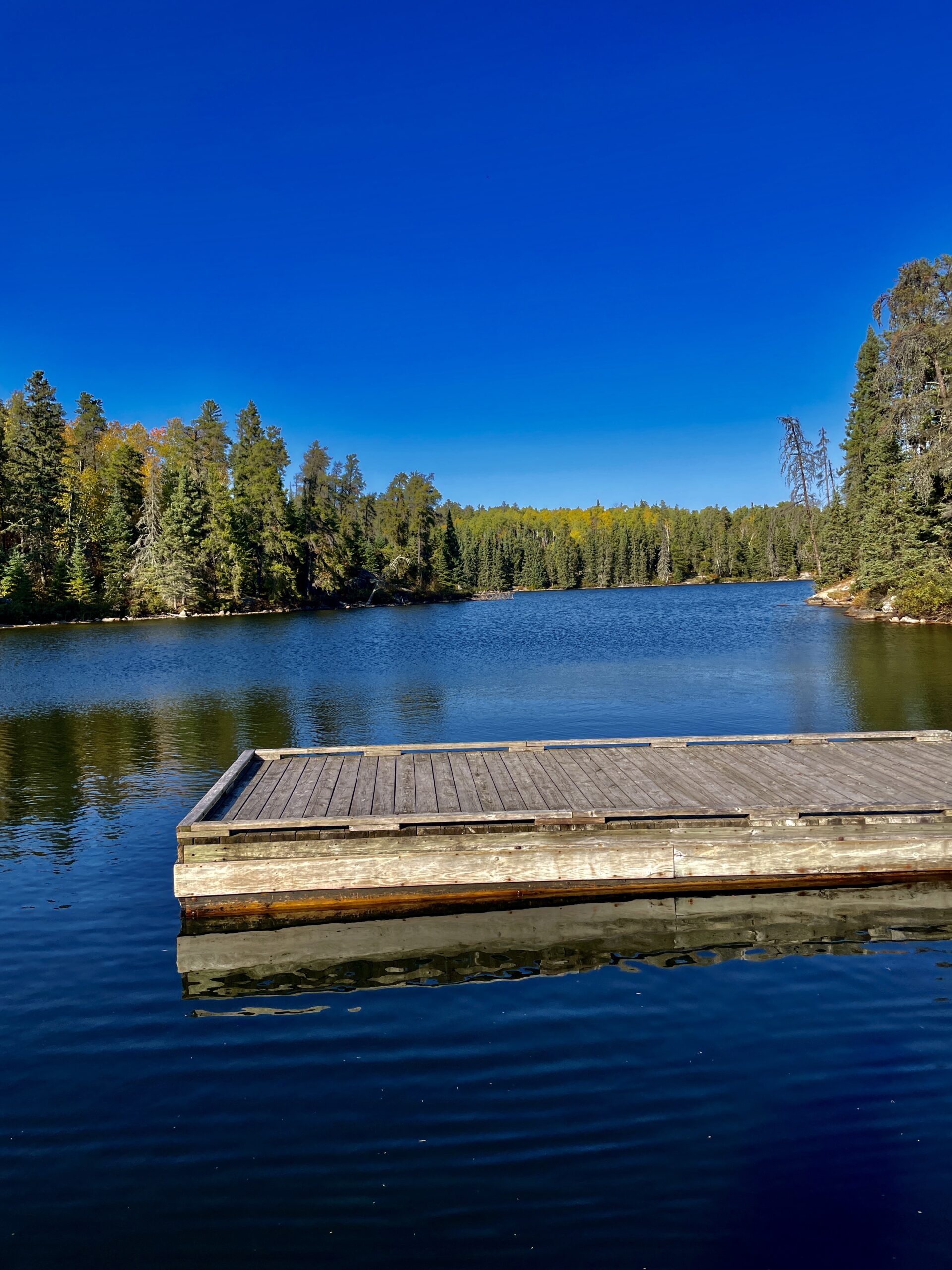
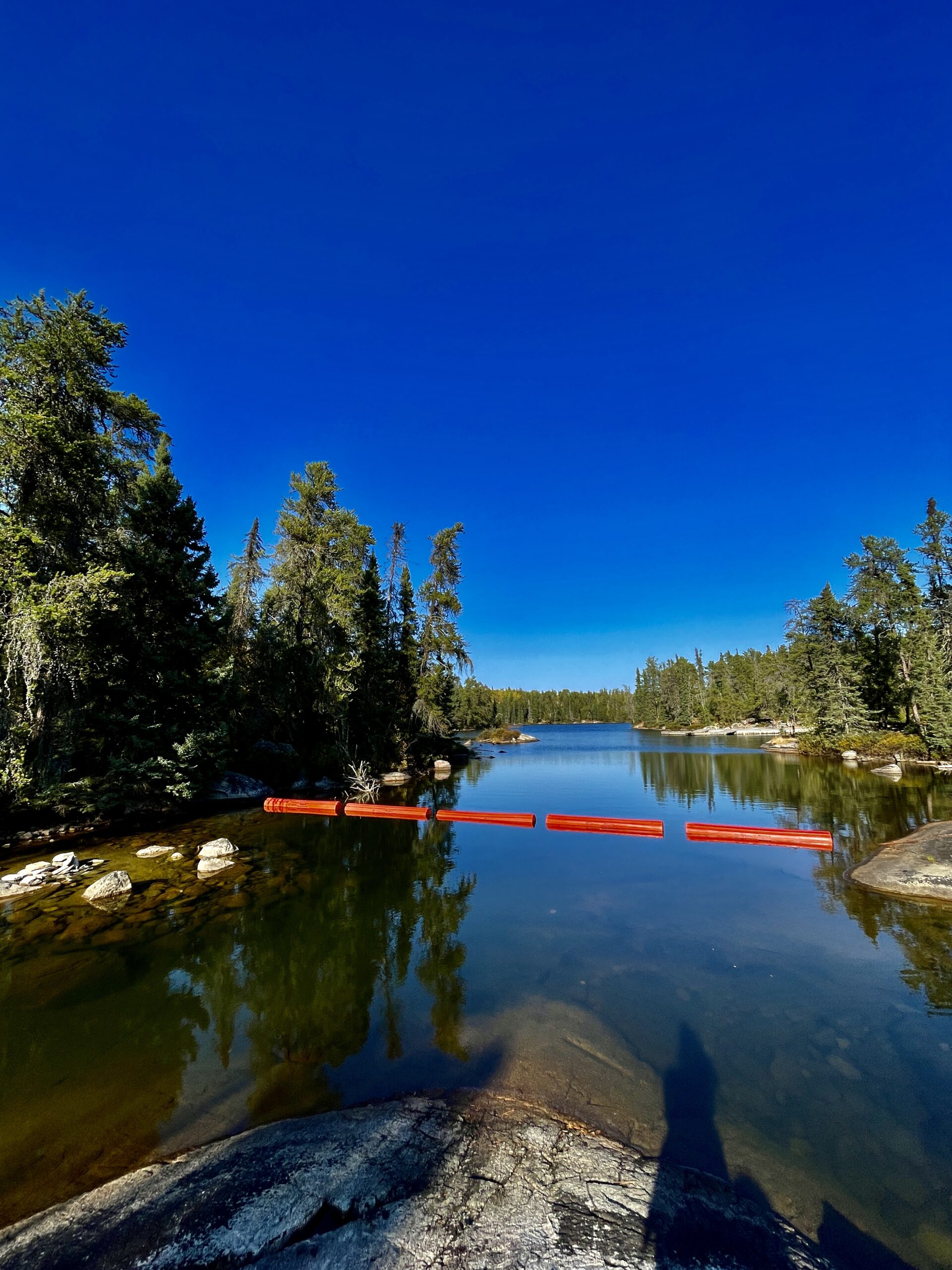
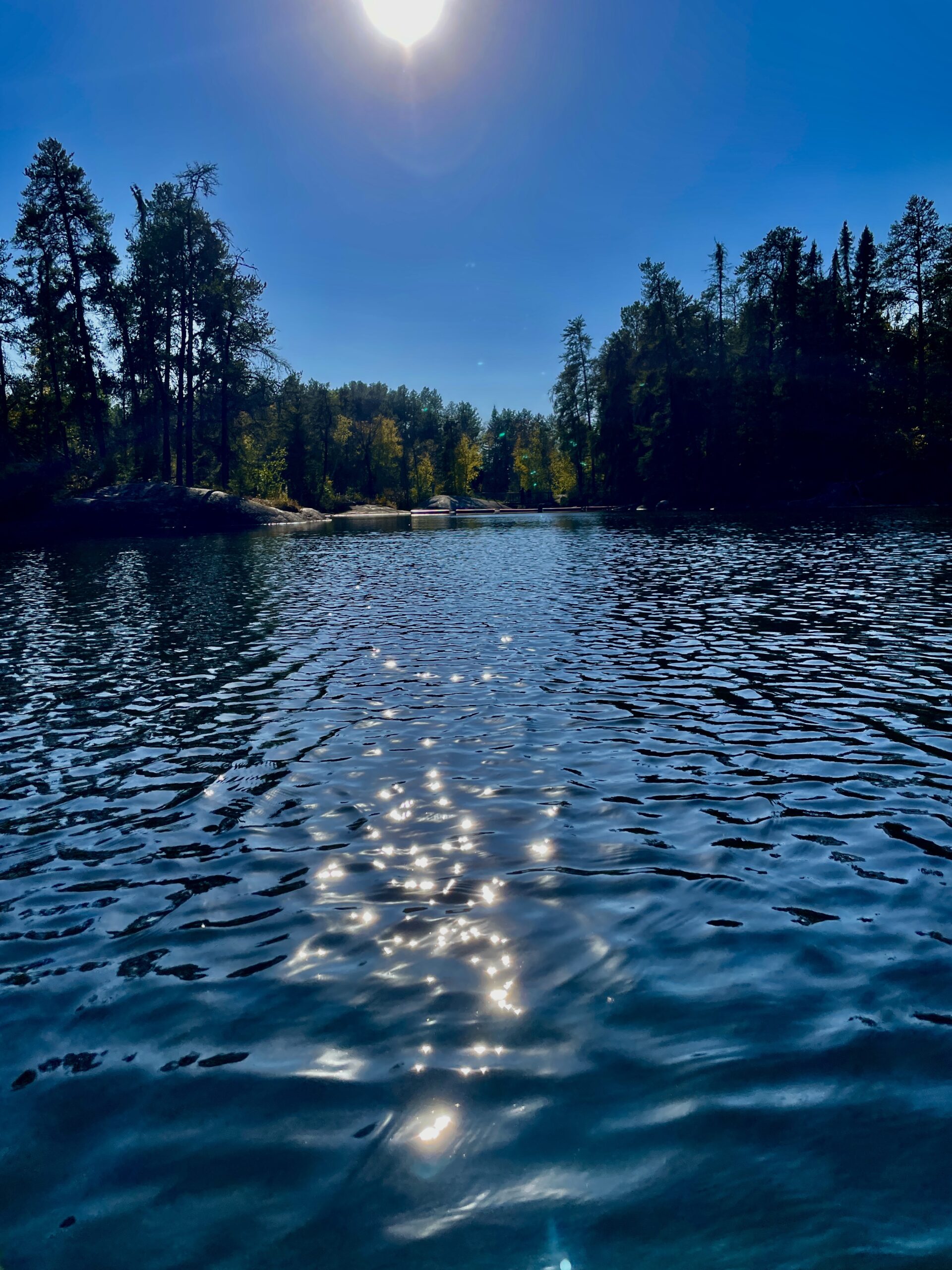
Rushing River has three sandy beaches on Dogtooth Lake, which is what makes it such a good summer destination. The water is clear, the setting is classic Canadian Shield — granite, pine, and lake — and on a hot day this is exactly where you want to be.
A note for dog owners: you can bring your dog to the beach area on a leash, but dogs are not allowed to swim at the public beach. Check the posted signs when you arrive, since rules can change season to season.
Camping
This is, at its heart, a family campground — and a beloved one. It has around 191 campsites spread across several campgrounds, with about 38 of them offering electrical hookups. Many sites are right on the water with views over Dogtooth Lake, and some of the nicest are walk-in sites a short stroll from the parking spur.
A couple of things make Rushing River a little different from other Ontario parks. Instead of the usual cabins or yurts, it offers a handful of trailer-equipped sites — sites that come with a pop-up tent trailer or a travel trailer already set up, which is a soft way into camping if you don’t own the gear. And it has proper group sites: sites #501, #502 and #503 are set up for larger groups, with #503 — the biggest, tucked right beside the rapids — able to host up to 50 people.
One small, telling detail from the park’s own records: the majority of campers here are families from Manitoba. It is, in a real sense, Winnipeg’s nearest taste of the Shield — close enough for a weekend, far enough to feel like a different world.
Trails, Museum, and Other Facilities
Beyond the water, the park has a genuinely full set of amenities for its size: two interpretive walking trails, boat launches, docks, canoe and kayak rentals (through the privately run Rushing River General Store, about a kilometre south), playgrounds, picnic shelters, comfort stations with showers, and a small park store at the office that sells firewood and souvenirs.
There is also a small Natural Heritage Museum and an amphitheatre near the main beach, where the park runs interpretive programs in peak season — a nice touch if you are travelling with kids and want to turn the day into something they will remember.
How It Compares to Birds Hill
If your reference point is a Manitoba provincial park, Rushing River will feel familiar and completely different at the same time. Birds Hill, near Winnipeg, is big, forested, gently rolling — a whole world of trails and a shallow lake. Rushing River is smaller and rockier, built around moving water and Canadian Shield granite rather than open forest. Neither is better. They are just proof that no two provincial parks are the same — each one keeps something of its own province in it.
When to Go
Summer (June–August) is the park at full tilt: beaches open, rapids running, campground busy, interpretive programs going. Occupancy runs very high in July and August, so book campsites well ahead.
Fall brings colour to the birch and aspen against the dark pine and rock, fewer crowds, and cool, clear air — a beautiful time for the day-use area and a walk by the rapids.
Winter and early spring are quiet; the park is a gateway to cross-country skiing and snowshoeing, but services are seasonal, so check Ontario Parks before you go.
What to Bring
- Day-use vehicle permit — payable at the gate (or reserve/buy through Ontario Parks).
- Water shoes or shoes with grip — the rock by the rapids is smooth and slick near the water.
- Swimsuit and a towel in summer, for the beaches on Dogtooth Lake.
- Bug spray — it is the Shield in summer; you will want it near the water and in the evening.
- Picnic supplies — the day-use area is made for it.
- A leash for your dog — and remember, no dog swimming at the public beach.
Who This Place Is For
- Families — beaches, playgrounds, shallow shoreline, and interpretive programs.
- Campers — waterfront sites, group sites, and ready-to-go trailer sites for first-timers.
- Day-trippers from Winnipeg — close enough to do in a day, different enough to feel like a real trip.
- Anyone who loves moving water — the rapids alone are worth the drive.
- Paddlers and anglers — Dogtooth Lake, canoe rentals, and boat launches.
- Dog owners — leashed and welcome (just not swimming at the beach).
Quick Reference
| What | Details |
|---|---|
| Location | ~20 km southeast of Kenora, Ontario, via Highway 71 |
| From Winnipeg | ~2 hours 15 minutes east on the Trans-Canada Highway |
| Established | 1958 |
| Size | ~340 hectares |
| Famous for | whitewater rapids over glacier-carved rock; three sandy beaches |
| Lakes | Dogtooth Lake (the rapids run down toward Blindfold Lake) |
| Camping | ~191 sites (~38 electrical), group sites, trailer-equipped sites |
| Entry | day-use vehicle permit at the gate |
| Dog-friendly | yes, on leash — no dog swimming at the public beach |
| Best time | summer for beaches and rapids; fall for colour and quiet |
Why It’s Worth Visiting
Rushing River is the kind of park that gives you the full Canadian Shield experience in a small, easy-to-love package — rapids you can sit beside for an hour, rock you can climb, a beach you can swim from, and forest in every direction. For anyone in Winnipeg, it is one of the best reasons to point the car east and cross into Ontario for the day.
If you want the whole story of how we got there — the drive, the town of Kenora, the giant fish, and the two lakes we stopped at on the way home — it is all in our Kenora and Rushing River day trip. And if you are curious about its quieter Manitoba neighbour just across the border, see our first look at Whiteshell Provincial Park.