


About two and a half hours east of Winnipeg, the prairie quietly runs out and Ontario’s rock and pine take over. A summer Saturday, a friend visiting from Europe, and a dog who slept through the best parts of the drive.
If you just want the practical part — the route, the timing, what it cost, what to bring — scroll to the bottom. And if you want the full guide to the park that became the heart of this day, see our complete Rushing River Provincial Park guide.
When Friends Come to Visit, We Don’t Go to the Mall
There is a question we get a lot. When friends come from Europe to visit you in Canada, where do you take them? To a restaurant? A café? The shopping centre? A bar?
With us, that approach doesn’t really work.
This time a friend came to stay with us. It was summer, the weather was perfect, and she had only one weekend to spend with us before heading back. Sitting at home was simply not an option. And we had been saying for a while that we wanted to finally see Kenora and the provincial park next to it. So the decision made itself.
We got up early, left around seven in the morning, picked up our friend, and pointed the car east. A beautiful Saturday morning, if you ask me. This time we had Nika with us too — our dachshund and the smallest, most enthusiastic member of the family. She rode looking out the window, enjoying the warm wind, and every so often curled into a little ball to nap and save her energy for the big day-long walk ahead.
The Drive: Where the Prairie Ends
Kenora is not exactly close, and it is not even in Manitoba — it is already Ontario. The drive took us about two and a half hours.
And honestly, I did not expect the landscape to change the way it did as we got closer to the Ontario border.
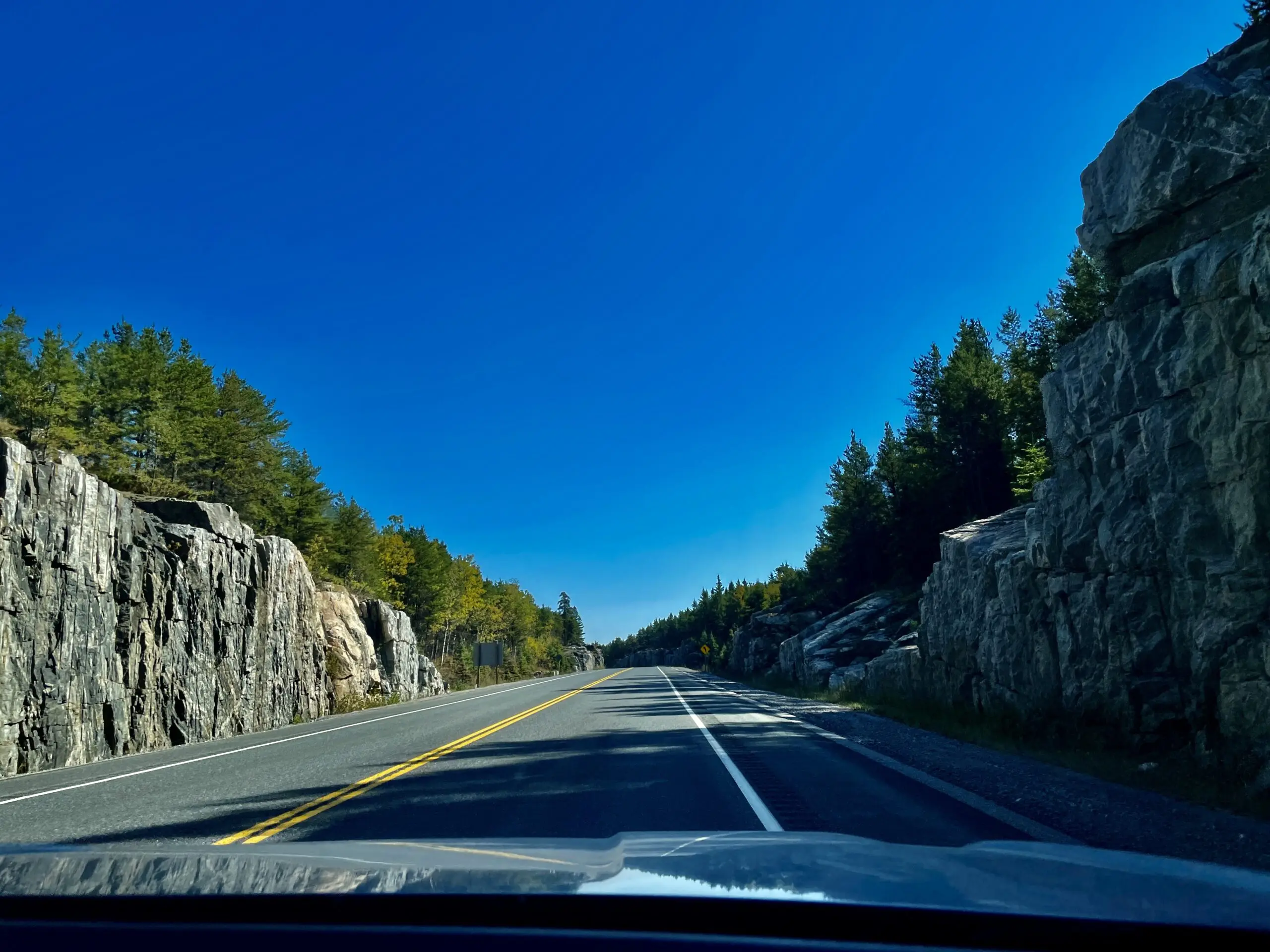
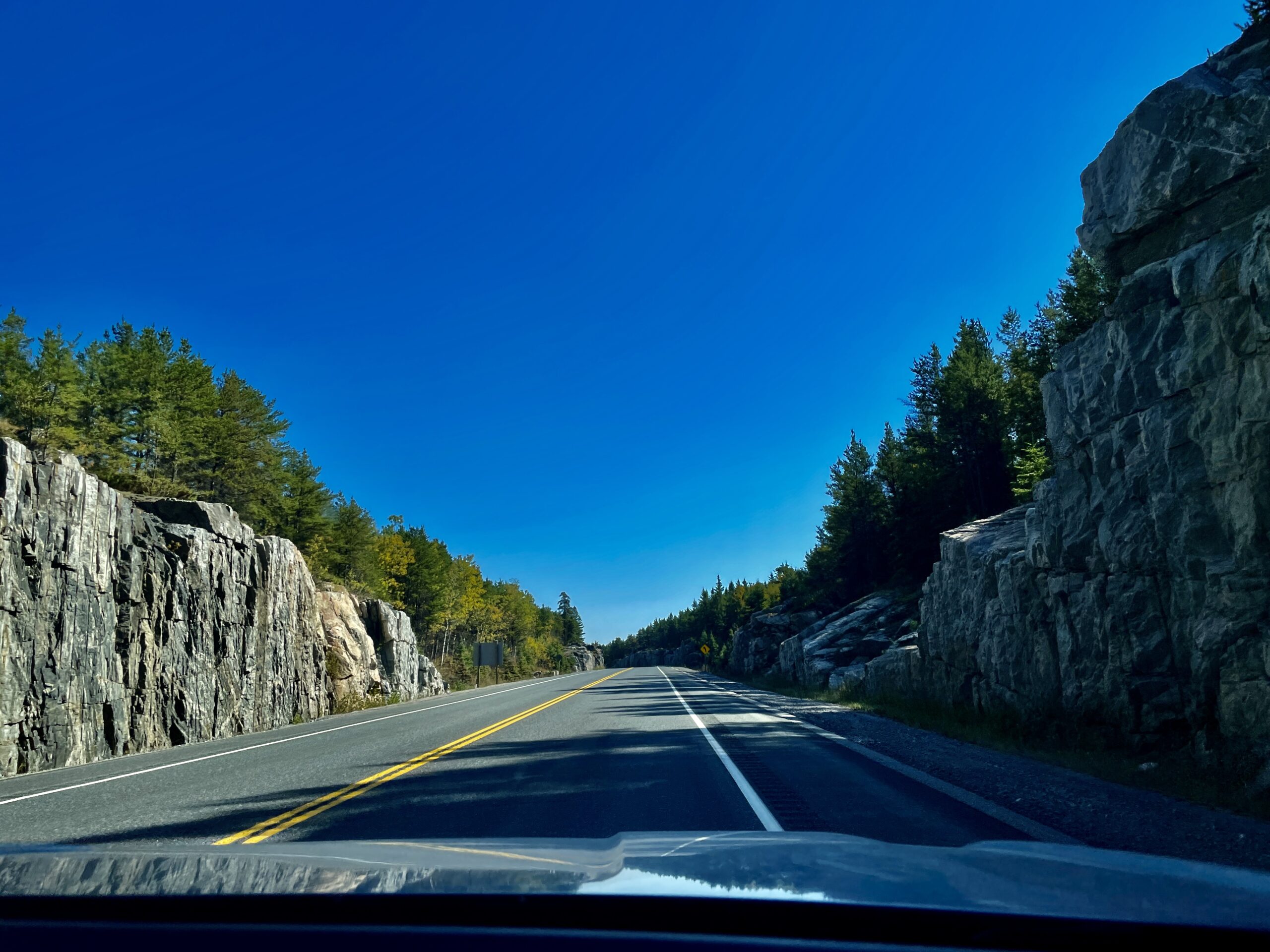
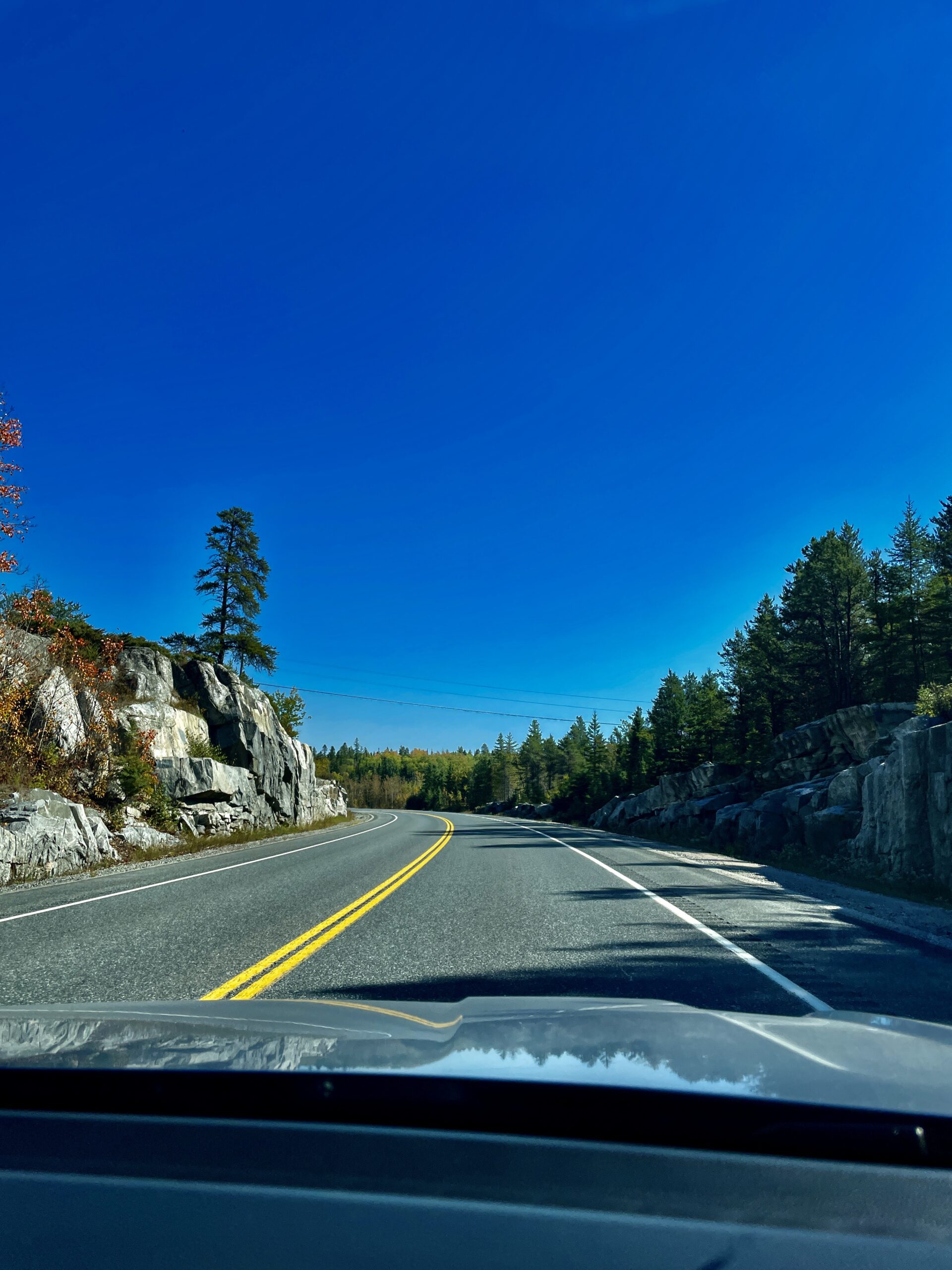
You know how it is when you drive across Manitoba — mostly flat, fields, trees, more fields, a straight road to the horizon. And then, closer to Kenora, the land stops being flat. The road starts to rise and dip instead of running straight. There are more forests and fewer of those big open fields along the shoulder. And then come the rocks — enormous granite walls cut right along the edges of the highway, exactly like in the photos. A completely different world. I had never driven toward Ontario before, and I could not have told you it would look like this. I could not take my eyes off it.
The two and a half hours flew by — jokes, conversations, songs, music, the windows down. And then, finally, Kenora.
First Look at Kenora
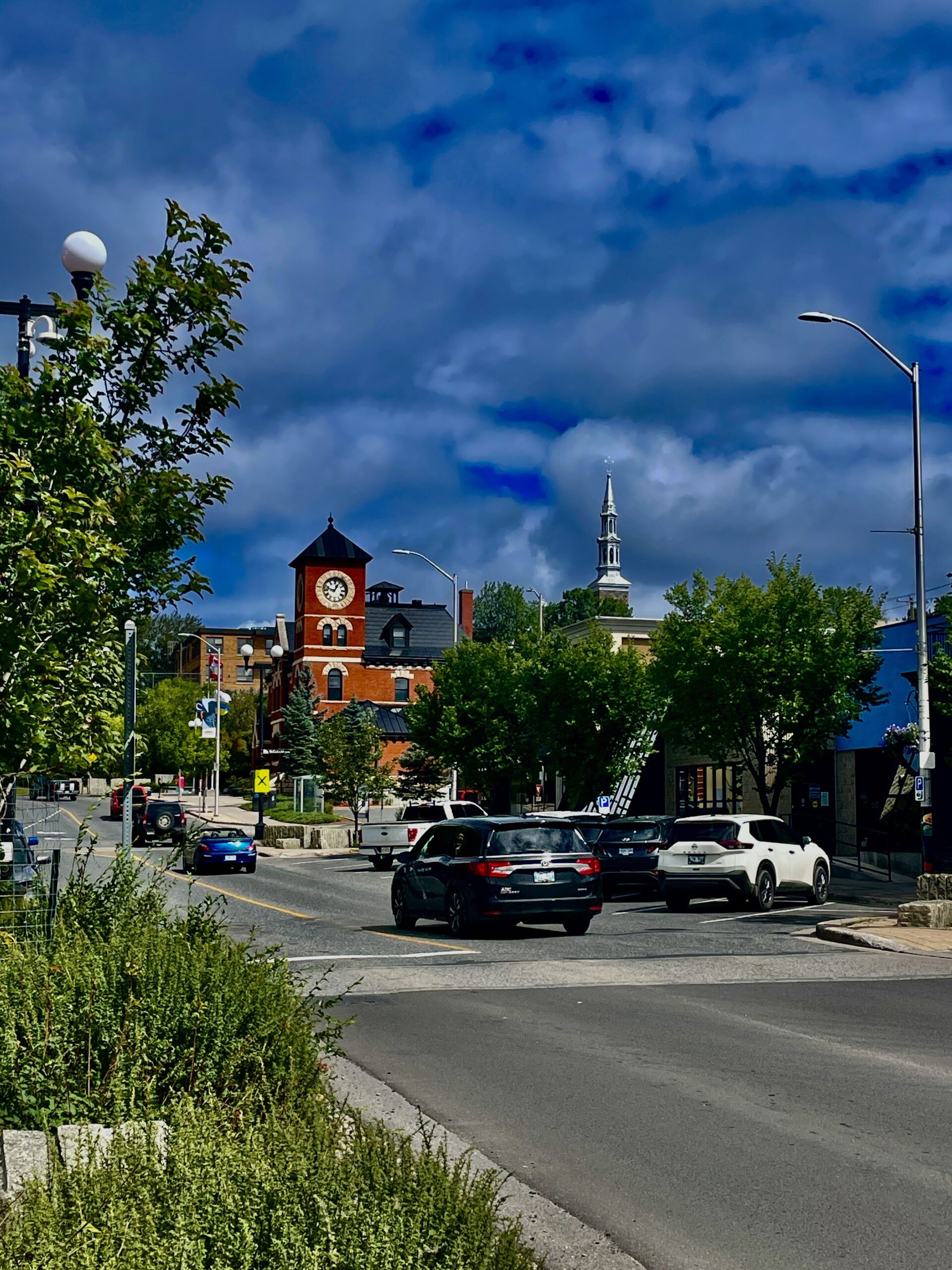
Kenora is a small, picturesque town, and it has more history than its size lets on. It began in 1882 as Rat Portage — and here is the part that made me smile: back then it was part of Manitoba. It was only after a long border dispute that Rat Portage was handed to Ontario in 1884. So a Manitoba family “crossing into Ontario” was, in a way, visiting a town that used to be ours. The town got its current name, Kenora, in 1905, stitched together from the first letters of three neighbouring settlements: Keewatin, Norman, and Rat Portage. The old name itself comes from the Anishinaabe — “portage to the country of the muskrat.” Keep that in mind; it comes back later in the shape of a very large fish.
We parked near the pier — the parking there is paid — at the corner of Bernier Drive and 2nd Street South. And right away we were met by Kenora Harbourfront on Safety Bay, the bright, busy waterfront on the northern tip of Lake of the Woods. A big pier, boats of every size, tour boats, and in the distance a scatter of little islands out on the lake.
We had come with no real plan to “see the town” itself — but Kenora won us over anyway, with its views, the fresh wind off the water, and a genuinely lovely waterfront. The plan formed quickly: first a walk along the harbour, then the little shops nearby, and maybe something to take home as a memory of the place.
A Walk Along the Harbourfront
What pleasantly surprised us — both in size and atmosphere — was Lakeside, the white-roofed event venue you can see from a distance. We were told they hold all sorts of things there: dances, concerts, bright shows. When we walked by it was morning, so nothing was happening yet, though you could see preparations underway for something. So quiet, so few people, just a handful sitting on benches taking in the view. The kind of quiet that makes you want to sit down too and say nothing at all, think about nothing at all.
But we had plans, and only one day to fit everything in. A little further along the waterfront, we met a giant. A giant fish, to be exact — Husky the Muskie, the town’s most famous roadside attraction. He stands twelve metres tall in McLeod Park, built back in 1967 as a project for Canada’s centennial, with the original slogan “Husky the Muskie says prevent water pollution.” He is the largest fish statue in Canada — a muskellunge, the fish anglers call “the fish of ten thousand casts.” And remember Rat Portage, “the country of the muskrat”? Lake of the Woods has long been one of the best fishing spots in the country, so of course the town’s mascot is a fish.
Next to him there is a viewing deck out over the lake — a wooden platform with benches set in the shade of the trees, right by the water. A really beautiful spot to stop.
But the clock was honest with us. We had left at seven, picked up our friend, driven two and a half hours, arrived around ten, walked a while — and now it was already eleven, half past eleven. Time for breakfast, a wander through the shops, and then back on the road.
Breakfast, Souvenirs, and a Mural That Felt Like Home
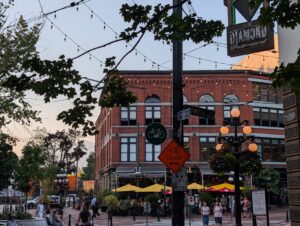
Everyone had told us to stop at The Vault Social House, but we did not manage it this time — we were short on time and there was a line. So we grabbed a bite at the nearest good café instead, walked through the shops, and picked up a few small things to remember the trip by.
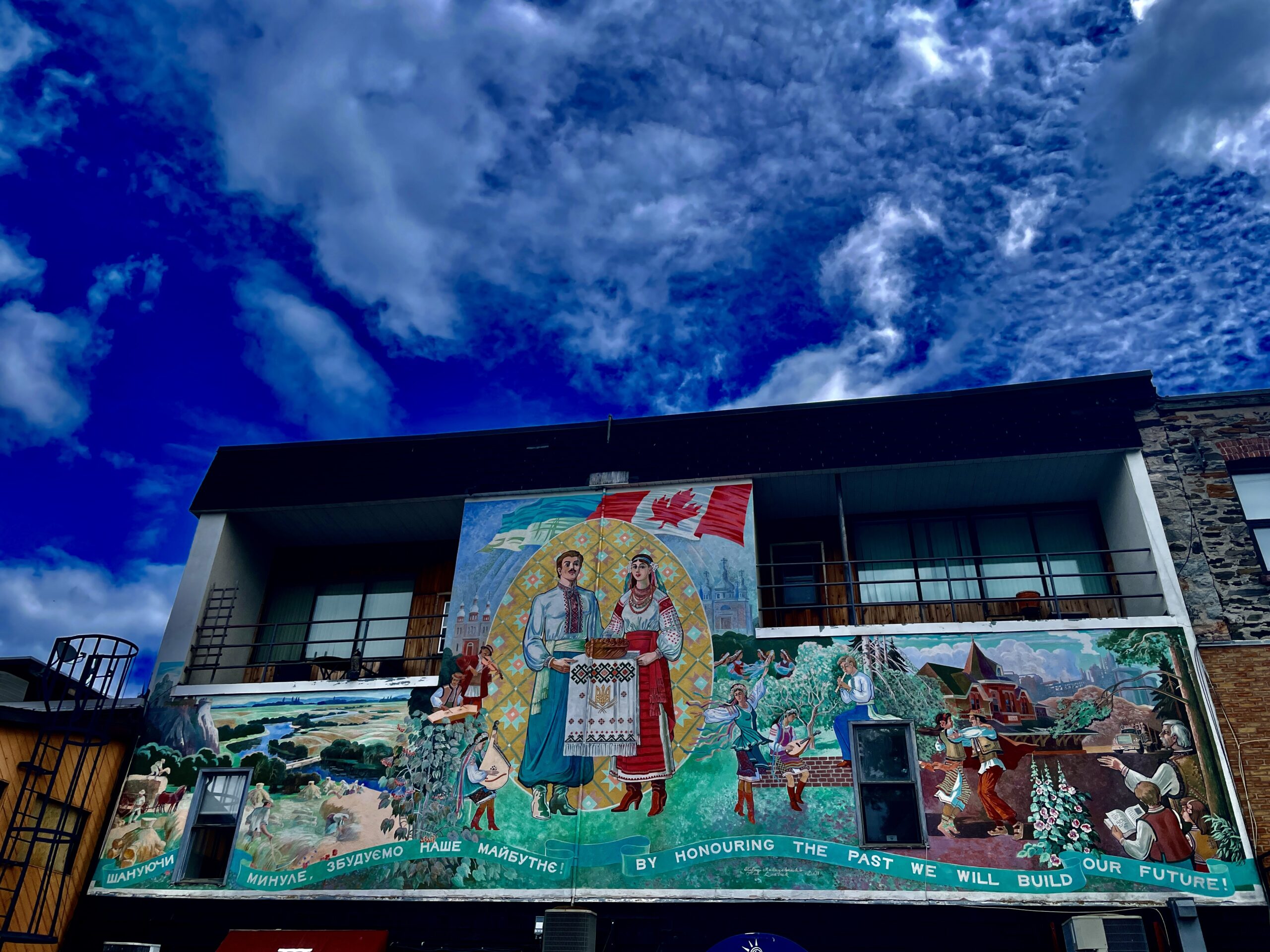
And then, in the middle of this small Ontario town, we found something unexpected: a large mural of a Ukrainian couple in traditional dress, holding bread on an embroidered rushnyk, the Ukrainian and Canadian flags behind them, and along the bottom the words “By honouring the past we will build our future” — in English and in Ukrainian. We did not go looking for it. It found us. And for a Ukrainian family that now calls Canada home, standing in front of it for a moment felt like a small, quiet hello from two countries at once.
One more thing for the list: on the way back through town later, we noticed the Lake of the Woods Brewing Company taproom, absolutely packed with people. We would love to come back and try it next time.
Rushing River Provincial Park
And then we set off for the real reason we came: Rushing River Provincial Park.
What a beautiful place.
You buy your pass at the entrance, and the moment you drive in you hear it — water, the sound of small waterfalls, everything green, birds singing, people relaxing. There are picnic shelters you can book for big groups, a beach, and little waterfalls tumbling over the smooth, glacier-carved rock. Every sense gets something. It is the kind of place where the sounds alone make you happy.
Nika was in heaven. She ran wherever she wanted, splashed through the shallow water, climbed the big rocks, sniffed absolutely everything — as active and joyful as I have ever seen her.
One thing worth knowing about the beach and pets: you can bring your dog to the beach area, but dogs are not allowed to go into the water at the beach itself — no swimming for the four-legged crowd. (Always check the posted signs.)
This park is wonderful for a walk, for spending the day, for celebrating something. And it is so different from Birds Hill Provincial Park back home in Manitoba. Provincial parks are not all the same at all — each one has its own thing, something unique that pulls you in and stays in your memory. This was a different landscape, a different feel — a different province, in a word. Do not leave this place off your summer list. It belongs on it. You could happily spend the whole day here, just soaking in everything around you.
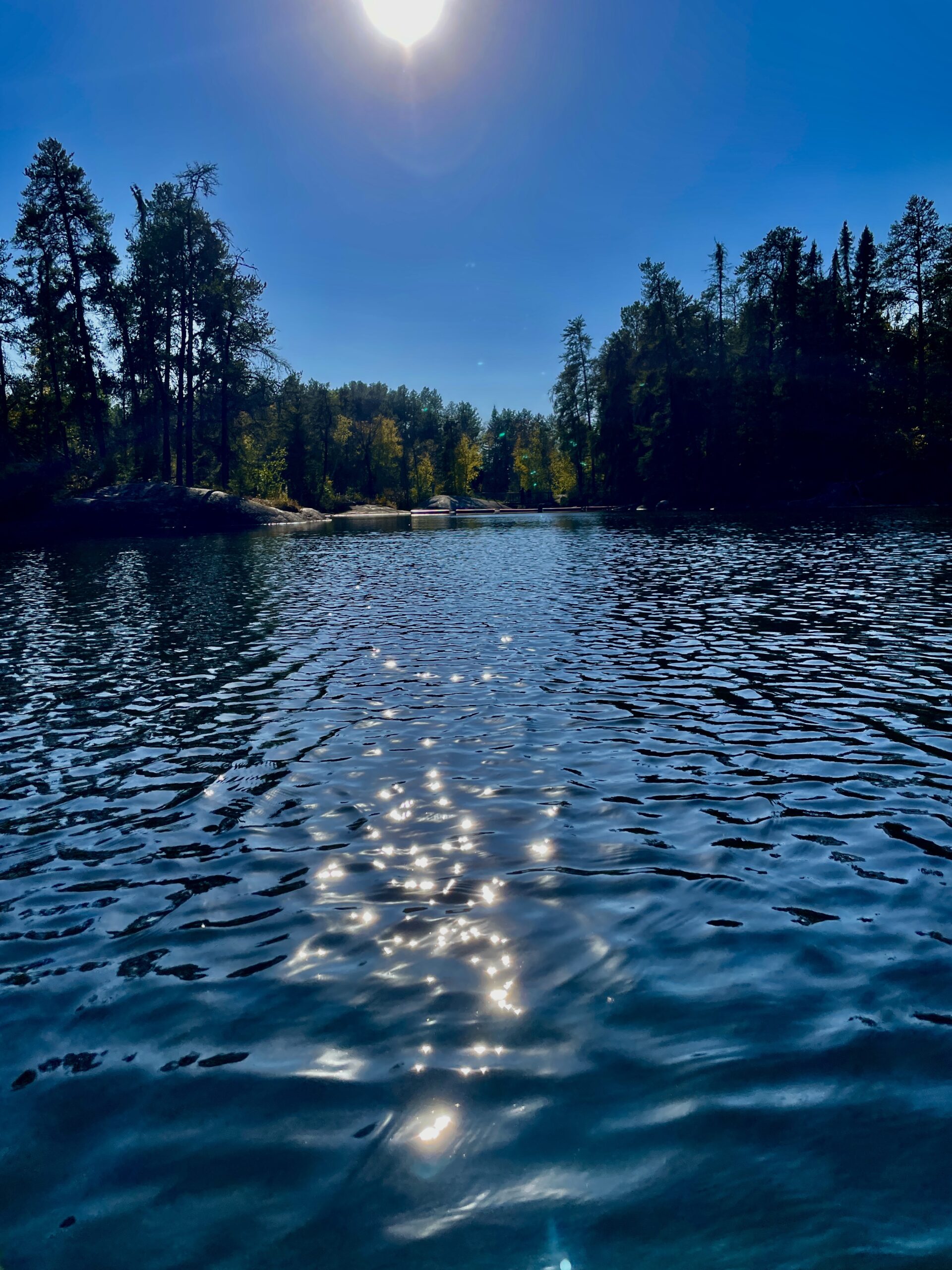
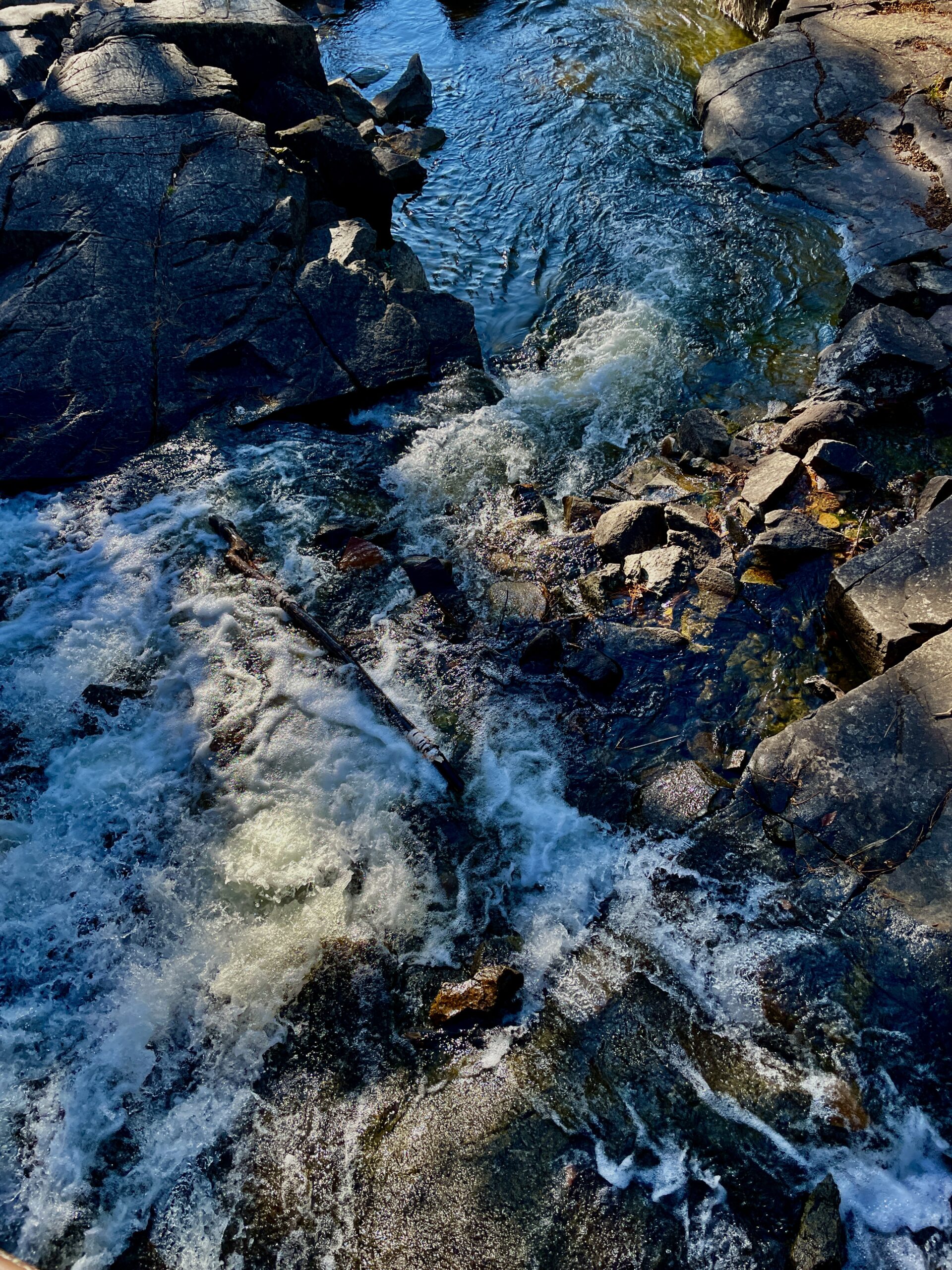
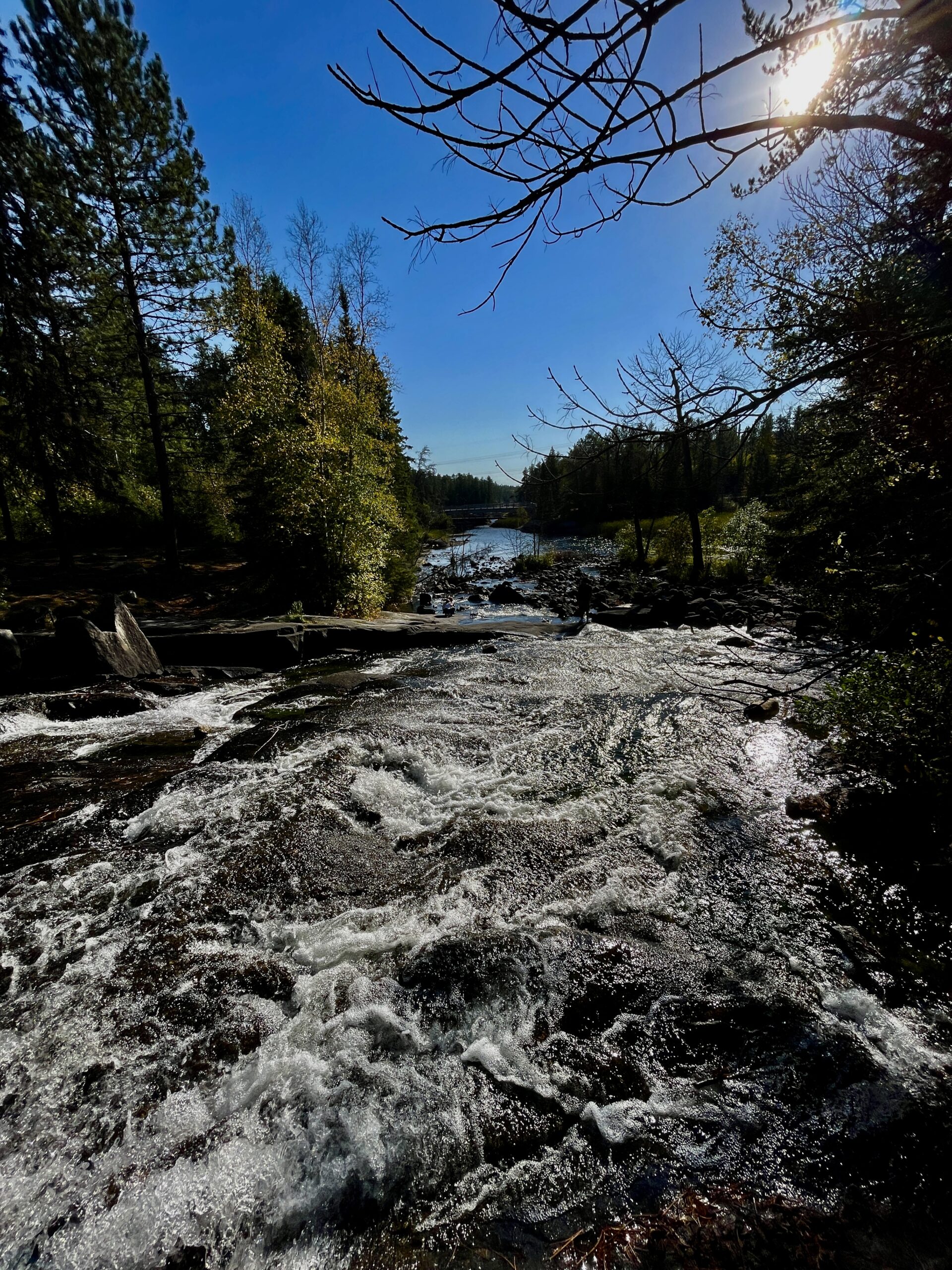
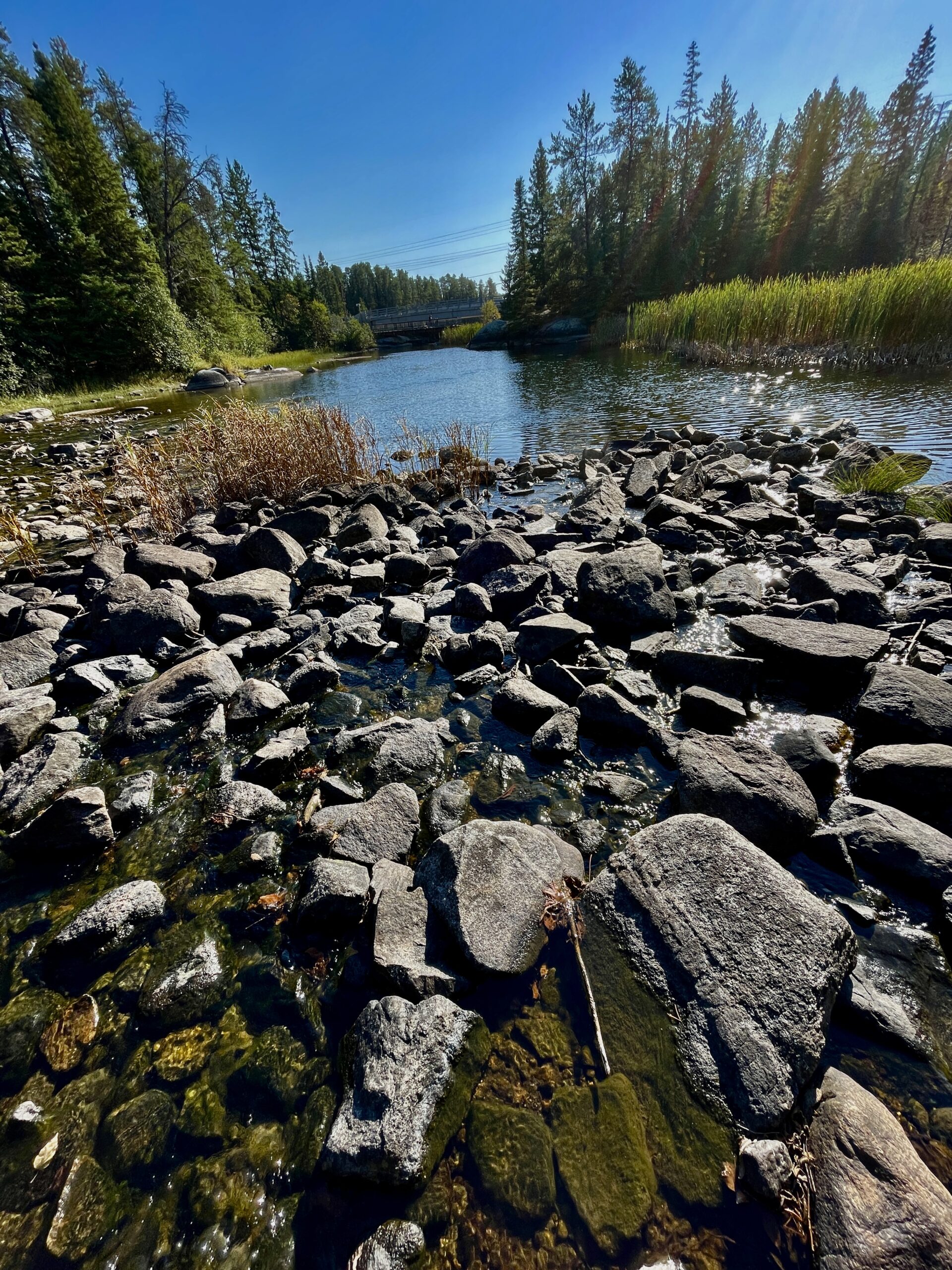
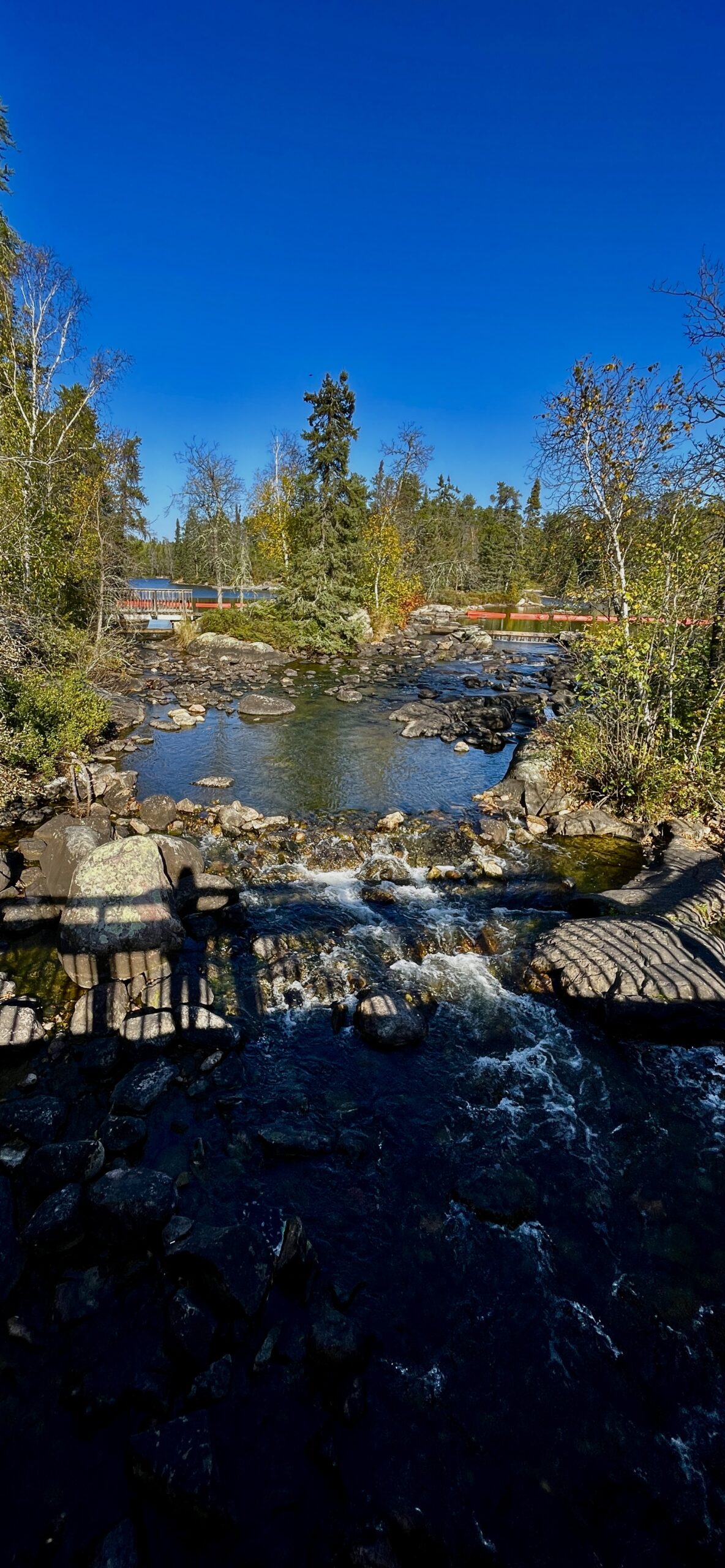
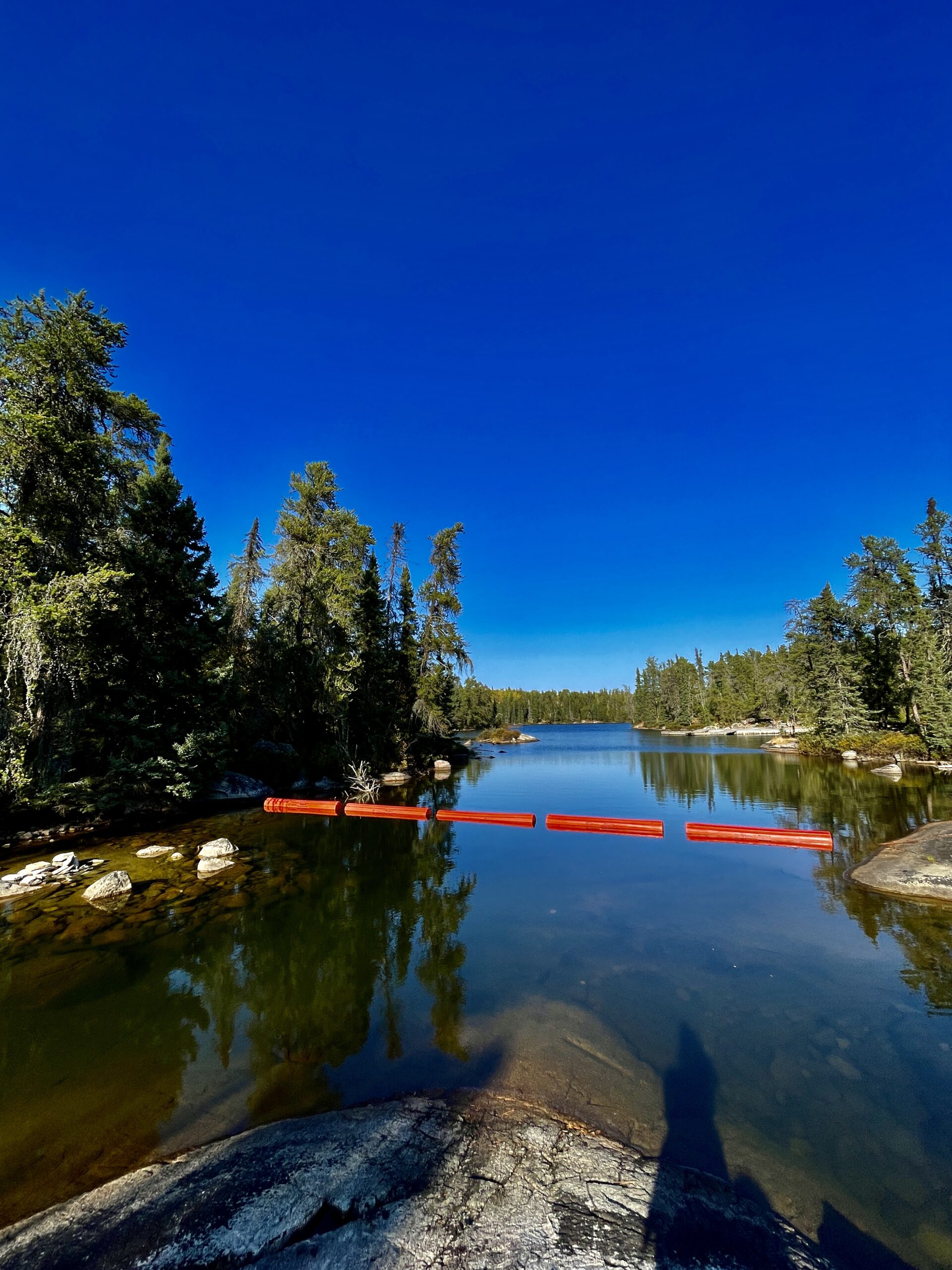
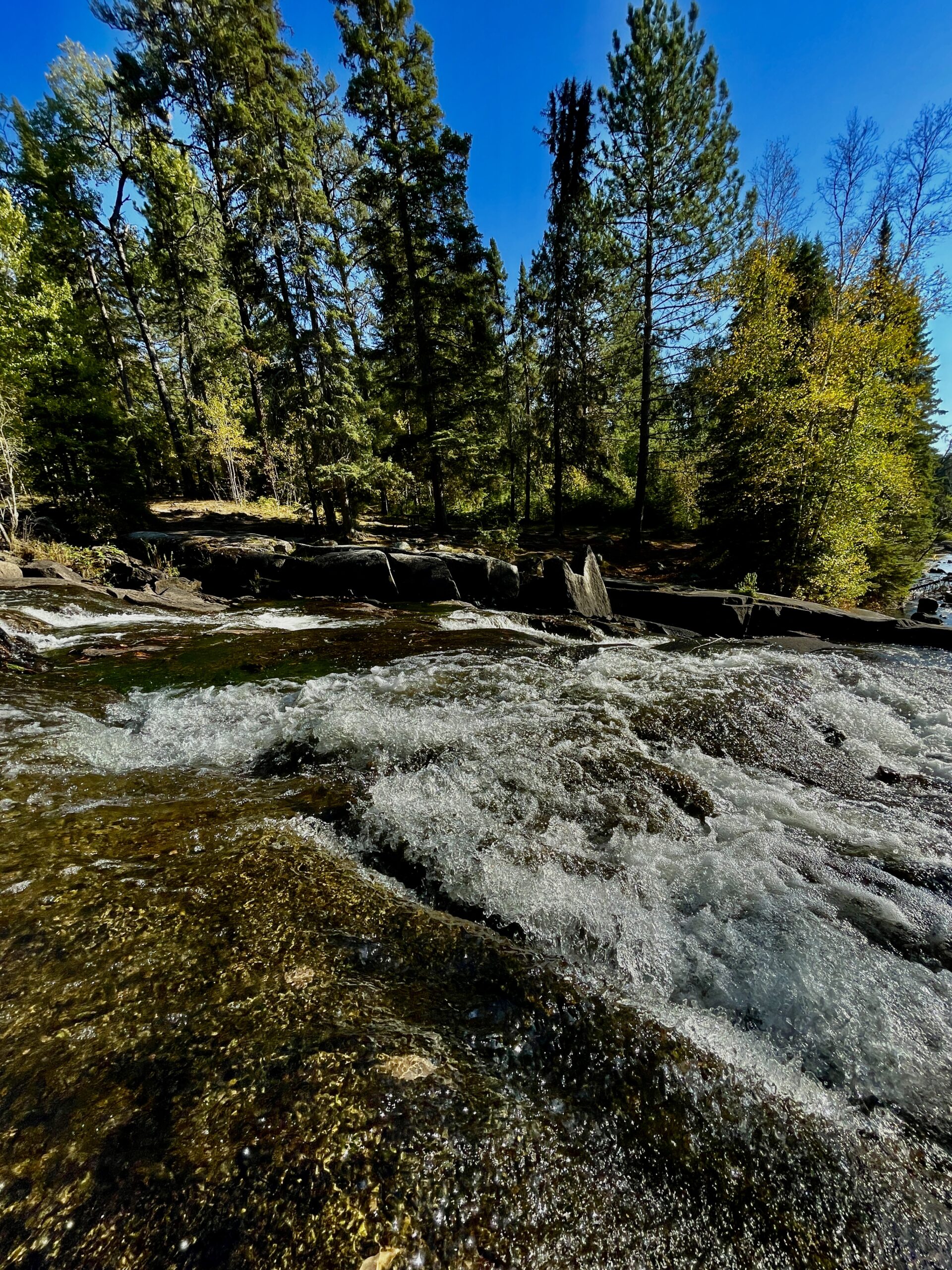
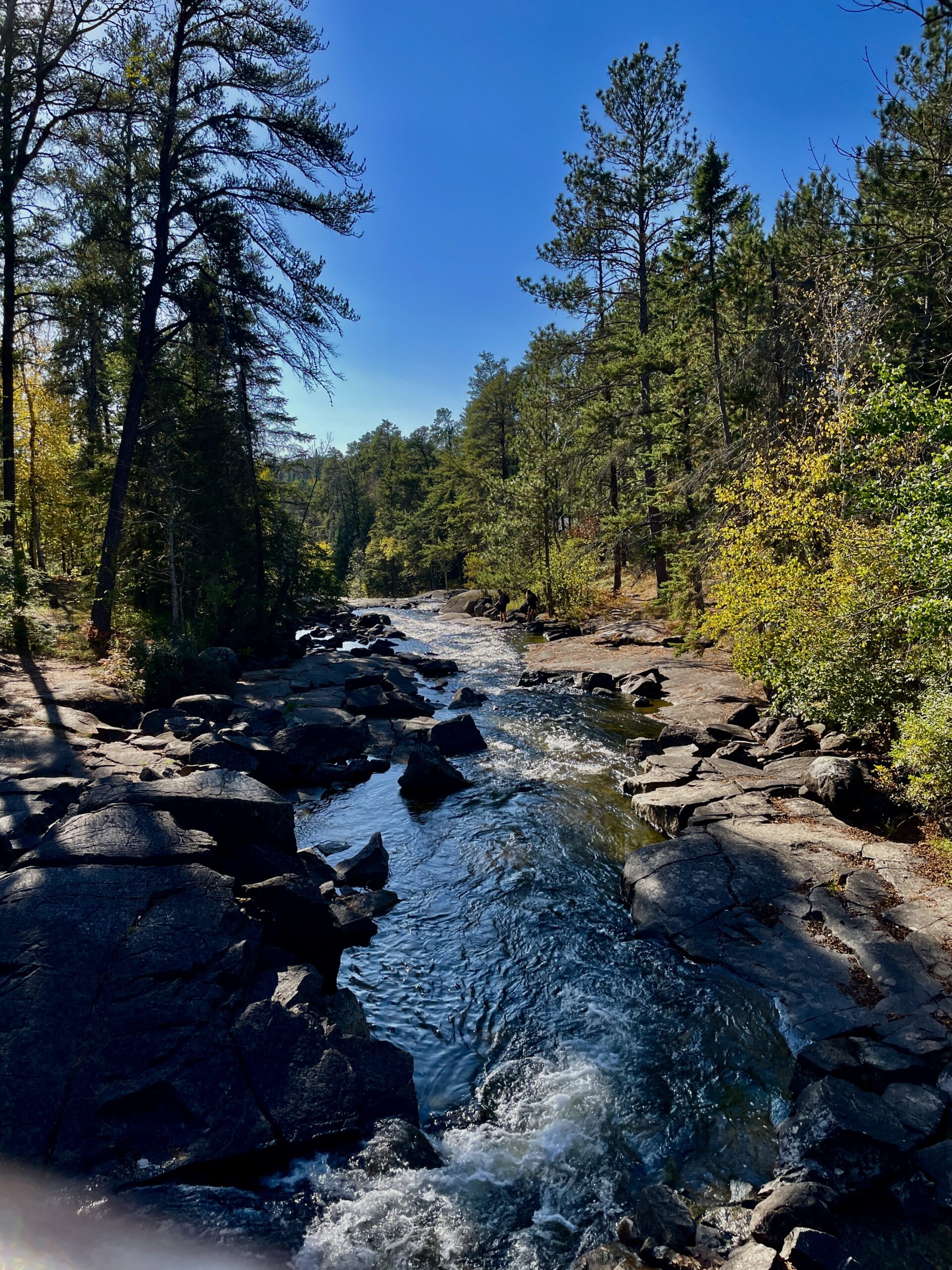
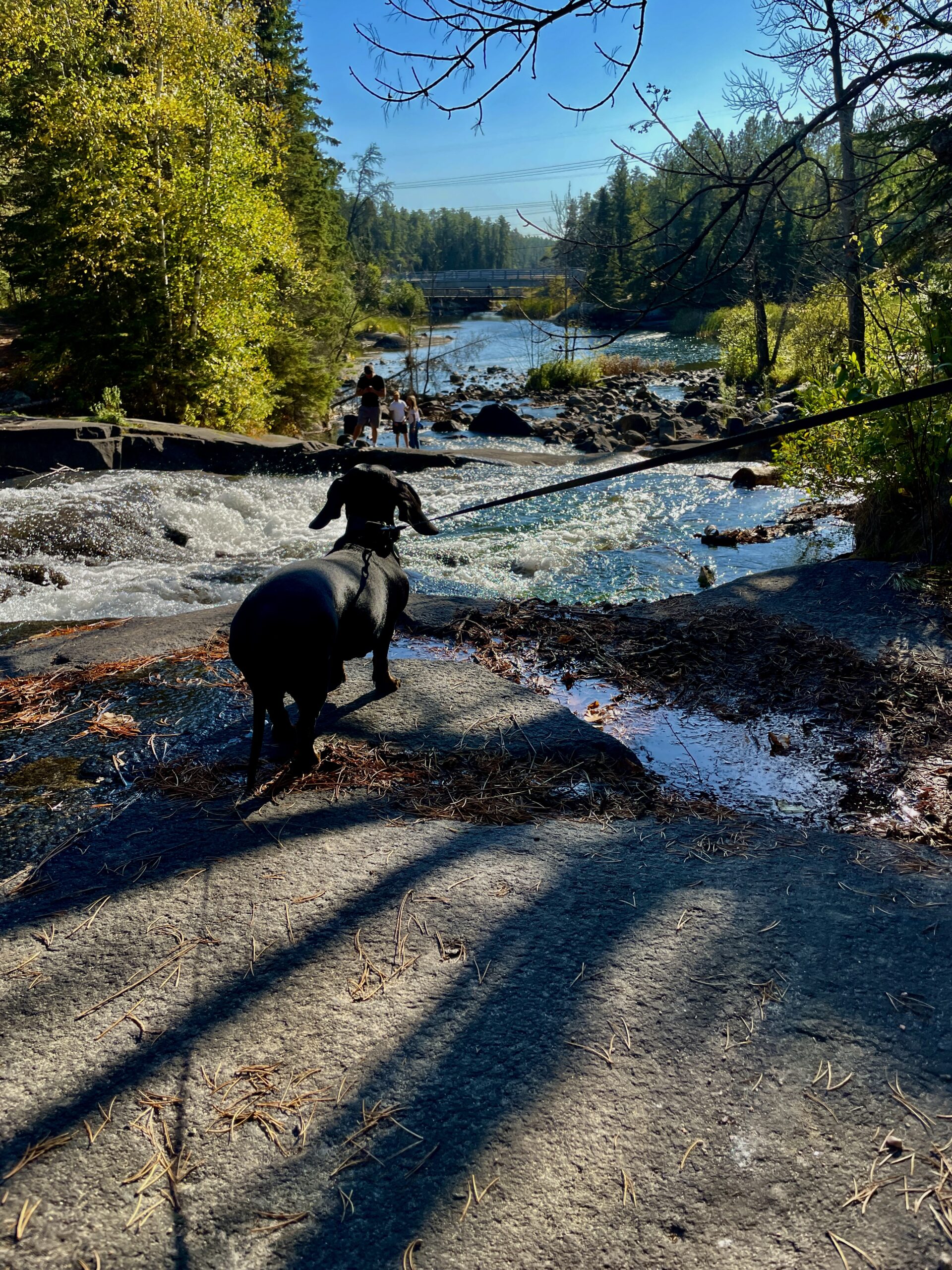
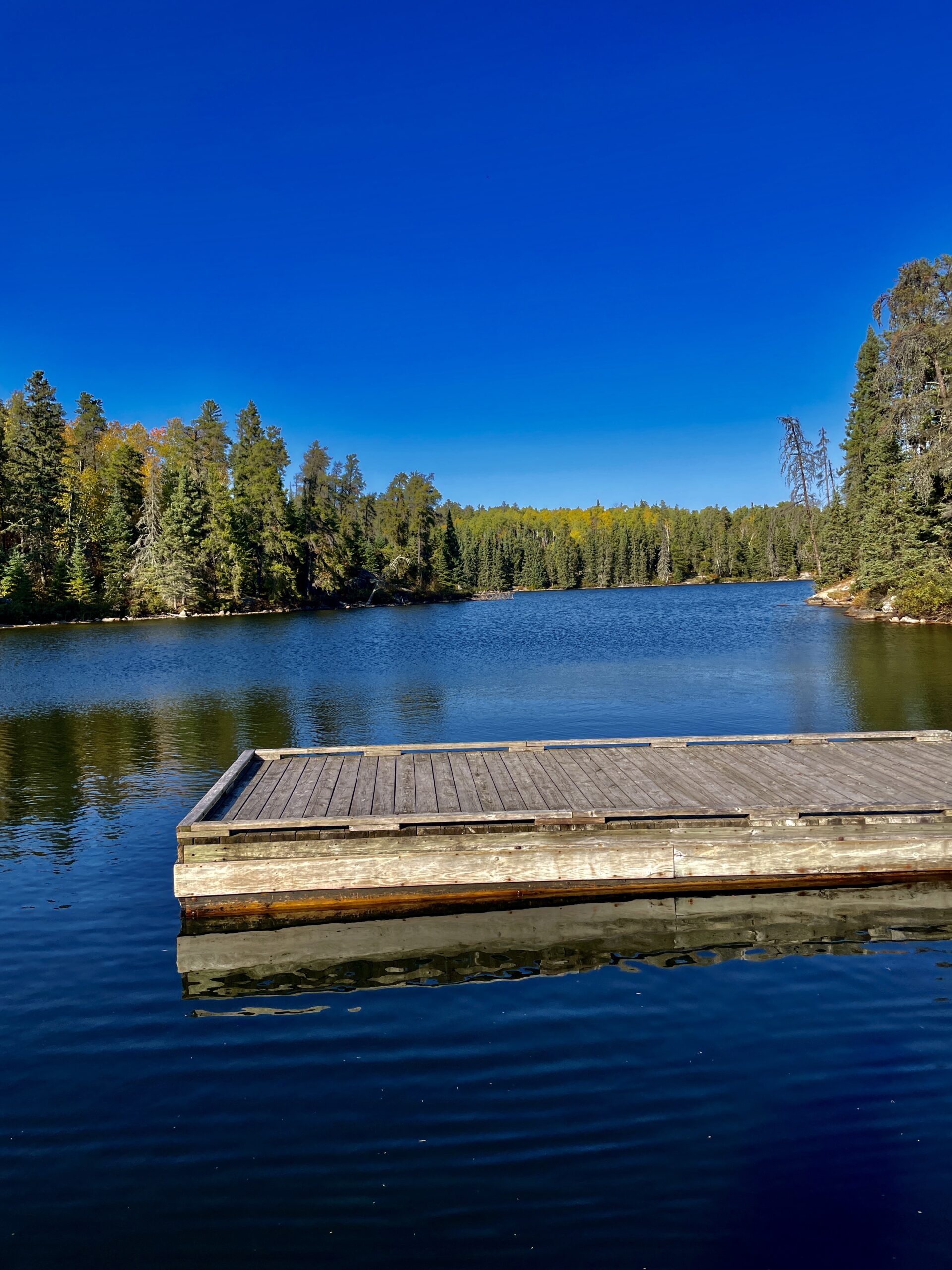
There is far too much to fit into one day’s story — the rapids, the beaches, the campground, the trails. I put all of it into our complete Rushing River Provincial Park guide, so you can plan your own visit properly.
Two Stops on the Way Home
On the drive back we decided to stop in two more places.
Longbow Lake (Storm Bay Road)
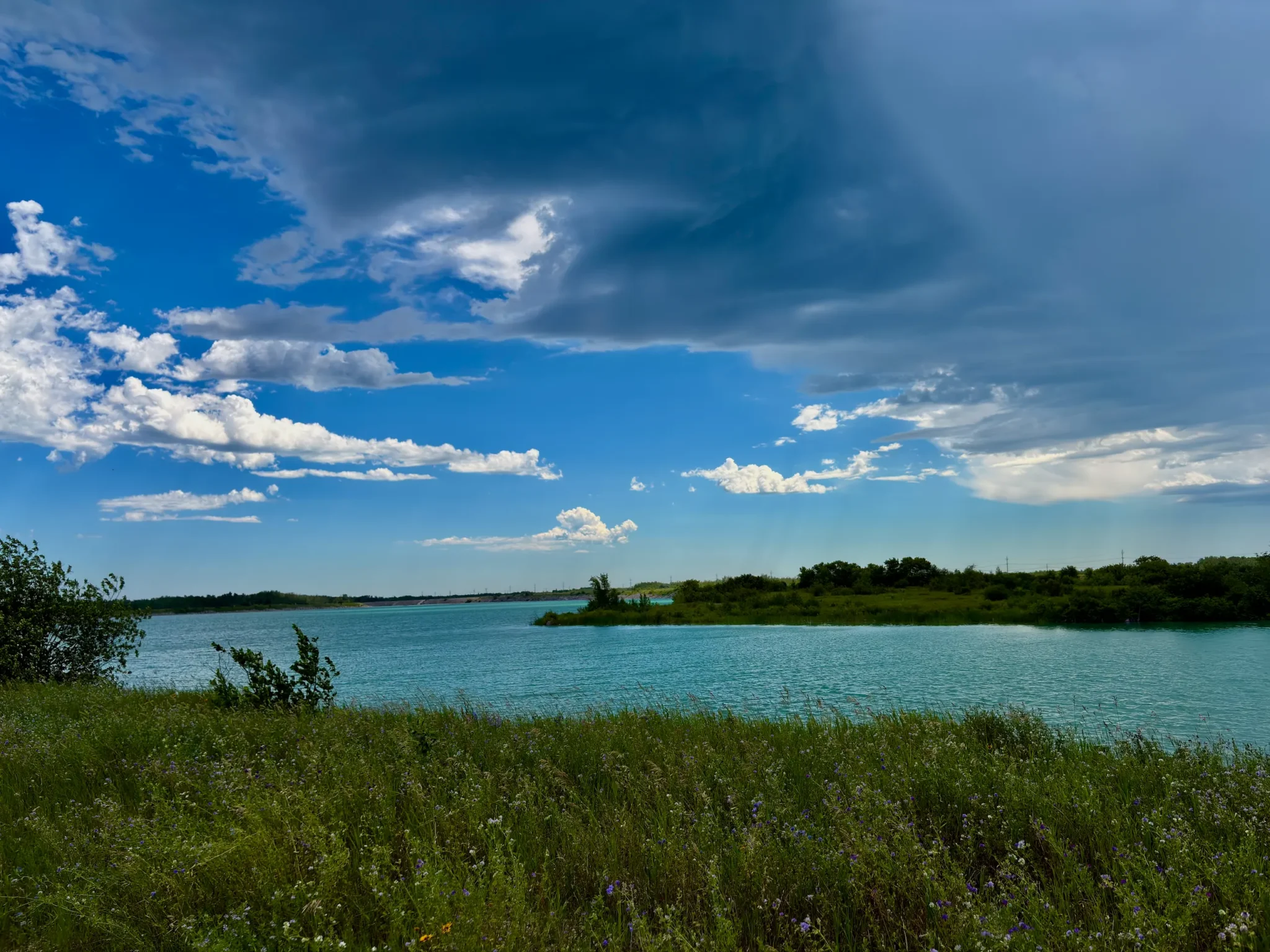
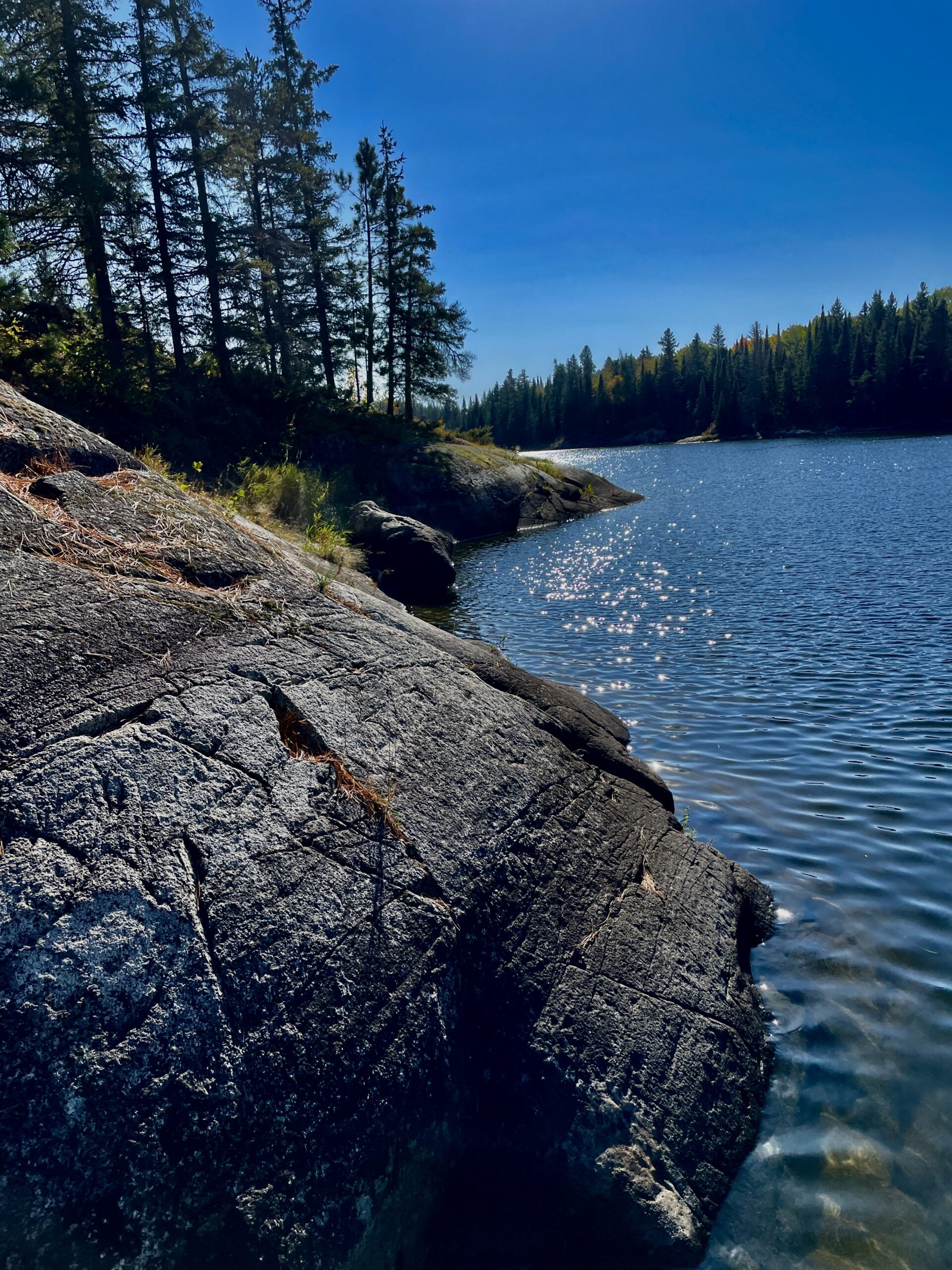
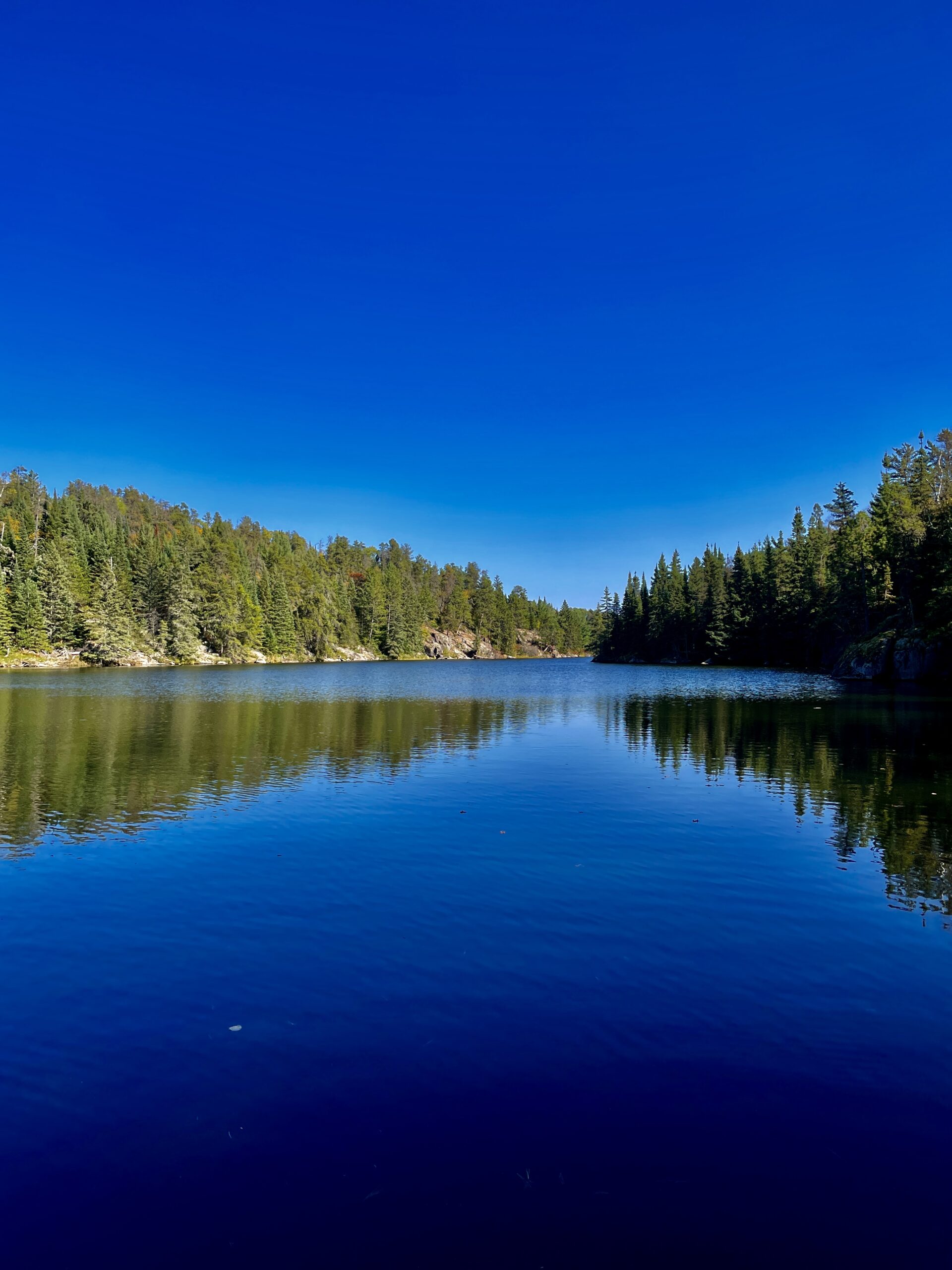
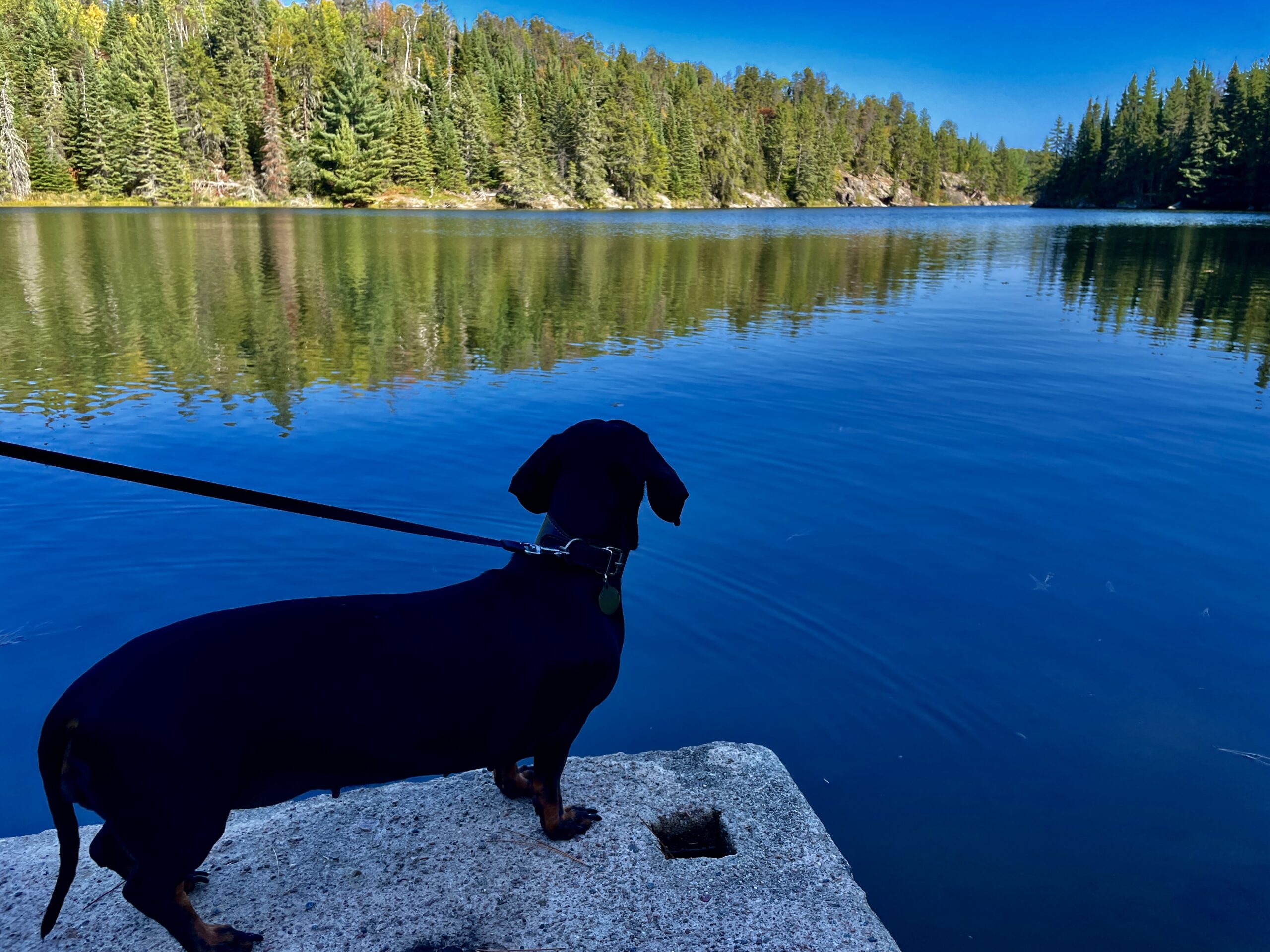
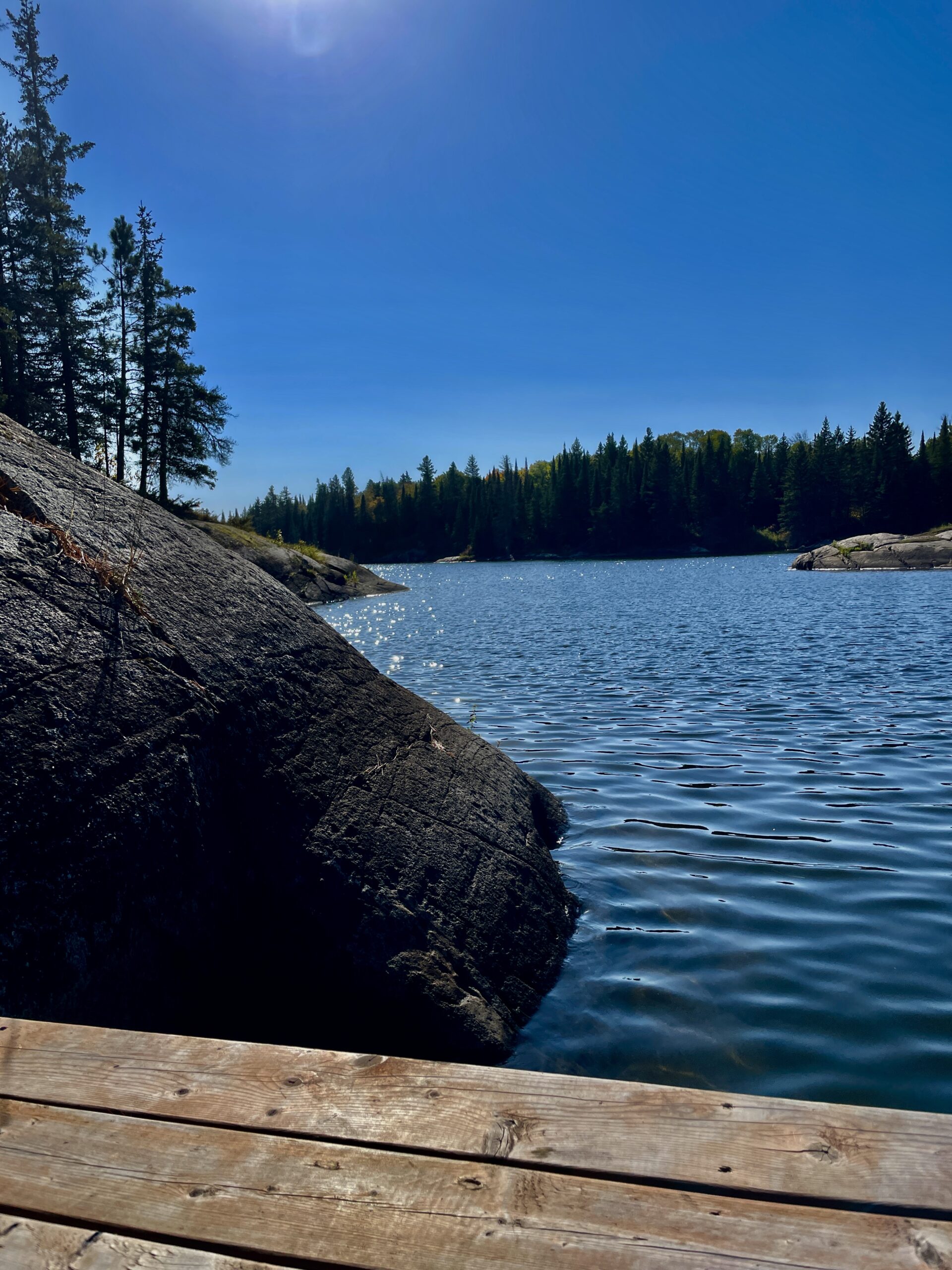
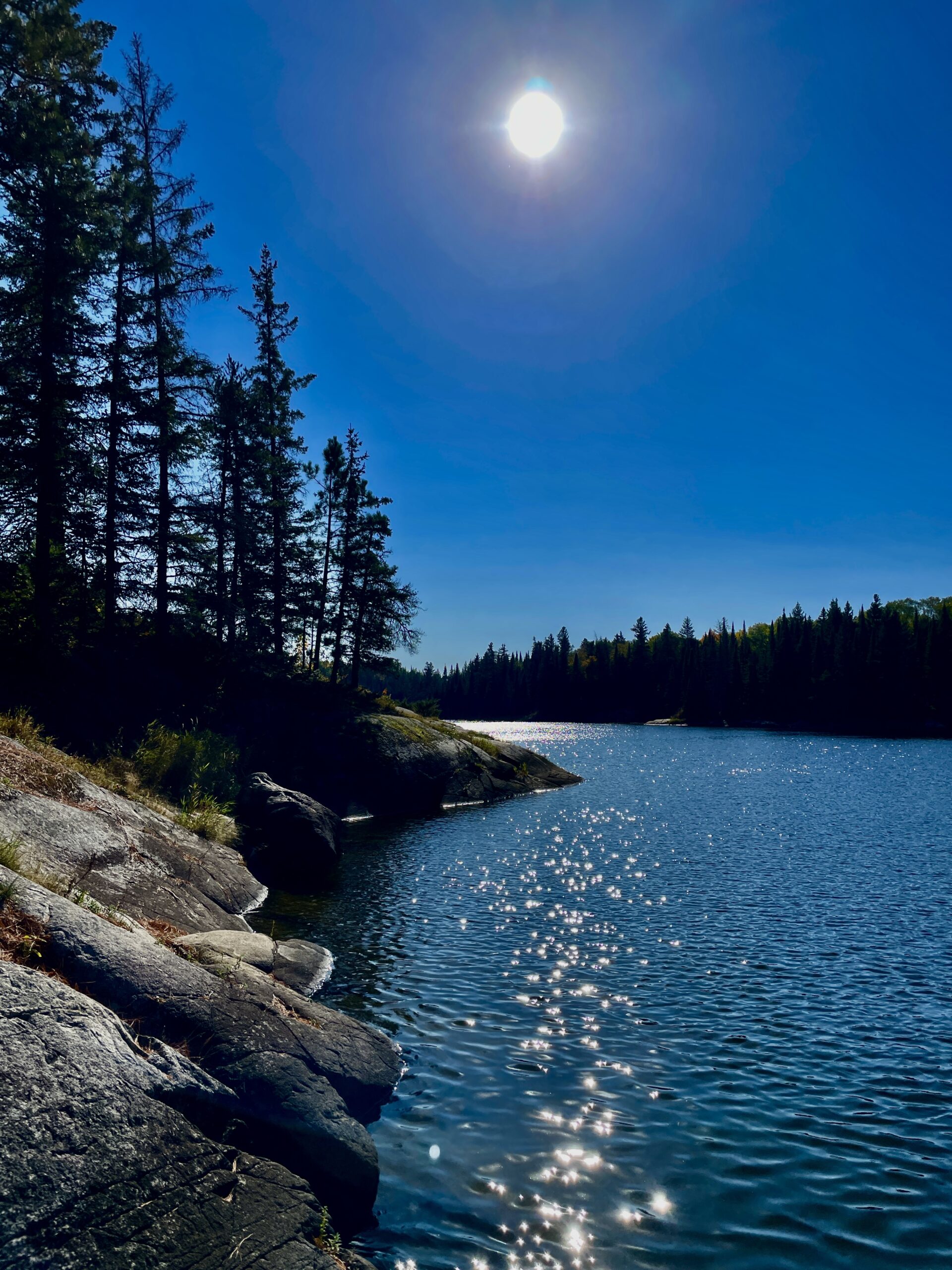
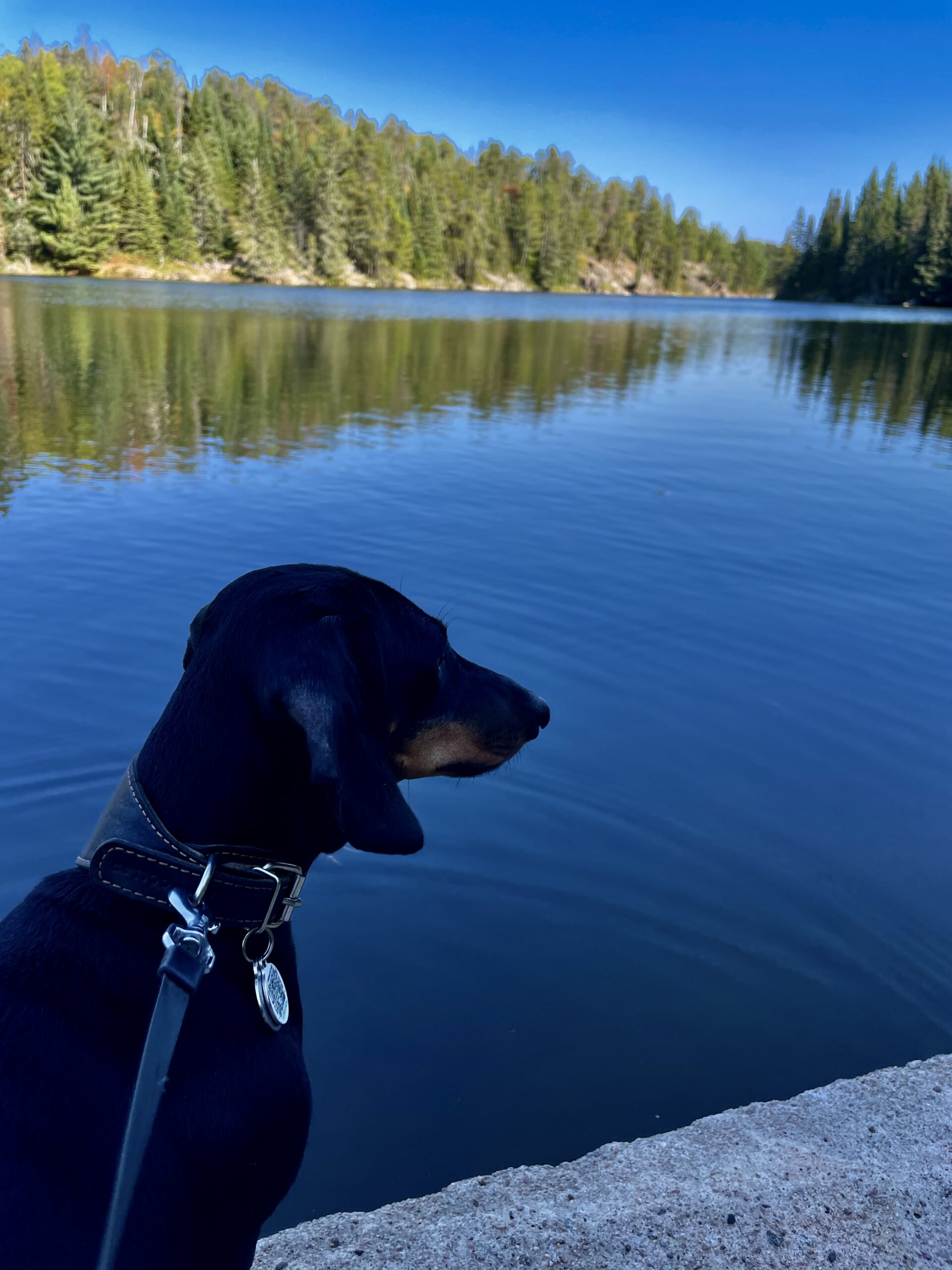
The first was Longbow Lake, off Storm Bay Road (around 49°39’45.5″N 94°17’37.6″W). Calling it a “stop” is generous — it is not even a marked one. We just saw a spot where you could pull the car over, and everything around it was so beautiful that not stopping was simply not possible. Spontaneous, but with unreal views. Half an hour of just looking at the water, resting, drinking some water, catching our breath before the last stop of the day.
Whiteshell Provincial Park
The second was a quick stop in Whiteshell Provincial Park, back on the Manitoba side. By then it was the last stop of the day, the rain was starting, the light was fading, and we sadly did not get to walk it properly. But we will be back — there is clearly a lot more to discover here. Even in fifteen minutes it was beautiful: cabins along the shore (a lot of them look like rentals), anglers fishing, good little spots where you can walk right up to small waterfalls. In short — fishing, water, waterfalls, lovely nature, and quiet. Quieter, even, than Rushing River.
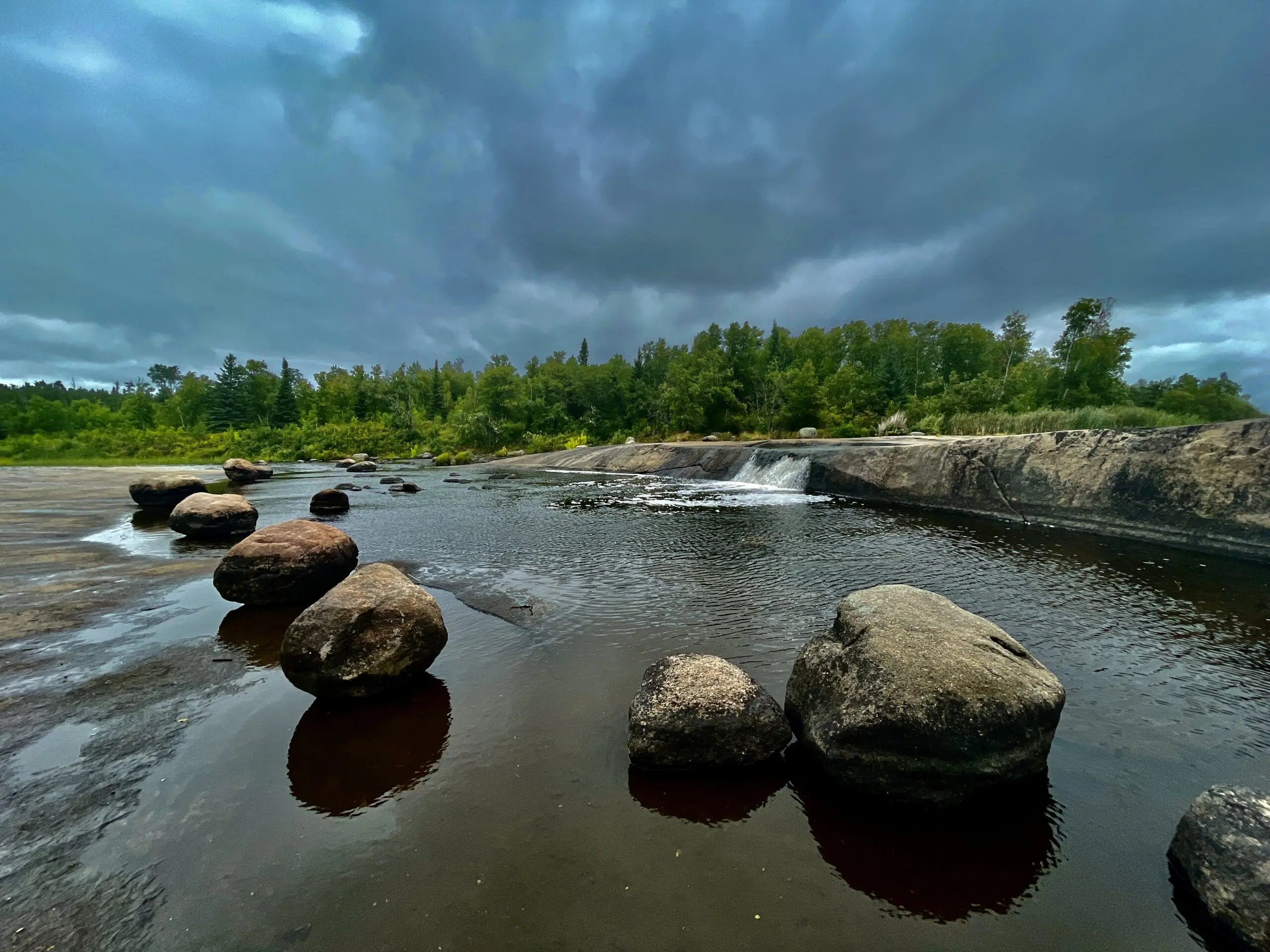
We owe Whiteshell a proper day. Until then, here is everything we know about it so far in our first look at Whiteshell Provincial Park.
What This Day Gave Us
This is the kind of day that answers the question we started with. When someone visits, we do not reach for the mall or another average café. Nature is always beautiful, always interesting, and it gives you more than a building ever could.
In one Saturday we crossed into a whole different province — two and a half hours from our door — and somehow fit in a town with real history, a giant fish, a mural that spoke to us in two languages, a provincial park full of waterfalls, and two lakes on the way home. Our friend went back to Europe with Canada in her camera roll and a day she will remember. And we were reminded, again, that the best places are usually a drive away, not a click away.
How to Do This Day Yourself
If you want to repeat what we did, it is simpler than it sounds.
Leave Winnipeg early — we left at seven, and that gave us a full, unhurried day. Good news for planning: Kenora is on Central Time, the same as Winnipeg, so there is no clock to change at the border. Head east on the Trans-Canada Highway (Highway 1, which becomes Highway 17 at the Ontario line). It is about 210 km and two to two and a half hours, through some of the prettiest driving in the region once the rock starts.
In Kenora, park near the harbour — parking downtown is paid. Walk the Harbourfront, find Husky the Muskie and the viewing deck in McLeod Park, grab breakfast, and browse the shops. If you have time and there is no line, try The Vault Social House (we will, next time), and save the Lake of the Woods Brewing Company taproom for an evening visit.
Then drive about 20 minutes southeast of Kenora on Highway 71 to Rushing River Provincial Park. You will need a day-use vehicle permit at the gate. Give yourself at least two or three hours here — the rapids, the rock, and the beach are worth slowing down for.
On the way home, Longbow Lake (Storm Bay Road) makes a beautiful, free, no-plan pull-over, and the southern Whiteshell — West Hawk and Falcon Lake area — is right on the Trans-Canada as you re-enter Manitoba, perfect for one more look at the water before the last stretch home.
A Few Things to Keep in Mind
- It is a long day, not a short one. Leaving early is what makes it work. Aim to be at Rushing River by early afternoon.
- Bring water, snacks, and a hot drink. You will be out for the whole day, mostly outdoors.
- Cash or card for the gates. Kenora parking is paid, and Rushing River needs a day-use permit.
- Dogs are welcome but on a leash. At Rushing River, dogs can be at the beach area but are not allowed to swim there — check the posted signs.
- Comfortable shoes with grip. The rock by the rapids is smooth and can be slippery near the water.
- This is a summer day at its best. Warm weather, long light, and everything open.
Trip Summary
| What | Details |
|---|---|
| Start | Winnipeg |
| End | Kenora & Rushing River, Ontario (and back home) |
| Distance | ~260 km one way (~520 km round trip) |
| Drive time | ~2 to 2.5 hours one way, Trans-Canada Hwy 1 → Hwy 17 |
| Duration | full day |
| Stops | Kenora Harbourfront → Husky the Muskie → Rushing River P.P. → Longbow Lake → Whiteshell P.P. |
| Budget | ~120 CAD for fuel, parking, day-use permit and breakfast (souvenirs extra) |
| Time zone | Central — same as Winnipeg, no change at the border |
| Best time | summer, on a clear weekend |
| Dog-friendly | yes, on leash (no swimming for dogs at the Rushing River beach) |