

In our previous story, we shared how a work trip to Riga unexpectedly turned into a chance to finally reach the Transfăgărășan. We left off at the end of a third working day in Latvia, with another 1,900 kilometres still waiting ahead of us, heading south.
This article is about the road itself. Day by day, with real stops, border crossings, places we slept, what we spent, and all the small details we once spent weeks trying to find in one place. If you are thinking about doing this trip yourself — everything you need is here.
The Route at a Glance
Start: Riga, Latvia
Finish: Transfăgărășan, Romania → back to Ukraine
Countries: Latvia → Lithuania → Poland → Slovakia → Hungary → Romania (on the way back: Hungary, Slovakia, Poland)
Distance: ~1,900 km one way + ~700 km back to the Ukrainian border
Duration: 4 days
Season: mid-August — ideal (the Transfăgărășan is open from July to October)
Car: Audi A6, 1998
Total budget: around €800 (~1,240 CAD) for two
When: 14–17 August 2023
What to Prepare Before You Leave
There are a few things we now do before every long road trip — and it was this exact journey that taught us why.
The car. Before leaving, I changed the oil, replaced the filters, and had the brakes fully serviced. That last one is not a formality. The Transfăgărășan is a mountain road, and mountains mean long descents where brakes overheat surprisingly fast. The standard advice: wherever possible, engine-brake on the way down instead of riding the pedal. If your brakes are anywhere close to “on the edge” — do not take them into the mountains. This is one of those cases where saving on service costs more than the repair itself.
Vignettes. Two are required for this route: the Romanian rovinieta and the Hungarian e-matrica. We skipped the Slovak one because we avoided the motorways — but if you plan to use them, buy it too. The cheapest way is to buy online in advance (a 7-day Romanian vignette costs around €3–7 depending on the reseller, a 10-day Hungarian one around €15). You can also buy at the first gas station after the border, but it usually costs more and can involve queues.
Passports. We were genuinely surprised to have our passports stamped on the Hungary–Romania border. In August 2023, Romania was in the EU but not yet in the Schengen Area (it only fully joined across 2024–2025). Every other border between EU countries on this route we crossed without stopping — the old checkpoint buildings are still standing, just empty.
Navigation. Google Maps and Waze. Both. The Waze tip actually came to us from… Slovak police officers at a gas station. Story below.
Day 1: Riga → Łódź (795 km)
10:00 — leaving Riga
14 August, ten in the morning. After breakfast and a full tank, we left Riga heading toward Łódź — my mother has been living there for about five years. We had not seen each other in a very long time: first because of the pandemic, then because of the war in Ukraine. Meeting her and staying the night was one of the main reasons we chose this particular route instead of going straight south.
About 350 kilometres to the Polish border. After a few days resting in Riga, that felt almost like a warm-up. Lithuania and Latvia are quietly green countries, and the views from the window are genuinely worth it. Especially in August.
13:00 — a stop worth remembering: double hot dogs in Lithuania
We had one specific target before the border. A Circle K gas station at Panevėžio aplinkl. 20 (coordinates: 55.6728, 24.3371), just outside Panevėžys. We had stopped here on an earlier trip and came back specifically for their double hot dogs. It sounds silly, but those were the best hot dogs I have ever had at a gas station. If you find yourself in that area — seriously, stop.

15:00 — first border and refuelling in Poland
We crossed into Poland without stopping. The first thing we did on the other side was pull into a gas station. Fuel in Poland is noticeably cheaper than in Lithuania and Latvia, so before leaving Riga I had deliberately calculated how much fuel we would need to reach Poland on a near-empty tank. That one refuel saves about €10–15.
The next decision I made right after the Polish border: I turned off motorways in Google Maps — not for the whole route, just the stretch to Łódź.
Why? Because Polish villages are their own kind of magic. Always clean, green, tidy, and you never know what you will find around the next corner — a 300-year-old church, a half-forgotten castle, a wooden roadside chapel. On the motorway, you simply do not see any of it.
17:30 — Tykocin (an unplanned gem)
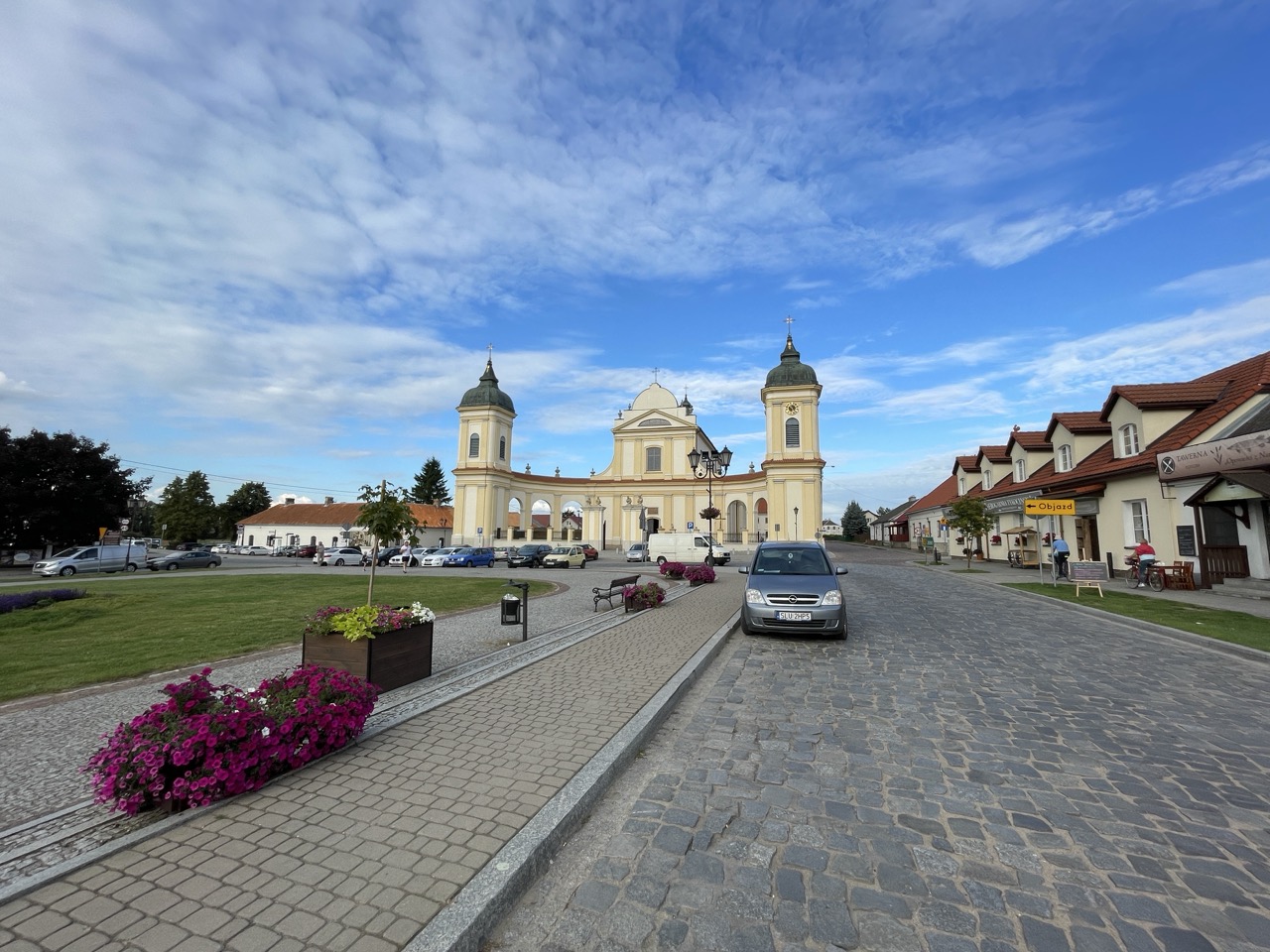
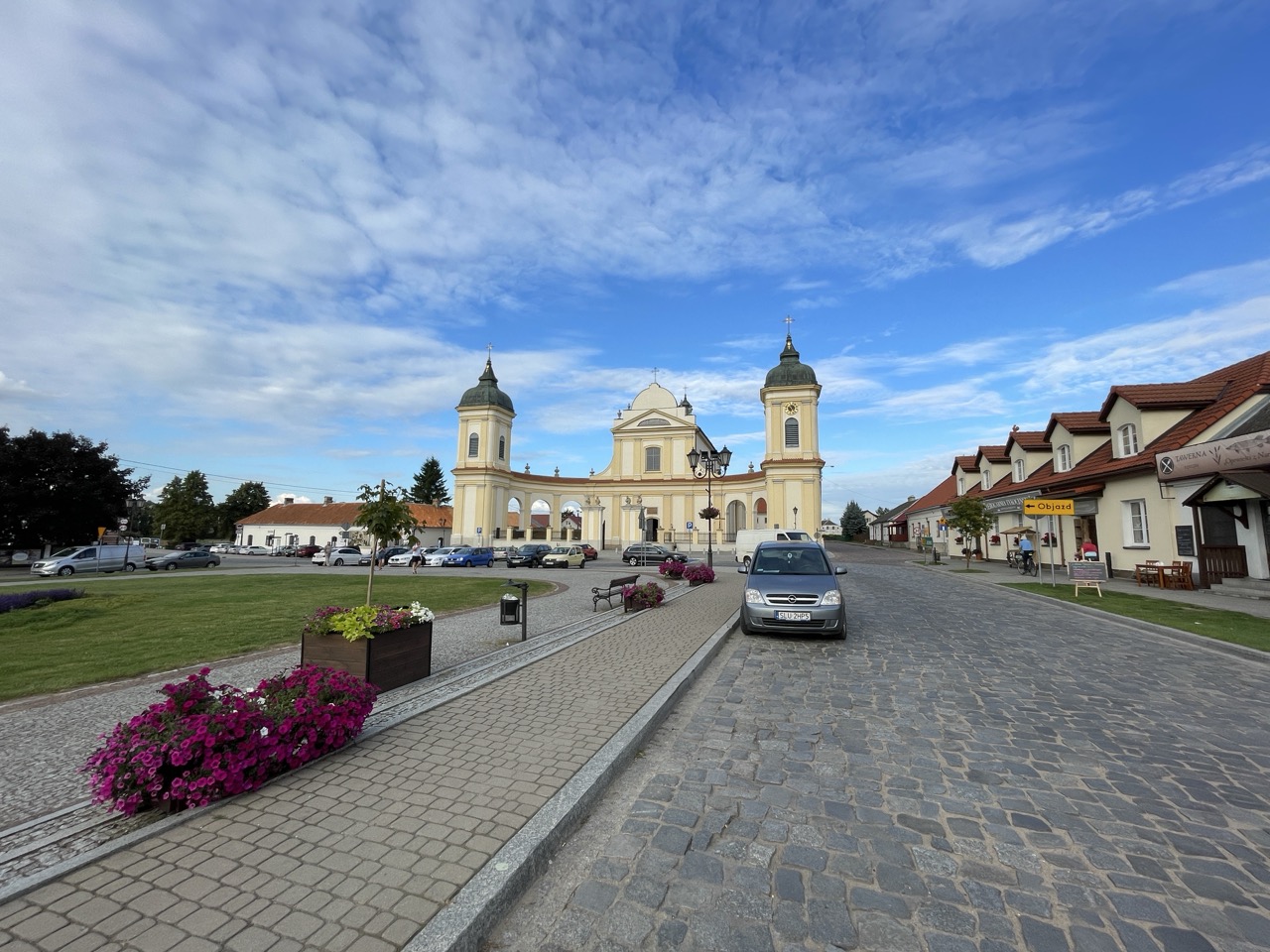
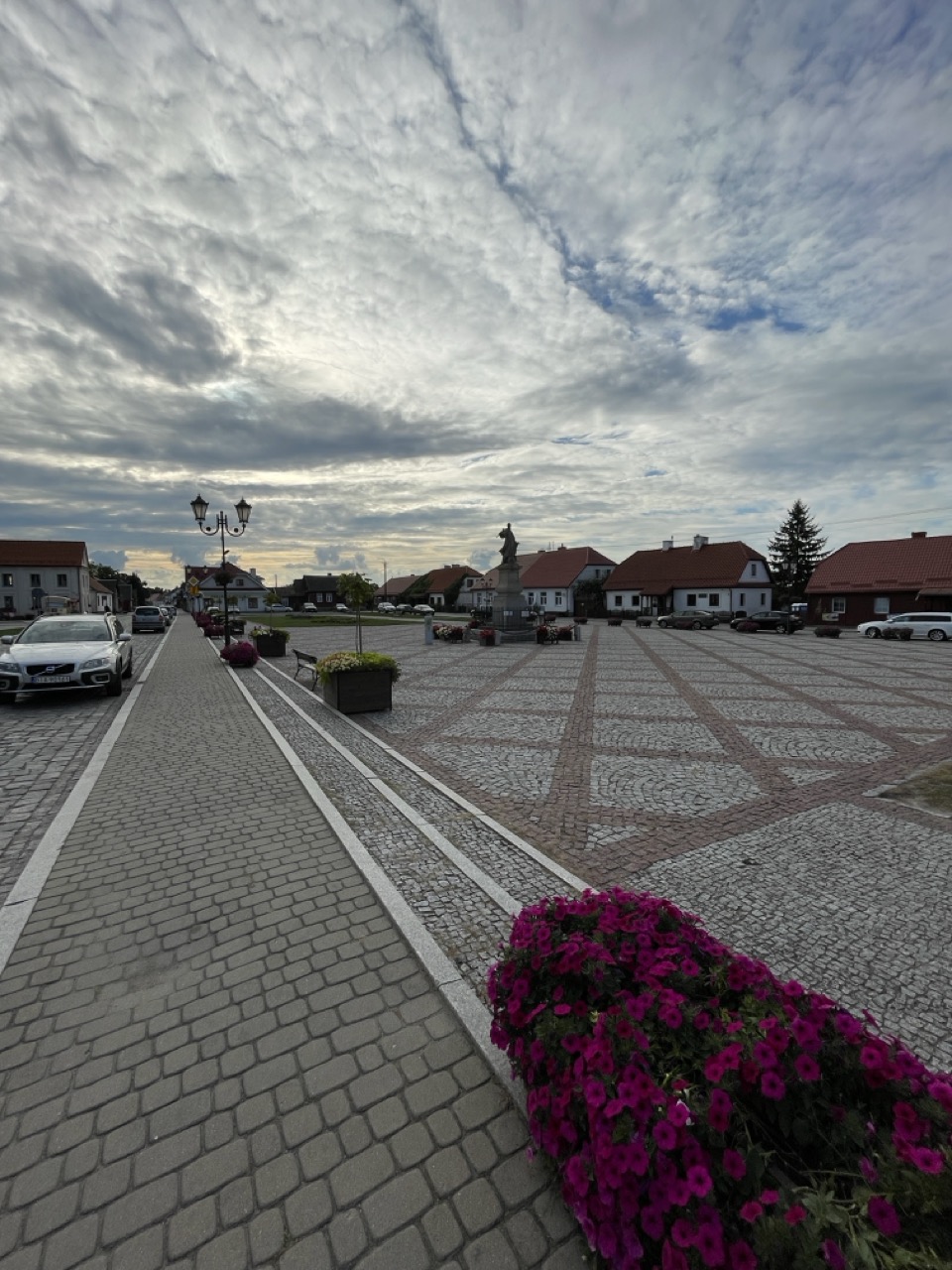
The rebuilt route took us through Tykocin — a small town we had never even heard of.
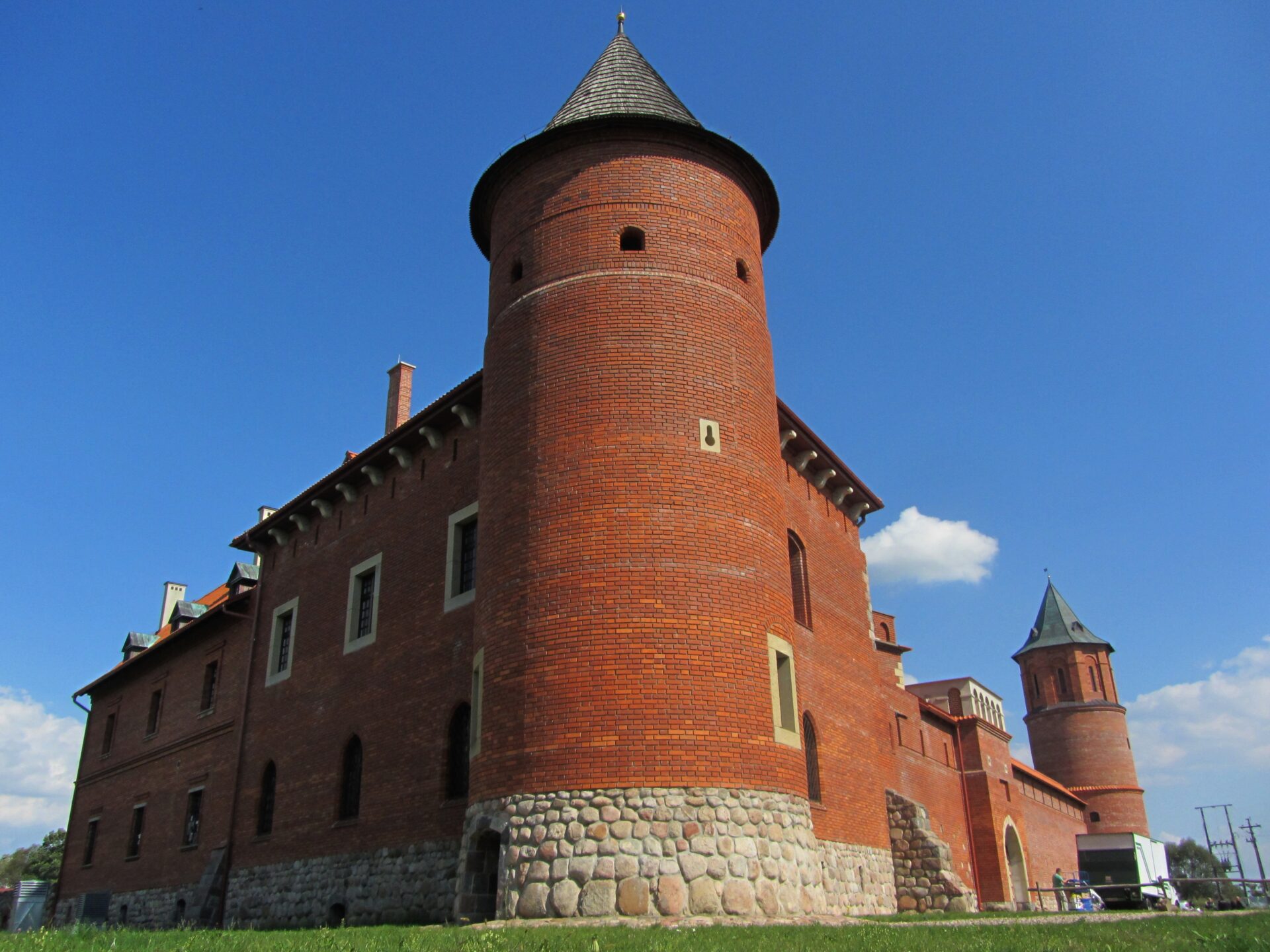
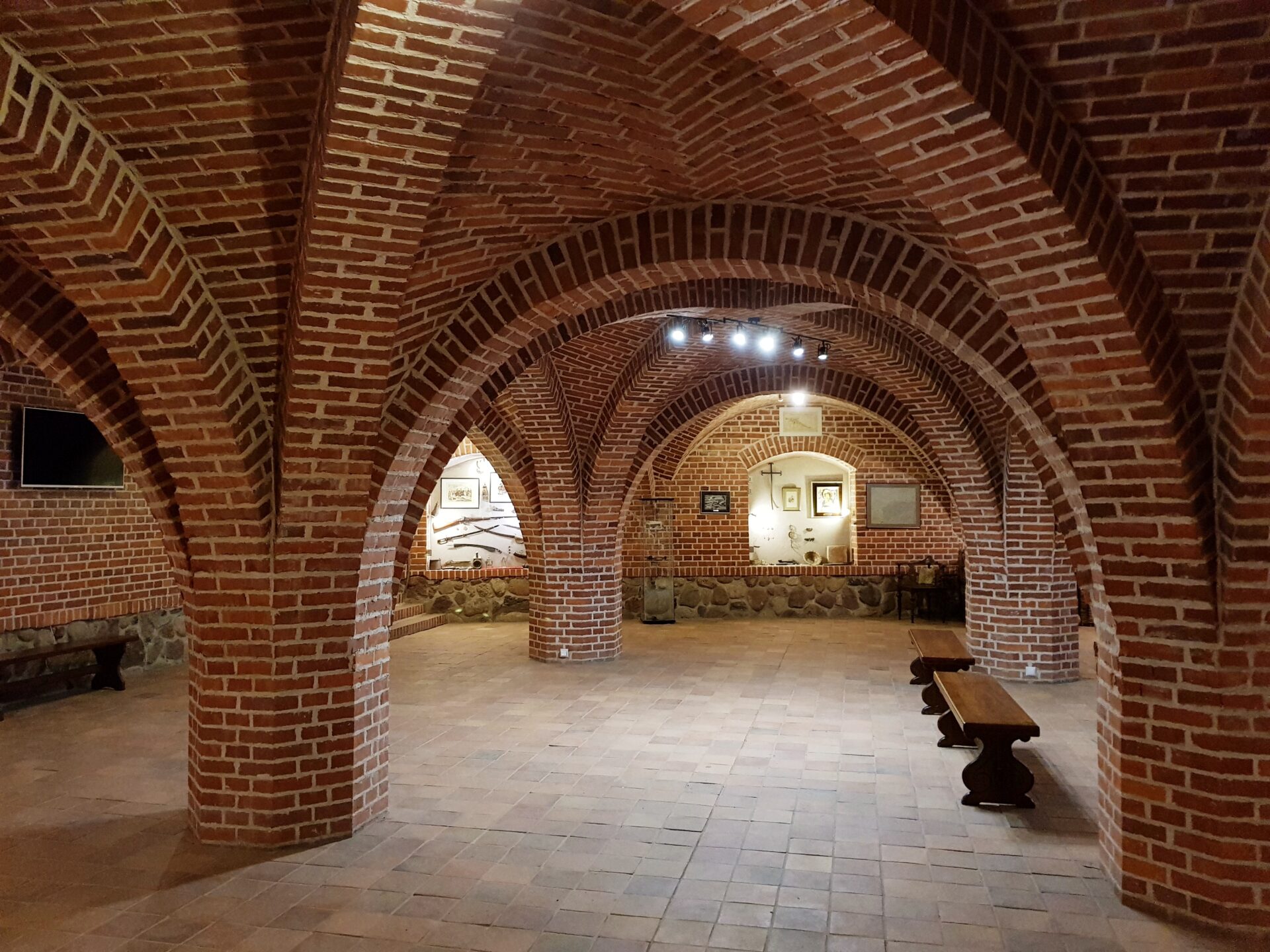
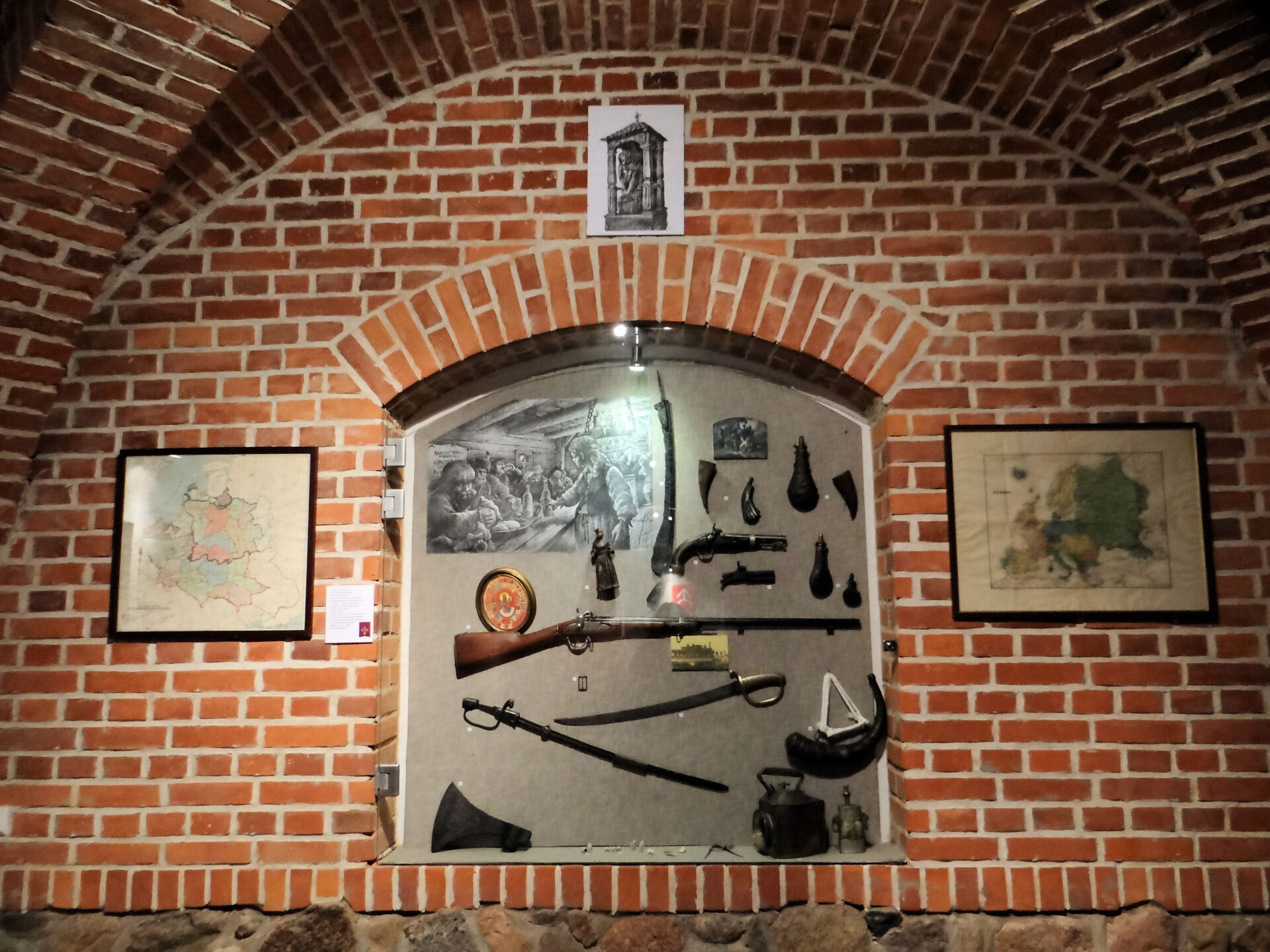
The first stop was Tykocin Castle — a reconstructed 15th-century castle on the banks of the Narew River. Hardly any tourists, quiet grass, old walls. That classic “not-for-tourists” Europe.

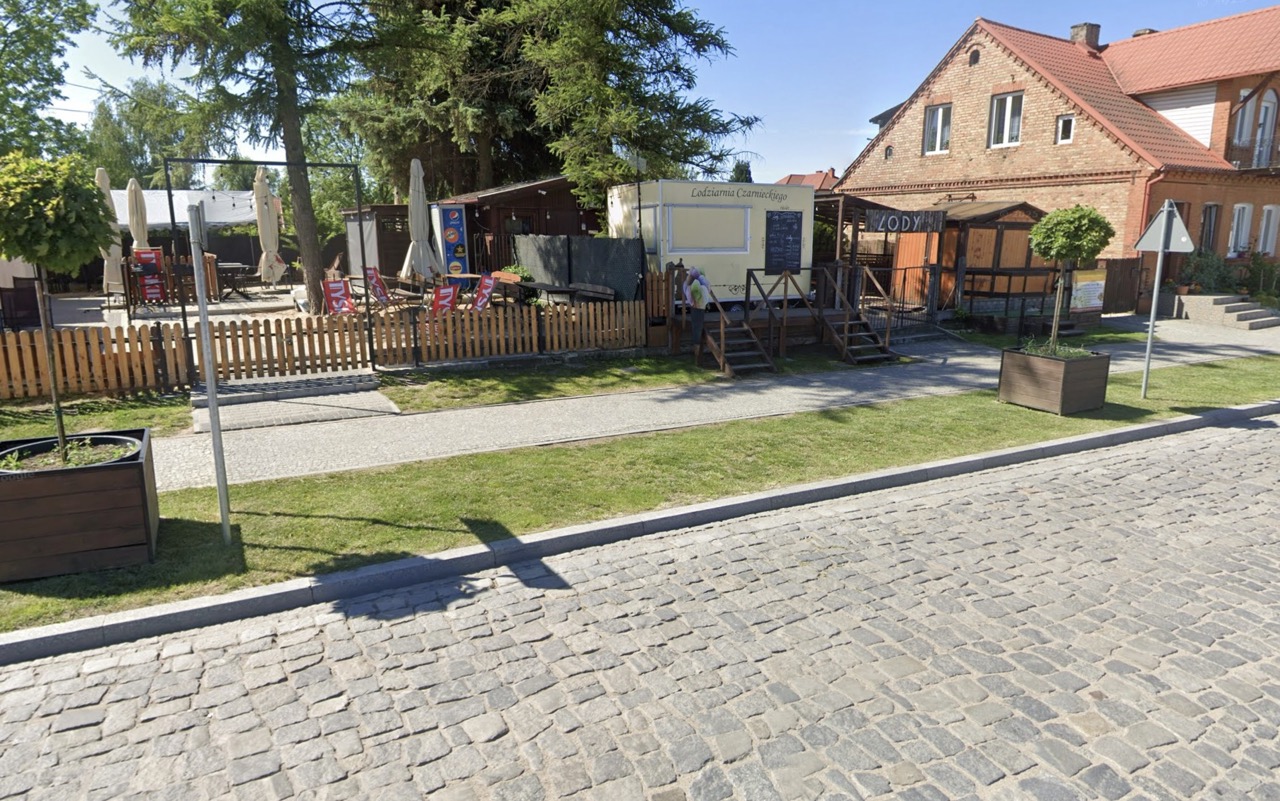
After the castle, straight into the town centre to Lodziarnia Czarnieckiego (plac Czarnieckiego 7A). It is an open-air ice cream café full of handmade souvenirs, with ice cream I would drive out of my way to get again.
We did not stay long — coffee, ice cream, and back on the road. It was already past five in the evening, and the time difference with Latvia was pushing things further. Still about 300 km to Łódź.
22:00 — Łódź
Another 300 km through small Polish villages and towns (the free rural roads are a quiet joy of their own), and by ten in the evening we were in Łódź.
Poland parking tip: in most Polish cities, street parking is paid from 6:00 to 18:00, and free the rest of the time. We arrived at 22:00 and planned to leave at 14:00 the next day. We only paid for 6:00 to 14:00 — around €6 instead of a full day’s rate.
The evening we spent with my mum.
Day 2: Łódź → Sibiu, Romania (~1,200 km, driving through the night)
14:00 — leaving Łódź via Sosnowiec
Before the final push south, one more reunion. Sosnowiec, where our long-time friend David lives. We refuelled, grabbed a coffee, spent half an hour catching up, and got back on the road. Ahead of us: a night of driving and three more countries.
Slovakia: a small lesson in politeness from the police
At a Slovak gas station, two police officers walked up to our car. My first reaction was instinctive — foreign plates, late hour, here we go.
There was no “here we go”. They greeted us, asked where we were heading, and warned us that there was roadwork ahead on our route — something that was not showing up in Google Maps. They suggested a detour. Then they mentioned one more thing: switch to Waze. They said it openly — that Waze does a good job marking speed cameras and police patrols — and smiled.
It was one of the friendliest police encounters of my life. Waze has been running alongside Google Maps on every one of our trips ever since.
03:00 — Hungary–Romania border: the surprise
We drove through Hungary at night, on the motorway (this is where our vignette was needed — bought online before leaving). But the Hungary–Romania border caught us off guard.
A checkpoint. Passport control. Stamps.
All the earlier borders — Poland→Slovakia, Slovakia→Hungary — we had crossed essentially without stopping. The old border buildings are still standing, but nobody is inside. Here, though, it was a real checkpoint. I had been sure Romania was in Schengen. Turns out it was not. In August 2023, Romania was in the EU but not yet in Schengen — it only fully joined across 2024–2025.
The whole thing took maybe 2–3 minutes. But if you are driving this for the first time — just be ready for an actual border stop here.
12:00 — Sibiu
We rolled into Sibiu at noon. In total, about 22 hours of driving from Łódź with only short stops.

We had booked our place in advance on Airbnb, in the Lazaret neighbourhood, just east of the historic centre. €70 a night — an apartment with a balcony facing the mountains. We checked in and I collapsed into sleep almost immediately. Anna had spent the whole night talking to me while I drove, helping me stay awake — she needed rest just as much.
An evening in Sibiu: a small ritual
I woke up before Anna. Walked to a supermarket nearby, came back, and while she was still asleep, I set up a small romantic dinner on the balcony — wine, candles, mountains fading in the distance. When she woke up and stepped outside, it was exactly the kind of moment that makes driving through an entire night worth it.
After dinner we took a walk through the old town — cobblestones, café terraces, that warm, soft August air. We came back early: the alarm was set for five in the morning. The Transfăgărășan was next.
Something worth saying separately: Romania pleasantly surprised us. We had shown up with a quiet internal bias — a country we expected to be a bit run-down, rough roads, not particularly clean. The reality was the opposite. Streets were tidy, roads were old but without potholes, people were warm. One of those trips where stereotypes lose to reality.
Day 3: Sibiu → Transfăgărășan → Ciugudu de Sus
05:00 — the deliberately early start
We left Sibiu at five in the morning. On purpose. From Sibiu to the start of the Transfăgărășan is about 150 km. After 10:00, the road fills up with tourists, and the switchbacks turn into a slow-moving queue. If you want to actually drive the road instead of stopping on it — leave before seven.
Important: the Transfăgărășan (DN7C) is officially open roughly from late June to late October. In winter and early spring, it is closed because of snow and avalanche danger. Exact opening dates vary year to year — always check before you plan your trip.
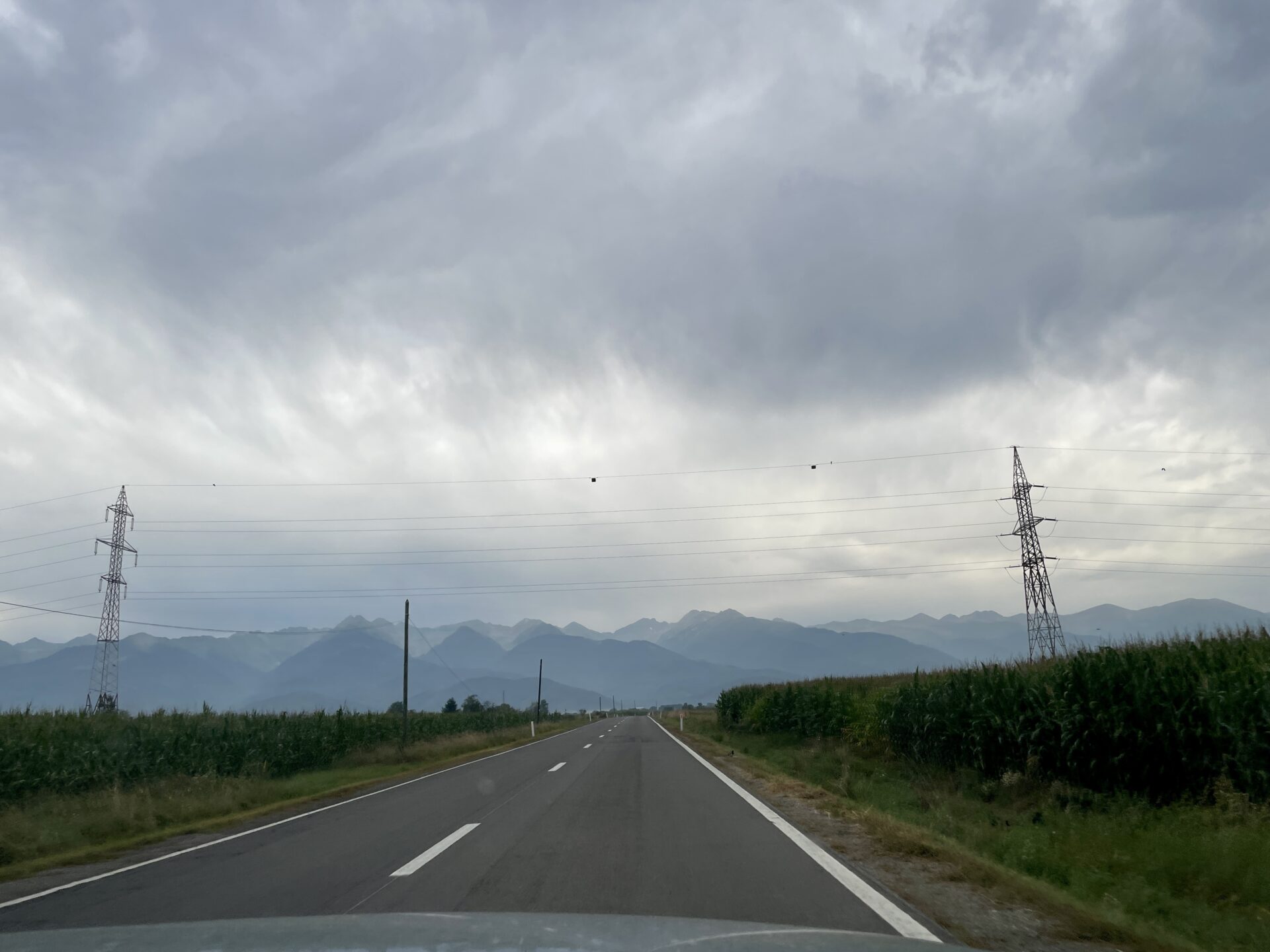
07:00 — the foothills
At the very start of the northern side (from Sibiu), there are several small hotels, guesthouses, and cafés. If you want to start the climb fresh in the morning, staying here is a good option. We instead had a coffee at the base, took our first photos, and started climbing.
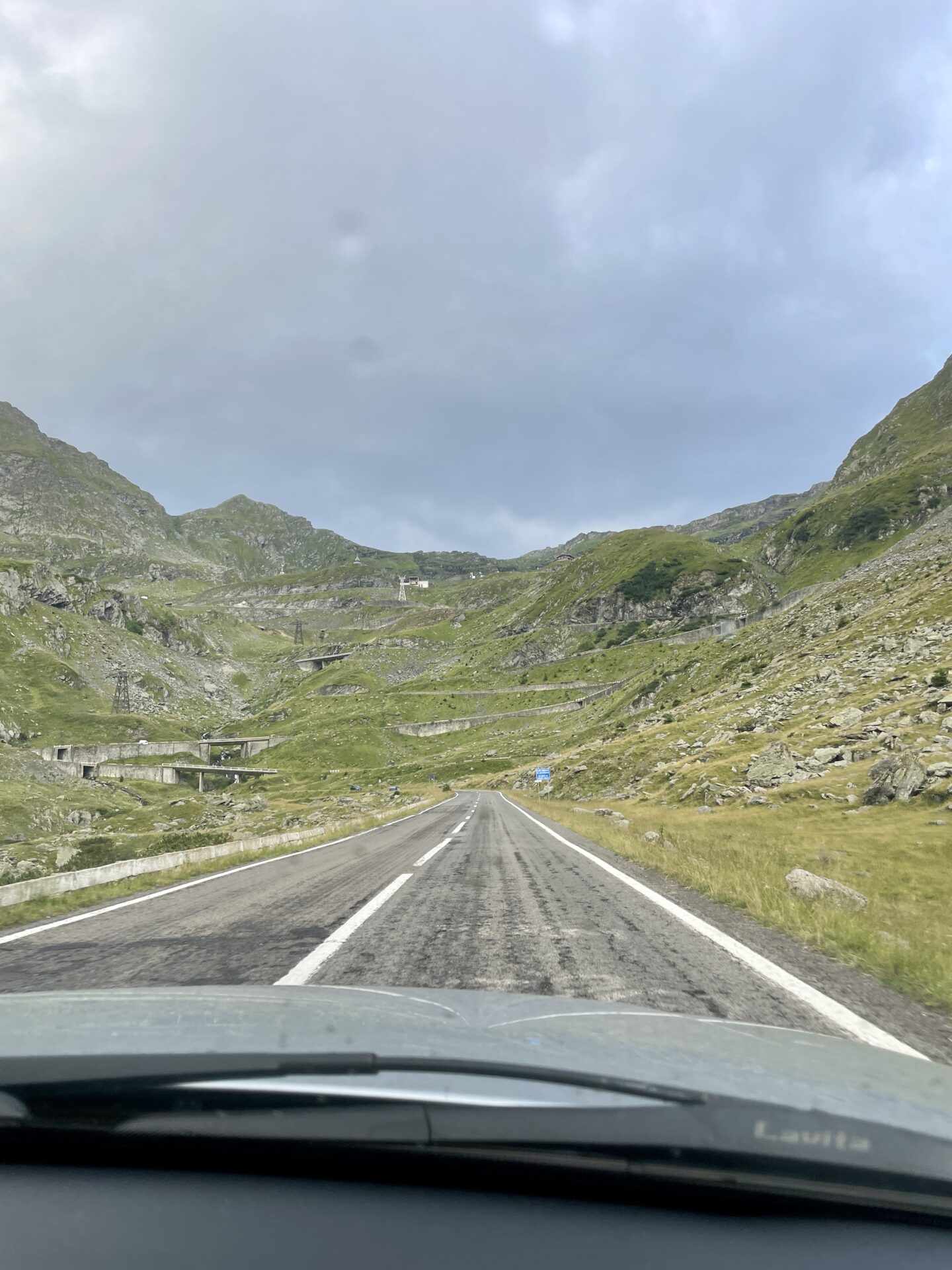
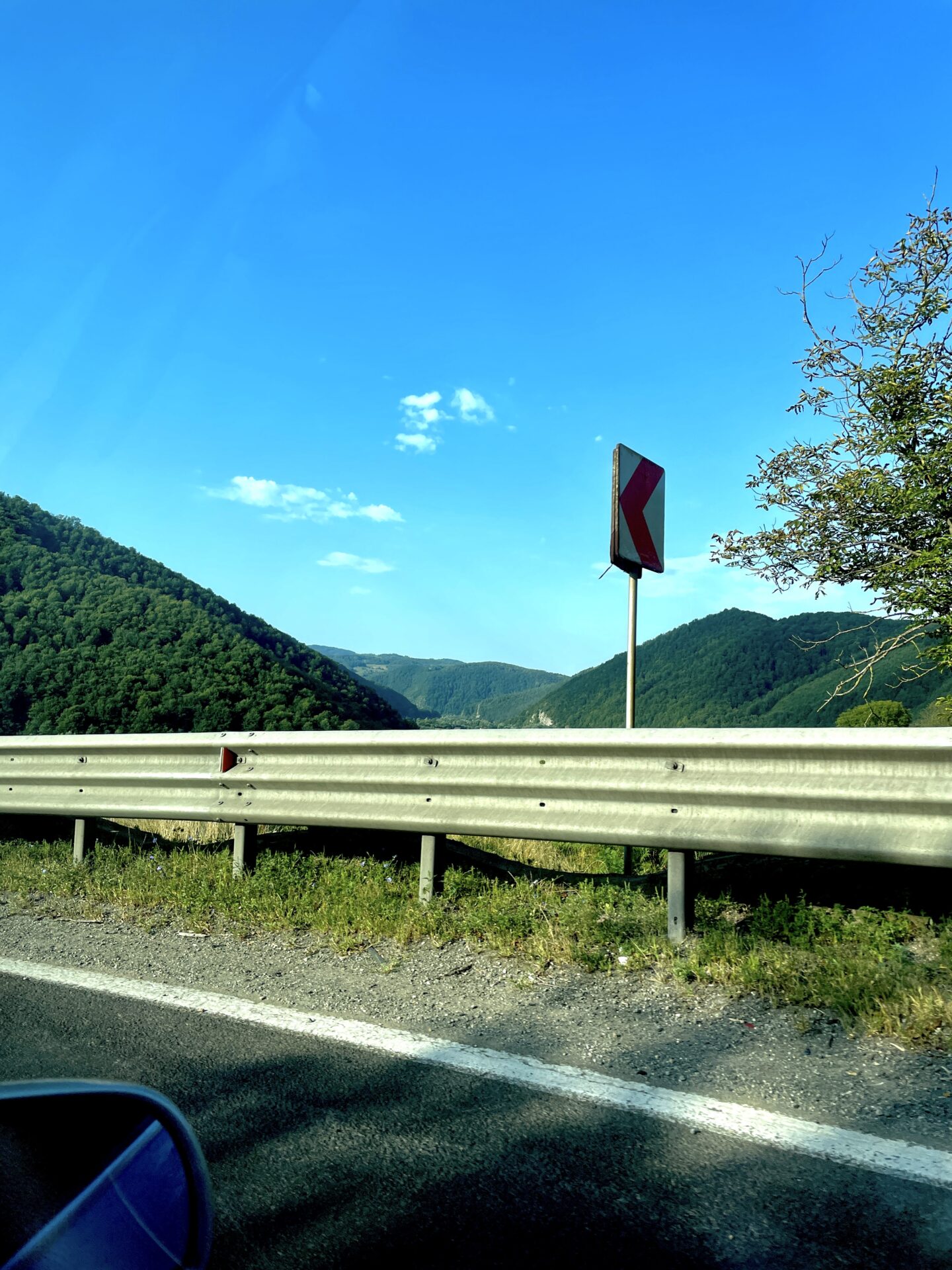
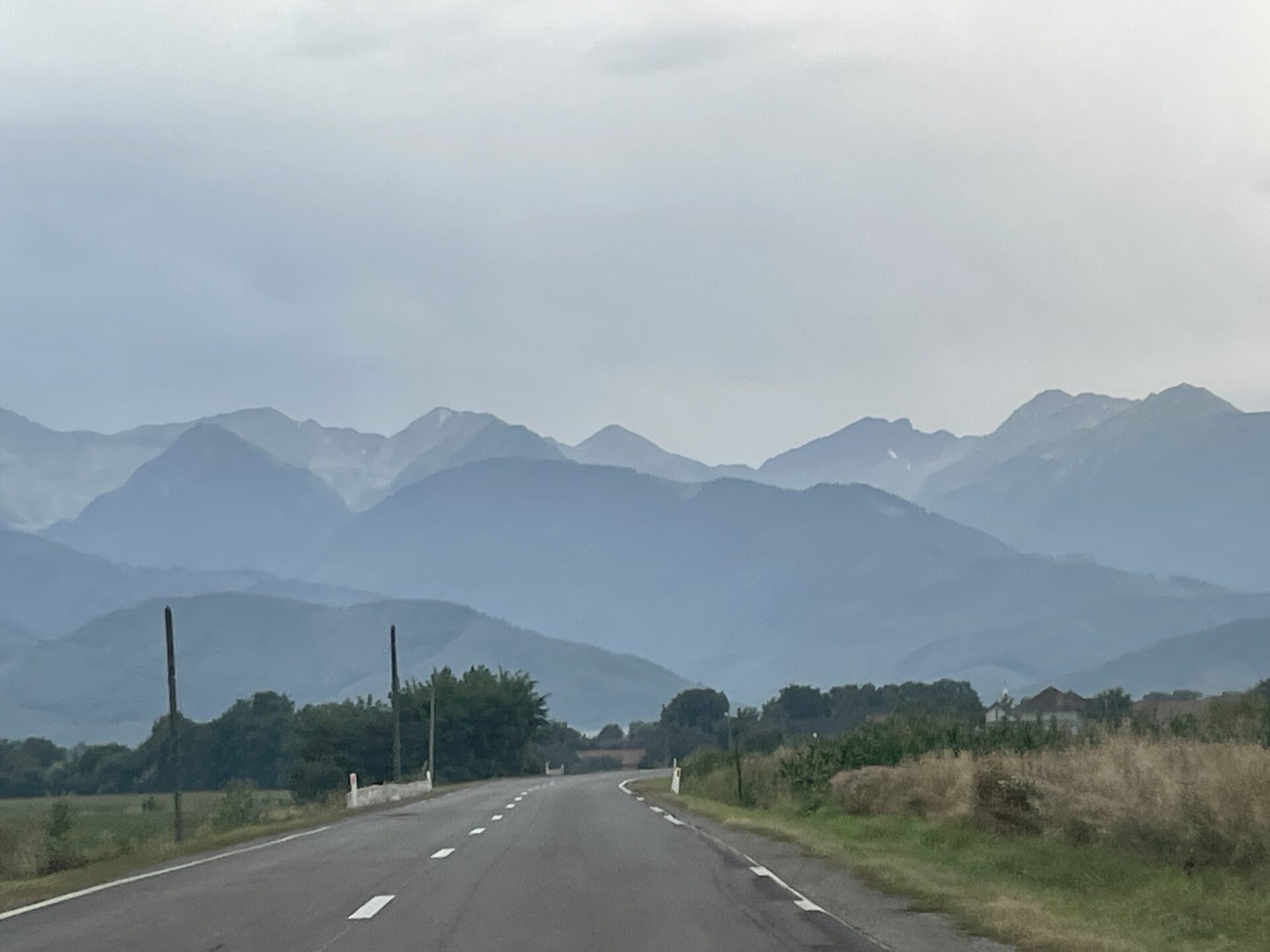
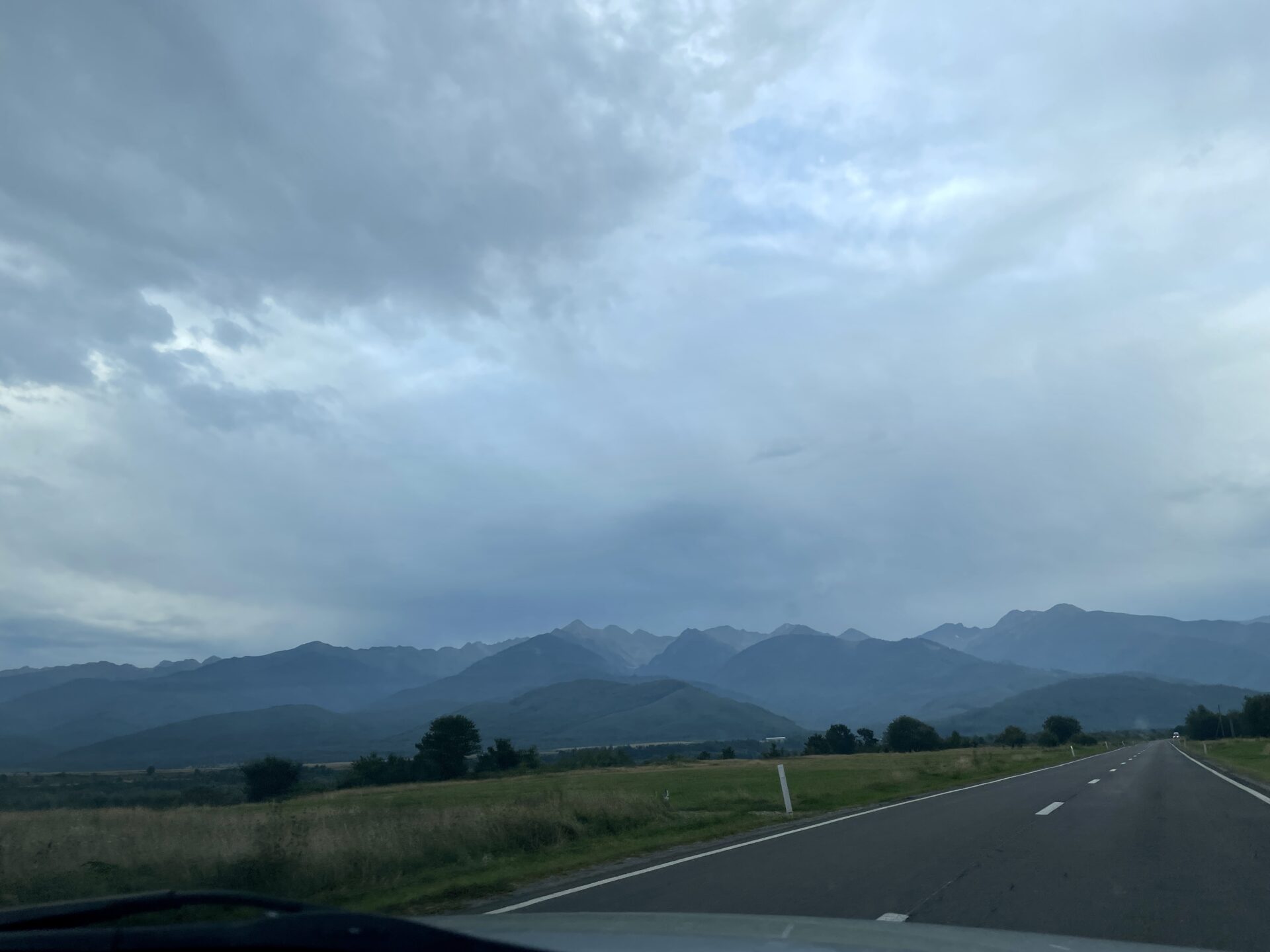
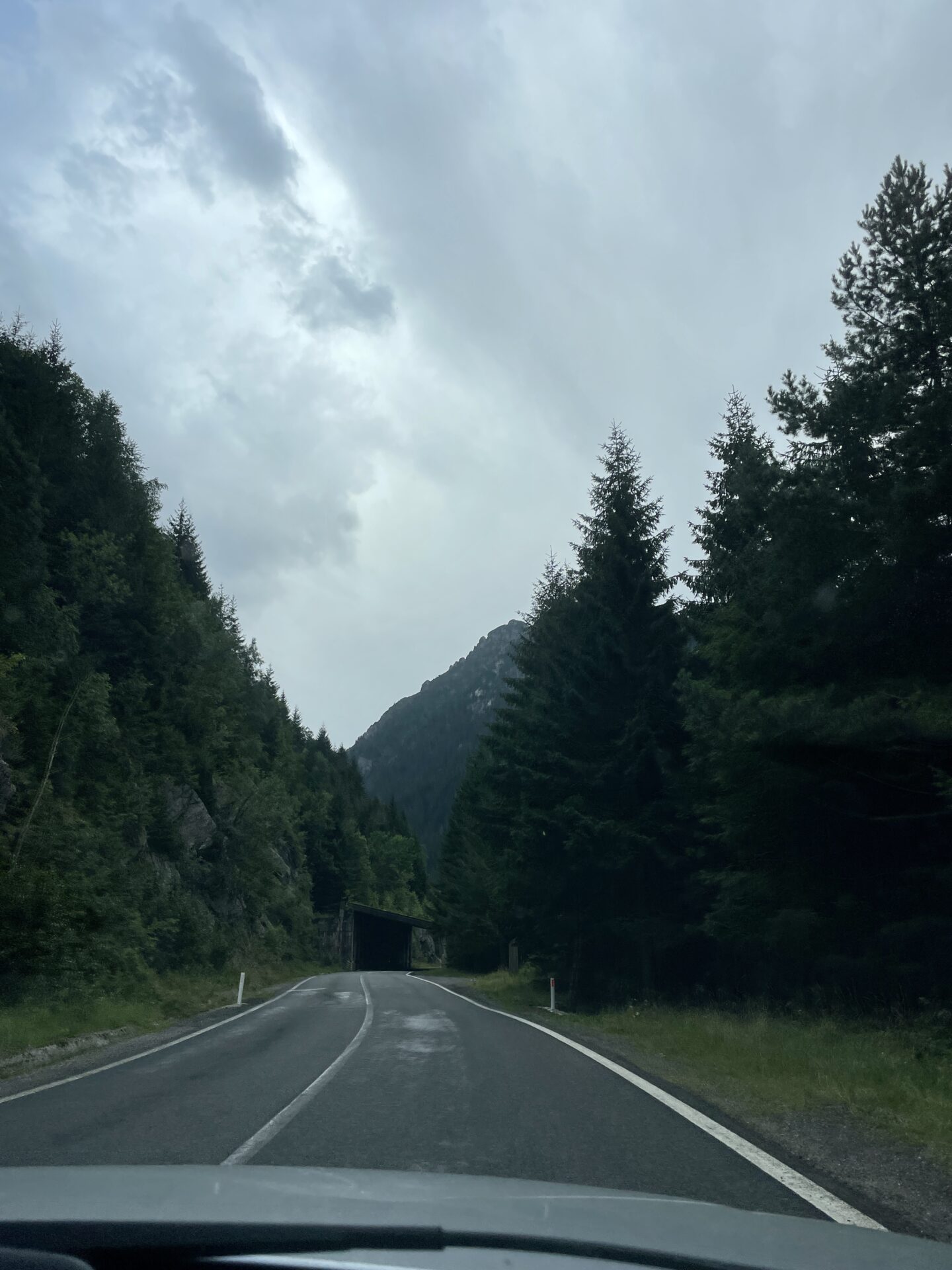
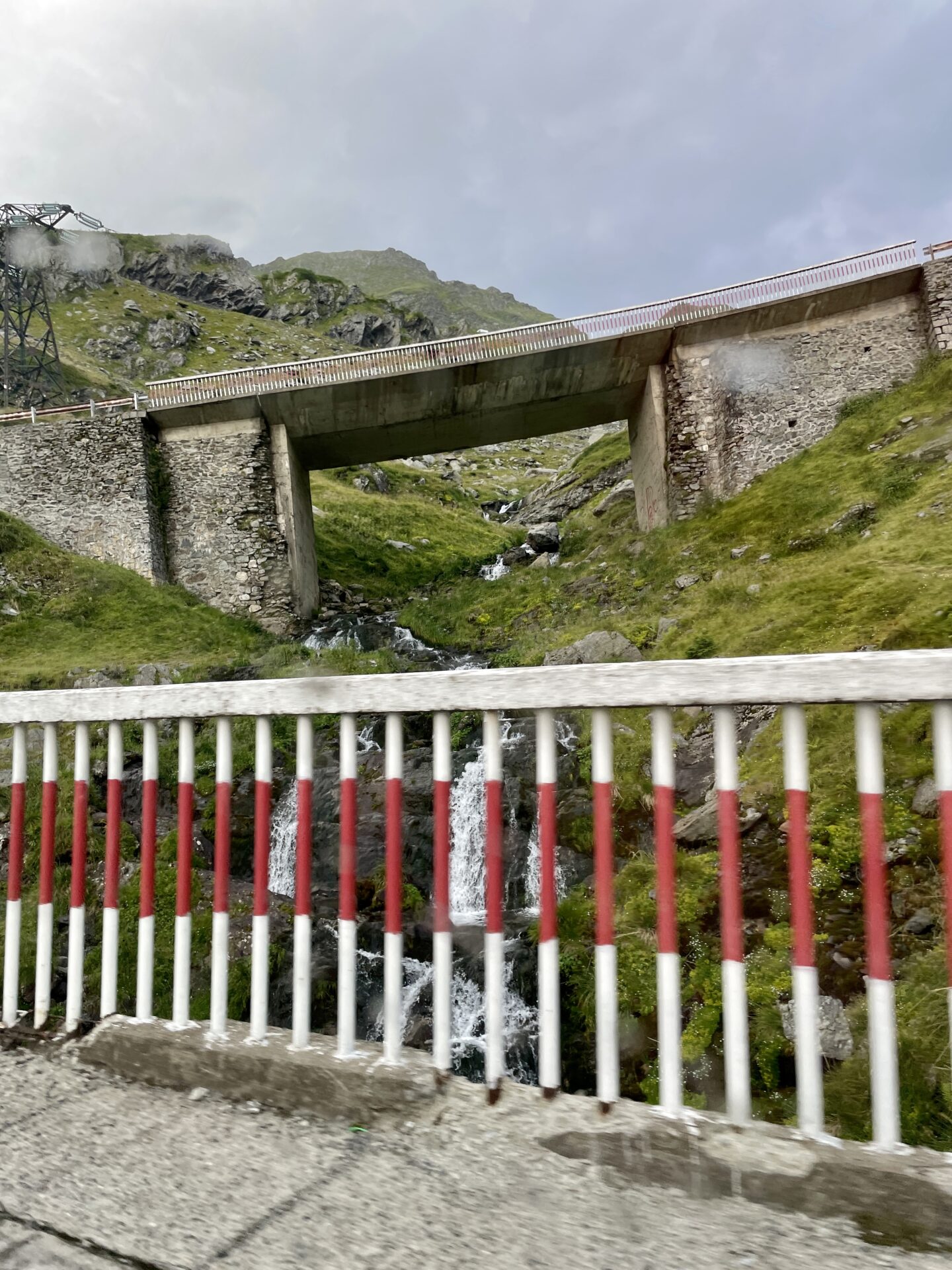
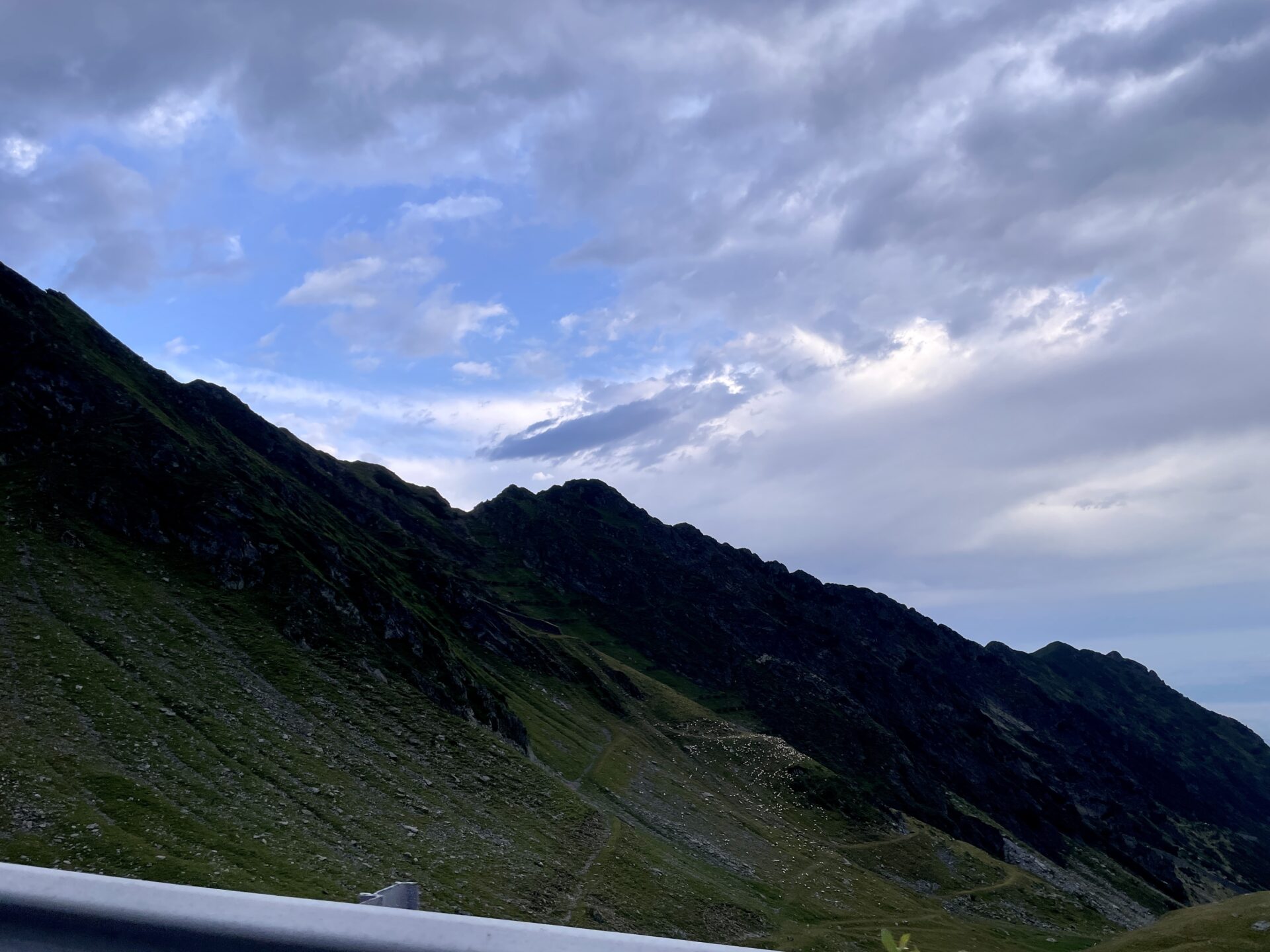
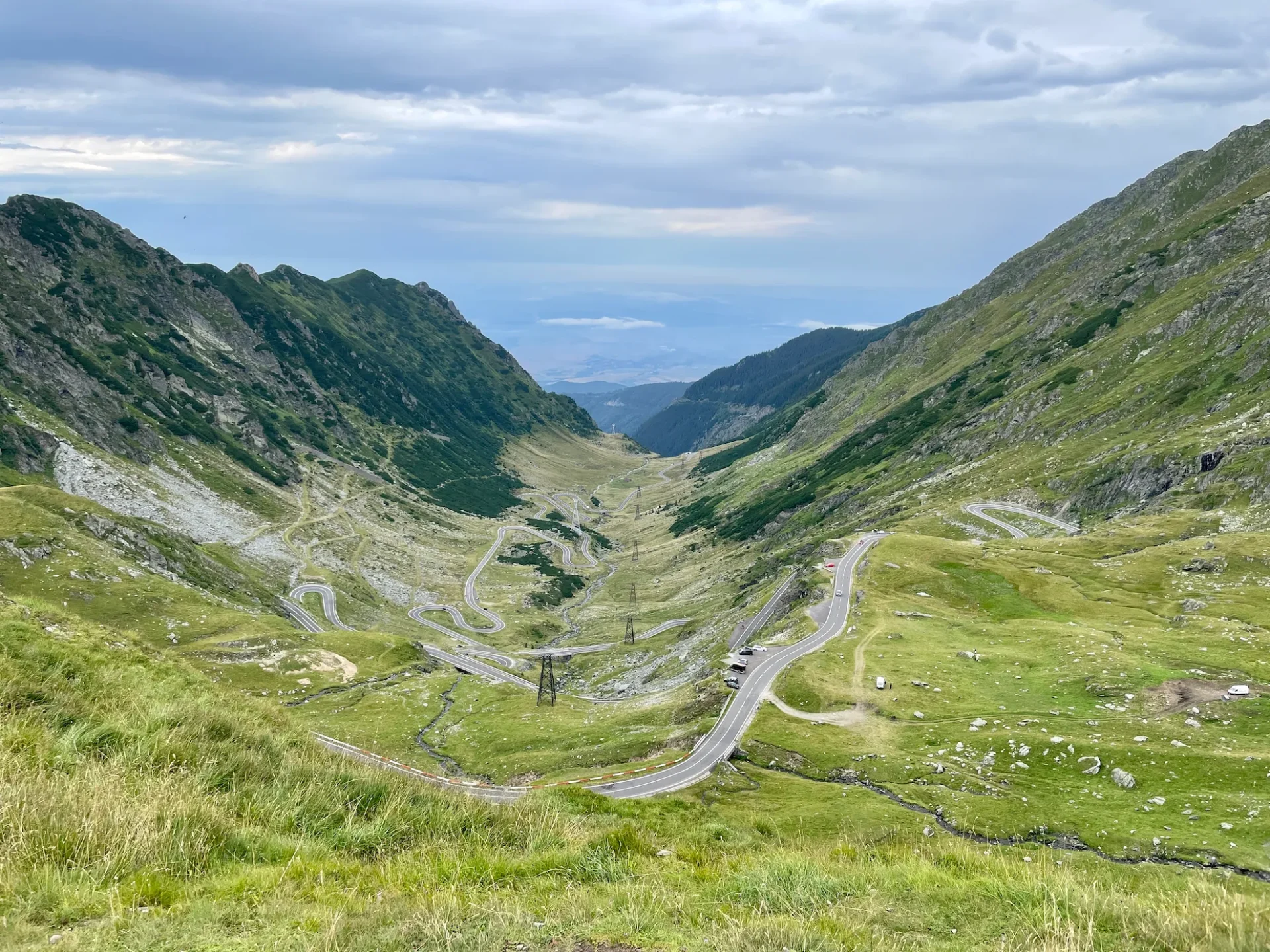
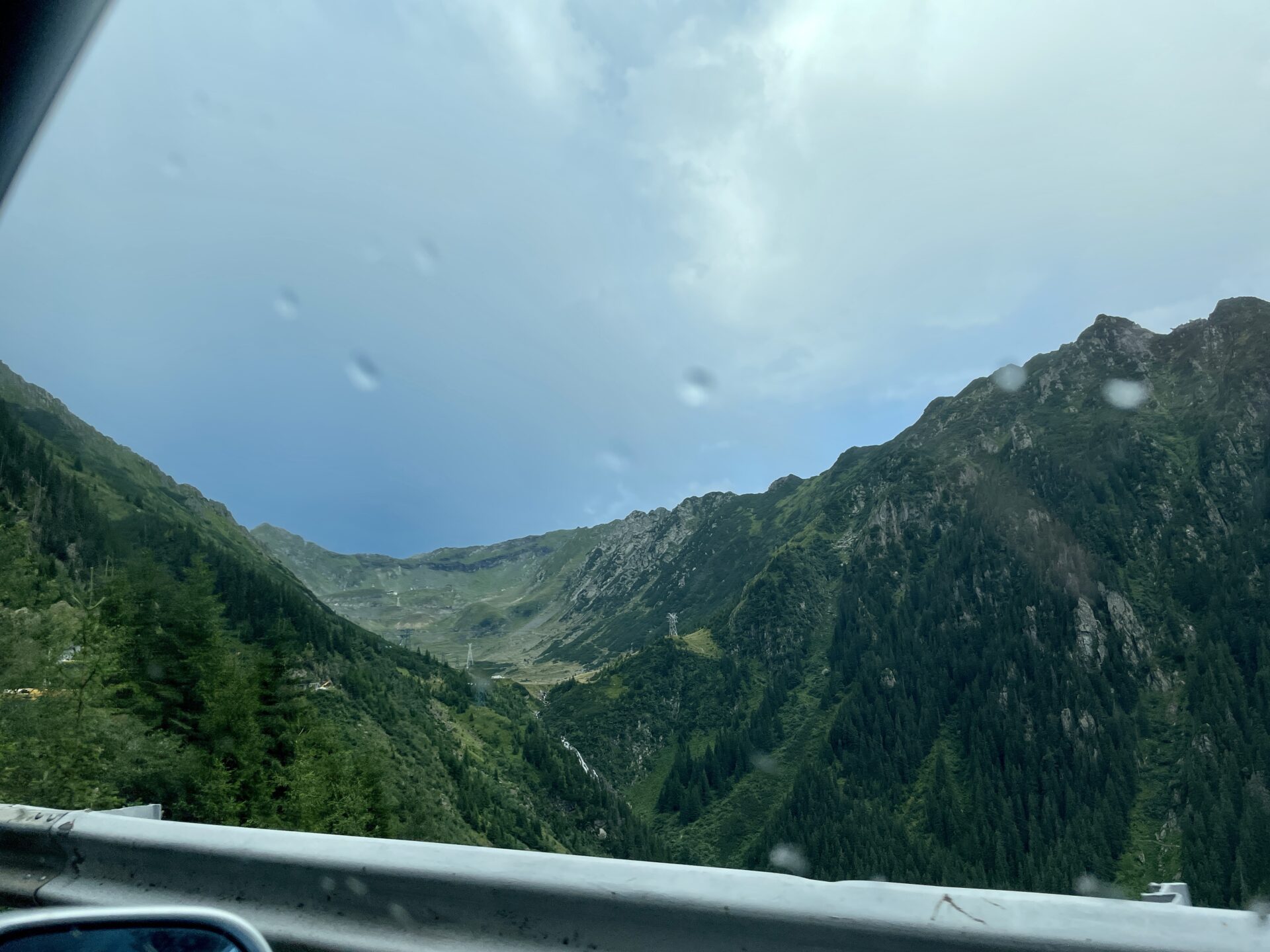
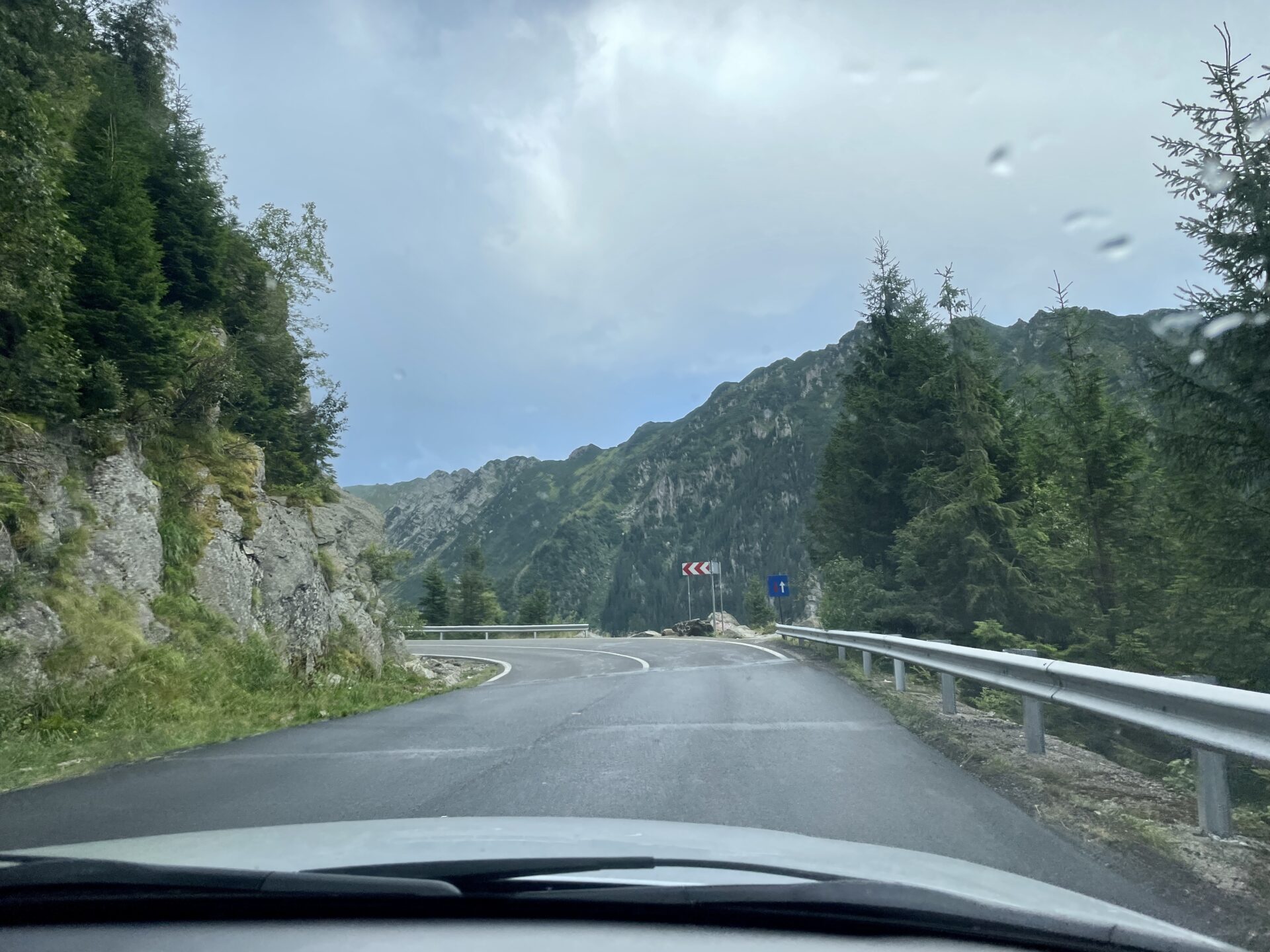
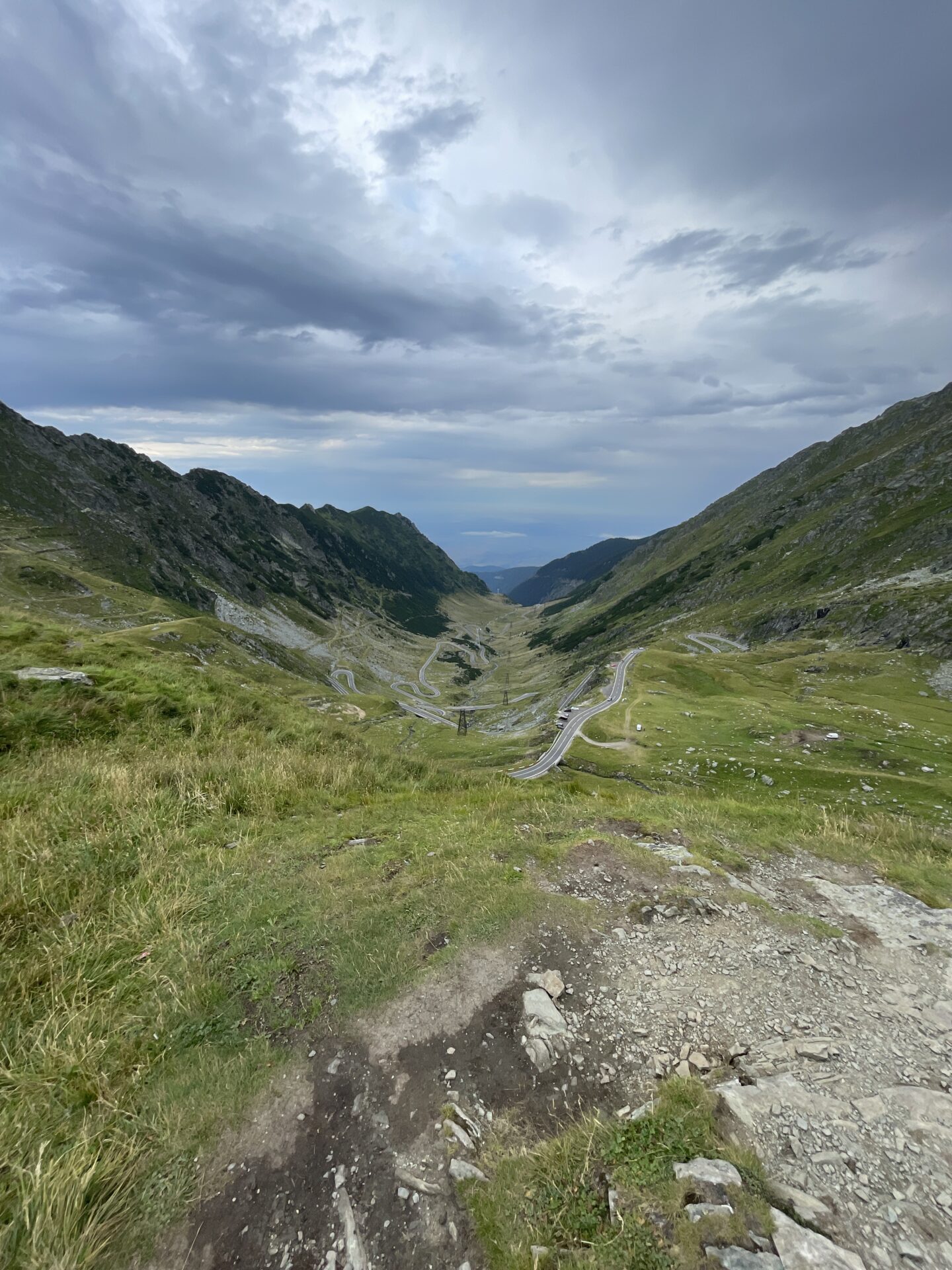
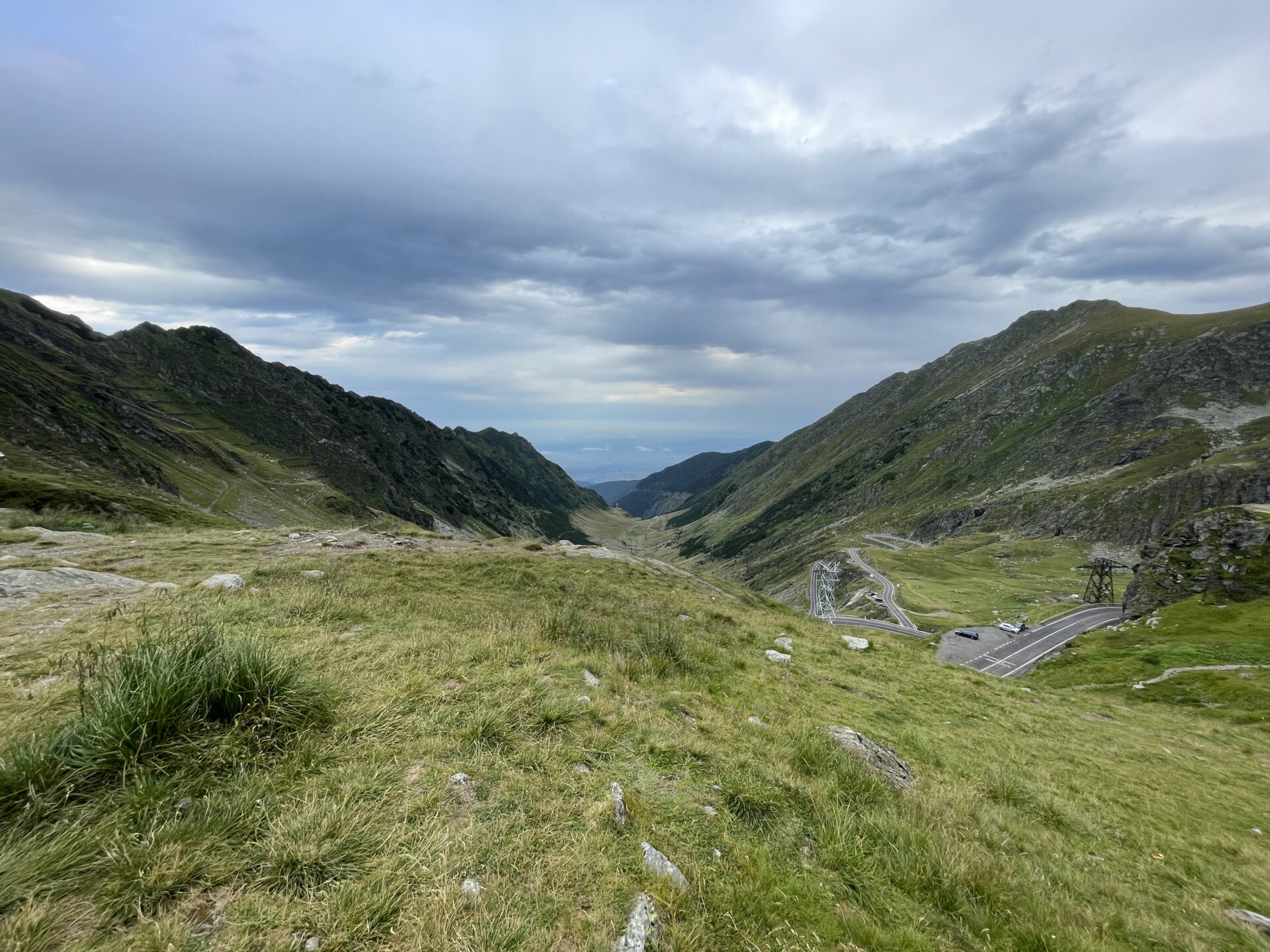
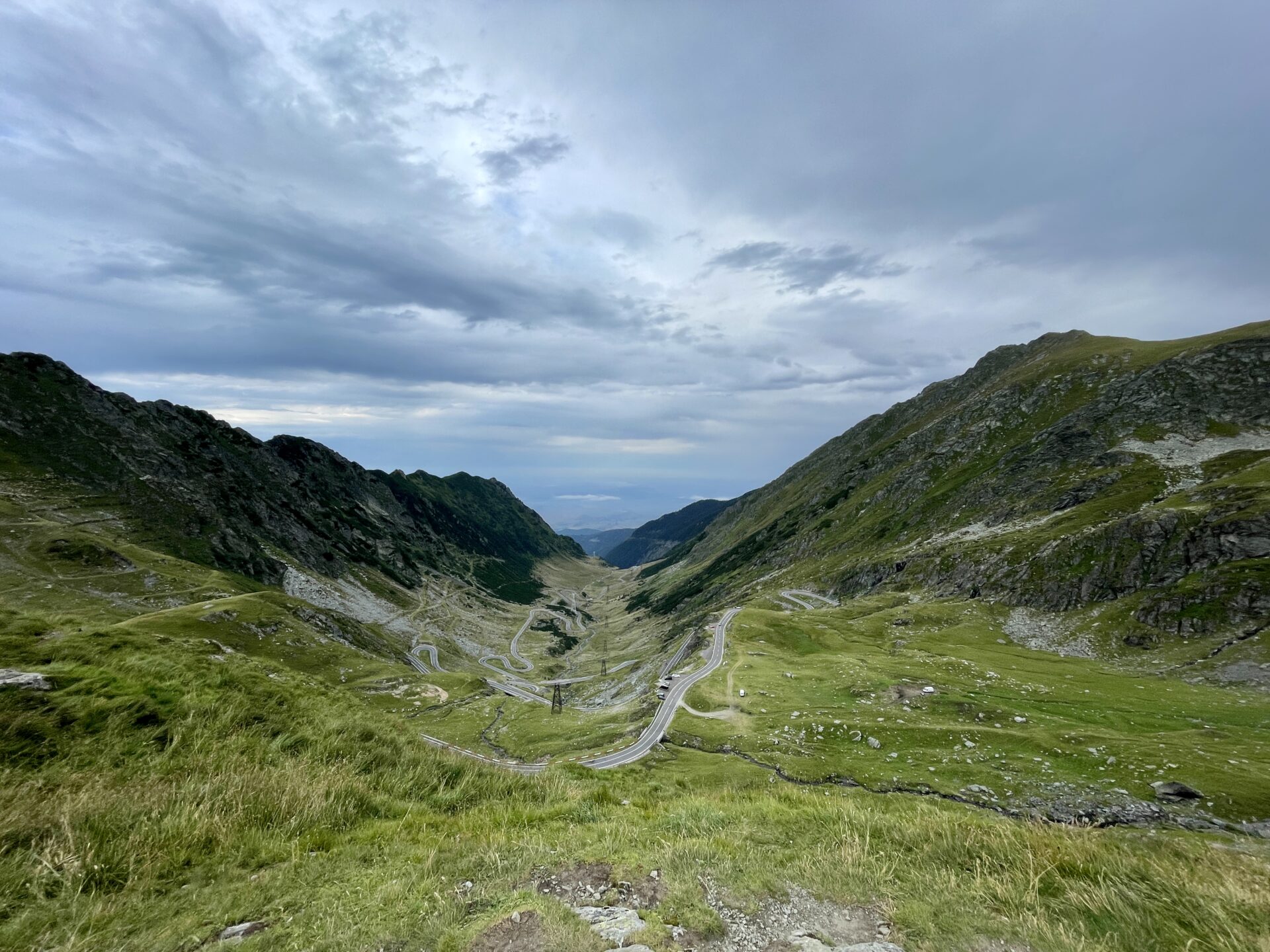
The northern side: switchbacks that make sense only when you see them
Long before this trip, I had read about the speed limits on the Transfăgărășan — as low as 20 km/h in some sections — and I could not understand the logic. Mountain road, sure. Switchbacks, sure. But why that slow?
I understood on the third turn.
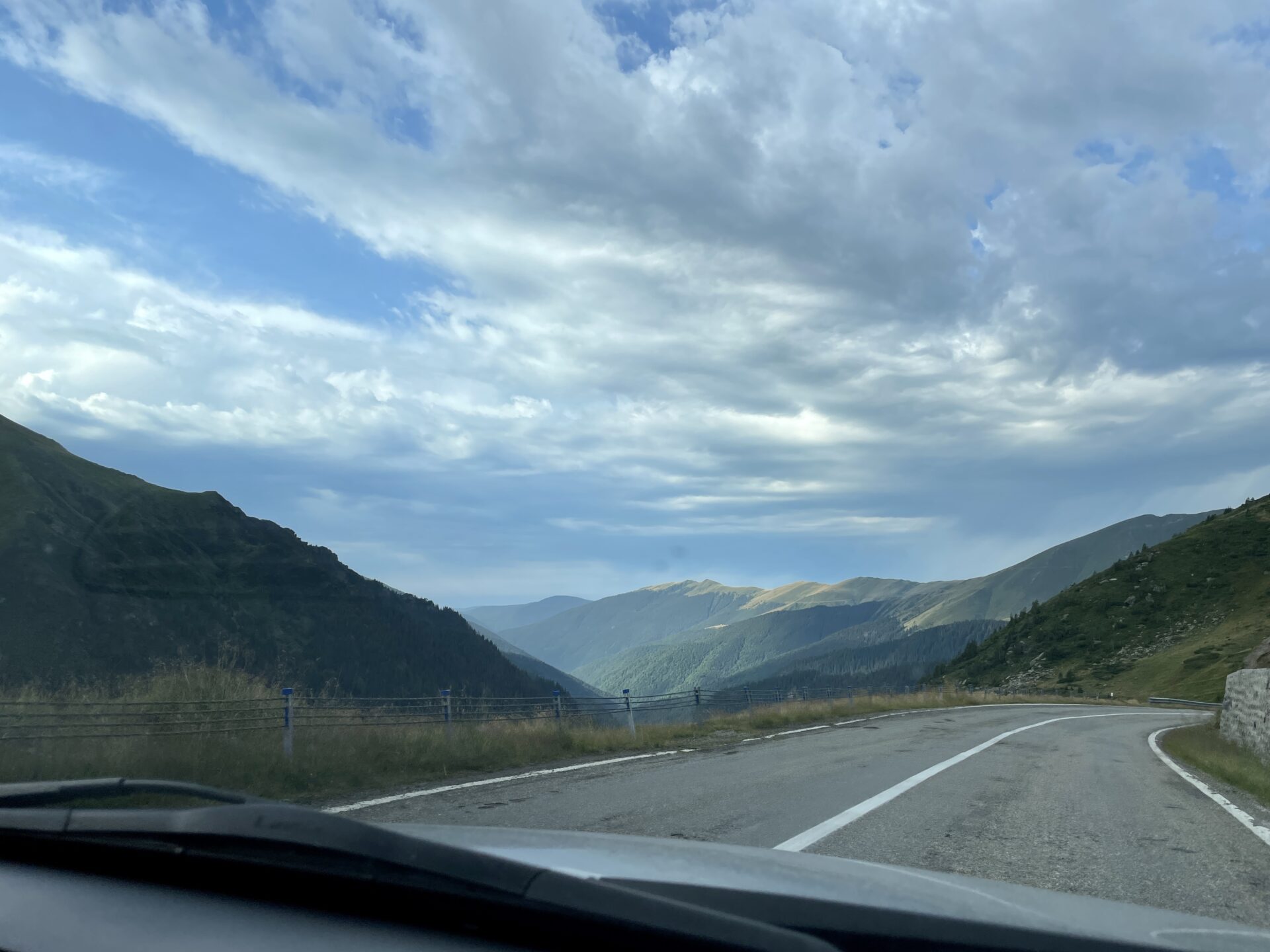
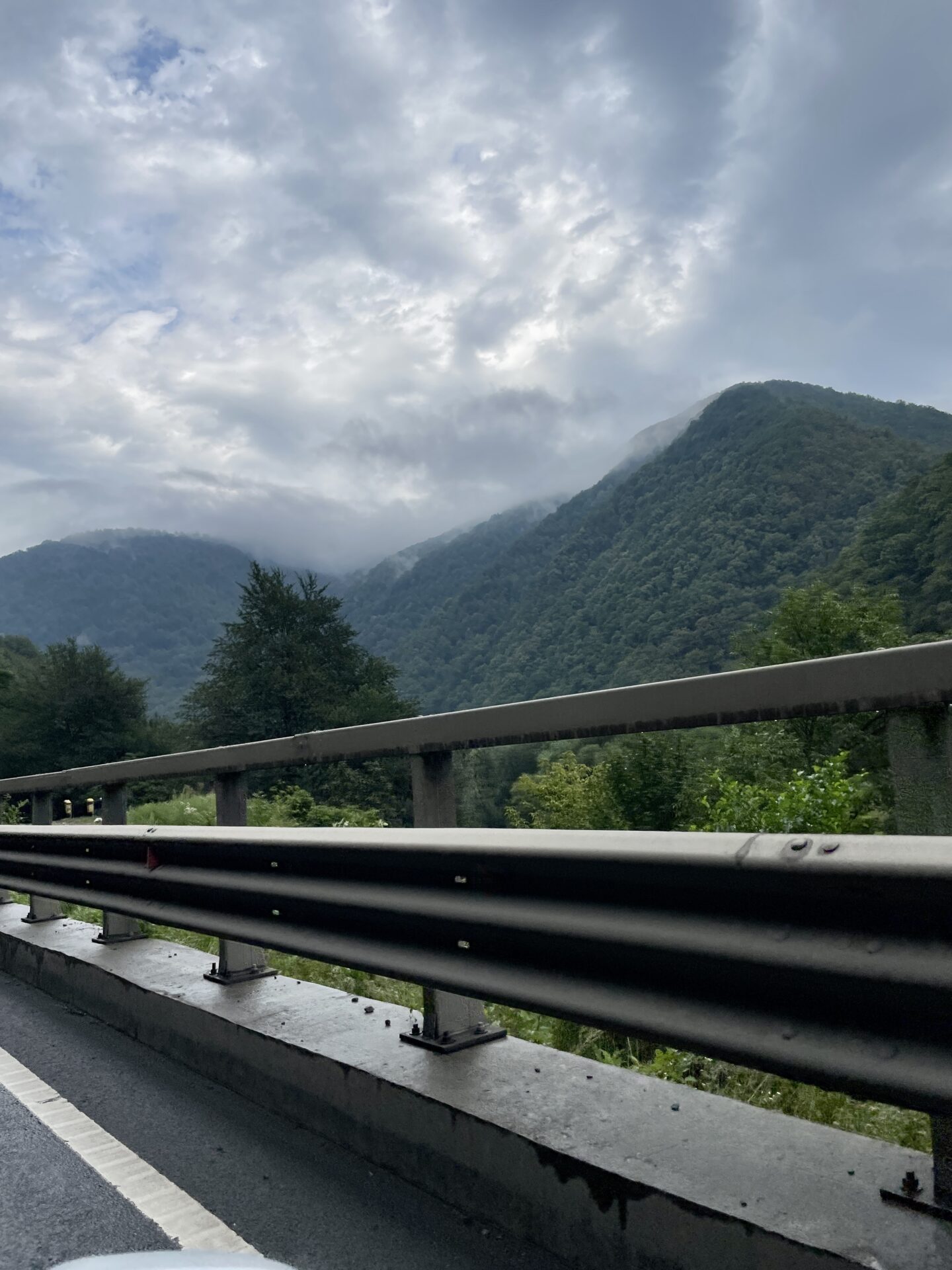
The limits are for safety, that much becomes obvious the moment you see the first real curve up close. But the bigger discovery was a different one: you just do not want to drive faster here. The views are so good that you slow down on your own, simply because you want to look. This is not a road you “get through” — it is a road you drive slowly because slowly is the right way to drive it.
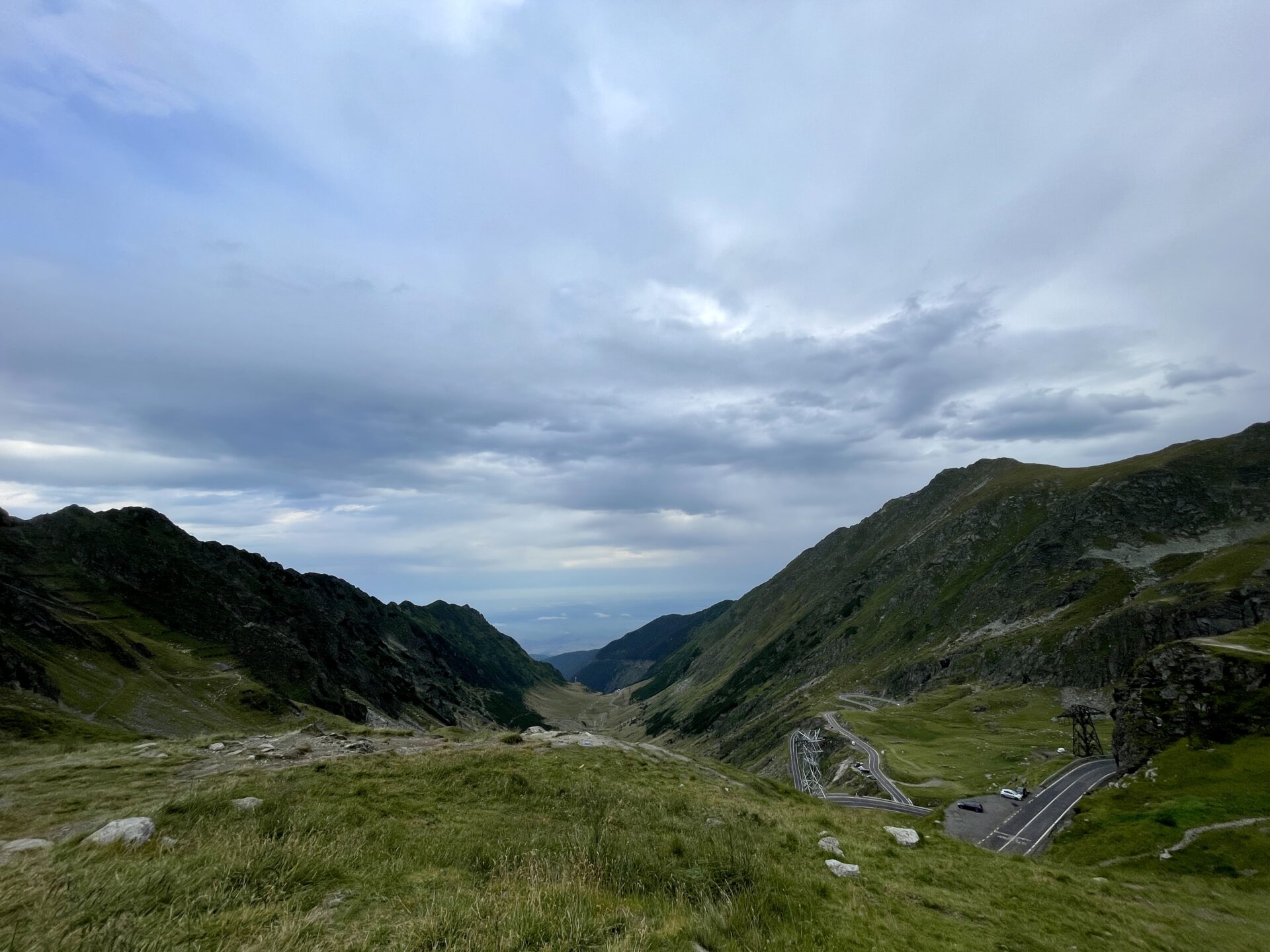
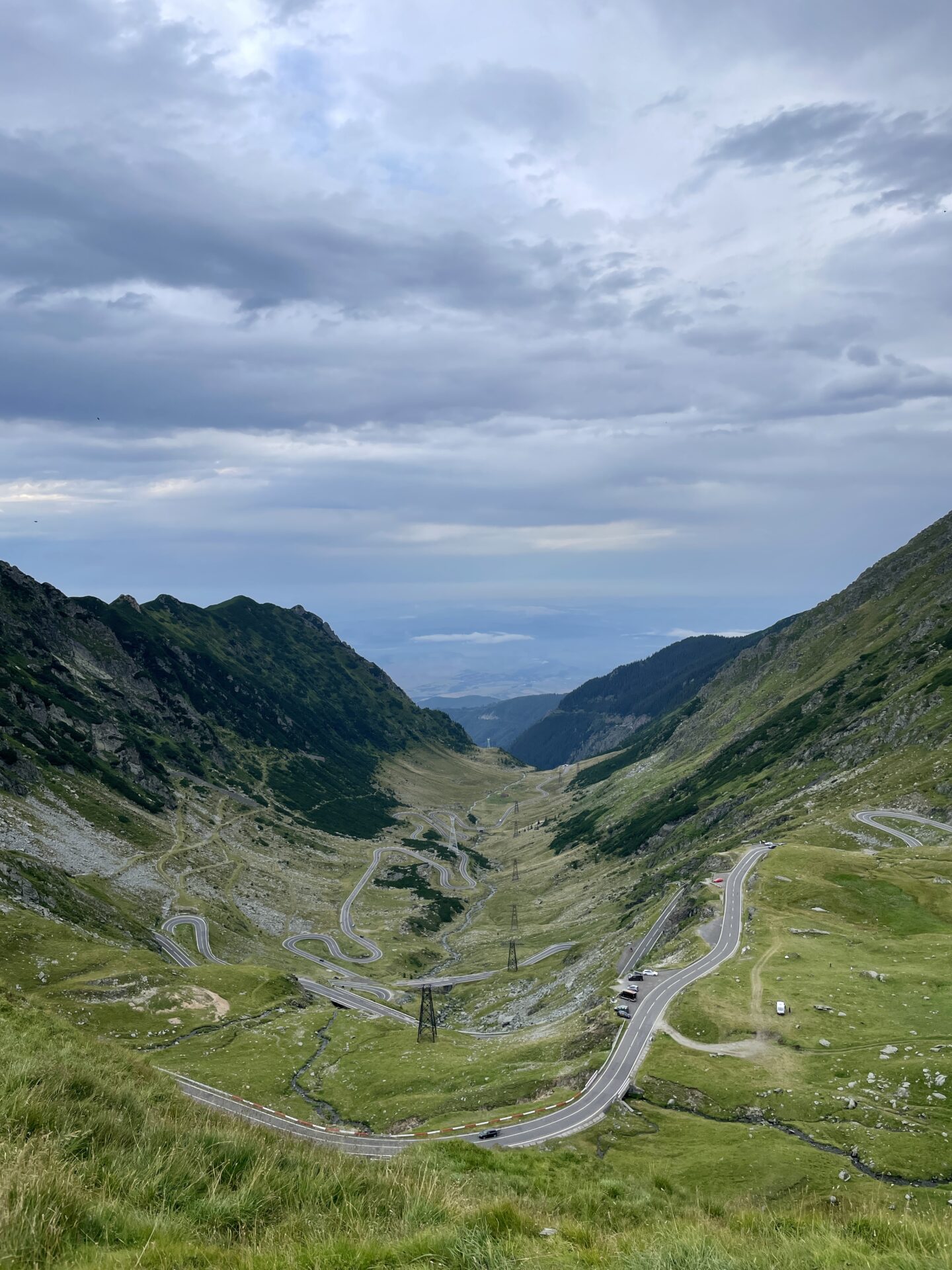
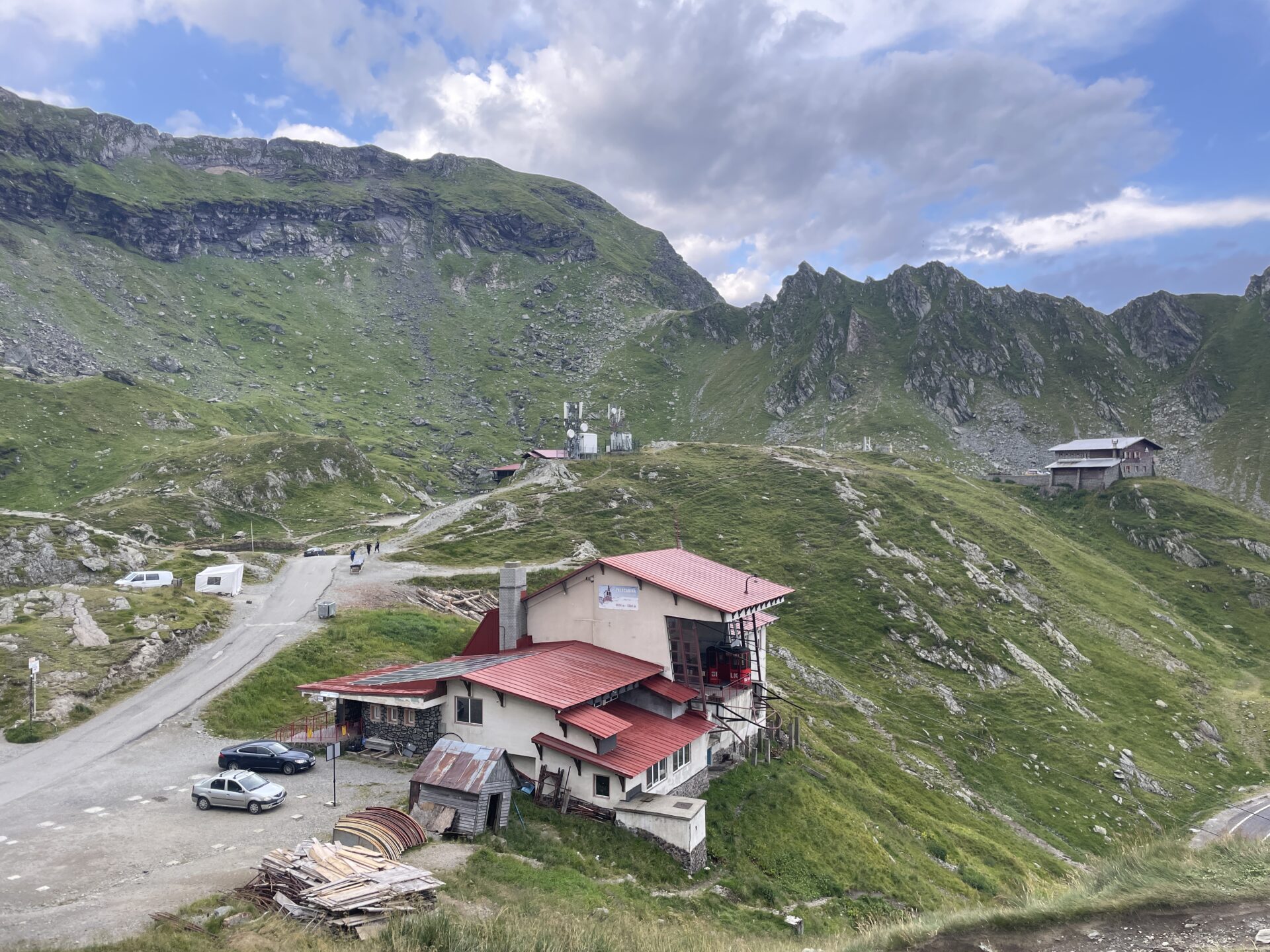
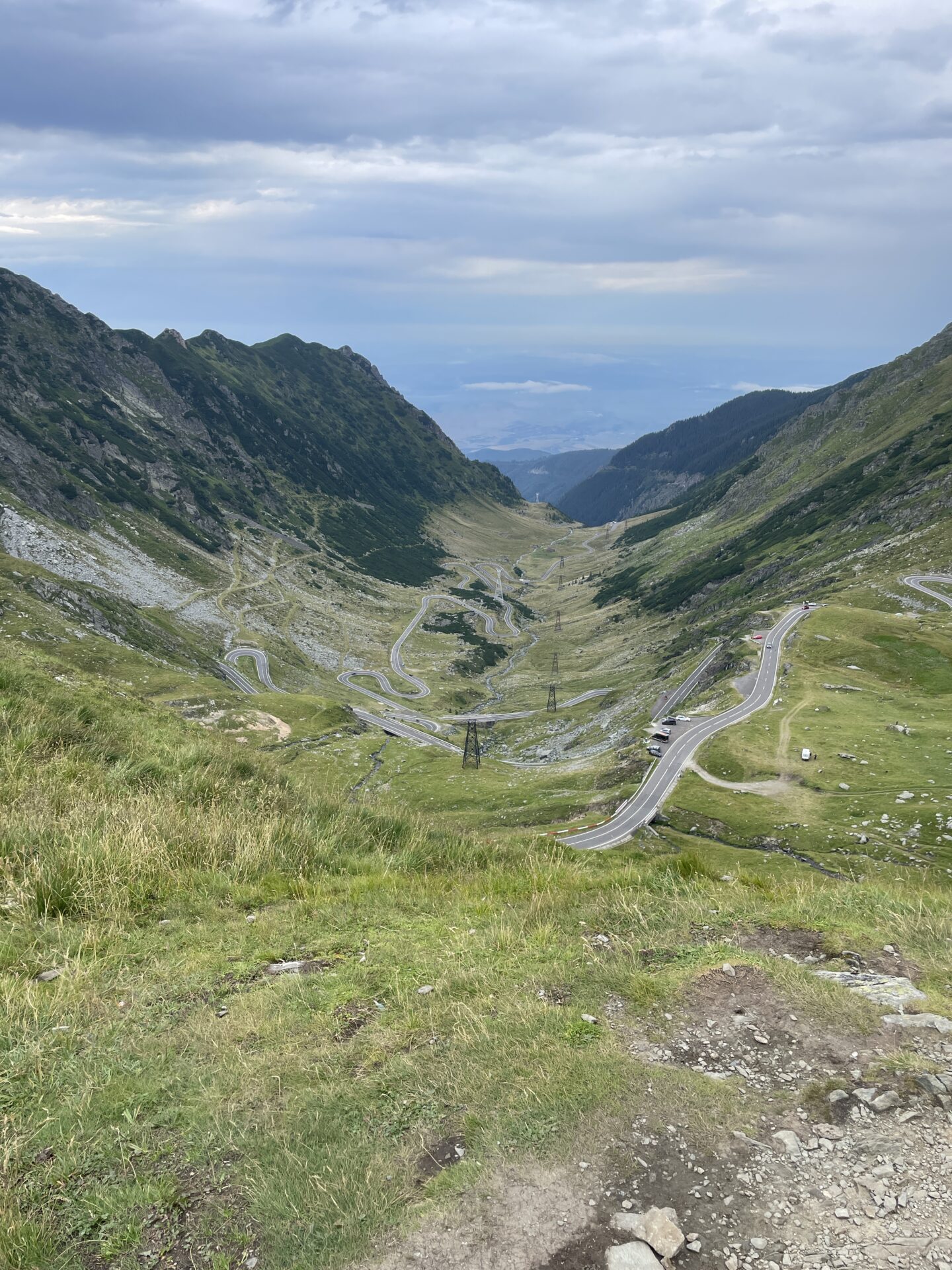
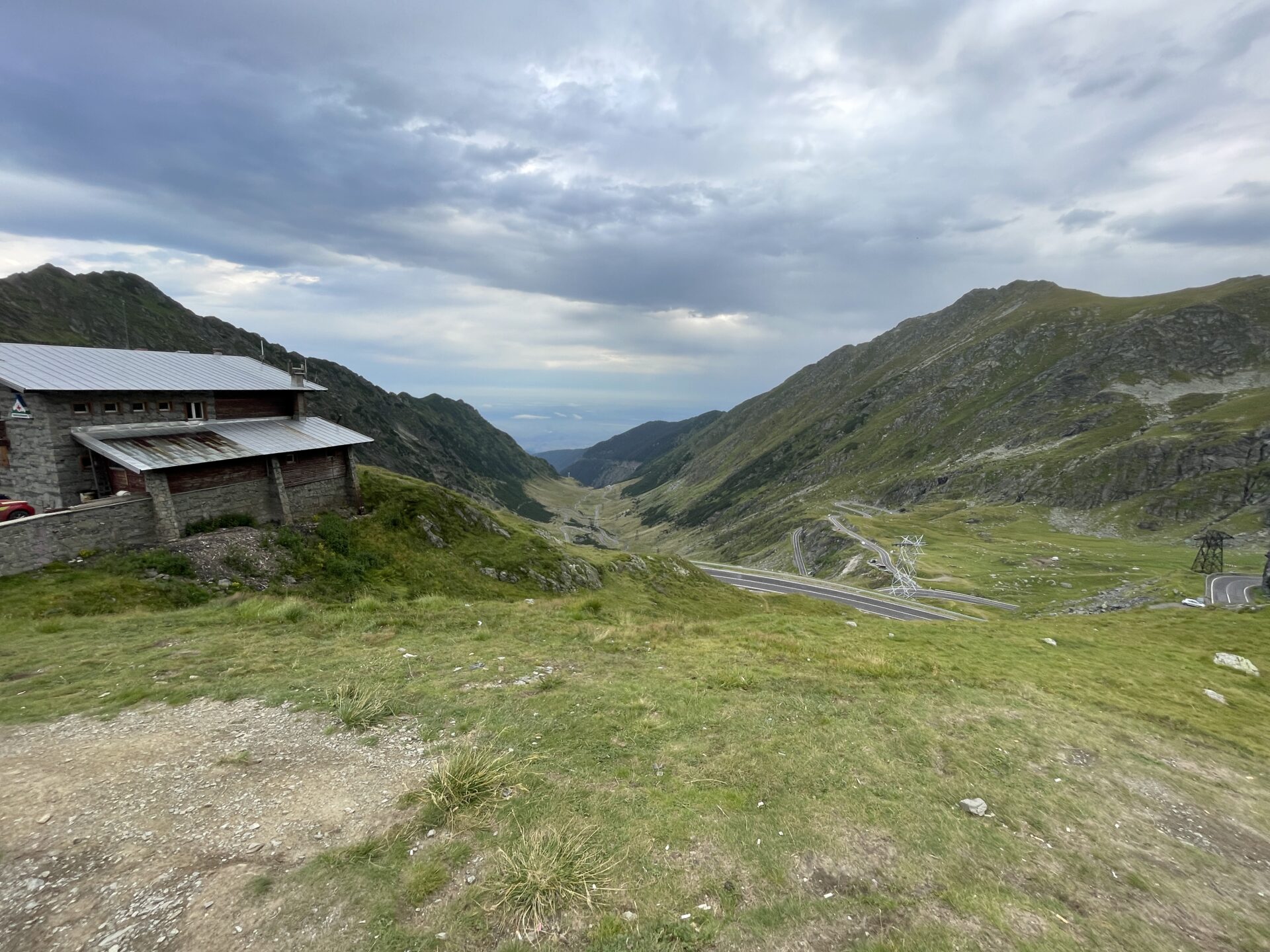
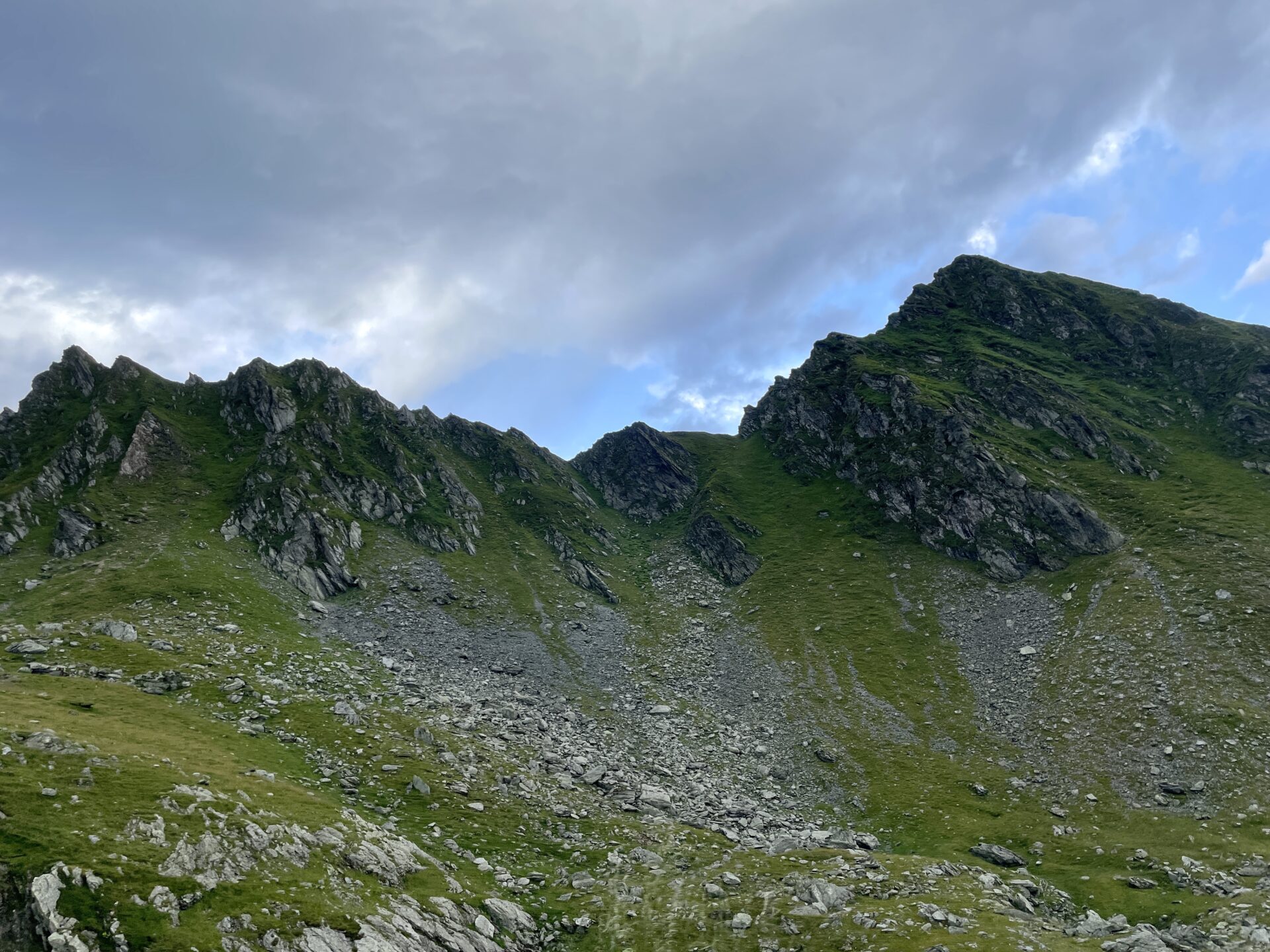
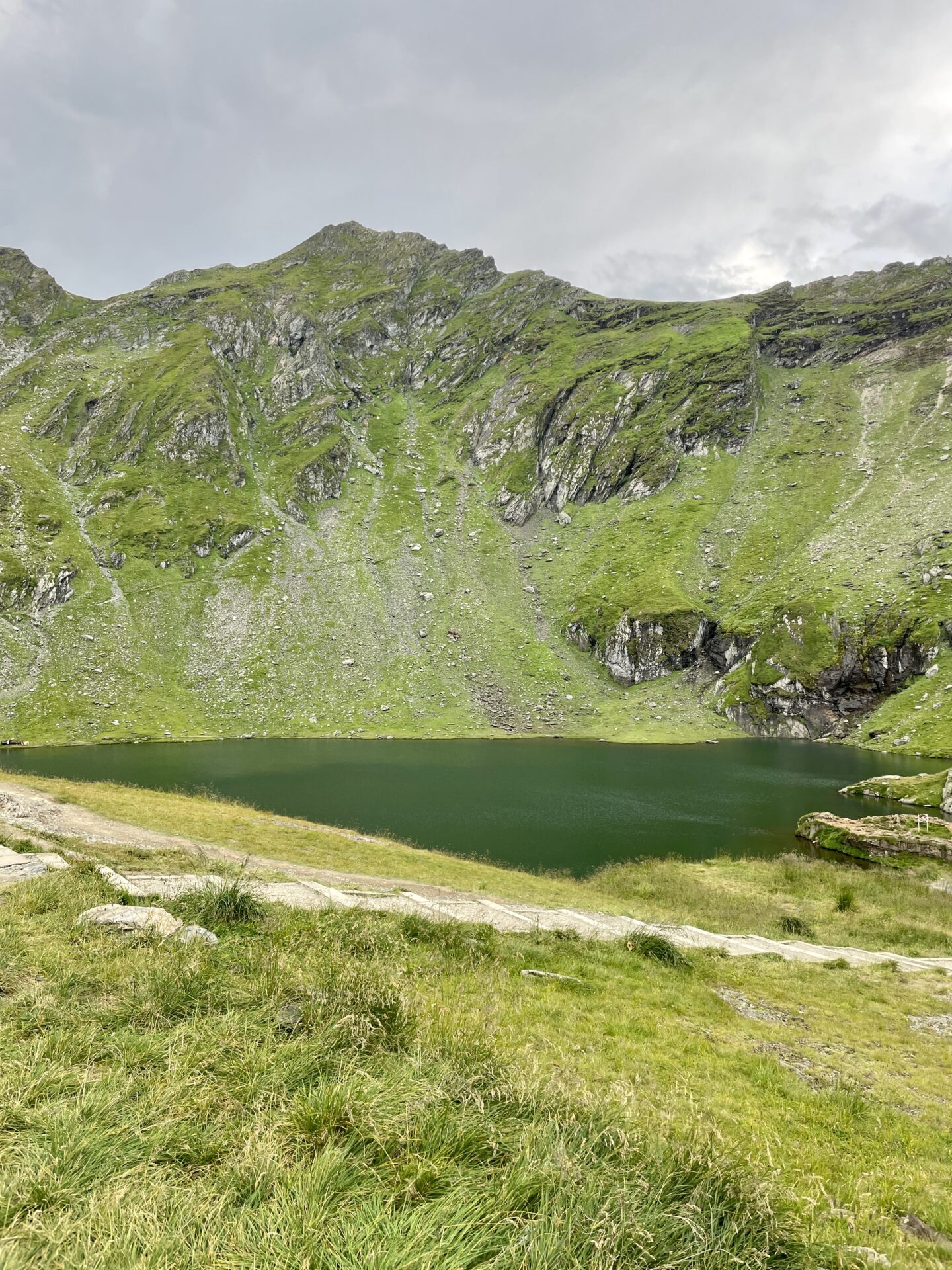
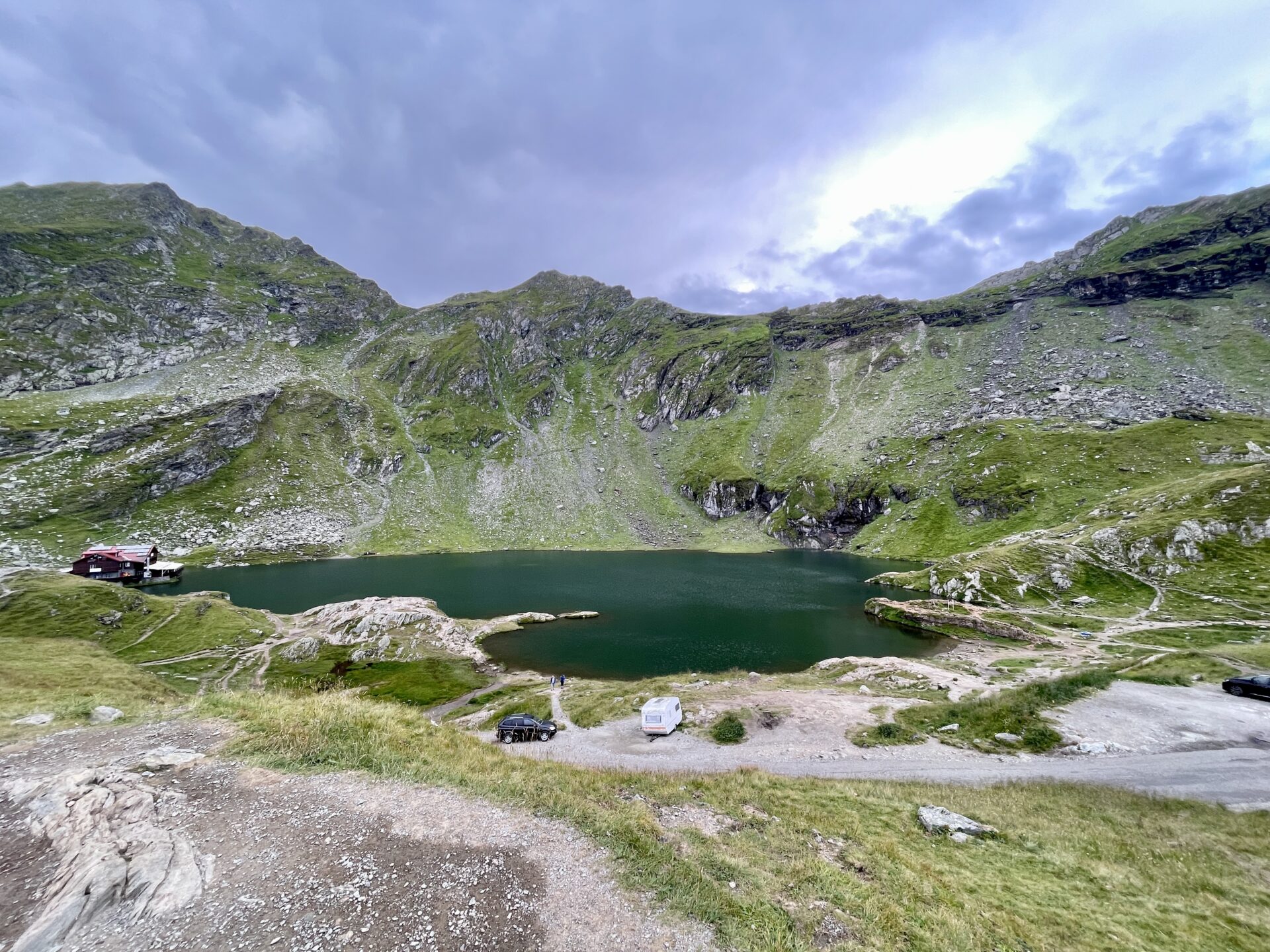
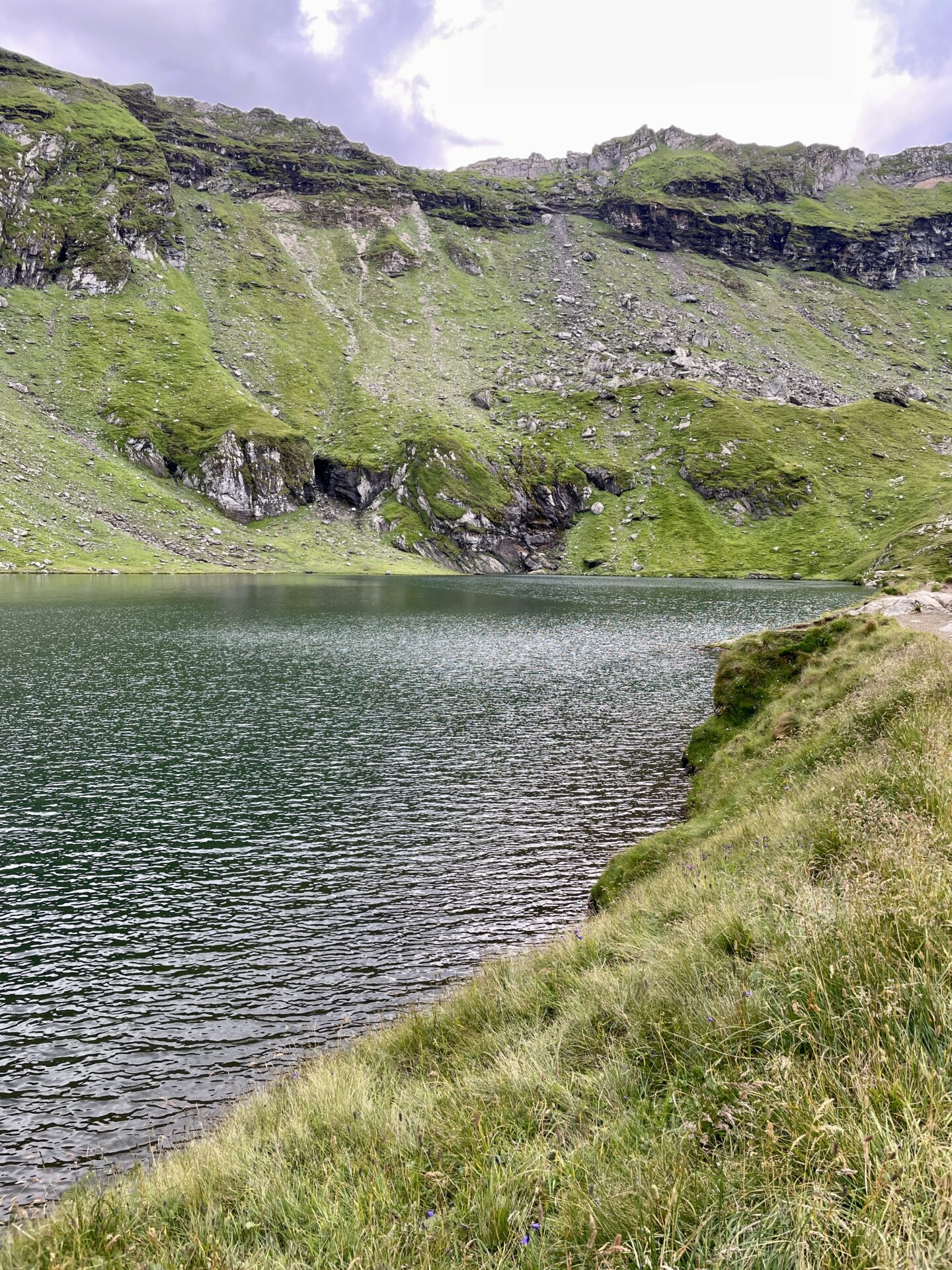
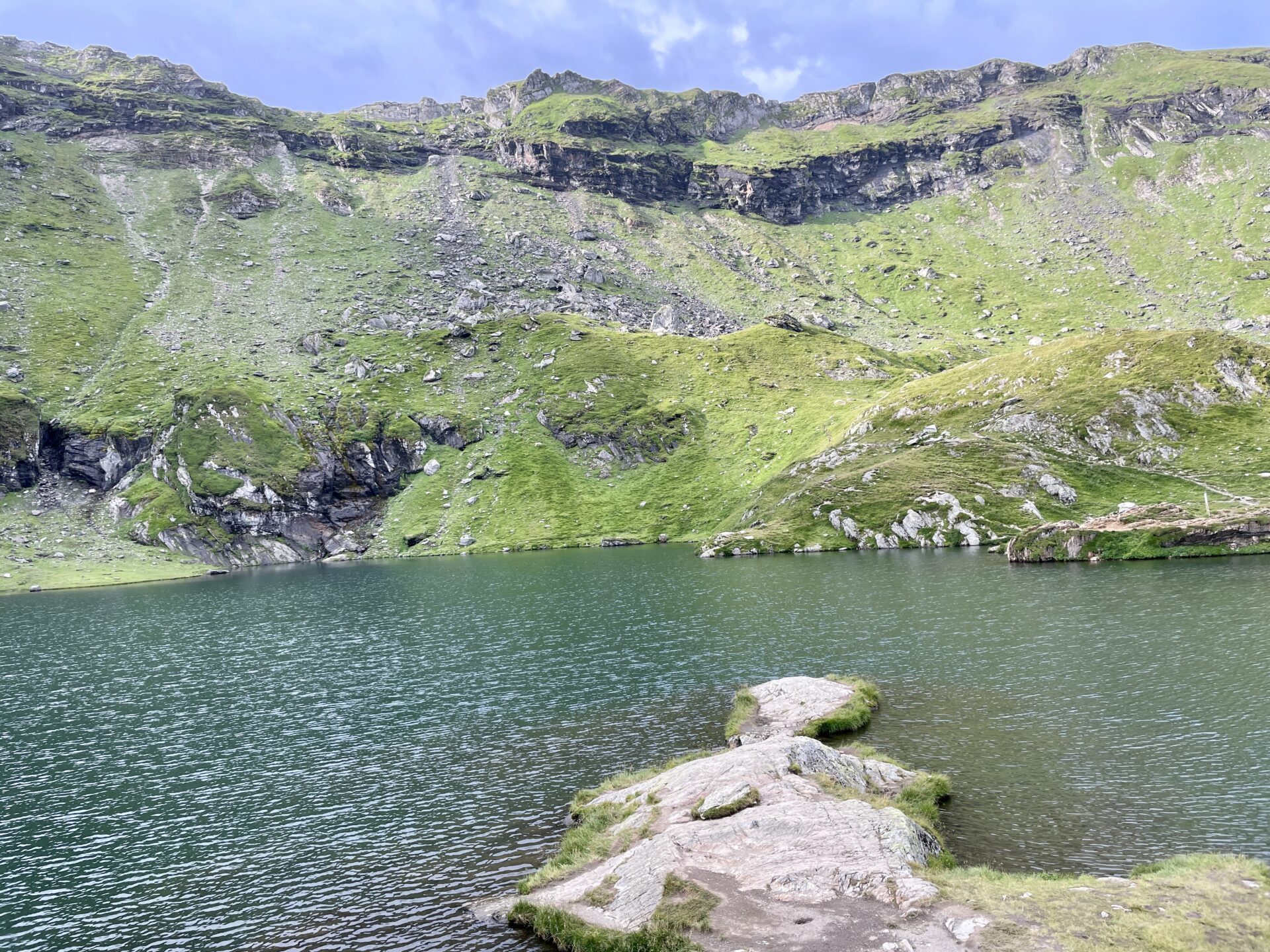
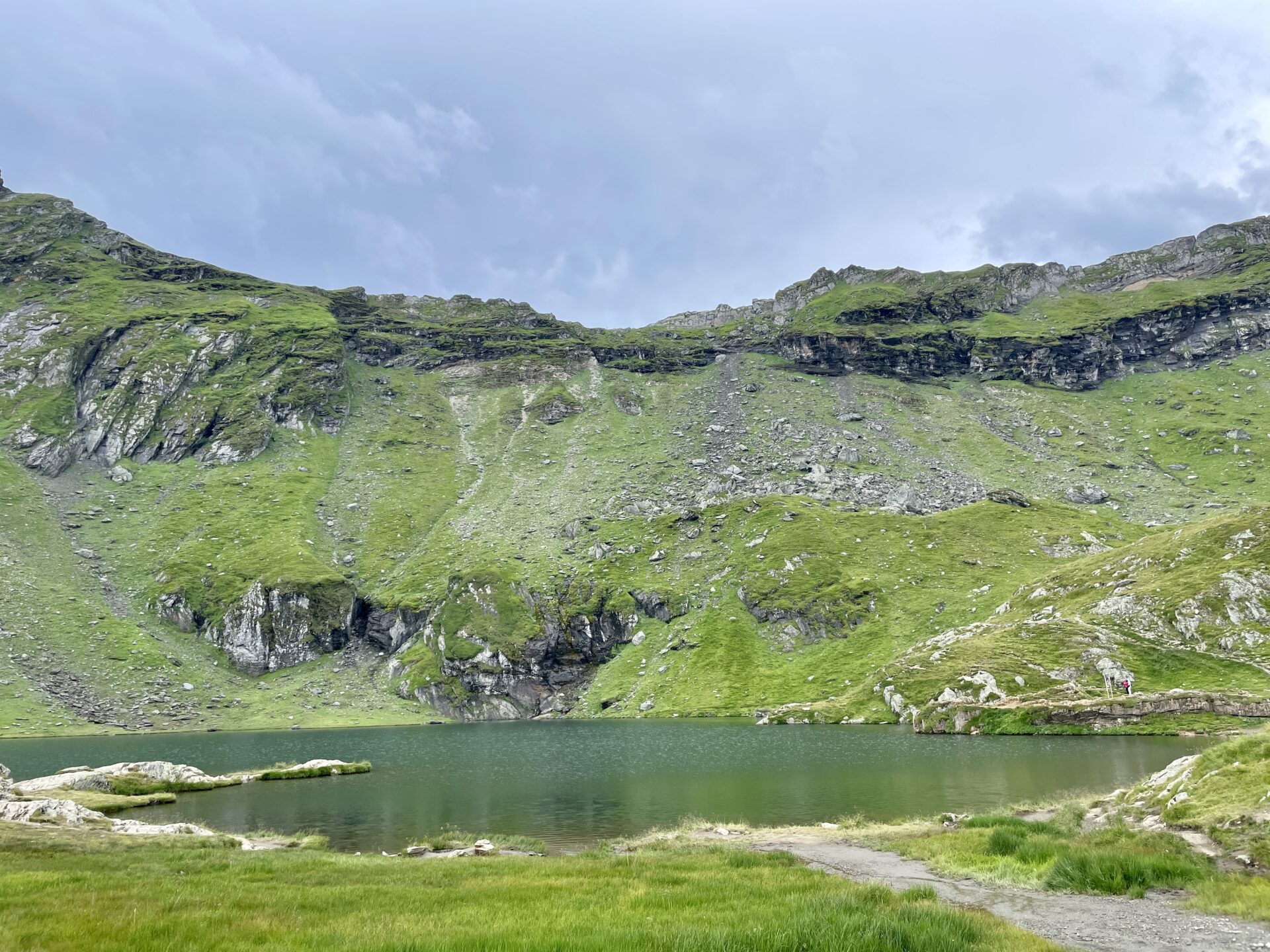
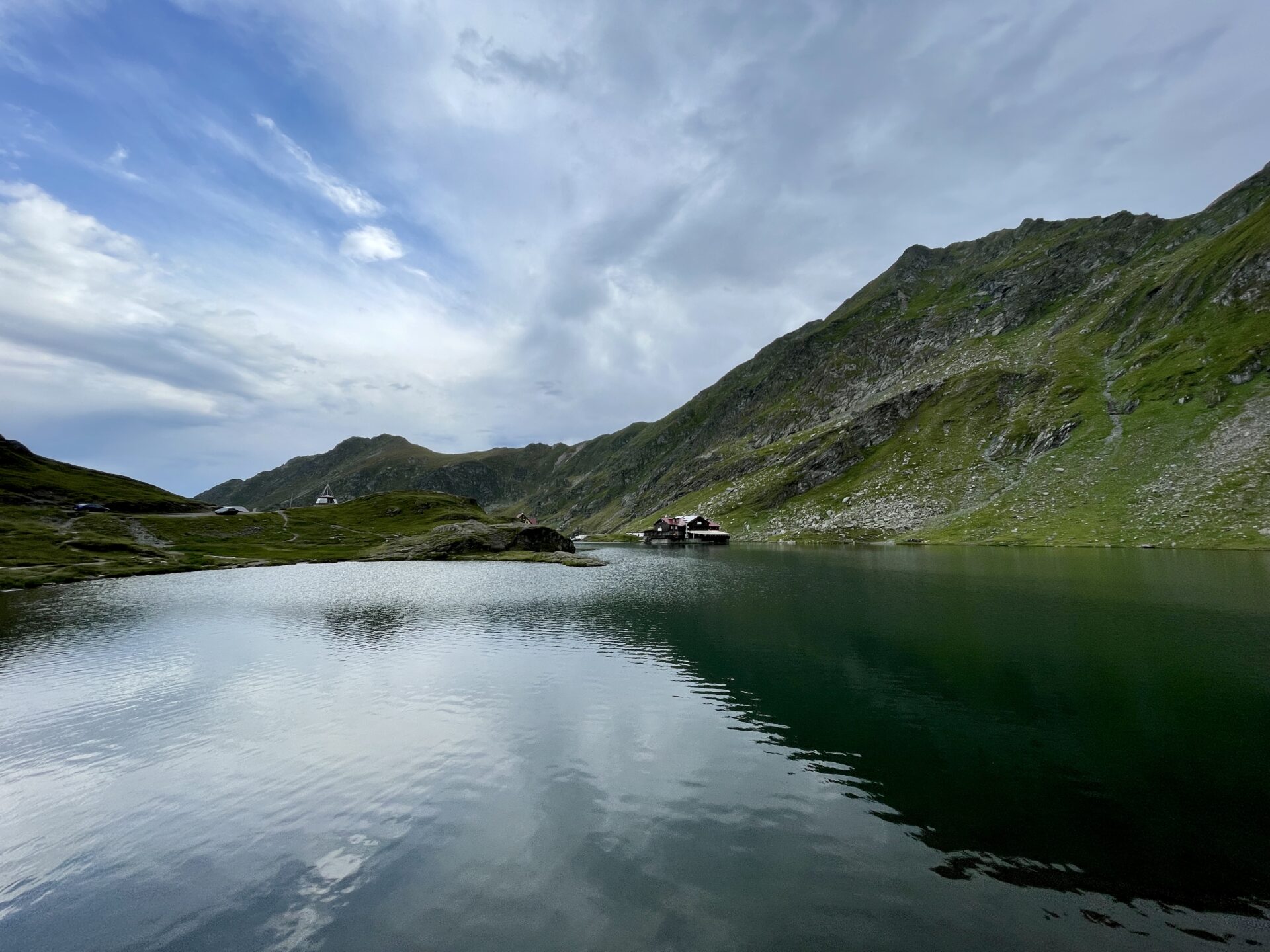
09:00 — Bâlea Lac
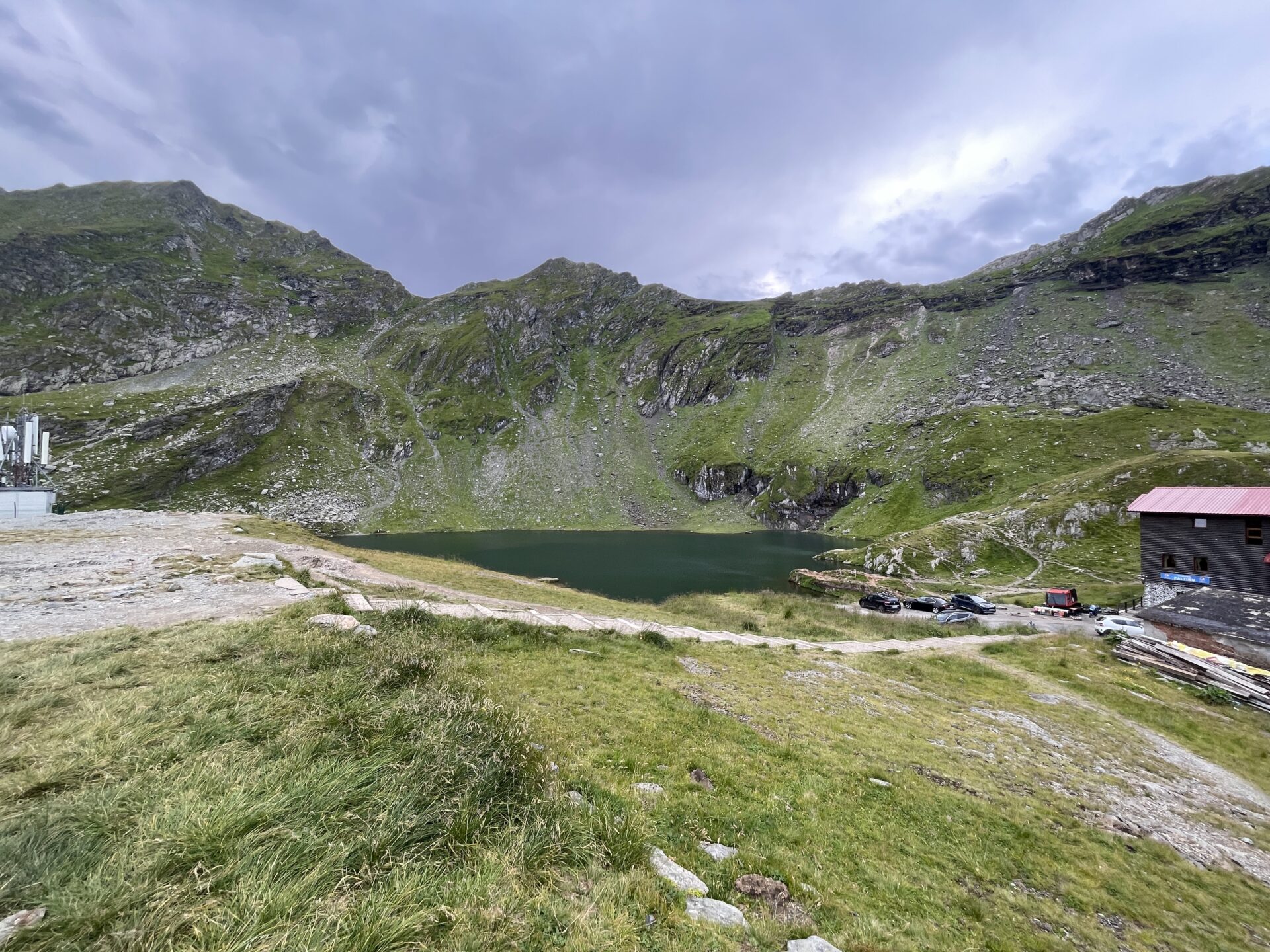
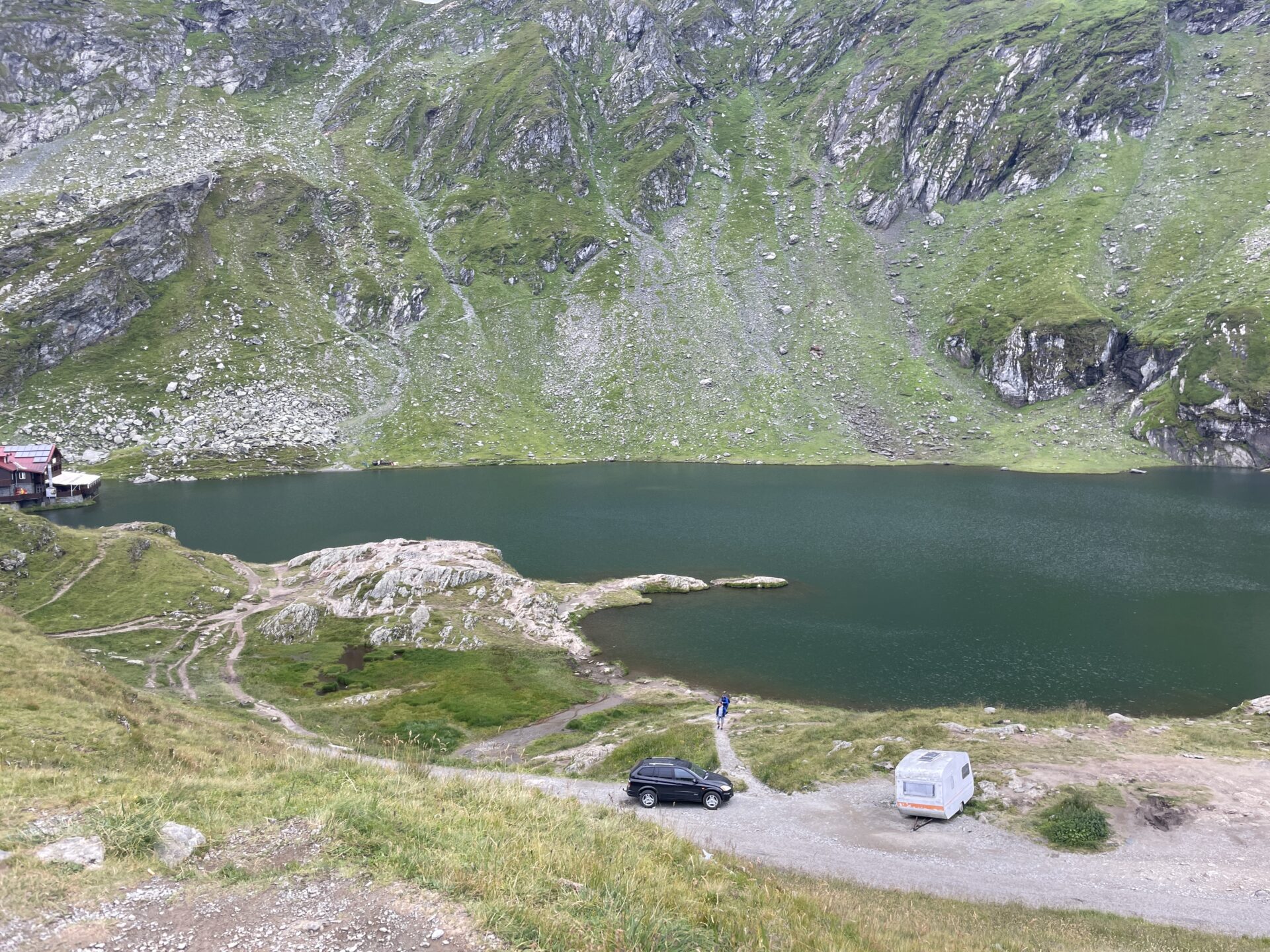
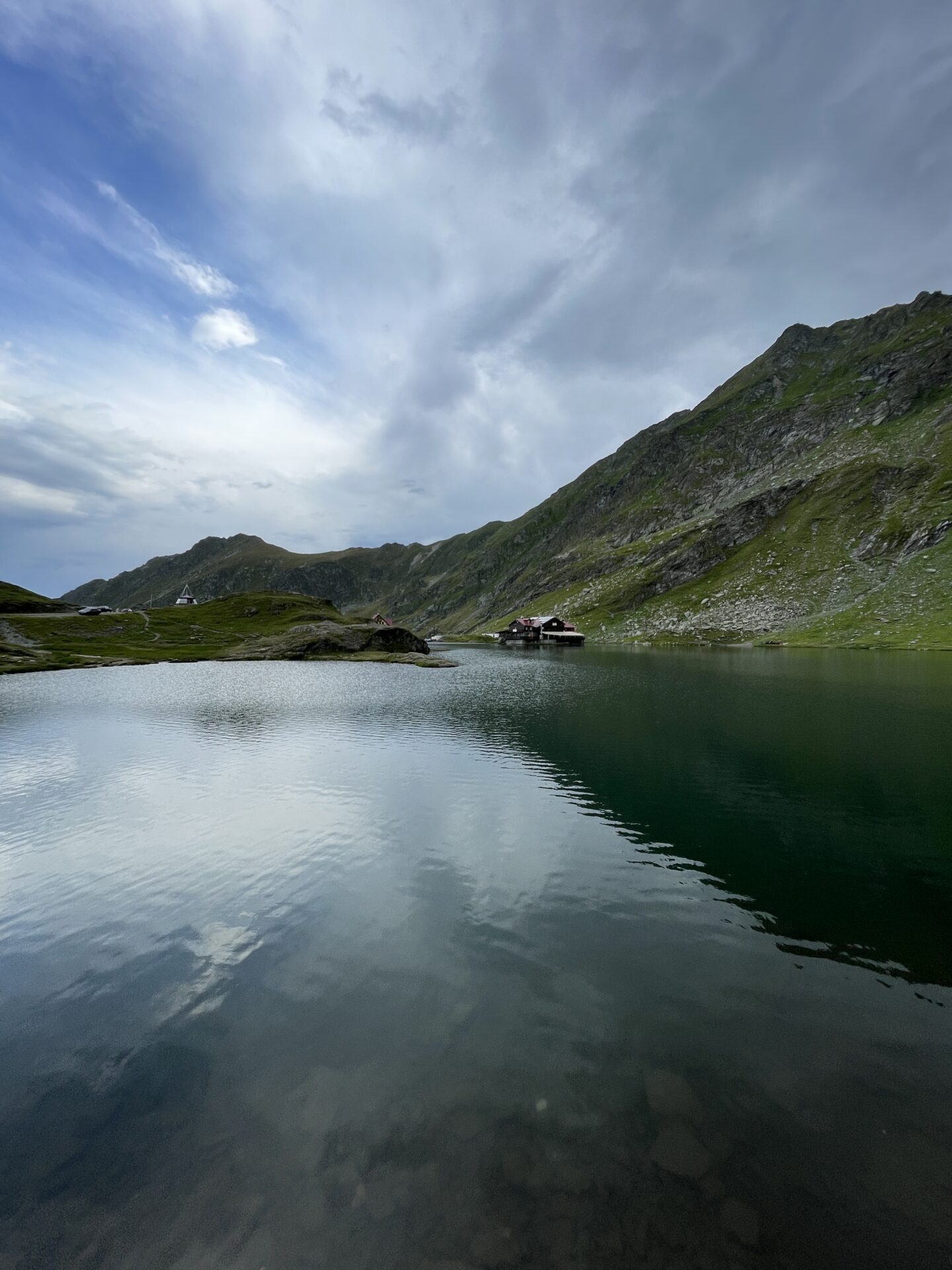
At the top is Bâlea Lac, a glacial lake at 2,034 metres. We parked at the paid lot (around 10 lei, about €2) and walked to the lake. That is the moment where the drive up pays for itself.
Only a few tourists around, cold even in August (around +10°C in the morning at the top — bring a jacket), and a view that earns every cliché.
The tunnel and the southern side: waterfalls
From the lake you enter a long tunnel (884 m), and when you come out, you are on the southern side — which is almost a different road entirely.
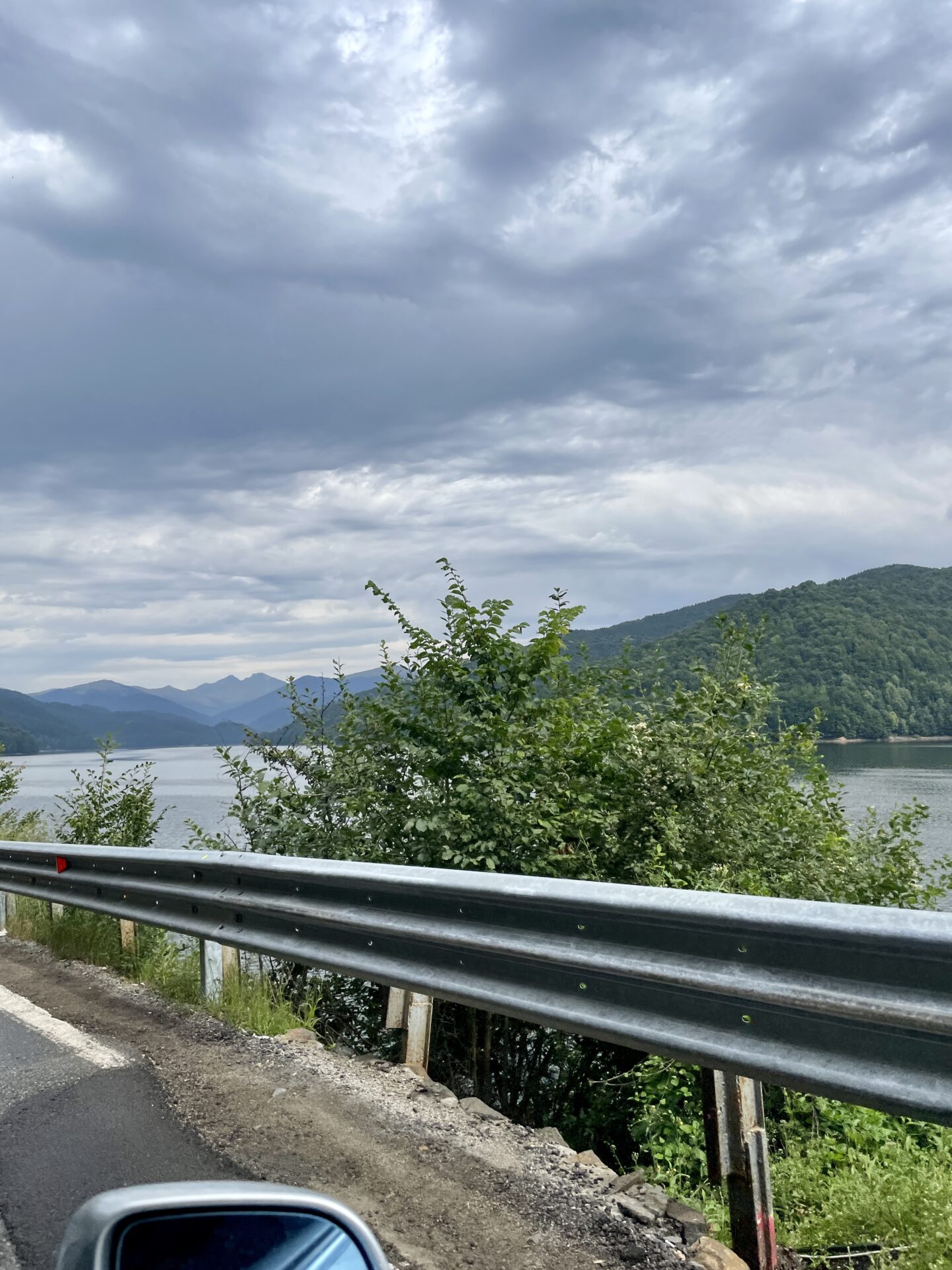
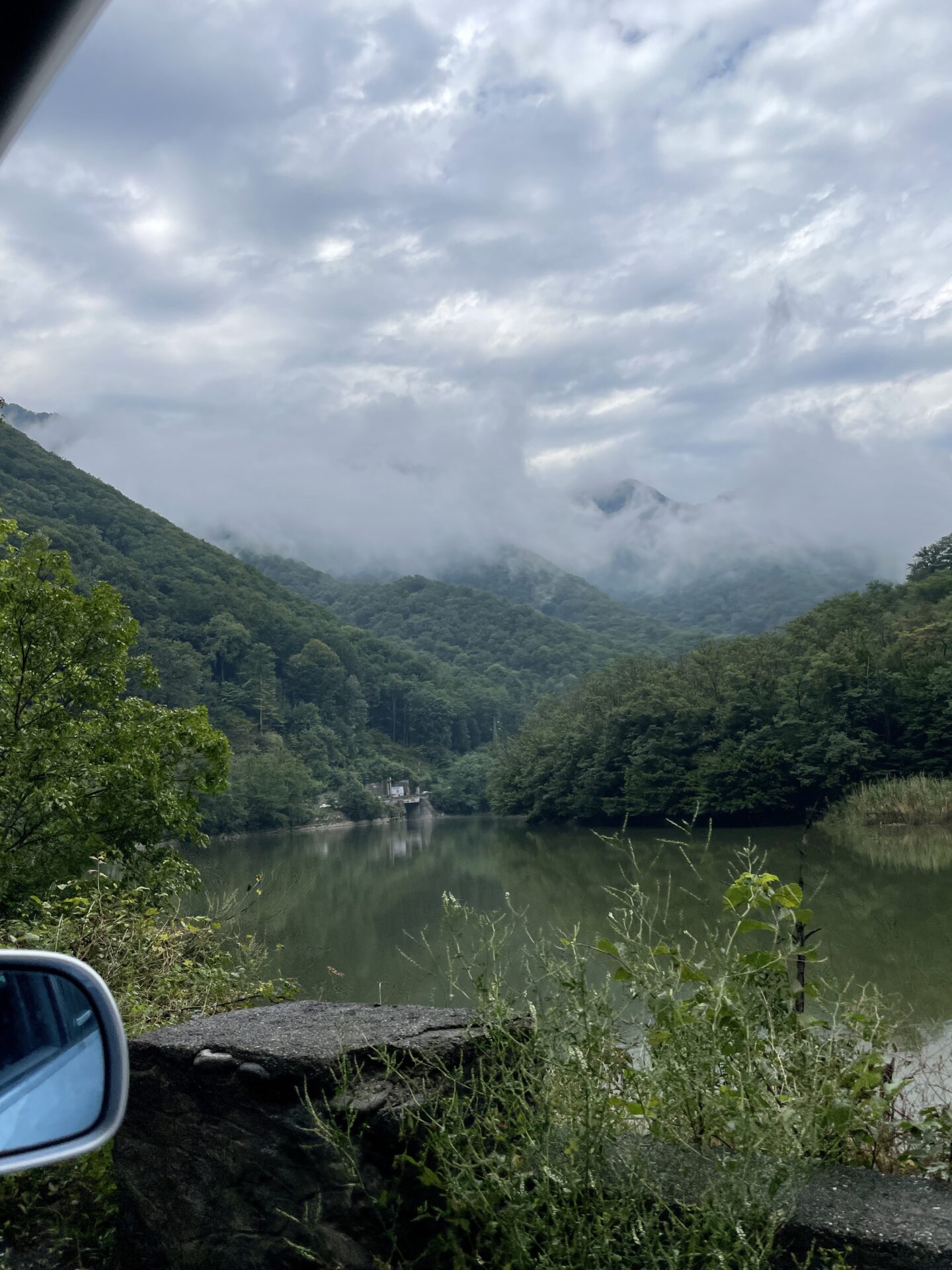
If the northern side is forest, firs, and green, the southern side is waterfalls. Every 2–3 kilometres there is another one worth pulling over for. I would say the southern side is actually more photogenic, even if the northern side is the one that shows up in every Top Gear clip.
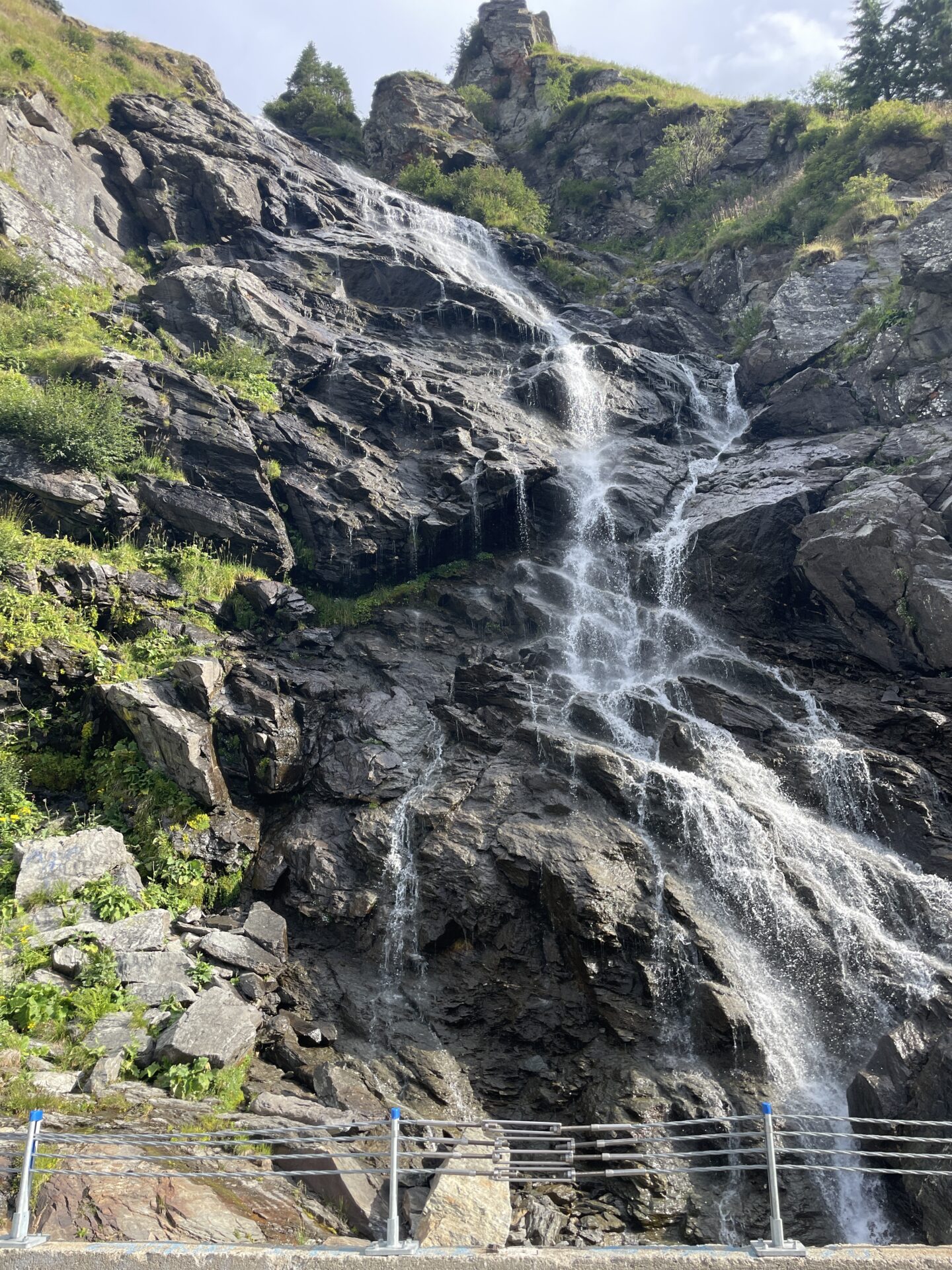
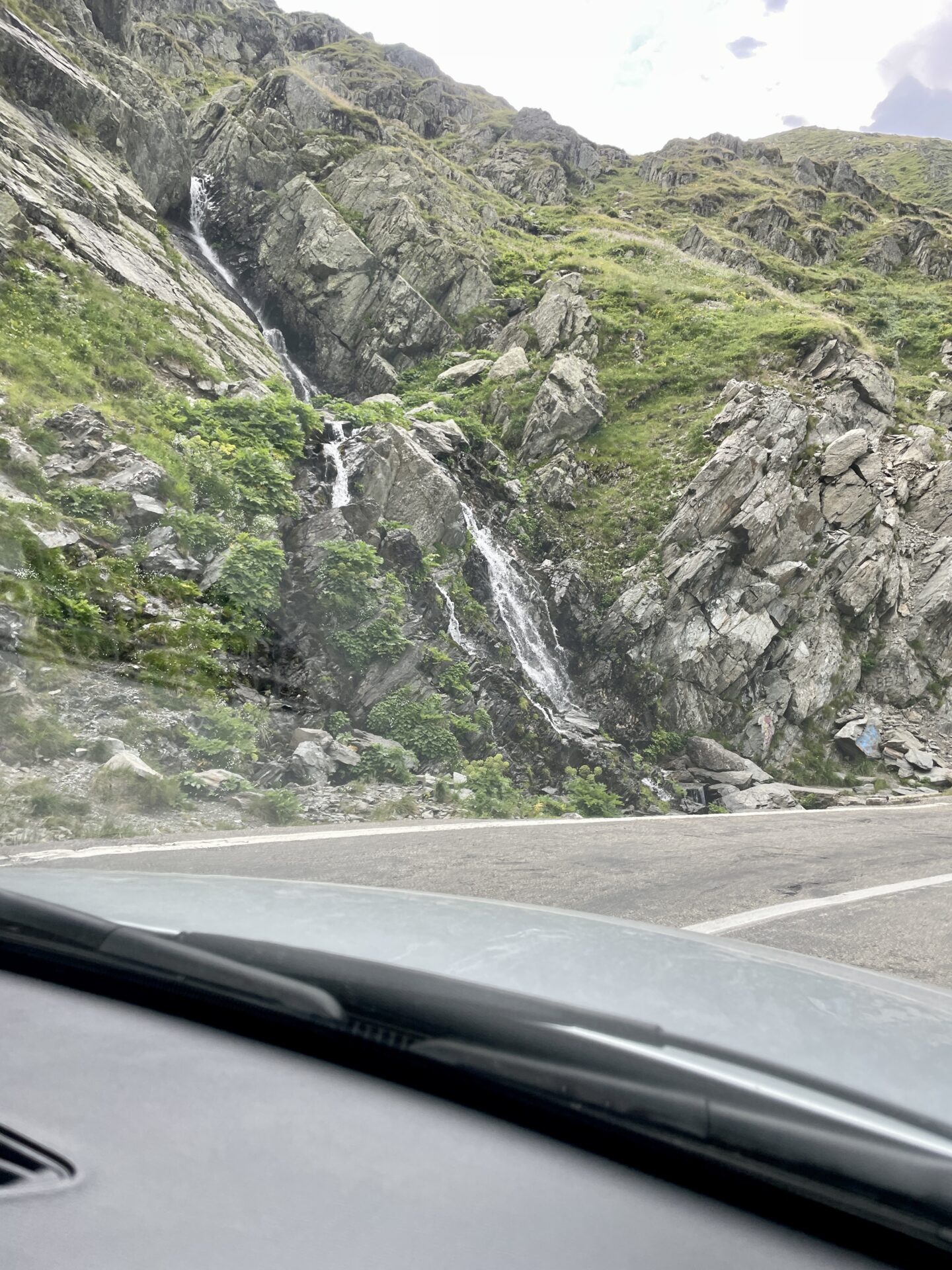
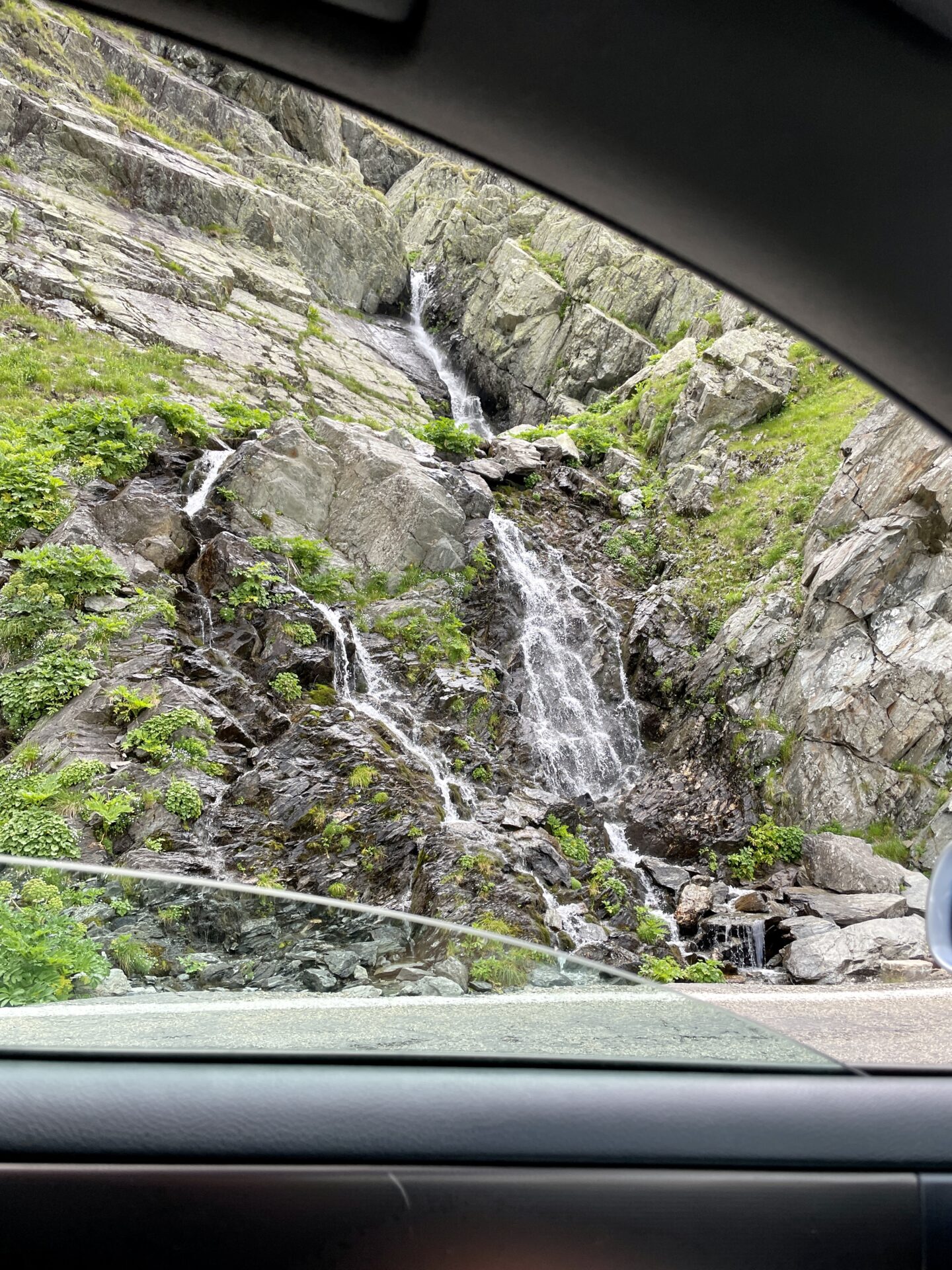
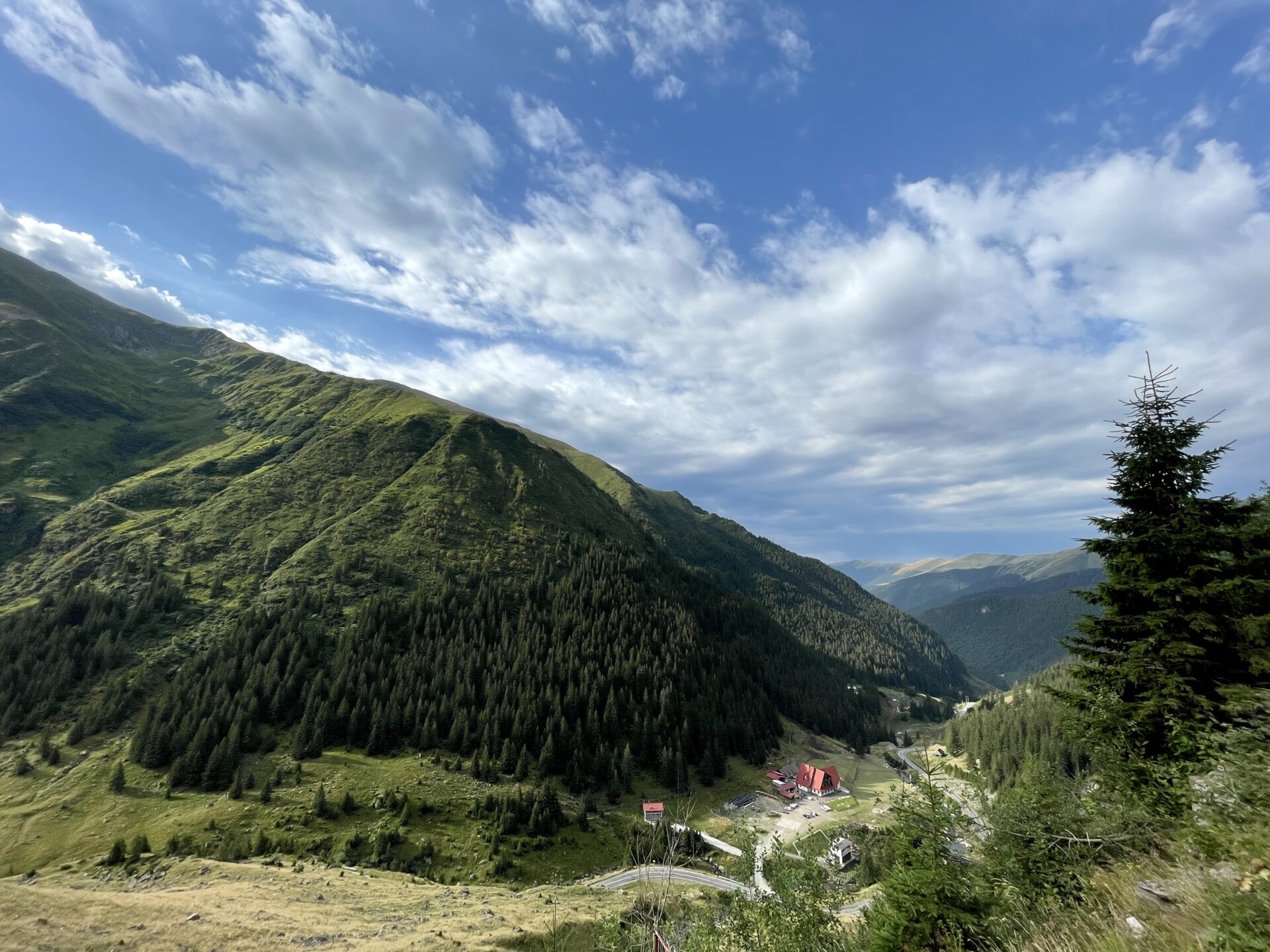
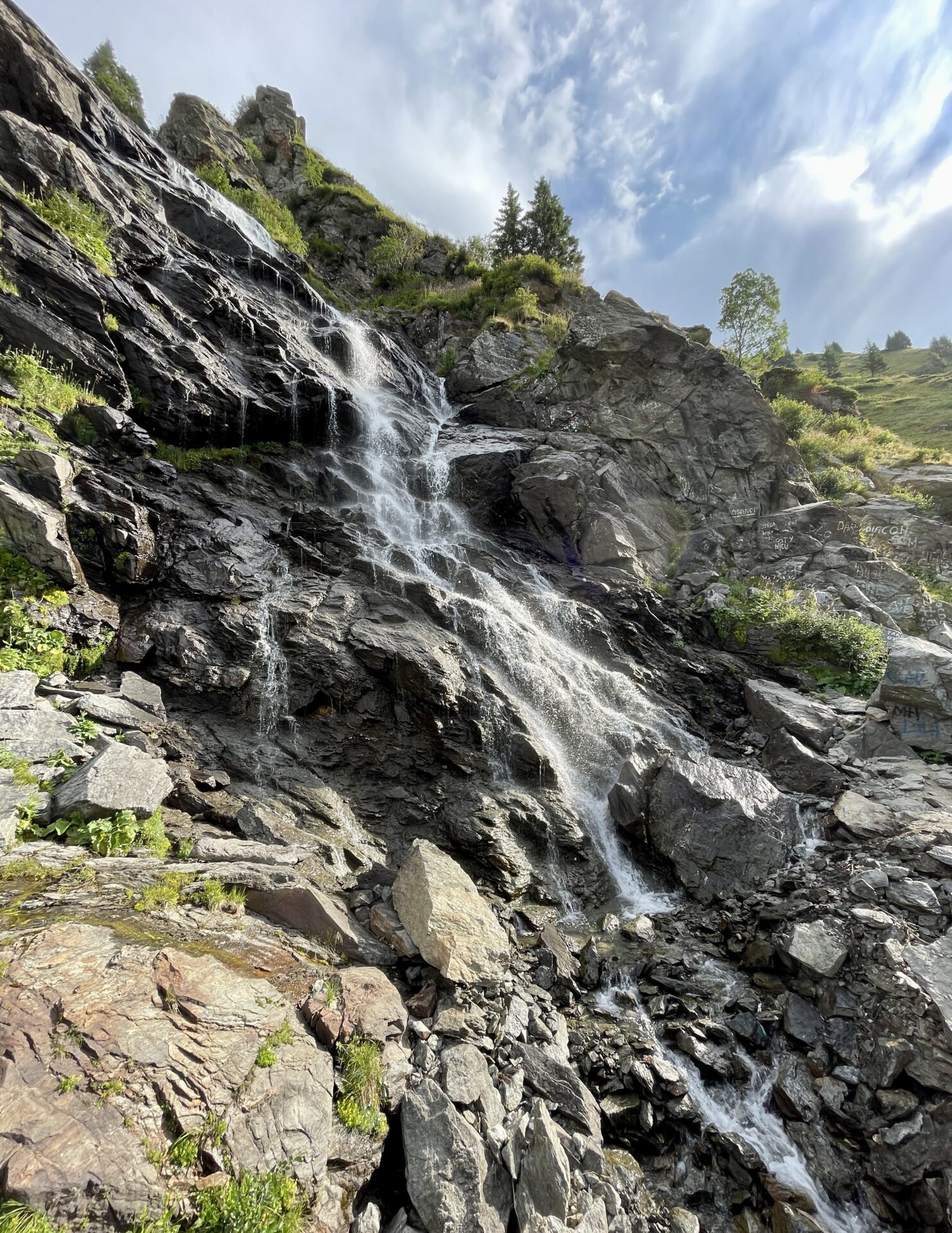
A warning about parking: there are plenty of viewpoints, but space at each of them is very limited. During peak hours (after 11:00), finding somewhere to stop becomes an actual problem. Another reason to start early.
~15:00 — the bear
This part needs its own section.
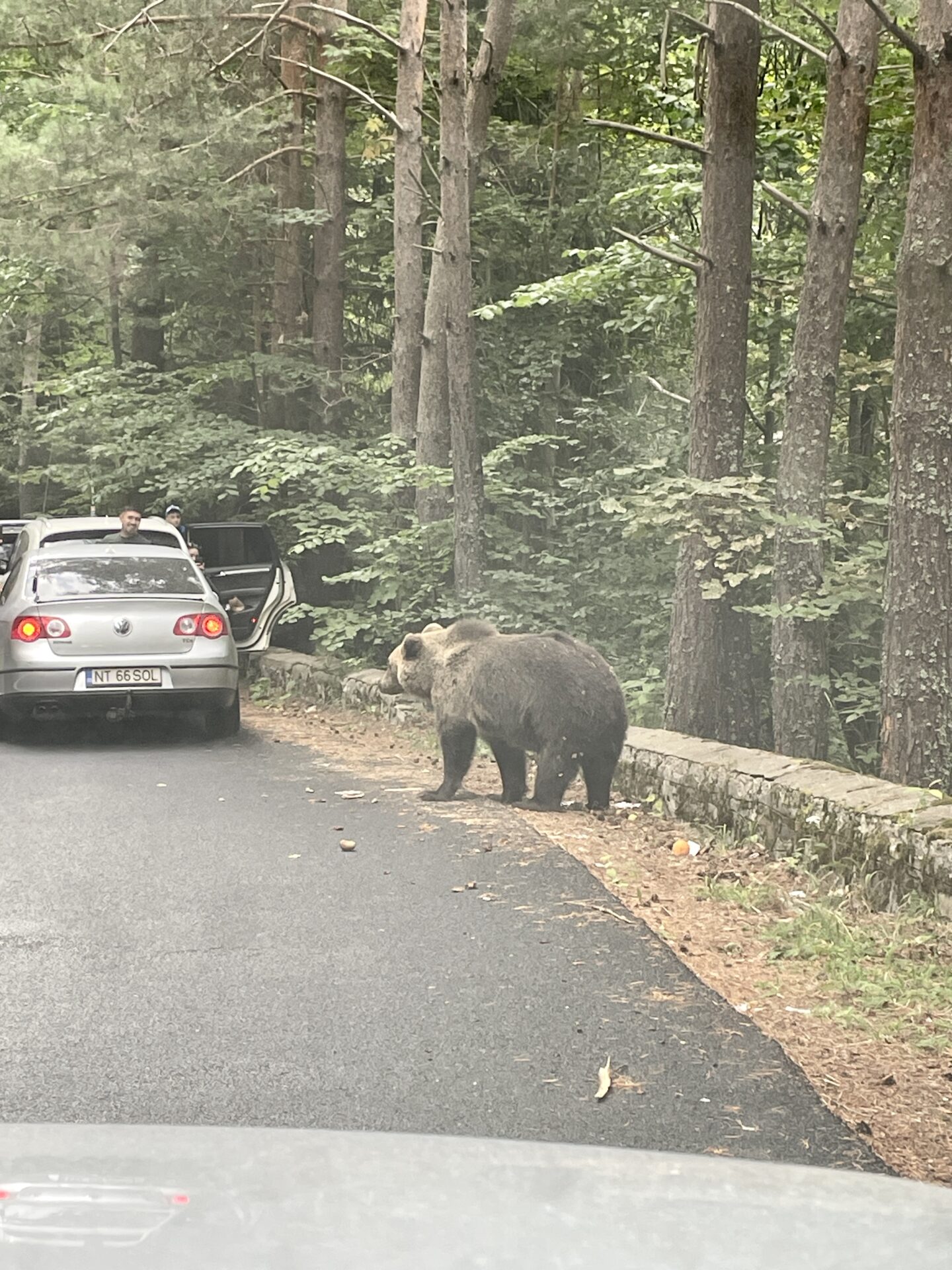
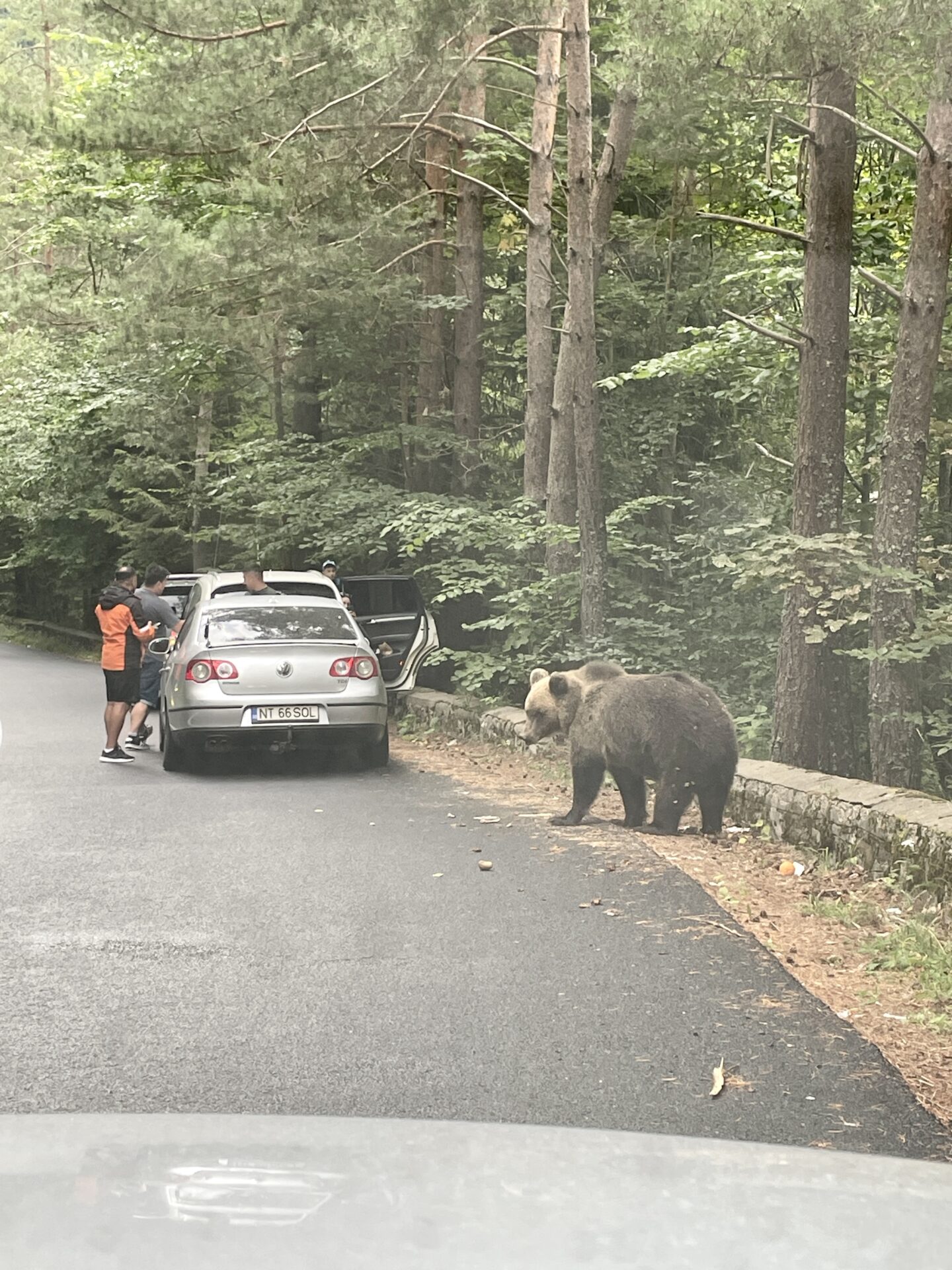
On one of the turns on the southern side, we saw a small traffic jam. Strange, because traffic had been light. Five or six cars in both directions, a few people outside their vehicles, some holding phones, some holding something else in their hands.
As we got closer, we saw a bear.
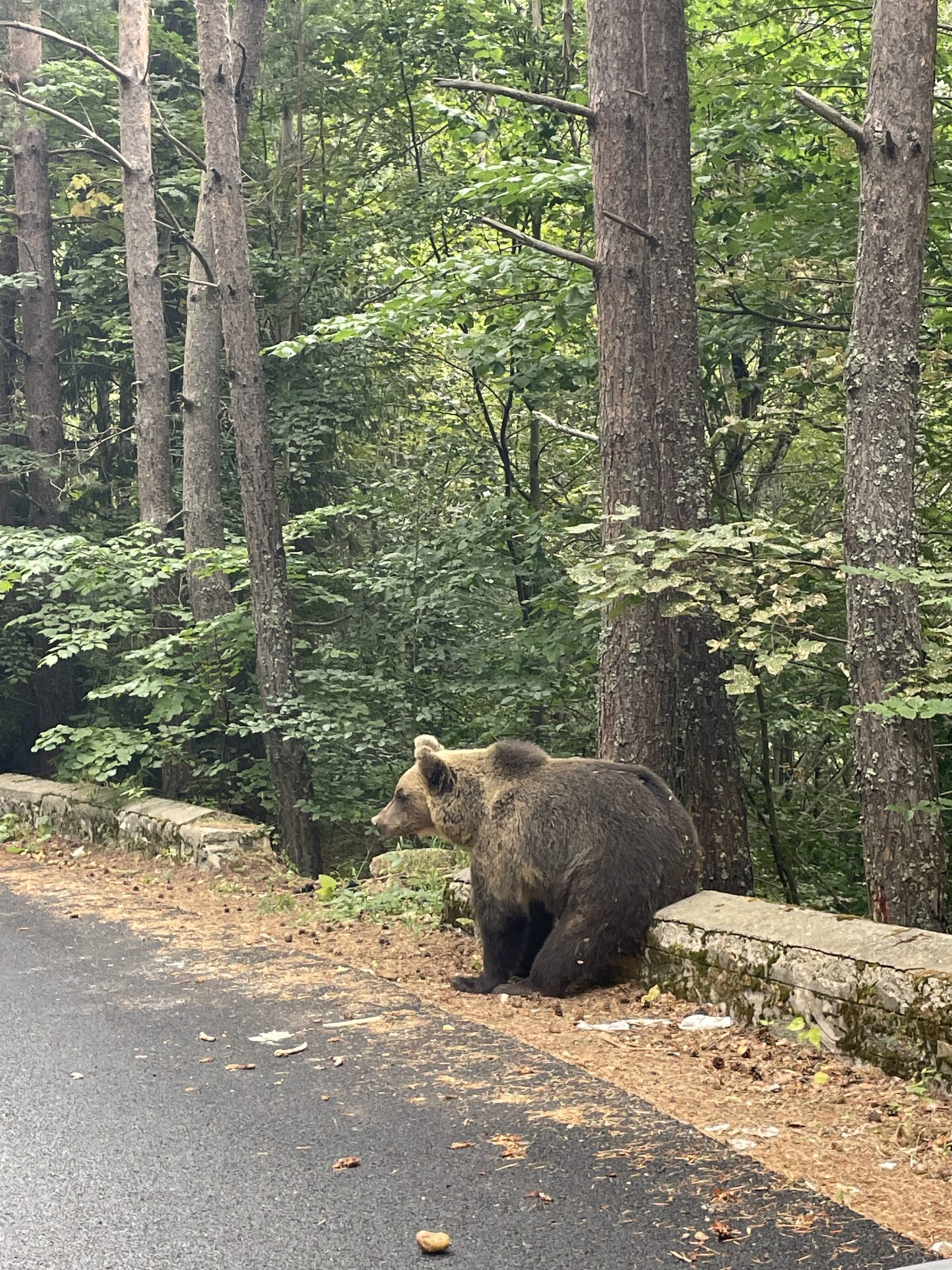
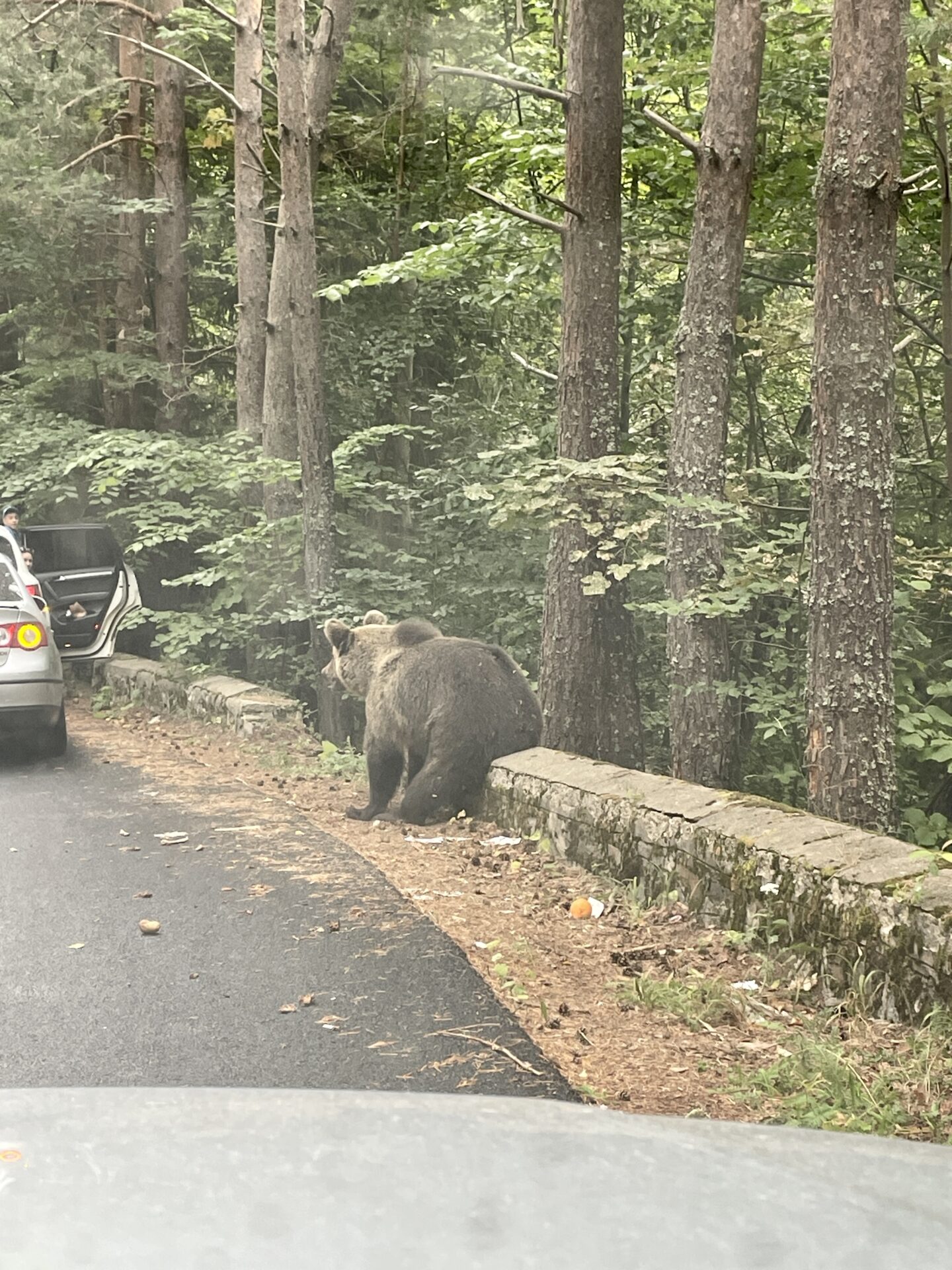
A young brown bear was sitting right on the shoulder of the road — on a small concrete barrier that ran alongside. Calm, almost relaxed, as if waiting for his next order. Tourists were holding apples and cookies out of their windows, and he was taking them. From hand.
Feeding bears on the Transfăgărășan is prohibited. The reason is simple: once animals get used to human food, they stop being able to forage properly in the wild. But in that moment, none of that was on our minds.
We had an apple in the car. We had brought it all the way from Sibiu for exactly this kind of encounter — because we had heard you might meet a bear on this road, and by the time we reached the summit we had already decided it probably was not going to happen.
I asked Anna to crack the window open slightly — just enough for the apple to go through. I pulled up closer and stopped level with the bear.
I turned my head.
The window was fully down. All the way. Anna was holding the apple out, smiling at the bear, which was standing closer to our car than I have ever seen a wild animal outside a zoo. It was already turning its muzzle toward her.
My heart dropped. I hit the window button, floored the gas, and we were gone.
Wild animals stay wild, even when they are sitting on a concrete barrier with an apple in their teeth. That is the best lesson the whole trip taught us — and the most expensive possible version of it, because the real cost could have been so much higher than just fear.
17:00 — Vidraru Dam: the end of the road
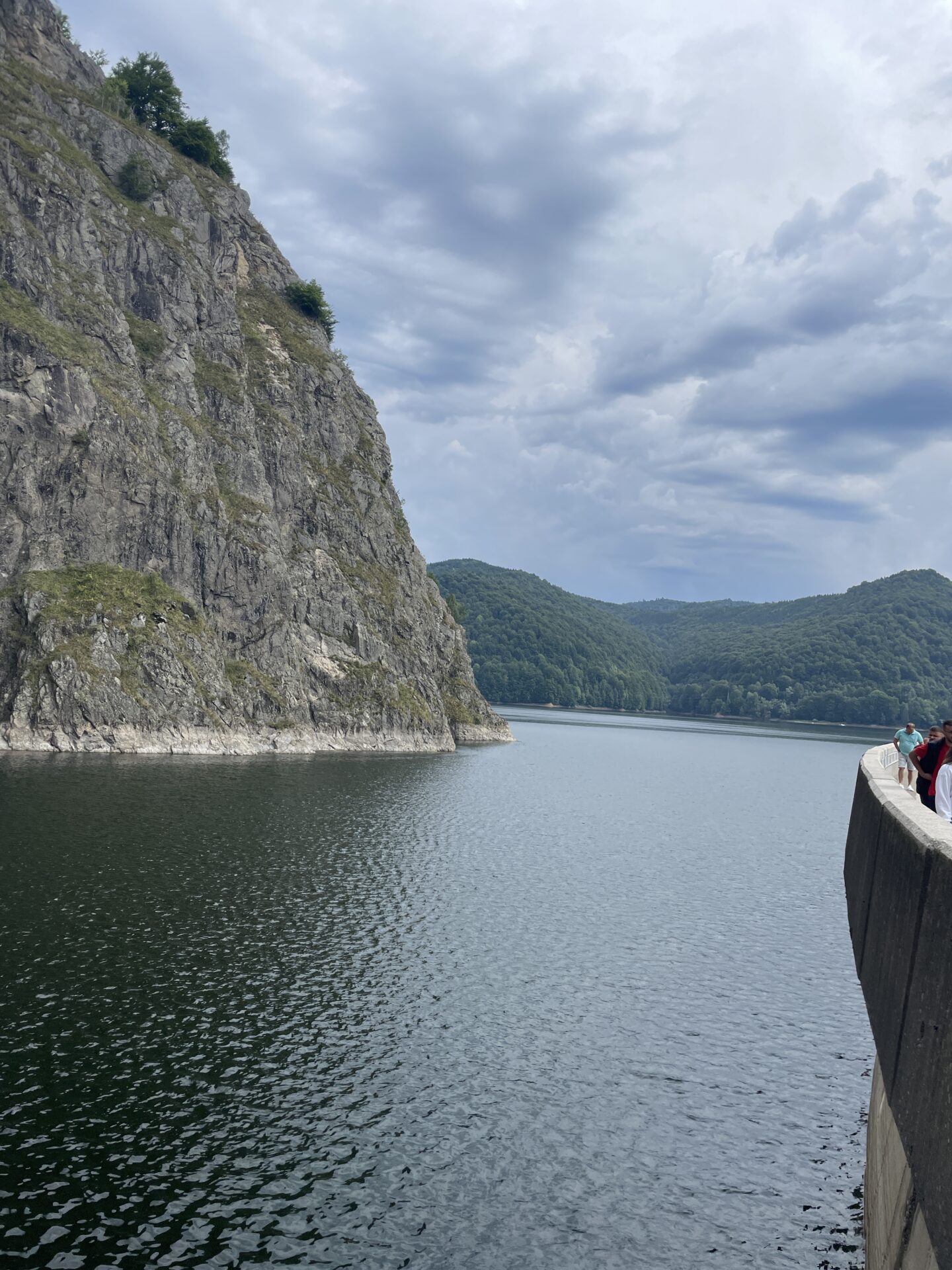
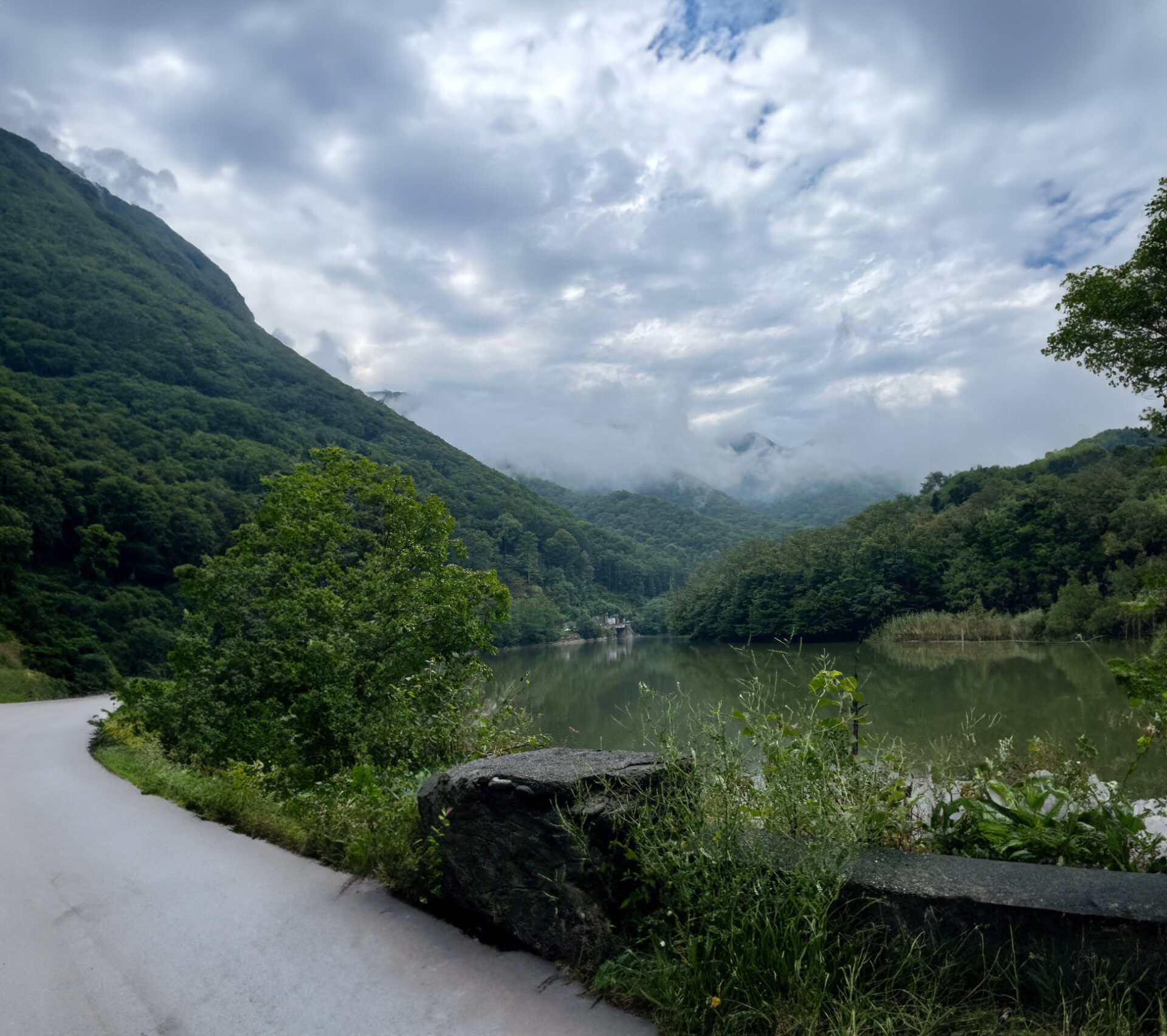
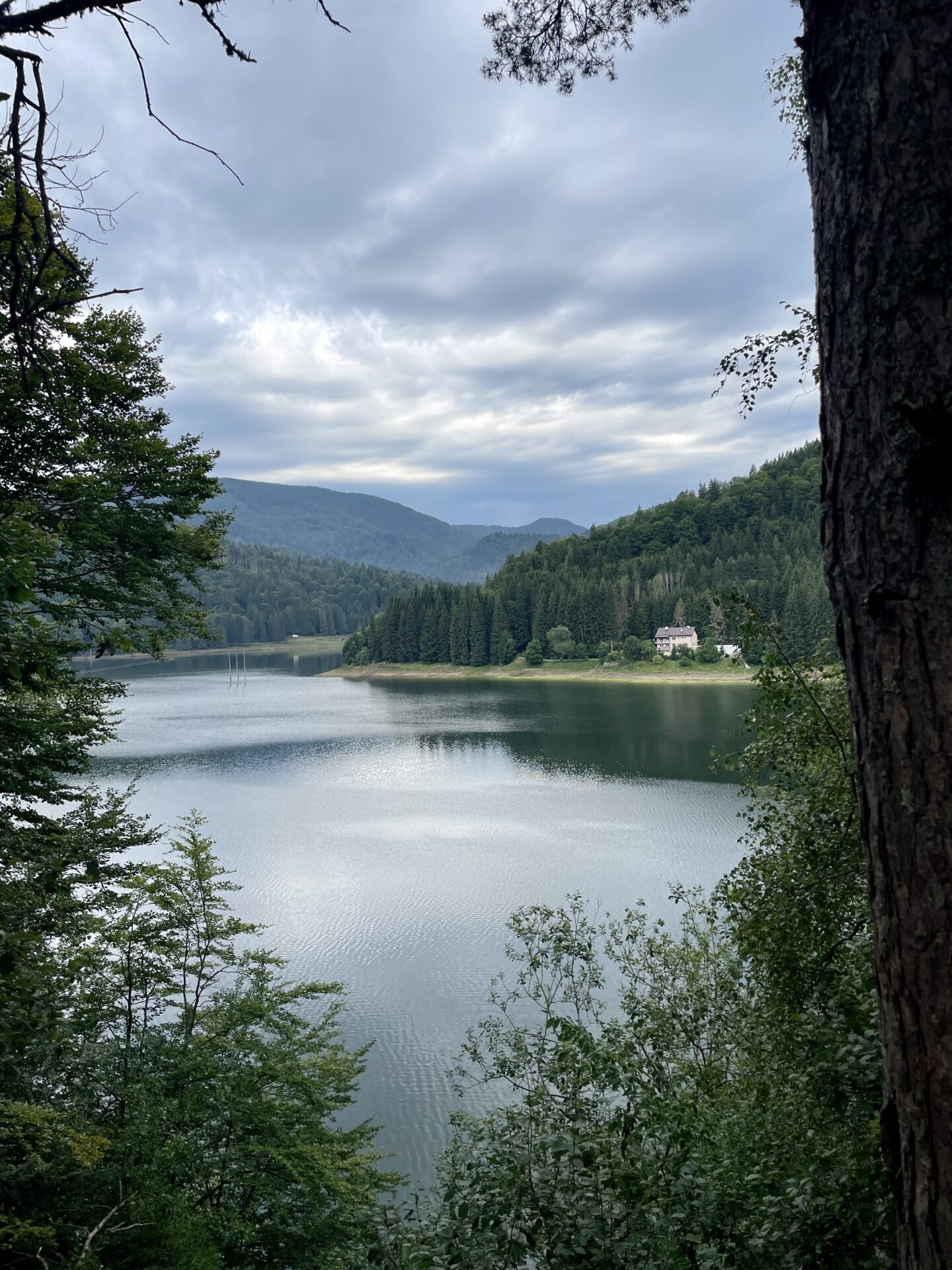
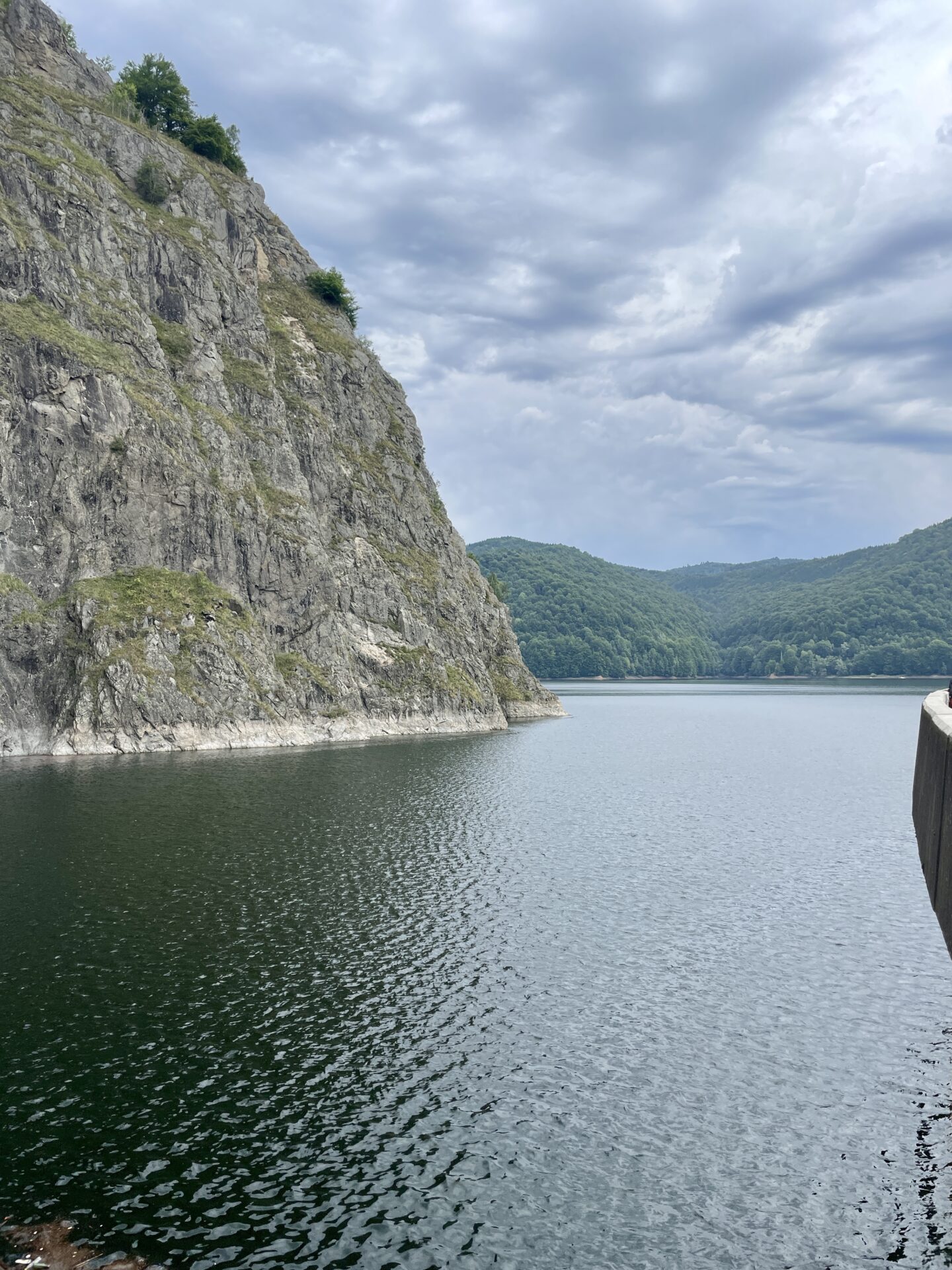
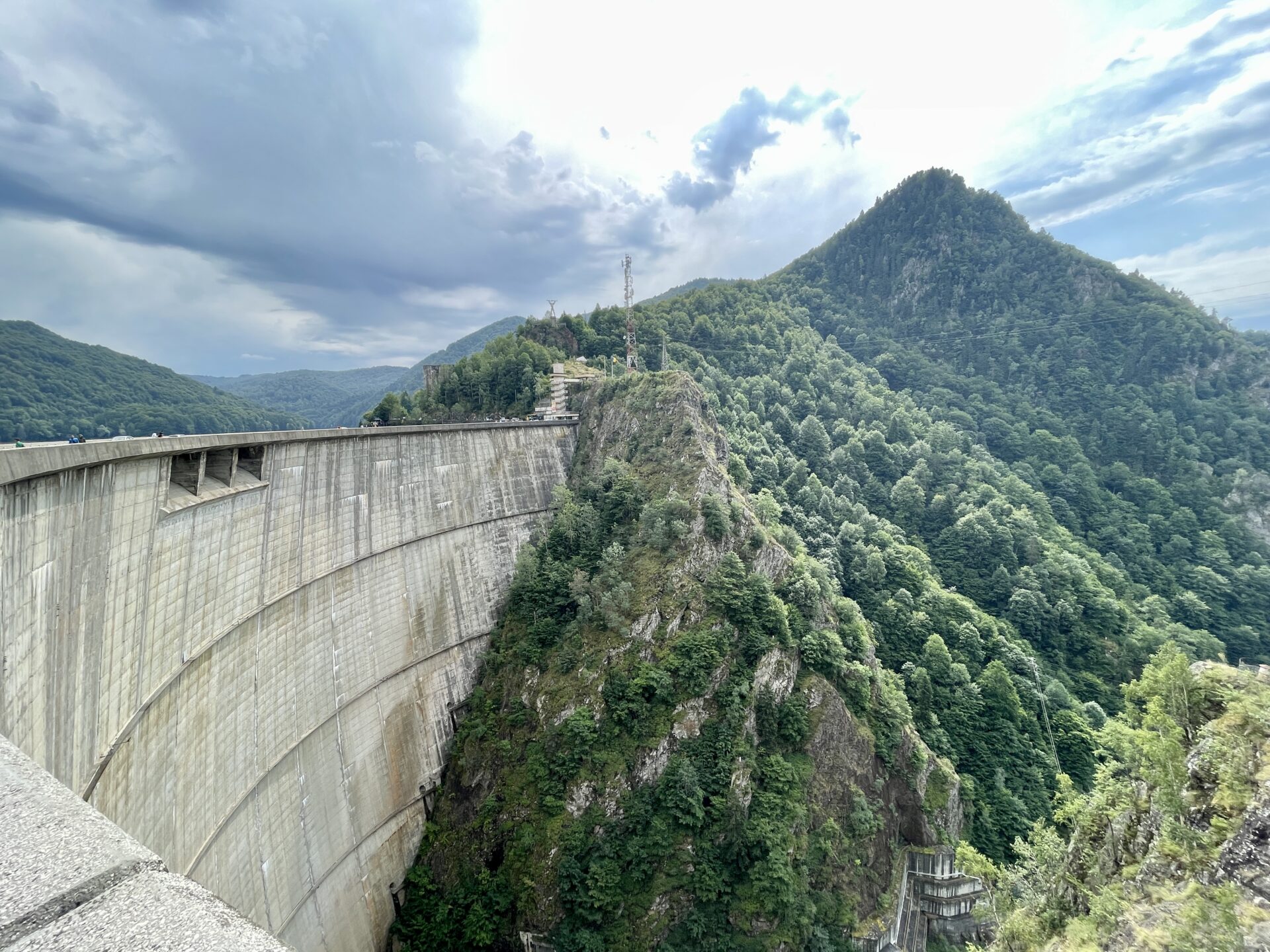
The southern side ends at Vidraru Dam — one of the tallest dams in Europe (166 m). The scale of it is genuinely impressive. Parking is difficult, though: huge tourist traffic.
We got lucky. A parking attendant saw our plates, realised we had driven a long way, and let us pull over on hazard lights for five minutes just to take photos. Small things like that — that was Romania too.
Evening: Cabin in Ciugudu de Sus
From the dam, our route headed north toward our next stay. And this was a story of its own.
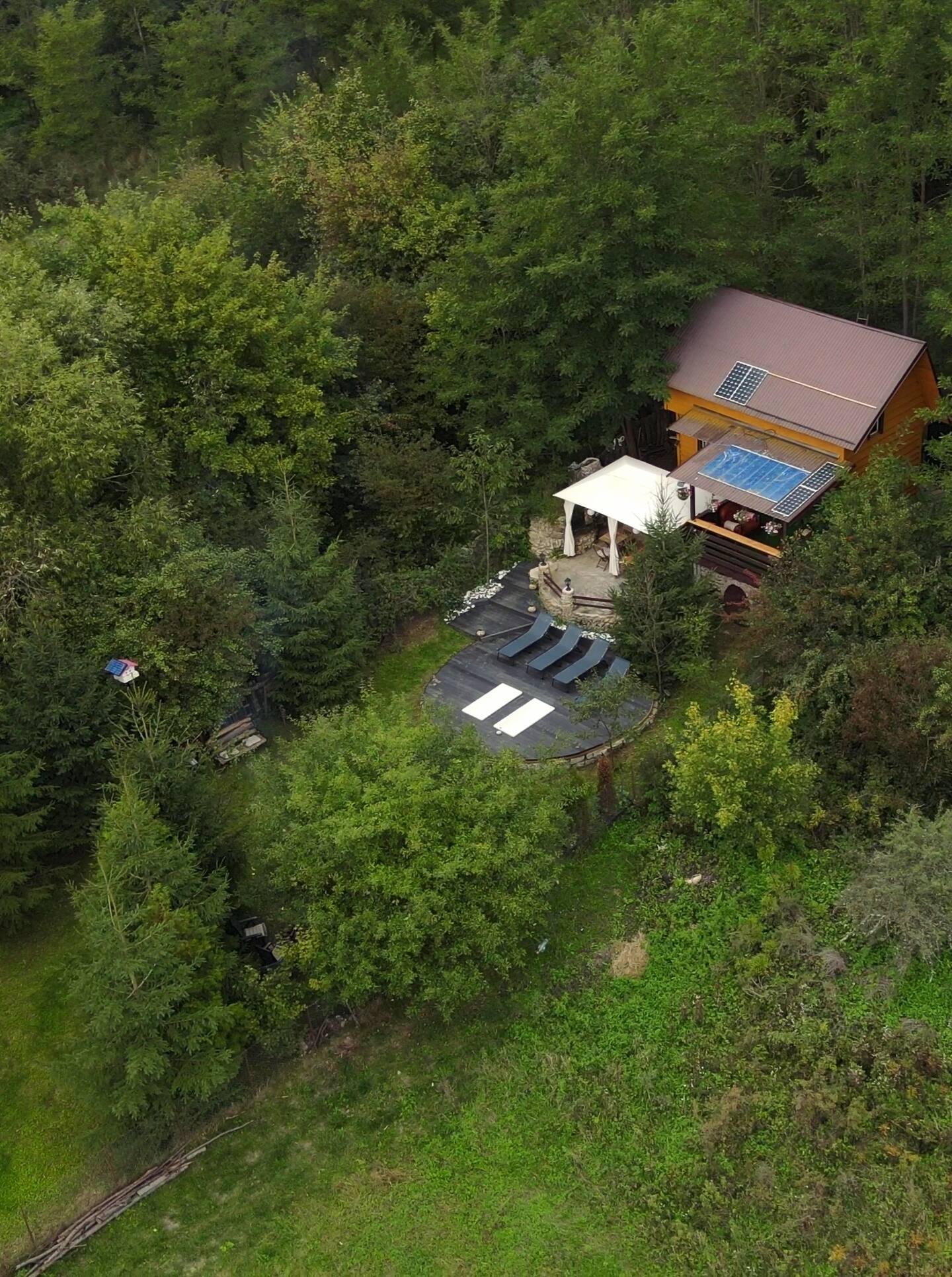
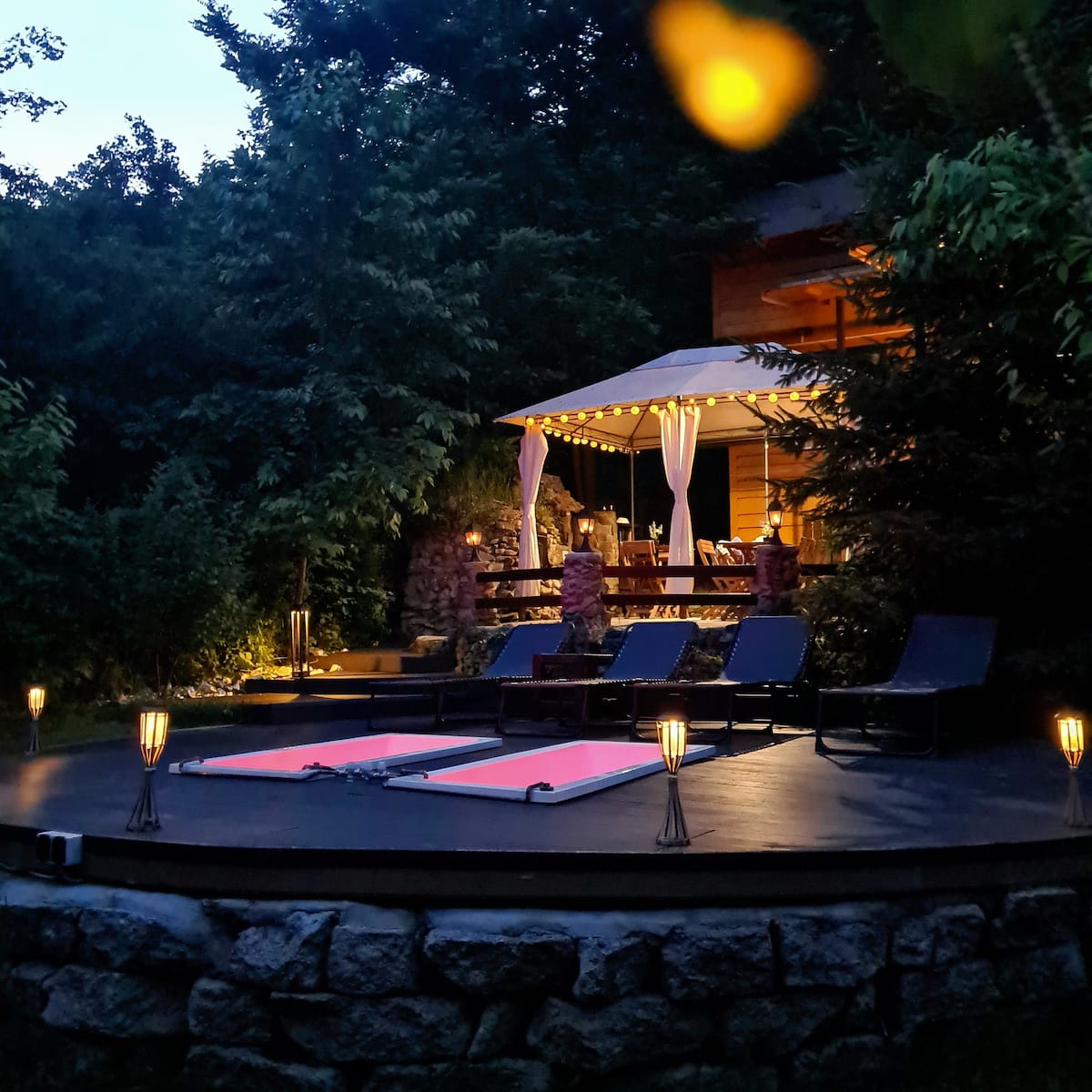
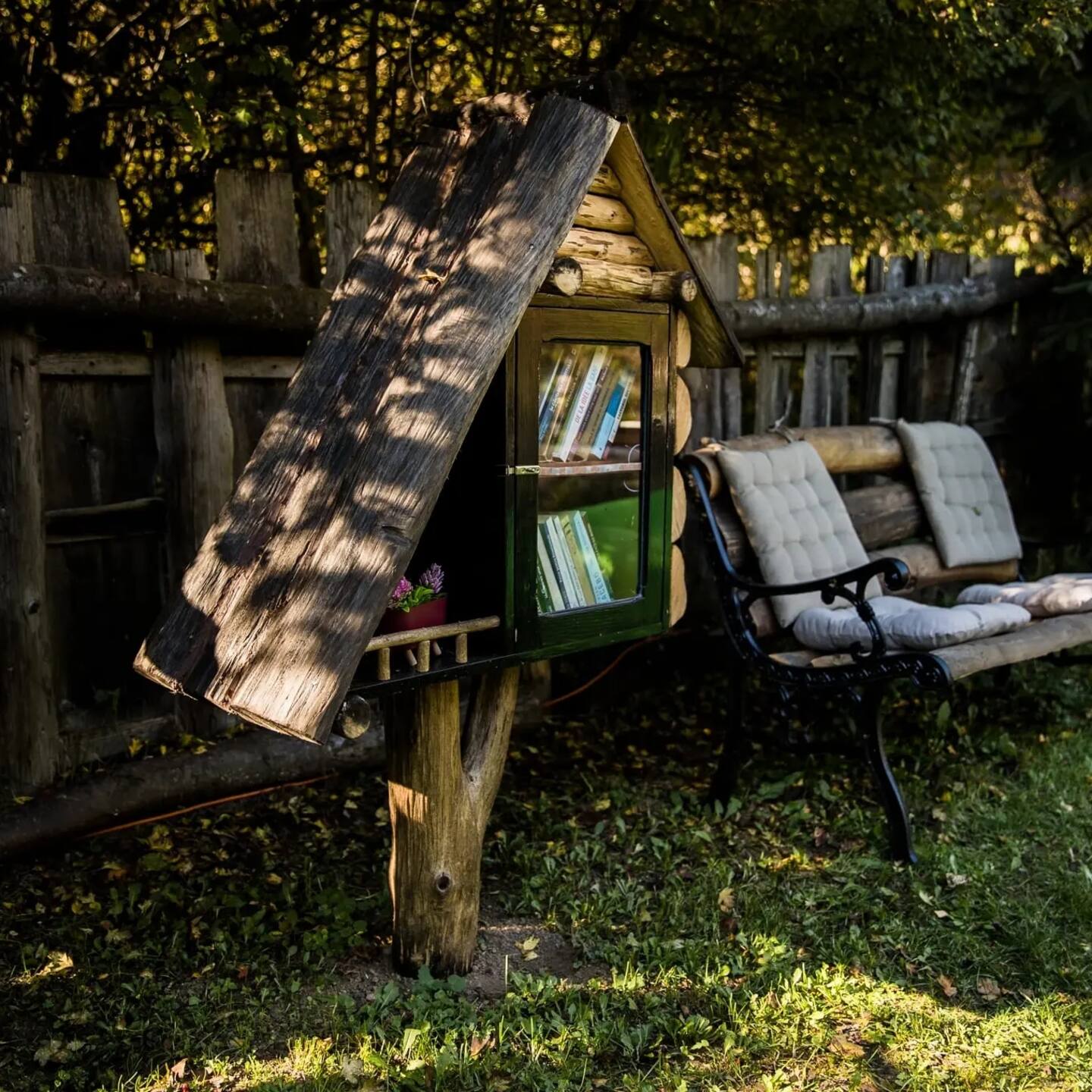
Cabin in Ciugudu de Sus — a house in the village of Ciugudu de Sus, Alba County, about 150 km north of the Transfăgărășan. €70 a night. Airbnb rating 4.86.
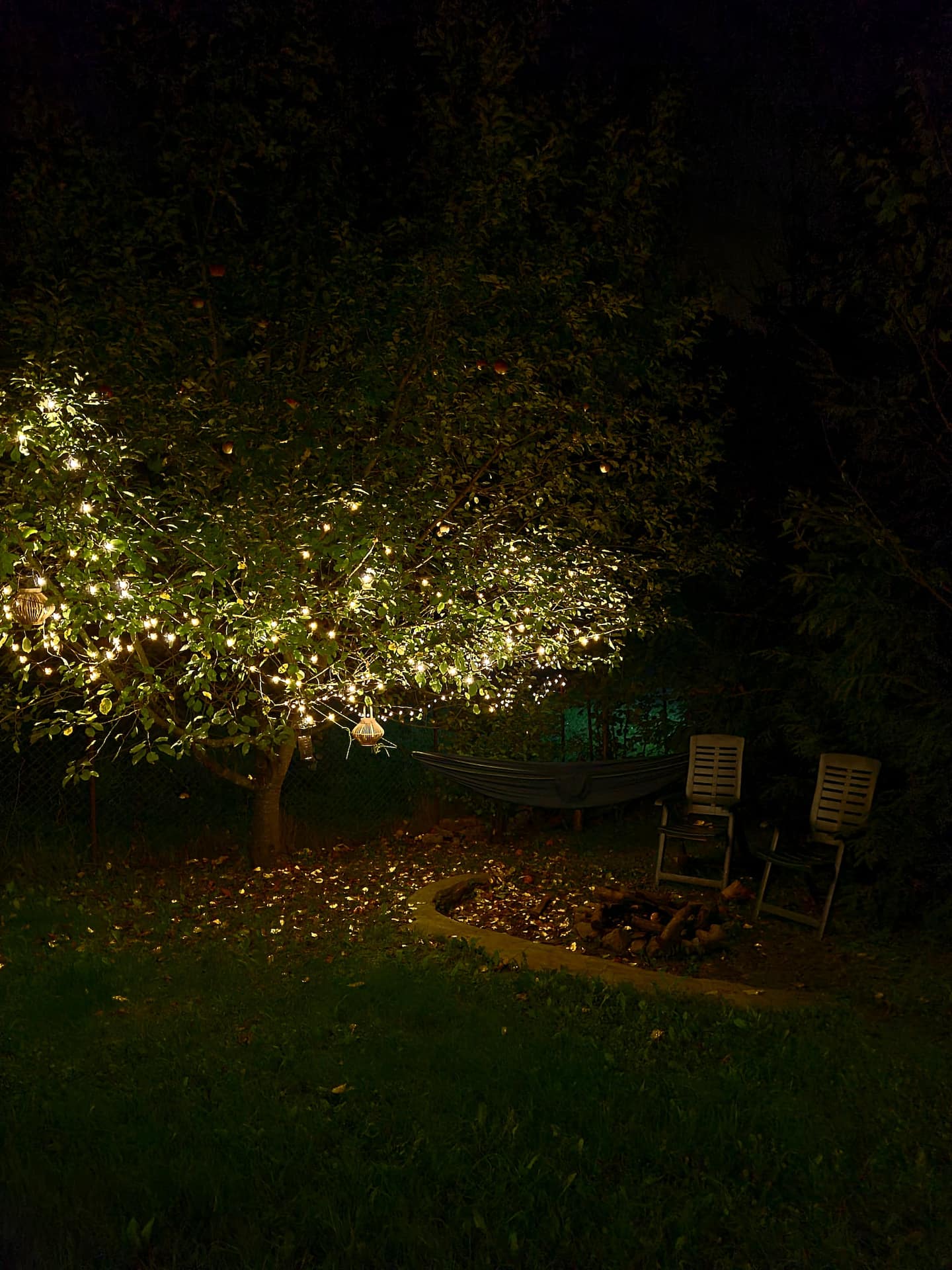
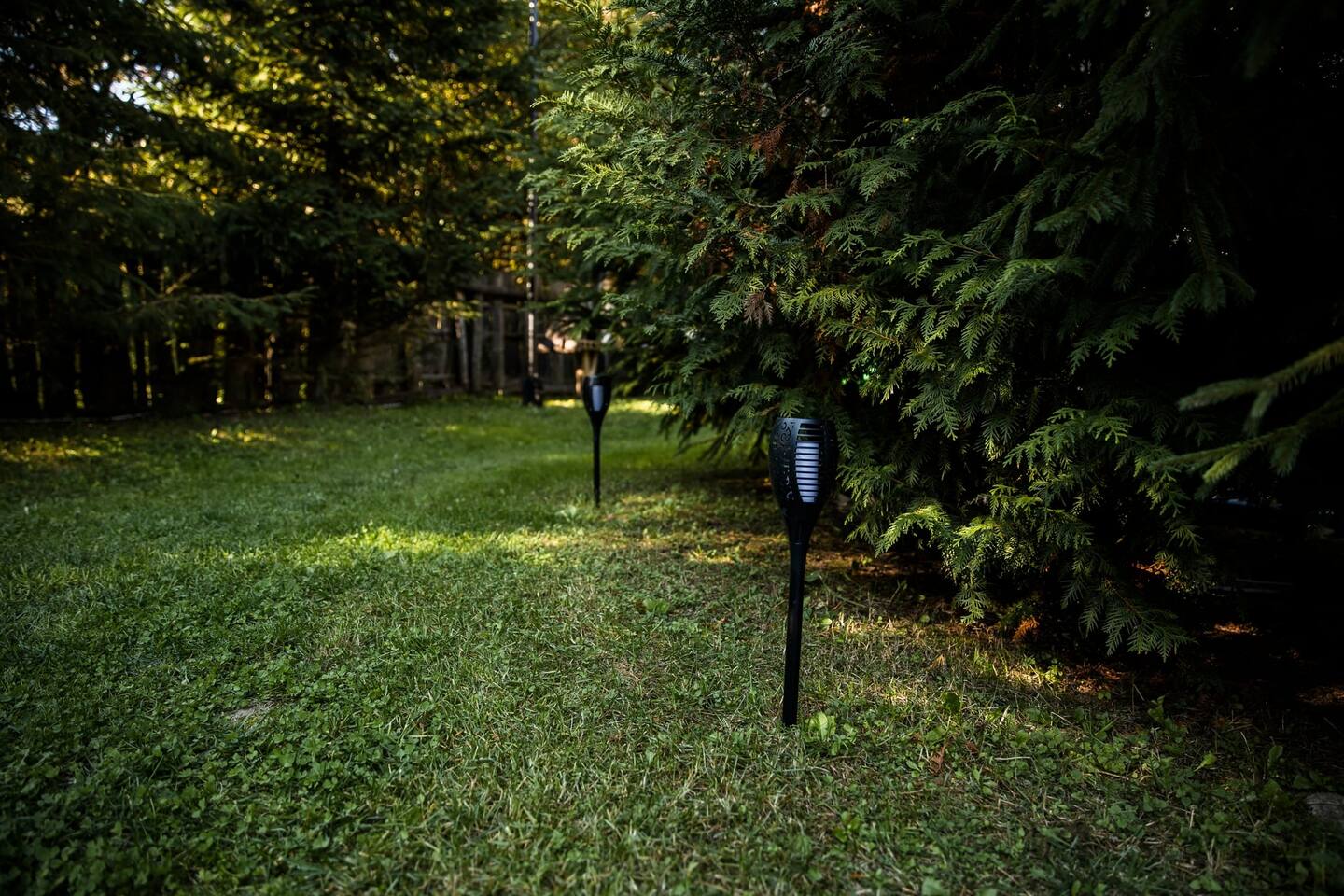
There is no regular electricity here — just solar panels. Around the cabin: cows, forest, complete silence. No neighbours within earshot.
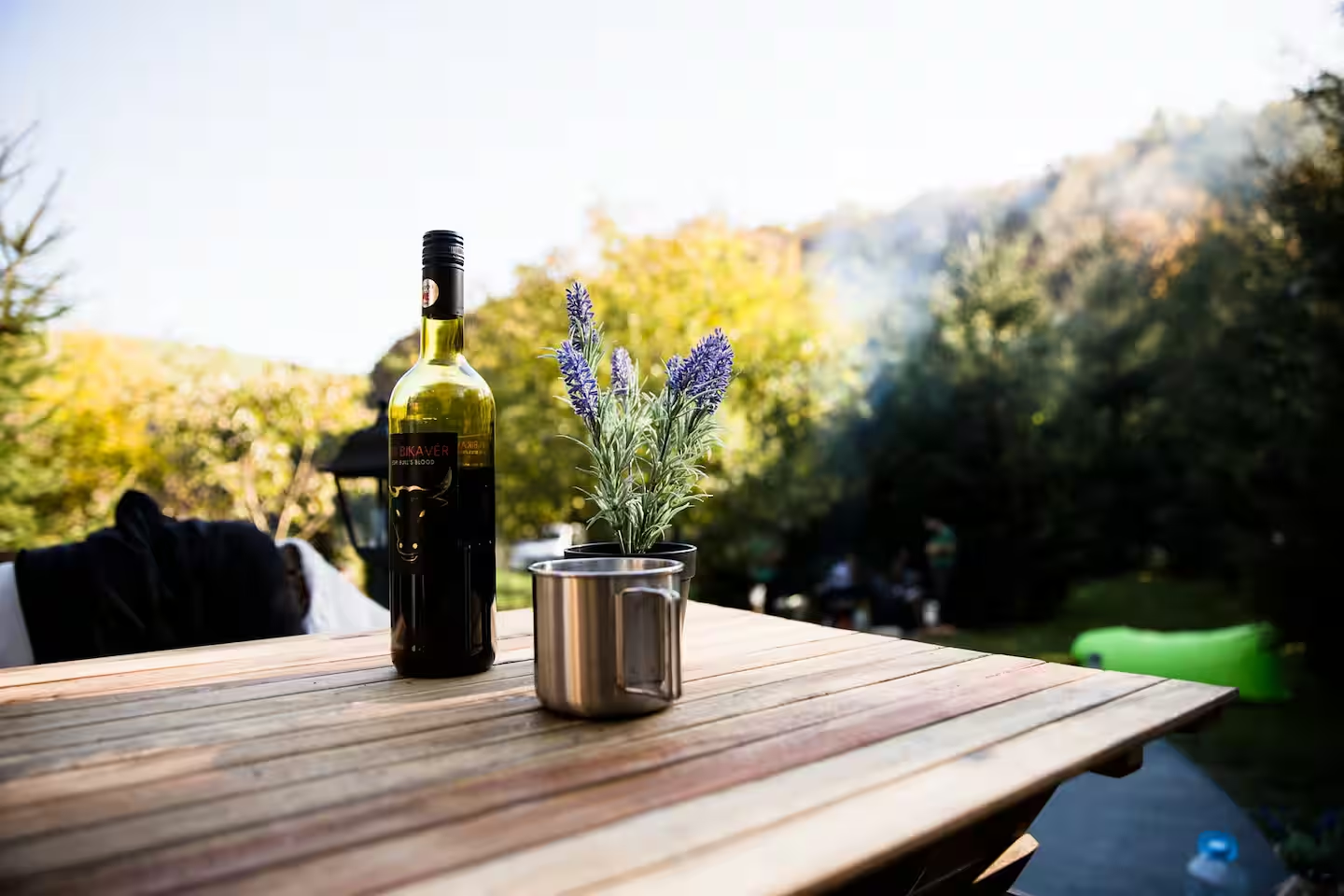
We cooked dinner outside, opened a bottle of wine, and sat talking late into the night — listening to the quiet, watching the sky slowly go dark above the forest. No phones, no internet, no people. Just us, the evening, and the mountains somewhere far to the south, where we had been in the middle of the Transfăgărășan earlier that day.
Day 4: Ciugudu de Sus → Ukrainian border (~700 km, and an incident with Hungarian customs)
Morning: why we chose to go back through Poland
The shortest way home from Romania is either through Moldova or straight north from Romania into Ukraine. We deliberately chose the longer route: through Hungary, Slovakia, and the southeast of Poland, into the Bieszczady National Park, and only from there onto the Ukrainian border.
The reason was simple. We had already been in mountains, and we wanted one more day in them. Paying a few hundred extra kilometres for views was, for us, a fair trade.
Romania–Hungary border: inspection “for fun”
This is where something happened that is worth mentioning — because it might happen to you too.
At the Hungarian checkpoint there were two queues. No signs suggesting they were for different types of vehicles — we just lined up in one of them, like everyone before us. A customs officer walked over and told us our queue was “only for cars with European plates”, and that we needed to move to the other one. Fine, noted.
That was not the end of it.
They opened the trunk, went through our documents, asked where we were going, why, for how long. The highlight was when one of them said they “could not let us through because a visa was required”. By 2023, Ukraine had already had visa-free access to the EU for several years. I calmly explained that. He kept us another 20 minutes, and during the whole process you could see his two colleagues exchanging looks and smirking to themselves.
Eventually they let us through. They had simply decided to mess with us for entertainment.
What to take from this: if you are driving with Ukrainian plates across the Hungary–Romania border, be prepared for the possibility that your inspection takes longer than other people’s. Patience, documents in order, and do not take the bait.
Bieszczady National Park: the last pearl
After the border — Slovakia, and then into southeastern Poland. By evening we were inside Bieszczady National Park — one of the least-trampled national parks in Europe. Small towns, empty roads, forests, hills stretching all the way to the horizon.
We drove slowly and, unfortunately, already in the dark — so there are no photos from this part. But the impression stuck: we want to come back here someday and spend a few proper days.
00:00 — Smilnytsia border crossing
We reached the Ukrainian border (Smilnytsia checkpoint) around midnight. We slept in the car at the crossing — about three hours. By morning, we were home.
What We Missed — and Why You Should Plan For It
We live in Canada now, and the road trips we are about to share are all on this side of the ocean. If we ever come back to Europe on vacation, we would probably choose new countries. But there are three places near the Transfăgărășan we did not reach, and we want to be honest about them — so if you are planning this trip, you can leave room for what we did not.
1. Bran Castle — “Dracula’s Castle”. A classic, for good reason. About 2.5 hours from the Transfăgărășan. If you have at least two days in Romania, do not skip it.
2. Cheile Bicazului (Bicaz Gorge). 3–4 hours east of the Transfăgărășan. Another dramatic mountain road, less known and less touristy. People who have driven both say the views are on the same level.
3. Transalpina (DN67C). The second great mountain road of Romania, parallel to the Transfăgărășan but further west. Higher, longer, quieter. Many of the people who have driven both actually prefer the Transalpina.
If we were planning this trip today with what we know now, we would allocate five days to Romania instead of two.
Practical Tips, in a Short List
- Start early. On the Transfăgărășan, aim to begin the climb before 7 AM. Later means slow traffic, noise, and no parking.
- Buy vignettes online in advance. Hungary and Romania for sure. Slovakia — only if you plan to use motorways.
- Refuel in Poland, not in Lithuania or Latvia. A full tank is about 10–15% cheaper.
- Google Maps and Waze together. Waze handles speed cameras, patrols, and live traffic.
- Service the brakes before the mountains. This is not a joke.
- Do not feed bears. Not even “just one apple”.
- Book Airbnbs well in advance. In August, Sibiu and the area around the Transfăgărășan fill up fast.
- August is the ideal season. The road is open, the weather is stable, and snow usually does not come back until September.
The End of Our First Chapter
This post closes our introductory trilogy — who we are, how we got here, and where it all started. The Transfăgărășan turned out to be more than just a beautiful road. It was the moment we understood that we wanted to write, not just drive.
A few months after this trip, we moved to Canada. Everything we write from now on lives on this side of the ocean: the Rockies, the Icefields Parkway, the Pacific coast, the endless forest roads of British Columbia. 23,000 km of Canadian roads already behind us, and dozens of routes still ahead.
See you on the next roads.