

A lake, forest, deer trails, picnic shelters, and the kind of quiet you can actually feel — all half an hour from the city.
If you live in Winnipeg and have ever wondered where you can escape into nature without a long drive, without booking a hotel, and without a real budget — the answer is probably 30 minutes north of the city. Birds Hill Provincial Park.
This is one of those cases where “a park near the city” does not mean a tidy little square with benches. It is 35 square kilometres of real forest, prairie, wetland, and lake. A place that gets more than a million visitors a year — and where you can still find the kind of quiet where you hear yourself breathe.
We first came here right after we bought our first car in Canada, and the park has been one of our favourite ways to get out of the city ever since — even just for a few hours.
Where It Is and How to Get There
Birds Hill is 24 kilometres north of Winnipeg, right along Highway 59. The drive takes 30–40 minutes, depending on traffic and which part of the city you are coming from. No transfers, no complicated junctions: get in the car, take Highway 59, and the park entrance signs appear.
GPS address: Birds Hill Provincial Park, MB. The west entrance is the main one.
Is There an Entry Fee
Manitoba’s provincial parks charge for entry — a daily vehicle permit is $9.50, a three-day (casual) pass $16.50, and an annual pass $44.50 (GST included). If you visit even a few times a year, the annual pass pays for itself quickly.
For a while, things were different. From April 1, 2025 to April 30, 2026, the provincial government made entry free to all provincial parks — no permits, no dashboard cards, just drive in. That window has now closed, and regular fees are back in place as of May 2026.
The easiest way to get a permit is online at manitobaelicensing.ca — you buy it, print it, and put it on the dashboard before you arrive. The permit has to match your licence plate number and stay visible in the windshield. If you do not have a printer at home, you can also buy one at the park office or at local retailers.
There are still a few free-entry windows in 2026, when no permit is required: Family Fishing Weekend (June 12–14), Parks Week (July 13–19), Labour Day Weekend (September 4–7), and the entire month of February 2027. Camping fees still apply on those dates.
Important: only the entry is covered by the vehicle permit. Camping, group shelter rentals, firewood, fishing licences, and horse rentals are separate paid services. And one more thing worth knowing — a Manitoba provincial park permit does not work in national parks like Riding Mountain. Those are run by Parks Canada and need their own pass.
For up-to-date fees and rules, the official page is here: Manitoba Parks — Park Fees.
What Kind of Park This Is (or “Why It Did Not Match What I Was Used To”)
If you grew up with the same idea of “park” that I grew up with — be ready to expand it. In my old understanding, a park was something inside the city, with paved alleys, benches, ice cream stands, and people walking on tidy paths.
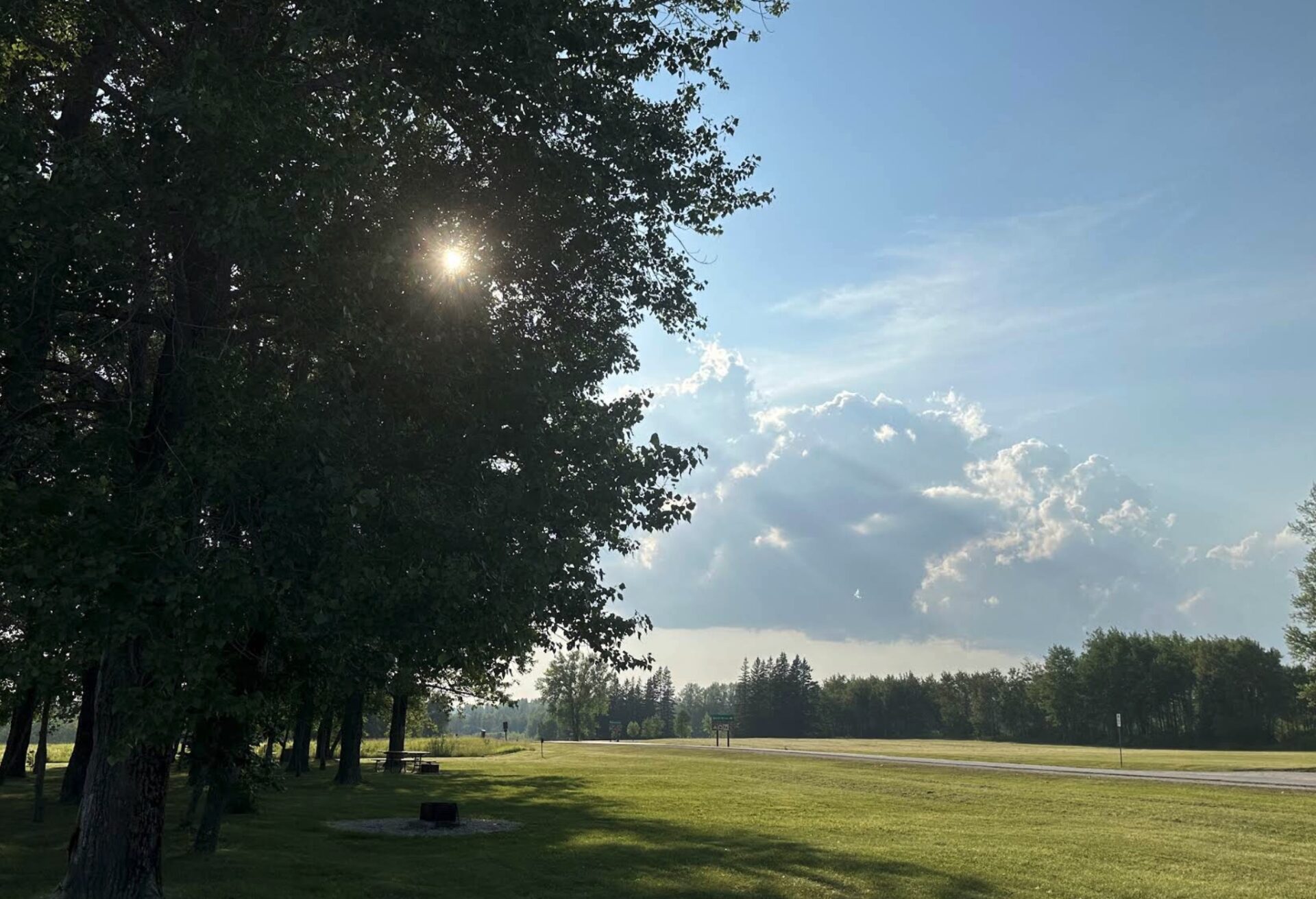
A Canadian provincial park is on a completely different level. This is a real forest. Oak-aspen groves, prairie meadows full of wildflowers (including a few rare orchid species protected by law), patches of conifers, a cedar bog, an artificial lake — Birds Hill Lake — in the middle, and kilometres of winding roads that take you past trees, picnic tables, fire pits, trails, and once in a while a deer thoughtfully crossing the road.
And at the same time — everything is set up for visitors. Toilets, water taps, sinks, garbage bins, fire pits ready to use, playgrounds, a store, a restaurant, a horse stable. So it is a wild forest where every detail for the visitor has been thought through. A combination that takes some getting used to.
A Bit of History
The park officially opened on July 15, 1967 — the ribbon was cut by then Manitoba premier Duff Roblin. The land was acquired from more than 150 local farmers — where today you see oak groves and trails, there used to be fields and farms.
The park is named after Dr. Curtis Bird — the first Speaker of the Manitoba Legislative Assembly in 1873. His father had received a large land grant here from the Hudson’s Bay Company.
A small historical curiosity: thanks to a slight elevation, this area once protected settlers during Red River floods — in 1826 and 1852. Water rose around it, and Birds Hill stayed “above the flood.”
And every July, the park hosts the Winnipeg Folk Festival, one of the largest folk music festivals in North America, drawing more than 70,000 people. In 1984, Pope John Paul II celebrated mass here during his visit to Manitoba. In 1992, Bryan Adams performed here. A place with a biography.
What Is Here
Birds Hill Lake and the Beach
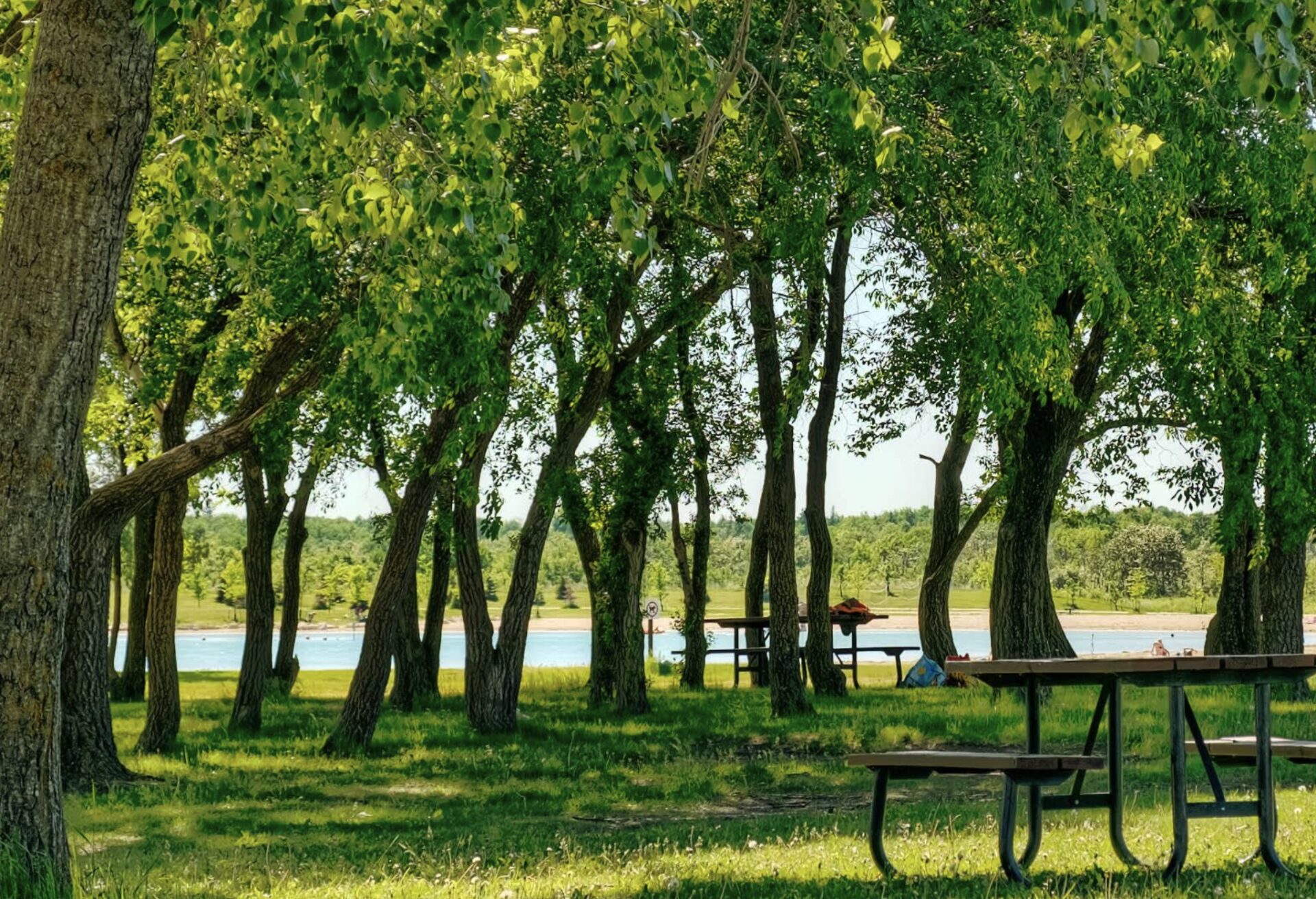
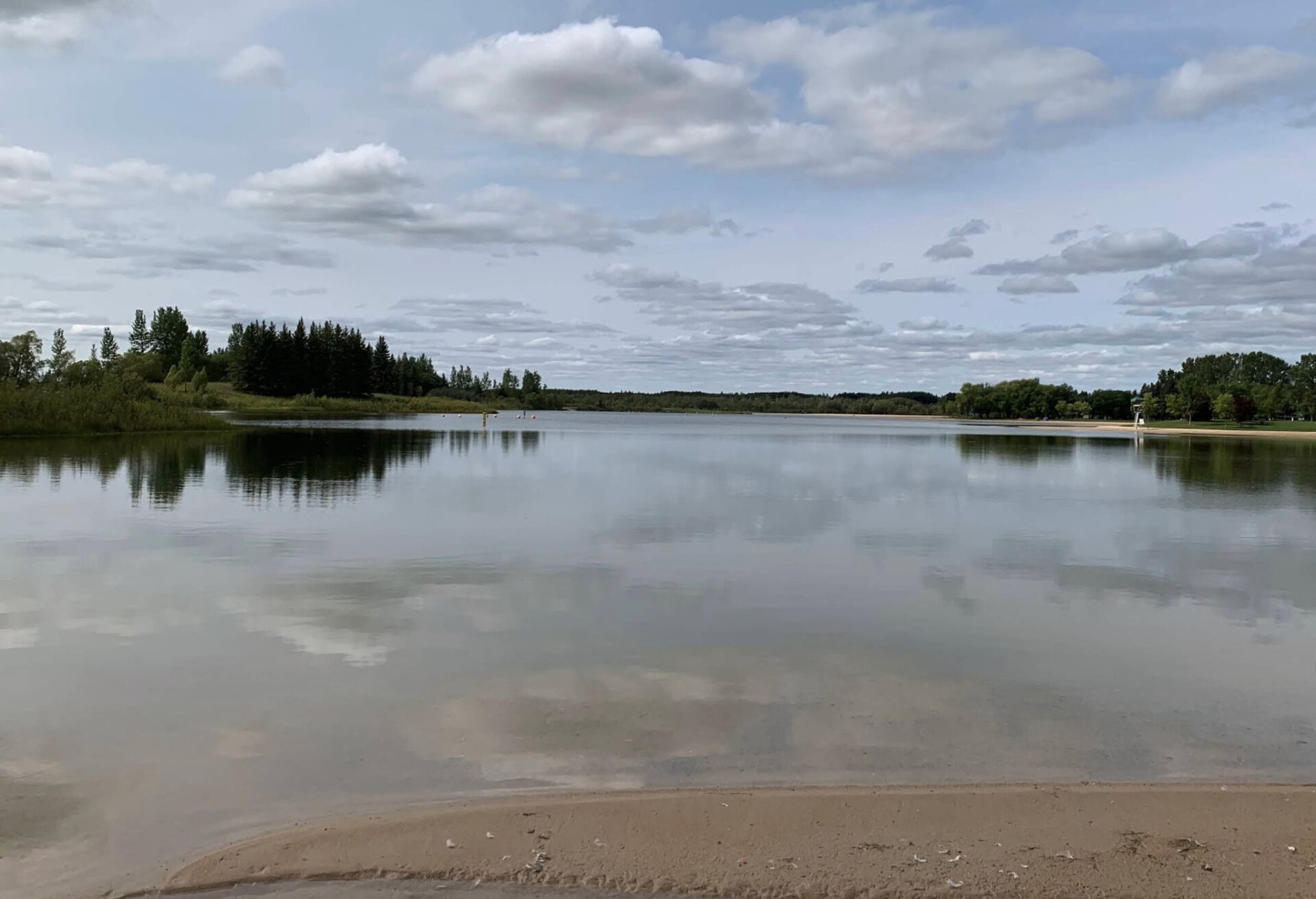
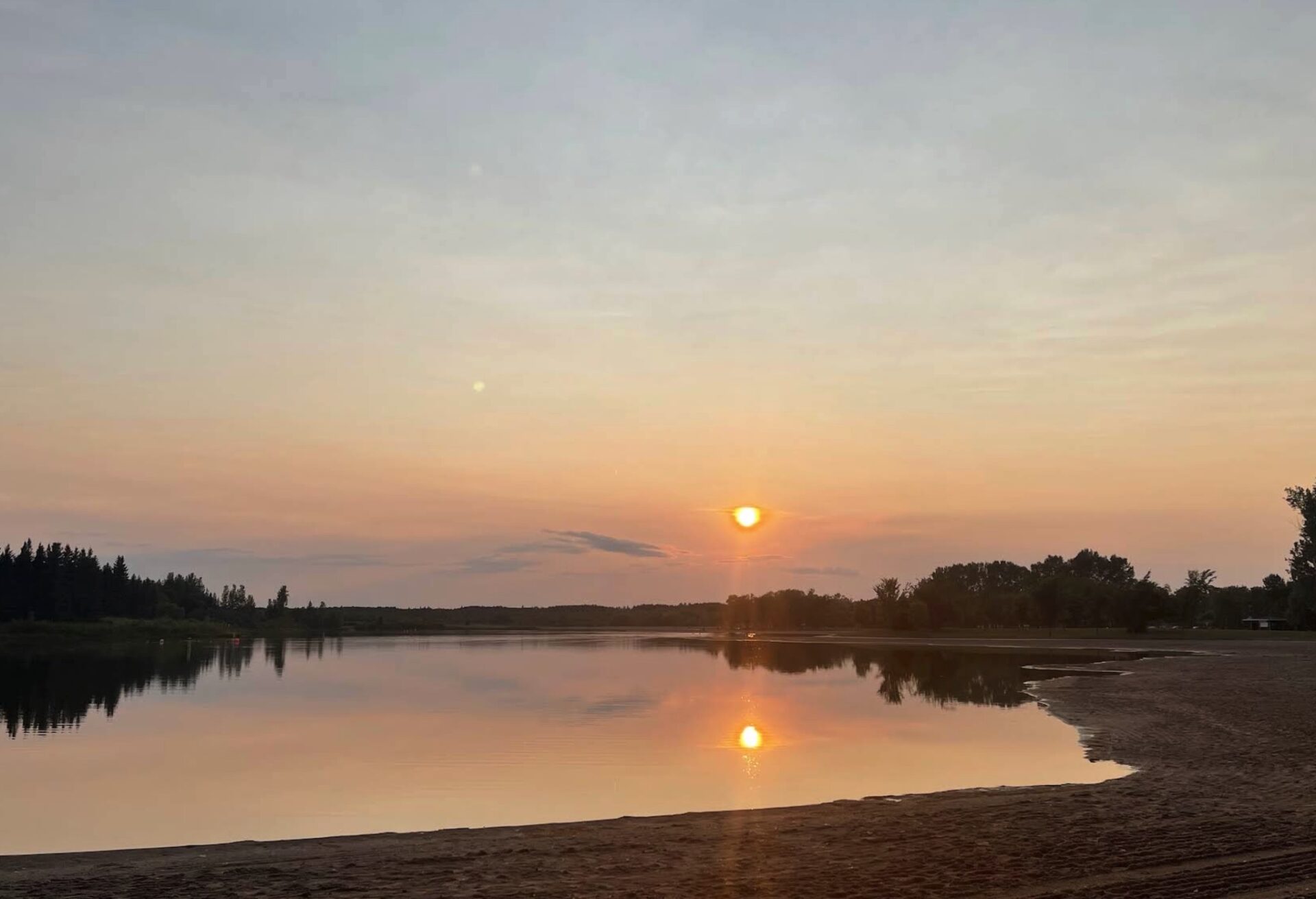
In the centre of the park there is an artificial lake of about 80 acres, with a beach roughly eight kilometres long. In summer, this is one of the busiest spots in the park, so on hot weekends — be ready for crowds.
The lake used to be one body of water, but at some point it was divided in two. The northern part is Birds Hill Lake, where everyone swims. The smaller southern part is now Kingfisher Lake, stocked with trout for fishing. So if you have seen both names on the map — that is the story.
The lake is shallow, especially close to the shore — perfect for families with small kids and for people who do not feel confident in the water. You will not get a real swim out of it, but for cooling off, splashing around, or sitting on the sand with a book, it is exactly right.
Motorboats are not allowed, so no noise, no waves. You can fish — for brown and rainbow trout — with a fishing licence, which you can actually buy at the park store.
There is a paved parking lot next to the beach, but on a hot day it fills up fast. Come early if you want a comfortable spot.
Picnic Shelters and Picnic Areas
This deserves its own section, because it surprised us the first time.
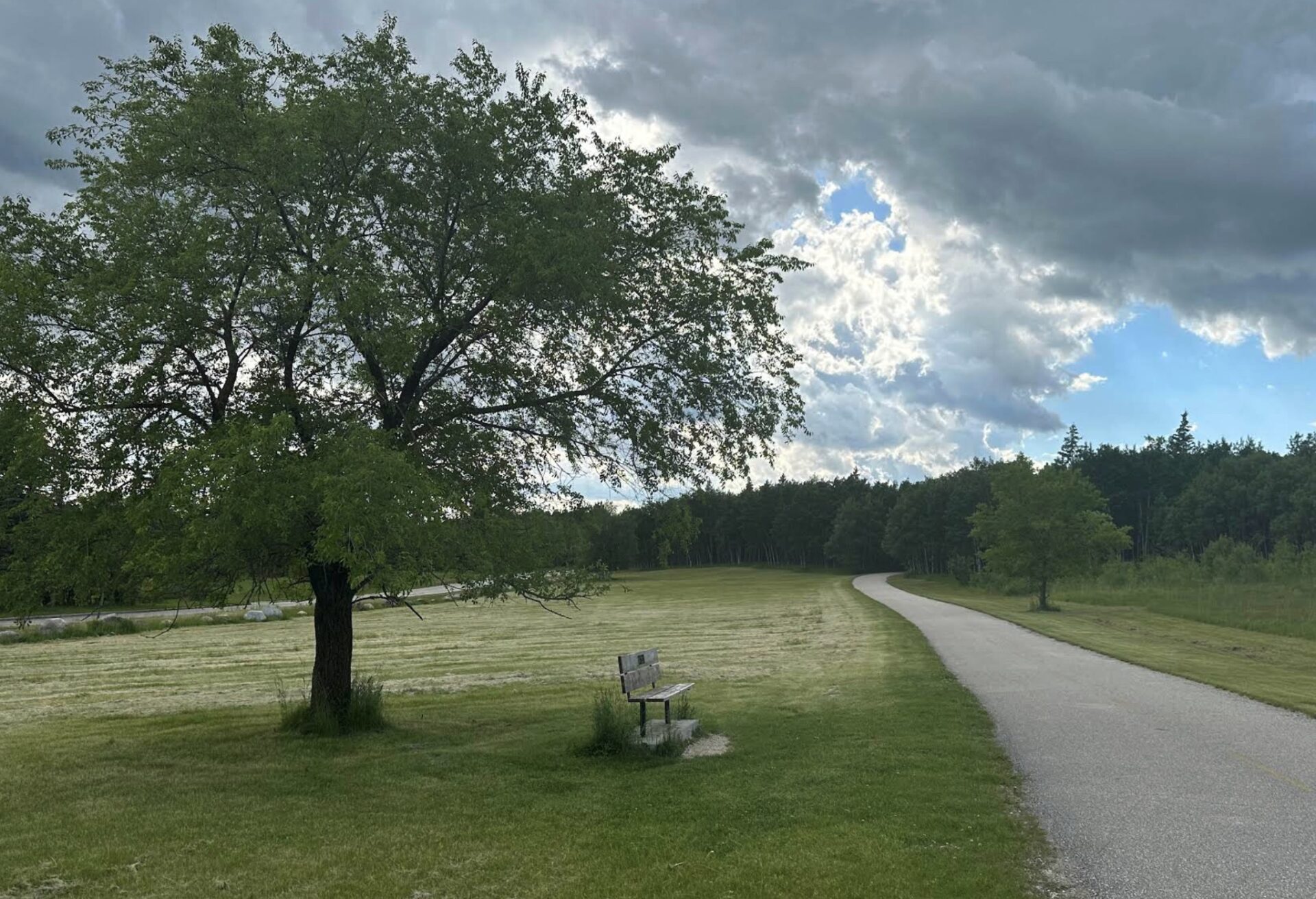
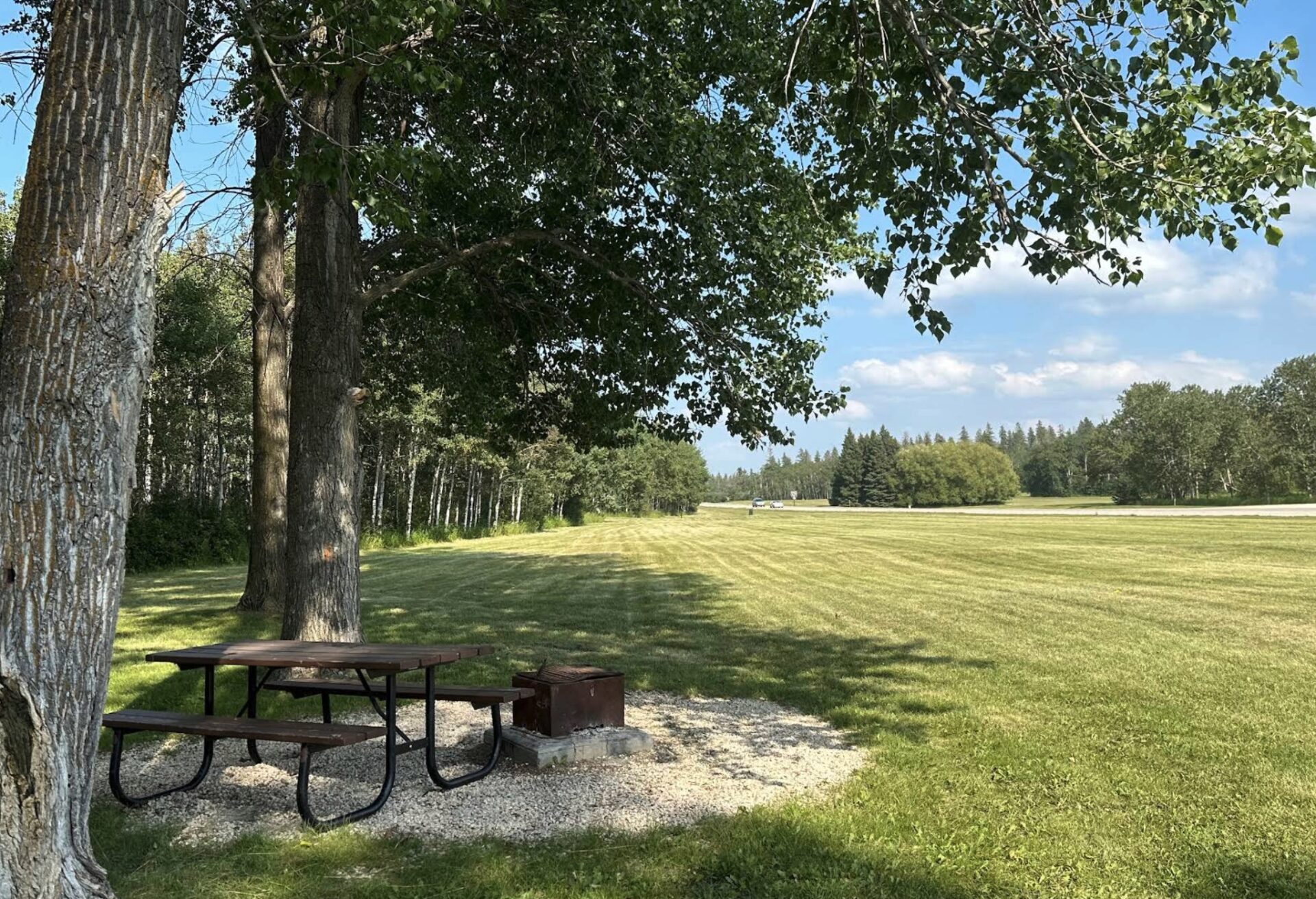
Picnic spots are spread all around the park. Some are simple — a table, benches, a fire pit, the road right beside you. These are free to use on a first-come basis. A solid option if you do not mind cars passing nearby (it is not a busy highway, just park traffic).
Then there are the larger shelters tucked deep into the forest — under a roof, with multiple sections, water taps, sinks, fire pits, and full setup. Some can be reserved ahead of time for a big group (paid), some are also free to use first-come. If you are sitting in a shelter and a group with a reservation shows up — you have to move.
Toilets are spread across the park so that from any shelter the nearest one is 5–10 minutes on foot. Clean, with soap and paper.
Trails
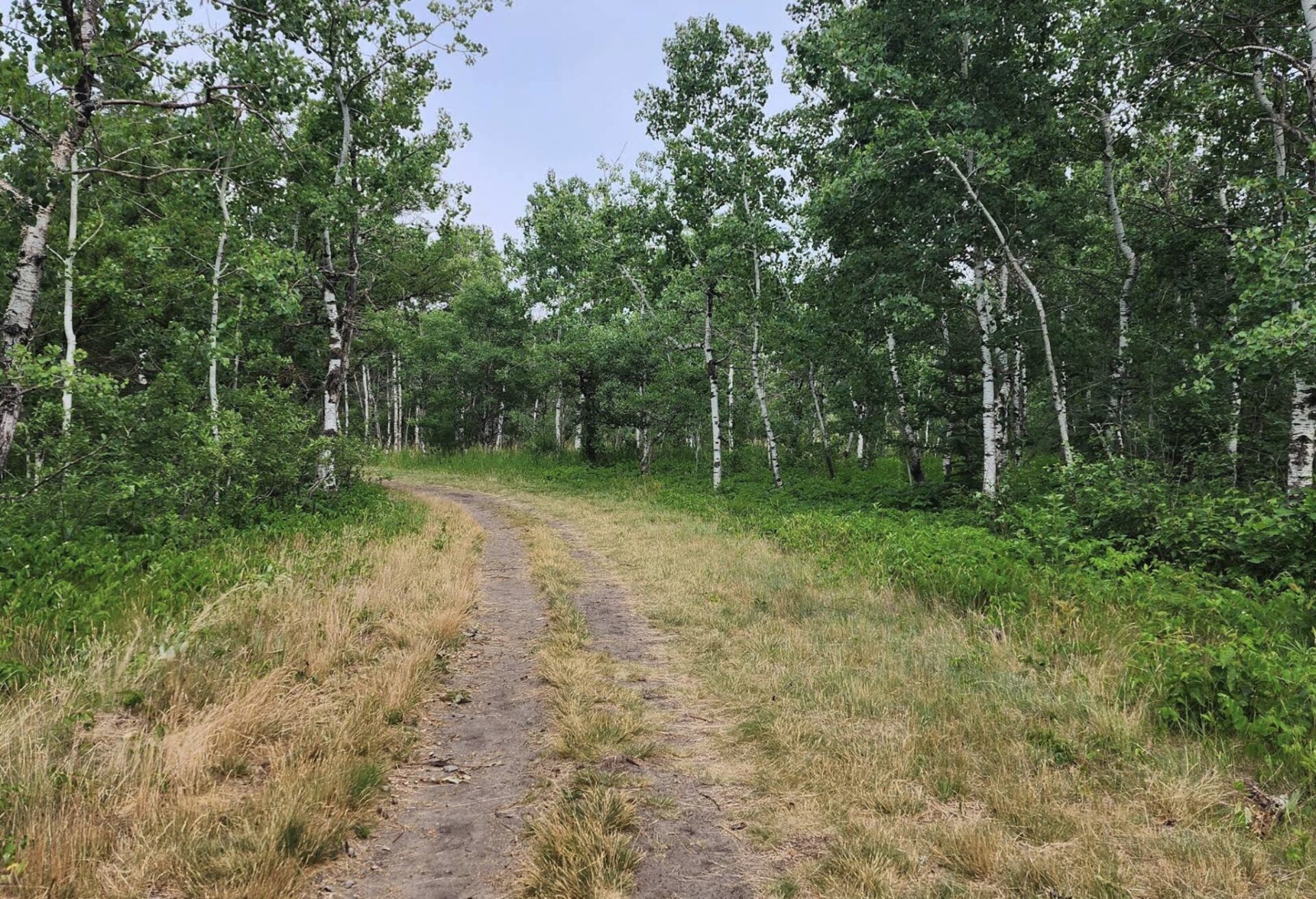
The park has more than 30 kilometres of walking trails — and they are all different.
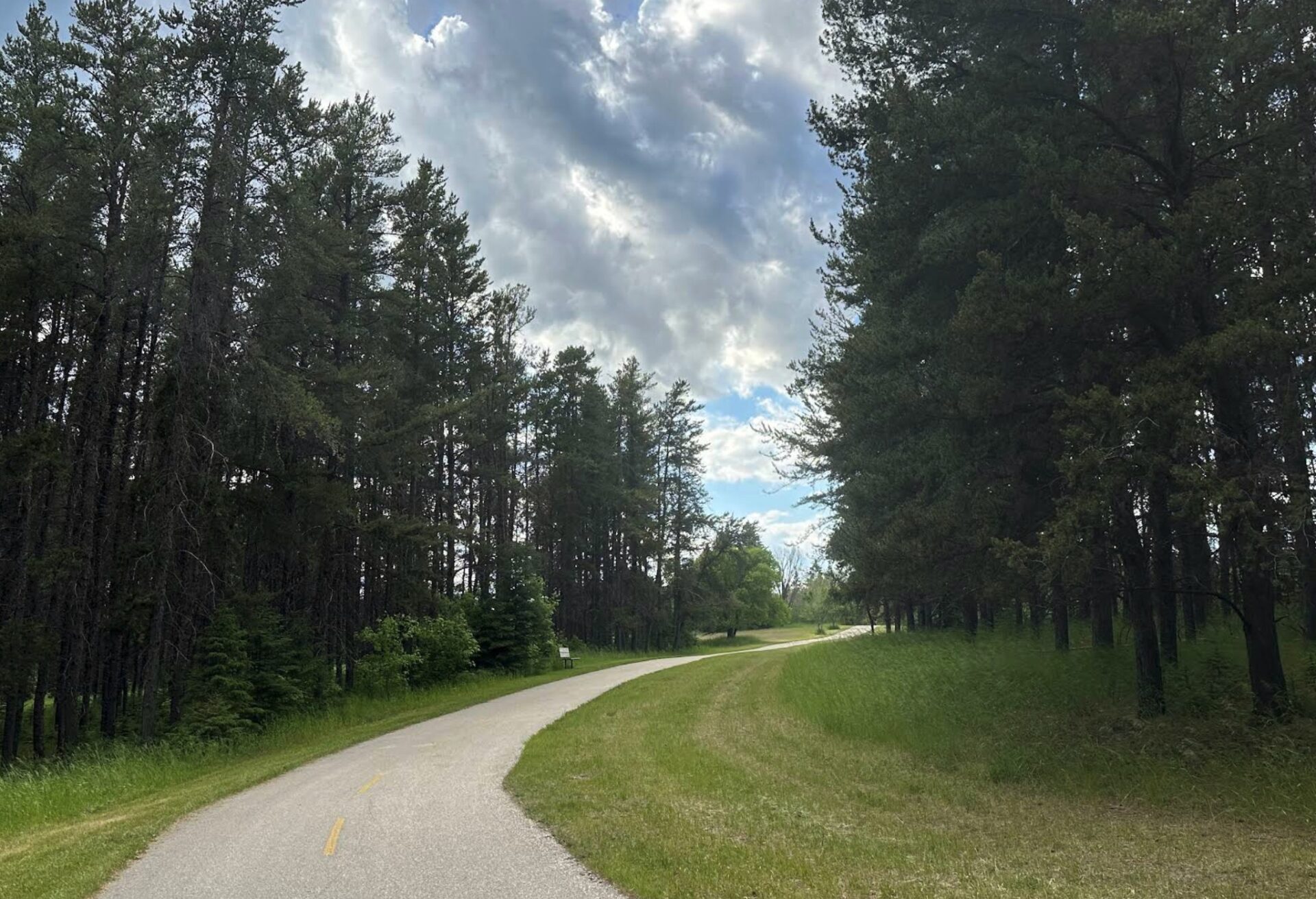
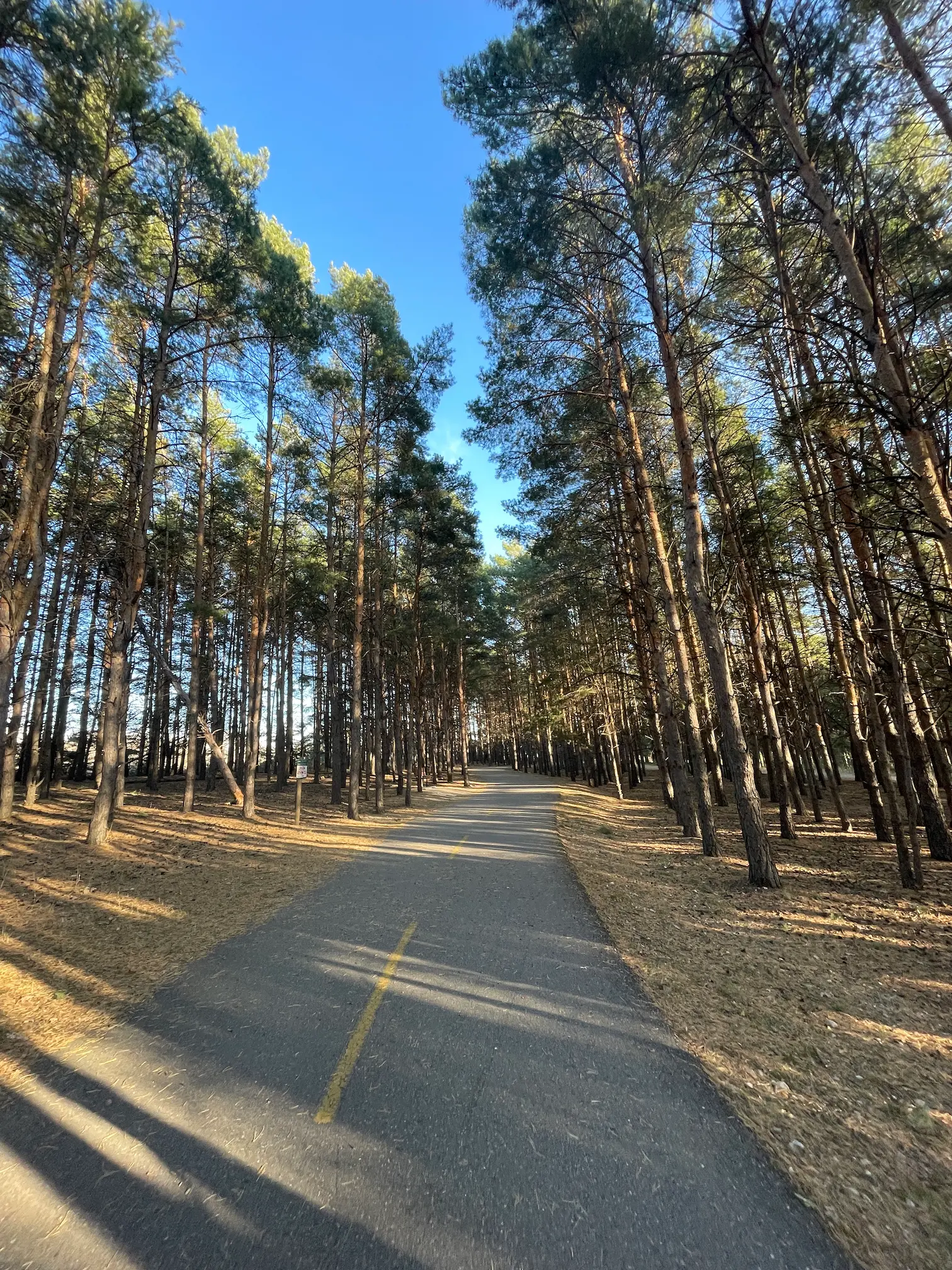
Lakeview Trail — 7.2 km of paved trail around the lake. Flat, easy, suitable for strollers, bikes, rollerblades, even wheelchairs. The most popular one.
Cedar Bog Trail — 3.5 km through a cedar bog on a wooden boardwalk. An unusual landscape for Manitoba.
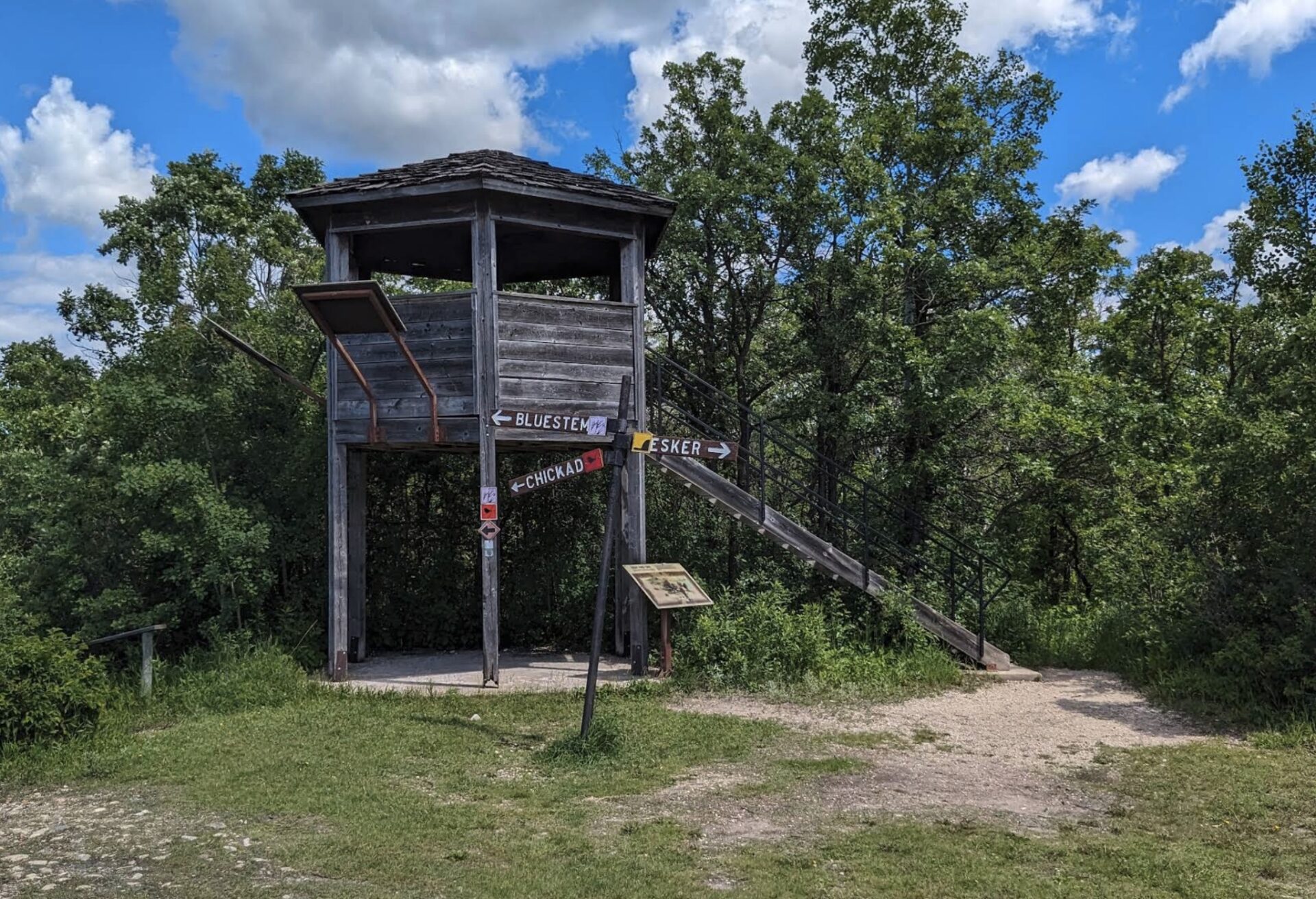
Pine Ridge Trail — 2.4 km past an old settler homestead with an observation tower at the end.
Whitetailed Deer Trail — 1.5 km with a real chance of meeting a deer.
Bur Oak, Nimowin — short interpretive loops for those who want to learn more about the park’s nature.
For longer hikes — Lime Kiln (8 km), Esker (6 km), Aspen (6.7 km), Bluestem (14 km).
Bikes, Rollerblades, Skateboards
A separate joy — paved routes for non-pedestrians. If you are on a bike, rollerblades, longboard, or with an electric scooter — Birds Hill becomes your best friend for a full summer day.
Horses
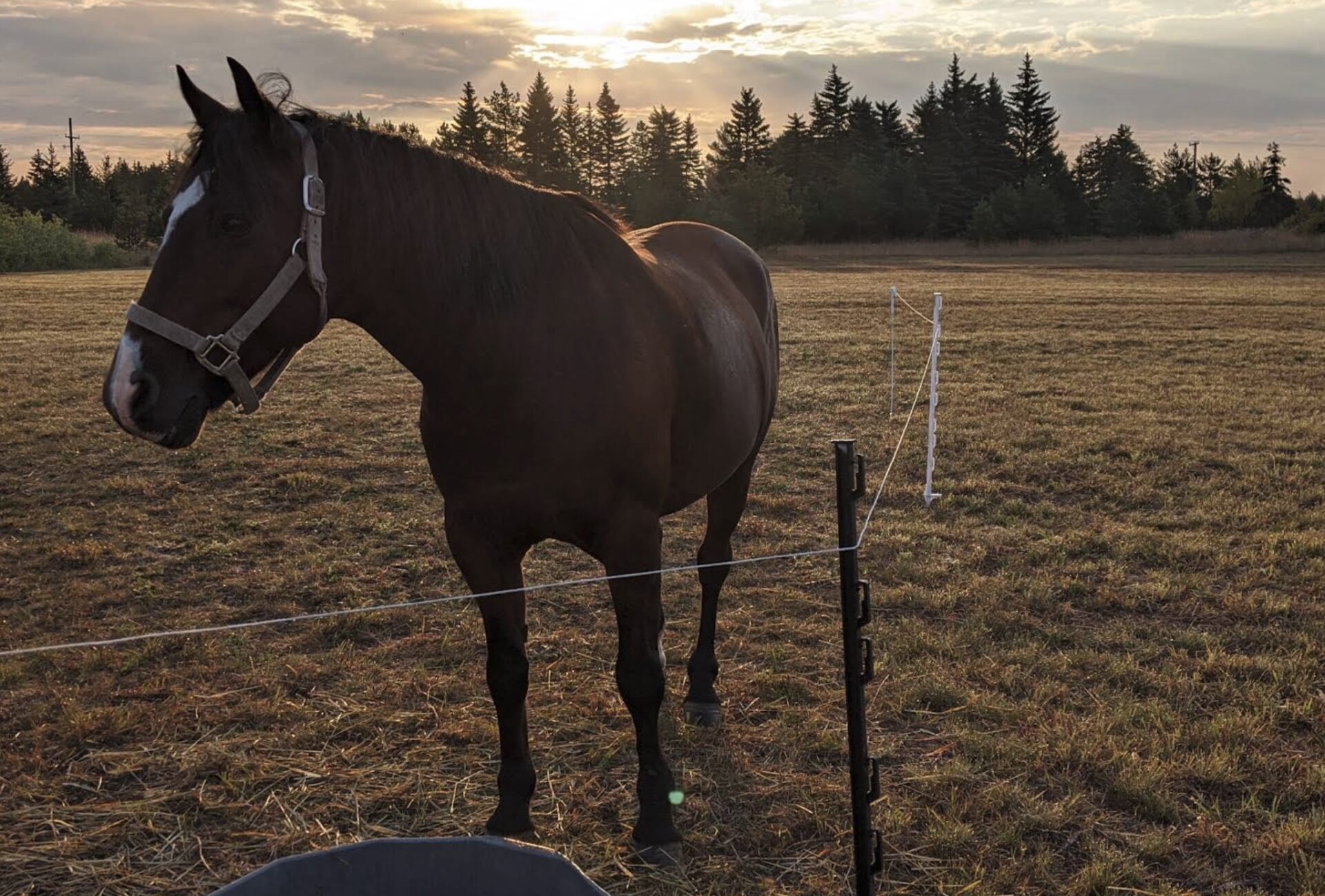
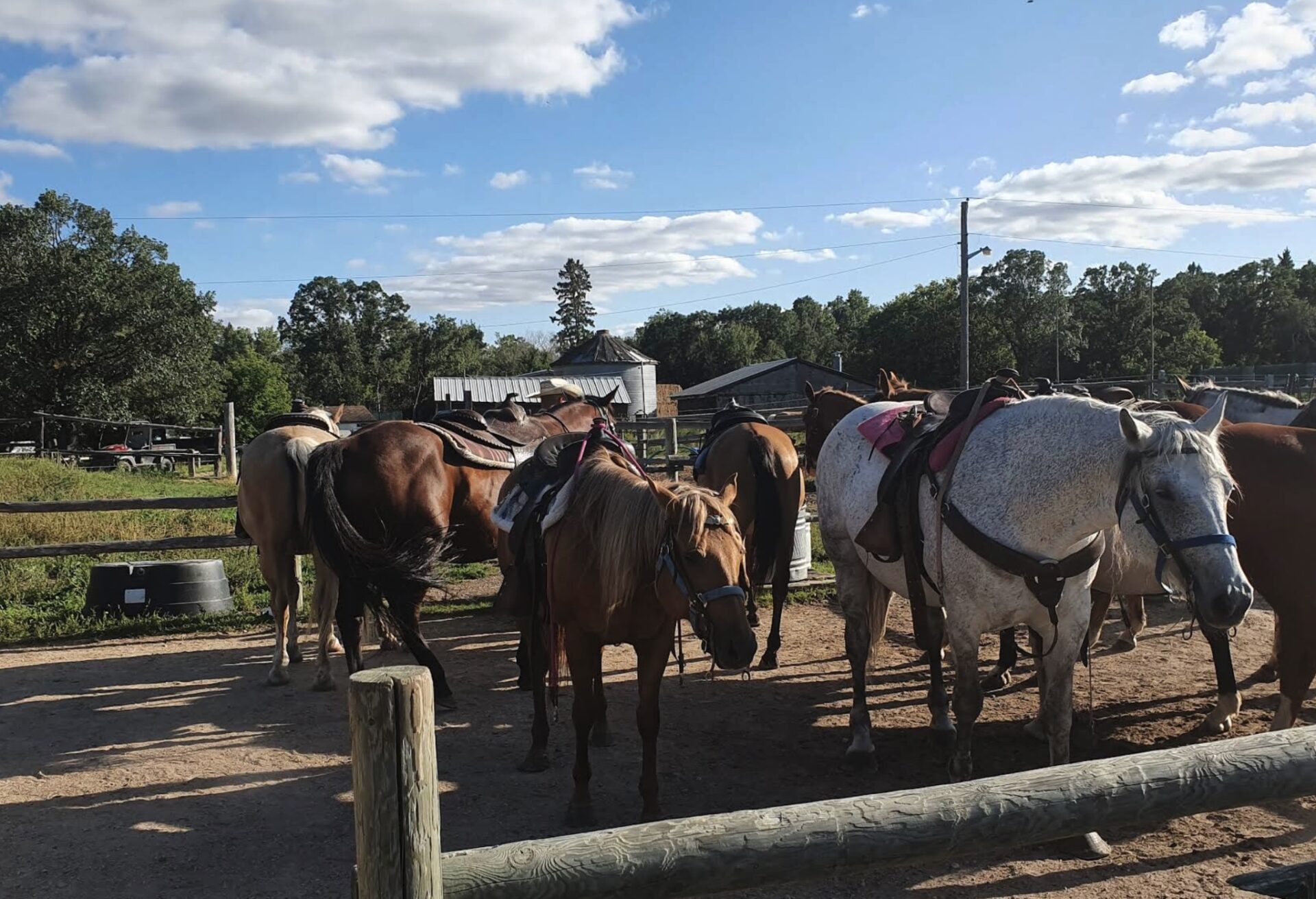
The park has a real riding stable. You can rent a horse, take a guided trail ride, or go on a horse-drawn carriage ride. In winter — sleigh rides too. It sounds like a scene from another movie, but it is real — just stop by the Riding Stable area.
Winter
We have not seen the park in winter ourselves yet — so I am writing what I know from others and from the official sources. The park is open year-round. In winter, 30 km of trails are groomed for cross-country skiing, with routes for skijoring (skiing with a dog) and kick-sledding. Heated shelters with firewood are scattered along the winter routes. Yes, the firewood is also free. No, I am still not used to it.
Animals You Might See
Birds Hill is home to more than 40 species of mammals and around 200 species of birds.
The most common sighting is white-tailed deer — the park population fluctuates between 250 and 450. The best chance to spot one is early morning or just before sunset, when they come out to graze in the meadows. Do not panic, do not run at them with your phone — just stand still and enjoy.
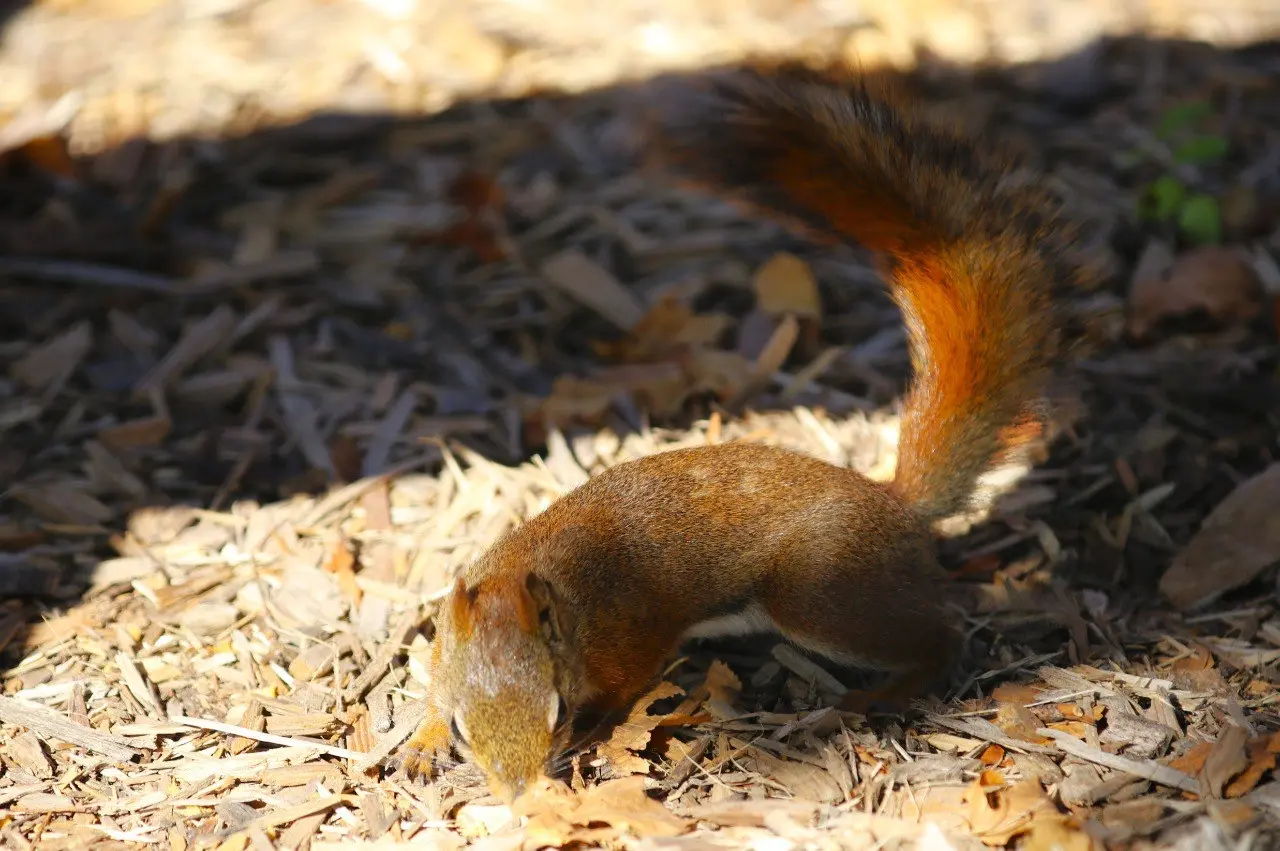
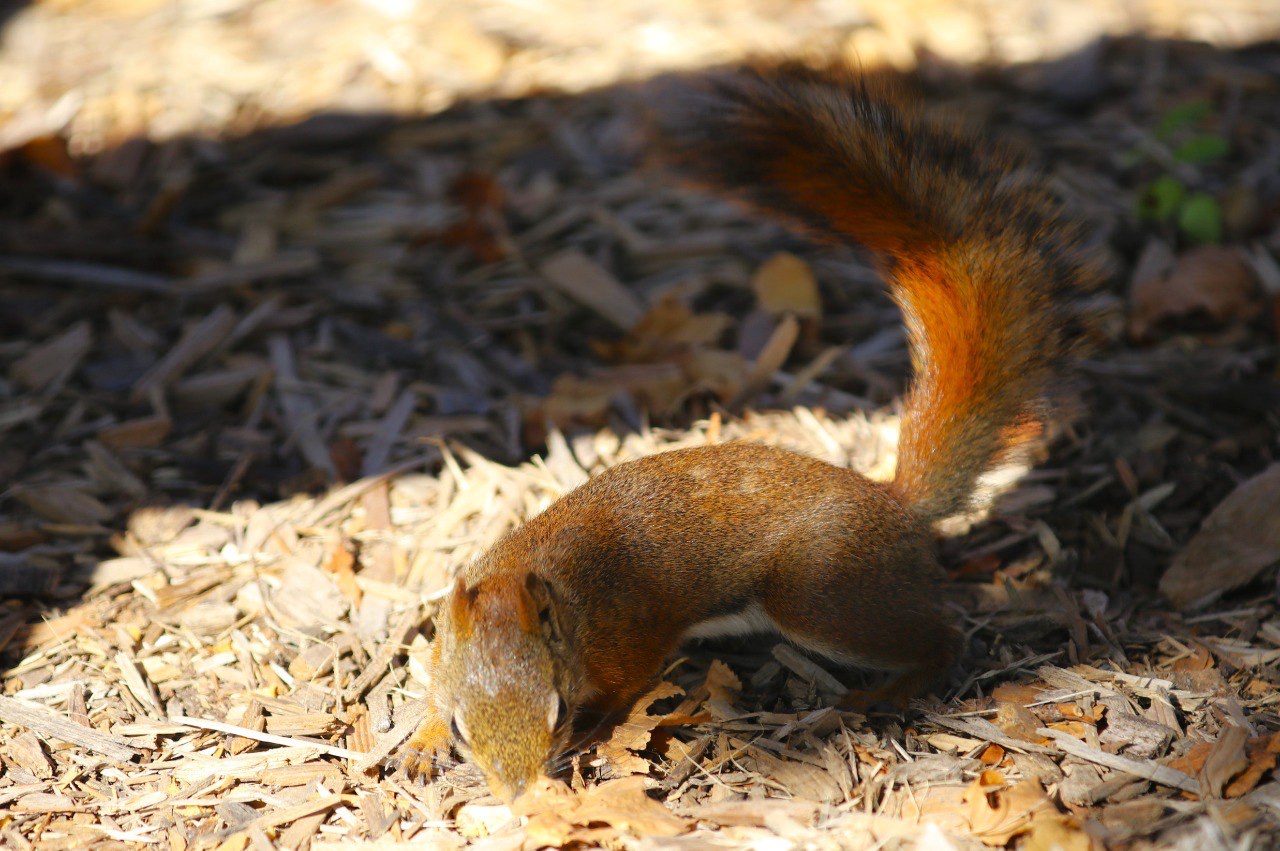
Besides deer, the park is home to coyotes (rarely seen — they are cautious), foxes, ground squirrels, small rodents, garter snakes (non-venomous, but capable of giving you a scare), frogs, and painted turtles. Bears occasionally pass through — not often, but possible.
Birds are a category of their own. Birding enthusiasts can easily spend a week here: hawks, shrikes, owls (including night owls), woodpeckers, songbirds, waterfowl. Among the rare species — Sprague’s pipit and lark sparrow.
Important: do not feed wild animals — it is harmful to them and against the rules. Do not try to pet a deer, do not leave food unattended, throw garbage in closed bins. You are a guest in their home.
Rules to Know Before You Go
Camping — Designated Areas Only
This is a separate important point. Camping in Birds Hill is allowed only at official campsites, pre-booked through manitobaparks.com (or by phone at 1-888-482-2267).
Pitching a tent “wherever you feel like it” — in the forest, on the beach, next to a shelter, in a parking lot — is strictly prohibited.
If the idea “we will be quiet, no one will notice” has crossed your mind — bad idea, for two reasons.
First — they will notice you. Park inspectors patrol regularly, especially in the evening and at night. Fines range from tens to hundreds of dollars, plus removal from the park. An alcohol violation is around $115 plus automatic eviction. Camping without a permit — at the inspector’s discretion.
Second — it is genuinely unsafe. Wildlife. This is not a city square, this is a forest where coyotes, bears, and various smaller residents go about their lives. Designated campsites are placed exactly to minimize risk for both people and animals. Outside of them, there is a real chance of waking up with someone’s nose in your tent. And it will not be the neighbour’s labrador.
Quiet Hours
11 PM to 9 AM — quiet hours. No loud music, no generators, no rowdy groups. Strictly enforced in the campground.
Speed Limit
A maximum of 20 km/h on campground roads. Sounds funny — until you picture kids on bikes, a deer deciding to cross the road, families with strollers.
Firewood
Because of the emerald ash borer — a pest destroying trees across Canada — you cannot bring your own firewood from other regions. Buy firewood on-site at the park store, or in Winnipeg in advance (it is sold at supermarkets and gas stations).
Camping
If you want to stay overnight — Birds Hill has a large campground along South Drive, near the lake.
Site options:
- Basic sites — no hookups, just a site with a fire pit and a table
- Electrical sites — with electricity
- Full-service — electricity, water, and sewer for trailers and RVs
- Group camping — for large parties, booked separately
The campground has showers, toilets, laundry, a store, and an RV wash. Book ahead — for popular summer weekends, good sites disappear within minutes when the booking system opens (usually in April).
When to Go
Summer (June–August) — peak season. Everything is open, the lake is warm, events are running. Among them — Winnipeg Folk Festival on the second weekend of July, drawing more than 70,000 visitors. If you are not into crowds — pick weekdays or other weekends.
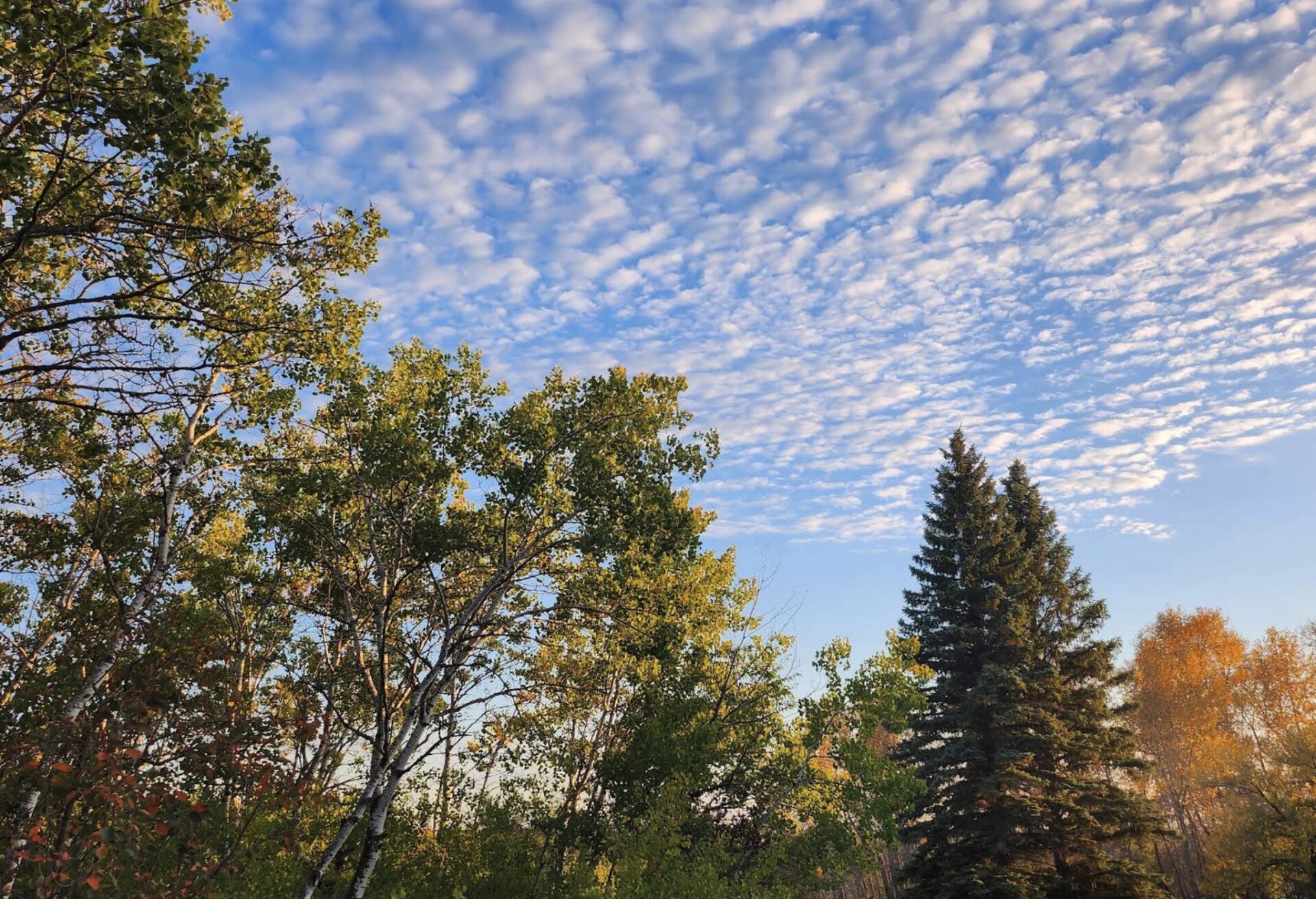
Fall — probably the most beautiful season. October turns the park into something unbelievable: aspens go gold, oaks go red, the air goes cool and quiet. Fewer people, bigger views.
Spring — nature is waking up, wildflowers appear, birds return. Can still be cool and damp.
Winter — for snow lovers. Cross-country skiing, dog sleds, horse-drawn rides. The park looks like a Christmas card.
What to Bring
For summer — essentials:
- Water (you can refill from taps in the park, but bring a backup)
- Sunscreen
- Bug spray — without it, on a summer evening you become “dinner”. Available at any pharmacy or grocery store
- A light sweater or jacket — temperatures drop in the evening
- Sealed food containers (wildlife has a good nose)
- Firewood (or buy on-site)
- Garbage bags, to take your trash with you
- Comfortable walking shoes
If you bring a dog — a leash is required. The park has lots of other dogs of all sizes and personalities, plus wildlife. Dogs are not allowed on the swimming beach. On trails and in picnic areas — yes, on leash.
Who This Place Is For
Birds Hill works for almost everyone:
- Families with kids — beach, bike paths, easy walks, space
- Couples — picnic, forest walks, quiet
- Sports lovers — running, cycling, rollerblading, winter skiing
- Birders and nature photographers — 200+ bird species
- Horse lovers — stable with rentals
- Campers — from basic camping to full-service RV
- Music fans — Winnipeg Folk Festival in July
Quick Reference
| What | Details |
|---|---|
| Location | 24 km north of Winnipeg, Highway 59 |
| Drive time | ~30–40 min from Winnipeg |
| Entry | free until April 30, 2026; then ~$9.50/day |
| Season | open year-round; camping from late April to Thanksgiving in October |
| Alcohol | only at a reserved campsite |
| Camping | designated sites only, book at manitobaparks.com |
| Cannabis | banned everywhere in the park |
| Wildlife | deer, coyotes, foxes, bears, 200+ bird species |
| Dog-friendly | yes, on leash; no dogs on swimming beach |
| Bikes/rollerblades | yes, 7.2 km of paved trail |
Why It Is Worth a Visit
Birds Hill is the kind of place that does not require a week of planning, a hotel booking, or a real budget. There is something here for everyone: the loud picnic with friends, the quiet afternoon under the pines, the 10 km run, the lazy hour on the sand with a book.
It is a park where you can come for an hour and stay all day. With us, that has happened more than once.
If you want to see what a real day in Birds Hill looks like — not a guide, but the story — I wrote about our first picnic.