



An hour north of Winnipeg, a small town named after the Norse heaven sits on the edge of a sea-sized lake. We went twice, both in the off-season — once with ice still on the water, once chasing a November sunset — and fell for the quiet both times.
We first came to Gimli with the same friends who’d shown us Selkirk — the kind of friends who say “get in, we’re going to the lake” and don’t tell you much more than that. This is the story of that day, and the one that followed.
Where It Is
Gimli sits about 75 kilometres — roughly an hour’s drive — north of Winnipeg, up Highway 8 or Highway 9, on the western shore of Lake Winnipeg in the region known as the Interlake. The lake is so vast that standing on the beach feels less like a lakeshore and more like an ocean coast: water to the horizon, big weather, and a wind that comes straight off the open water.
The heart of it all is Gimli Beach — a 600-metre stretch of sandy, Blue Flag shoreline running between the main harbour pier at the end of Centre Street and Barney Thomas Drive, with a boardwalk along its edge. Everything we’ll talk about here — the beach, the harbour, the Viking, the painted seawall, the town’s little main street — is within an easy walk of one another.
The Heart of New Iceland
Here is the thing that makes Gimli unlike anywhere else in Manitoba: it is, quite literally, the heart of a place once called New Iceland.
The first Icelandic settlers arrived on this shore in 1875, and to this day Gimli is home to the largest population of people of Icelandic descent anywhere outside of Iceland itself. You can still hear Icelandic spoken here, and the town’s whole identity is woven from it. Even the name carries it: in Norse mythology, Gimli is the fairest hall of the afterlife — the beautiful place where the worthy go. A town named after heaven, on the edge of an inland sea. It is hard to think of a better name.
There is a quieter, more honest layer to the story too, and we love the town more for it. Those first Icelandic settlers survived their early, brutal winters in large part thanks to the help of the local Anishinaabe, Cree and Métis, who shared the knowledge that kept the newcomers alive. If you want the full story, the New Iceland Heritage Museum in town tells it — with around 3,500 artifacts donated by local families, and exhibits that also honour the role of Indigenous communities and the first Ukrainians who came to the area. For a Ukrainian family standing on this Manitoba shore, that last detail felt like a small thread connecting us to the place.
The Viking and Viking Park
You cannot miss him. Standing guard near the waterfront is the Gimli Viking — a 4.6-metre (15-foot) fibreglass warrior with a shield and a spear, gazing out over the lake. He was raised in 1967 as a project for Canada’s centennial, designed by Gissur Eliasson and built by sculptor George Barone, and unveiled by the President of Iceland himself. He is, frankly, one of the most unexpected things you can come across on a quiet Manitoba street — which is exactly how we found him.
In 2017 the town built Viking Park around him, and this is where one of our small mysteries got solved. Behind the statue, a set of accessible walkways winds through gardens of native plants, past benches and paving stones inscribed with names — the names of Icelandic families and the donors who made the park happen, alongside stelae honouring people who shaped the community. There are even little figures of trolls and elves tucked among the greenery, a nod to Iceland’s “hidden folk.” A later phase connected the park all the way down to the harbour with tree-lined pathways and a timber boardwalk along the old breakwater. So when you follow that path of names from the Viking toward the water, you are walking a deliberate thread of the town’s history straight down to its working heart: the harbour.
The Working Harbour and the Painted Seawall
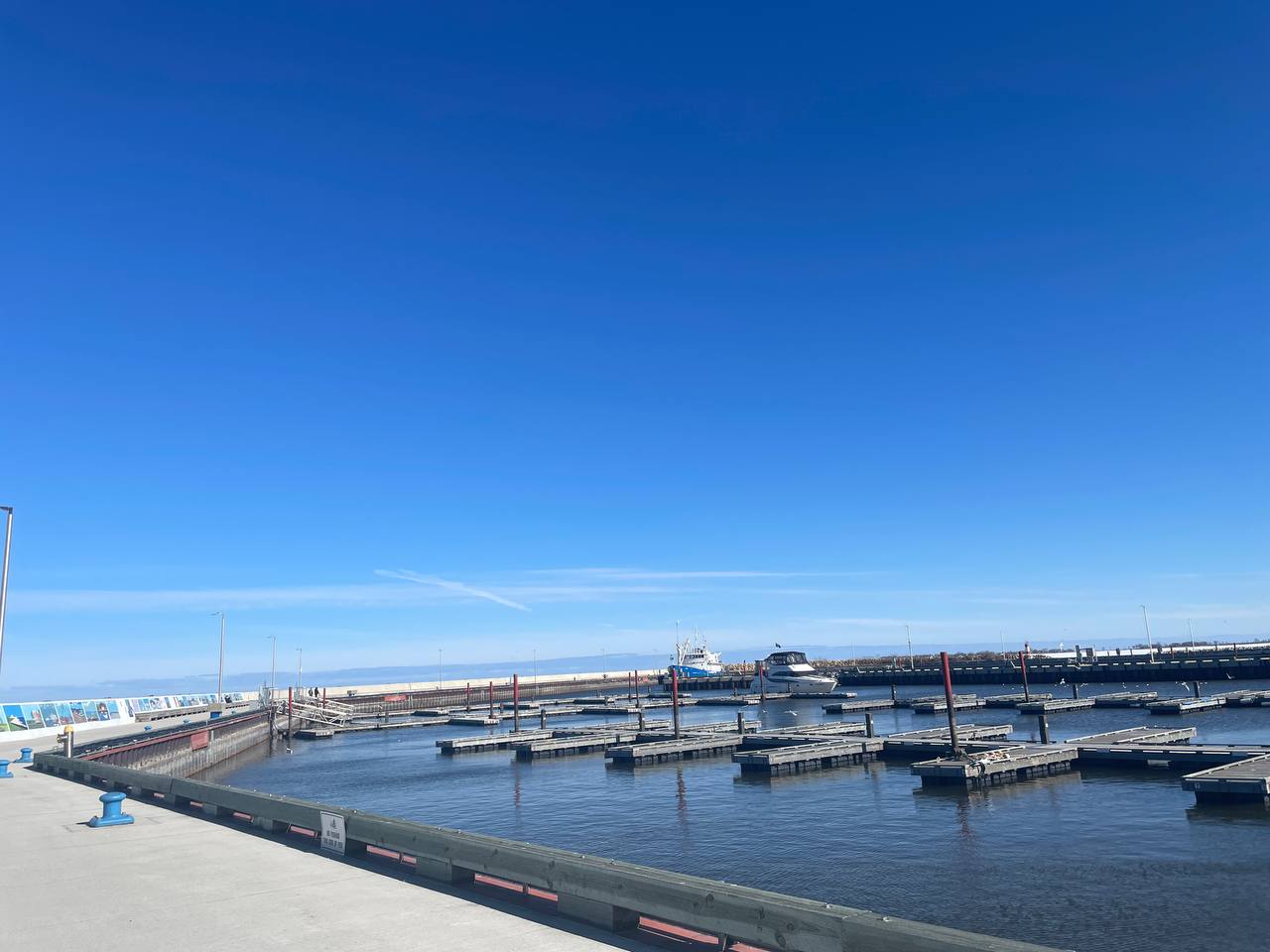
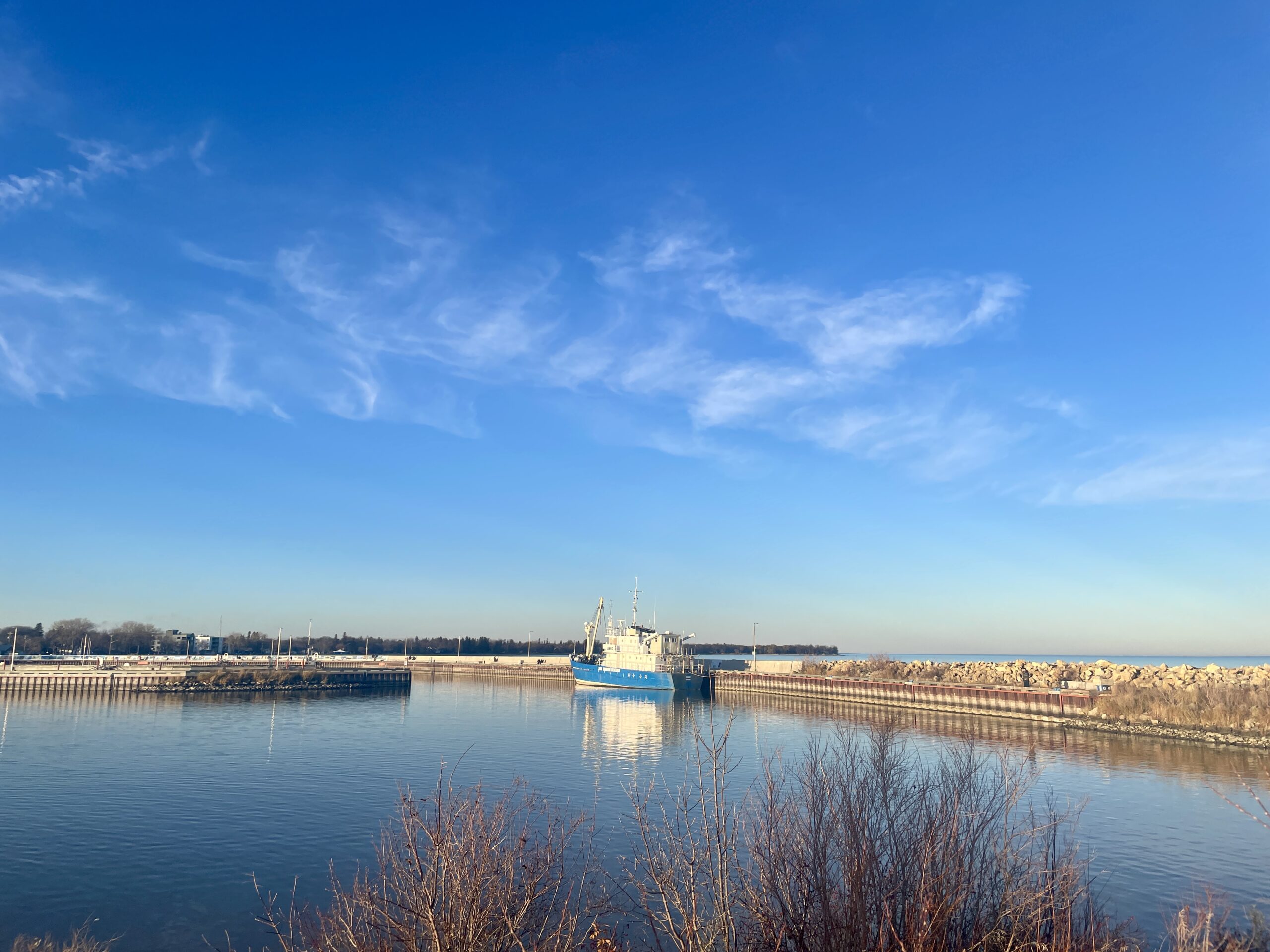
And it really is a working harbour — not a decoration. Gimli Harbour is a commercial fishing harbour, the largest of its kind between Thunder Bay and the west coast of British Columbia. It supports more than 50 commercial fishing families working the Lake Winnipeg fishery, and it has berths for up to 200 pleasure craft besides. So the boats you see moored along the piers — and there are a lot of them, in every shape and size — are the real thing: fishing boats and pleasure craft, the everyday traffic of a lake town. (It is also why the fish on local menus is about as fresh as fish gets.)
The other thing to slow down for is the painted seawall. Along the pier and breakwater runs what’s known as the Seawall Gallery — dozens of murals by local artists, depicting the town’s landmarks, its fishing history, and its Icelandic folklore. Some are polished and professional; some look like they were painted by a child; some are decades old, signed and dated quietly in a corner; and some are brand new. Walking the length of it is like reading the town’s diary, one panel at a time.
At the very end of the historic pier there’s a small lighthouse and the best vantage point in town for a photo of the lake and the shoreline.
The Beach and the Boardwalk
The beach itself is a proper one: 600 metres of sand with Blue Flag status, a boardwalk for walkers and cyclists, a big playground, and — in season — washrooms, outdoor showers, a concession stand, beach volleyball, and water-sport rentals. In summer this is where thousands of people come to swim, paddle and sunbathe.
One honest note: this is a northern lake beach, not a tropical one. The sand gives way to stretches of rock in places, the water can be bracingly cold well into the warm months, and on a windy day Lake Winnipeg means it. Bring layers, and in summer, water shoes aren’t a bad idea.
Off-Season Gimli: Our Two Visits
Most of what’s written about Gimli is about summer — the festivals, the swimming, the packed boardwalk. But we have only ever seen it in the off-season, and honestly, I think that’s when it tells the truth about itself.
April: Ice on the Lake
Our first visit was in April, and we had no idea what we were walking into. Friends invited us — the same ones we’d gone to Selkirk with — and we trusted them completely. We didn’t look the town up on a map, didn’t read about it, didn’t even glance at a photo. All we were told was: we’re going to a little town called Gimli, to the beach, to Lake Winnipeg. That was it. But we were curious anyway — back then we’d barely been anywhere in Manitoba.
It was still cold and windy, the way it is here after winter — because in Manitoba, March does not mean spring, and April only half-promises it. The snow had nearly gone everywhere else, so the last thing I expected was to find the lake still full of ice. Great pale slabs of it, drifting and breaking apart. I know now that another week or two and we’d have missed it entirely. We left Nika at home — the day was too raw for a long walk for her — and our friends drove, the four of us talking and listening to music the whole way.
The town, when we reached it, felt impossibly small and impossibly quiet. Almost no one on the streets — maybe it was the weather. We grabbed coffee at the Tim Hortons nearest the beach and drove right down to the water. A sandy beach, an endless lake, and not another soul in sight — just us. We walked the boardwalk, found the pier with its handful of boats, and spent a long time in front of the seawall murals. Some of them were fresh, and painted in a Ukrainian style, on Ukrainian themes — which stopped me in my tracks. Others were old and faded, each one different, some beautiful and some barely more than a scribble. We walked the pier with our coffee warming our hands and our eyes stuck on that huge sheet of ice-strewn water.
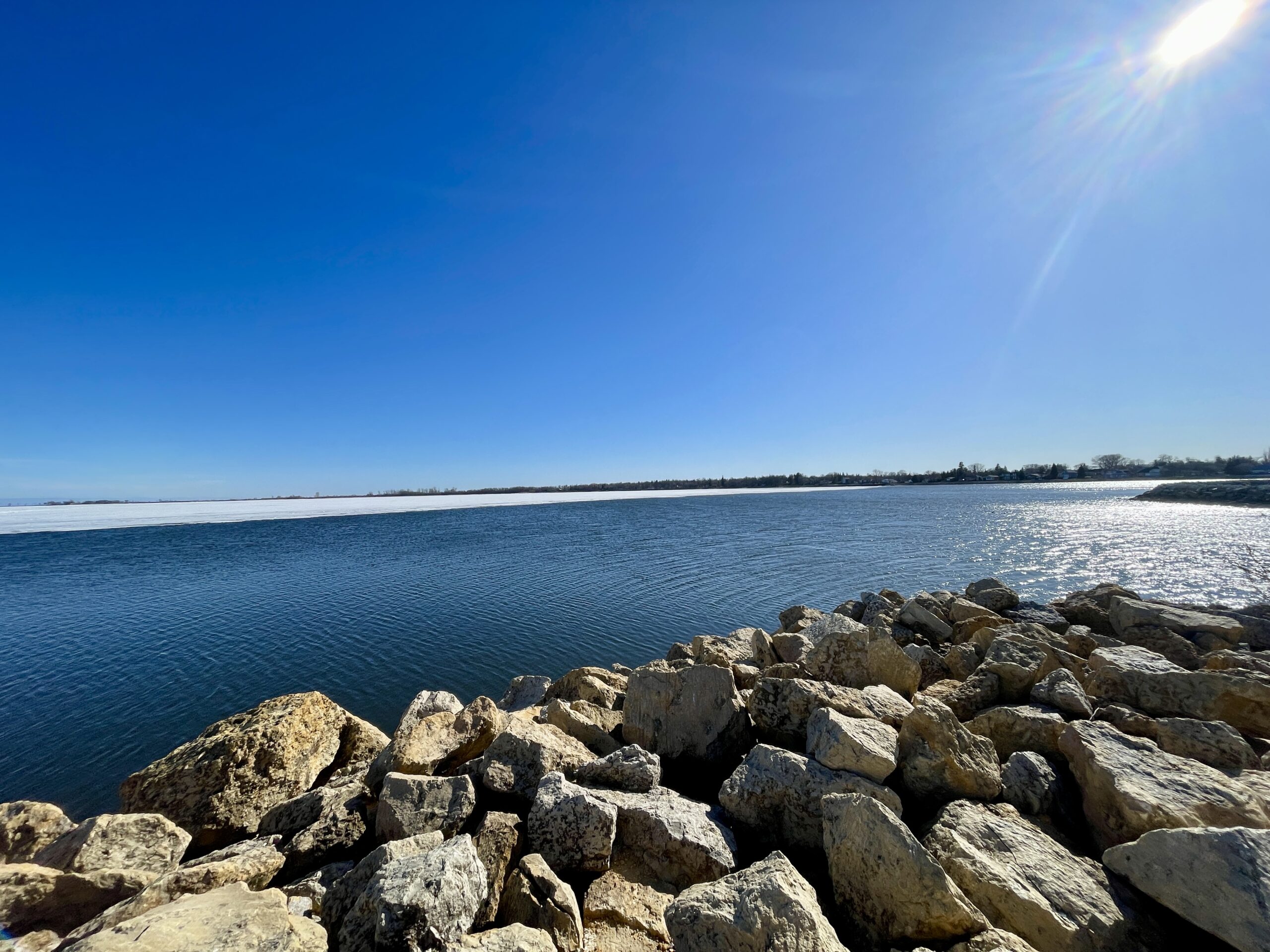
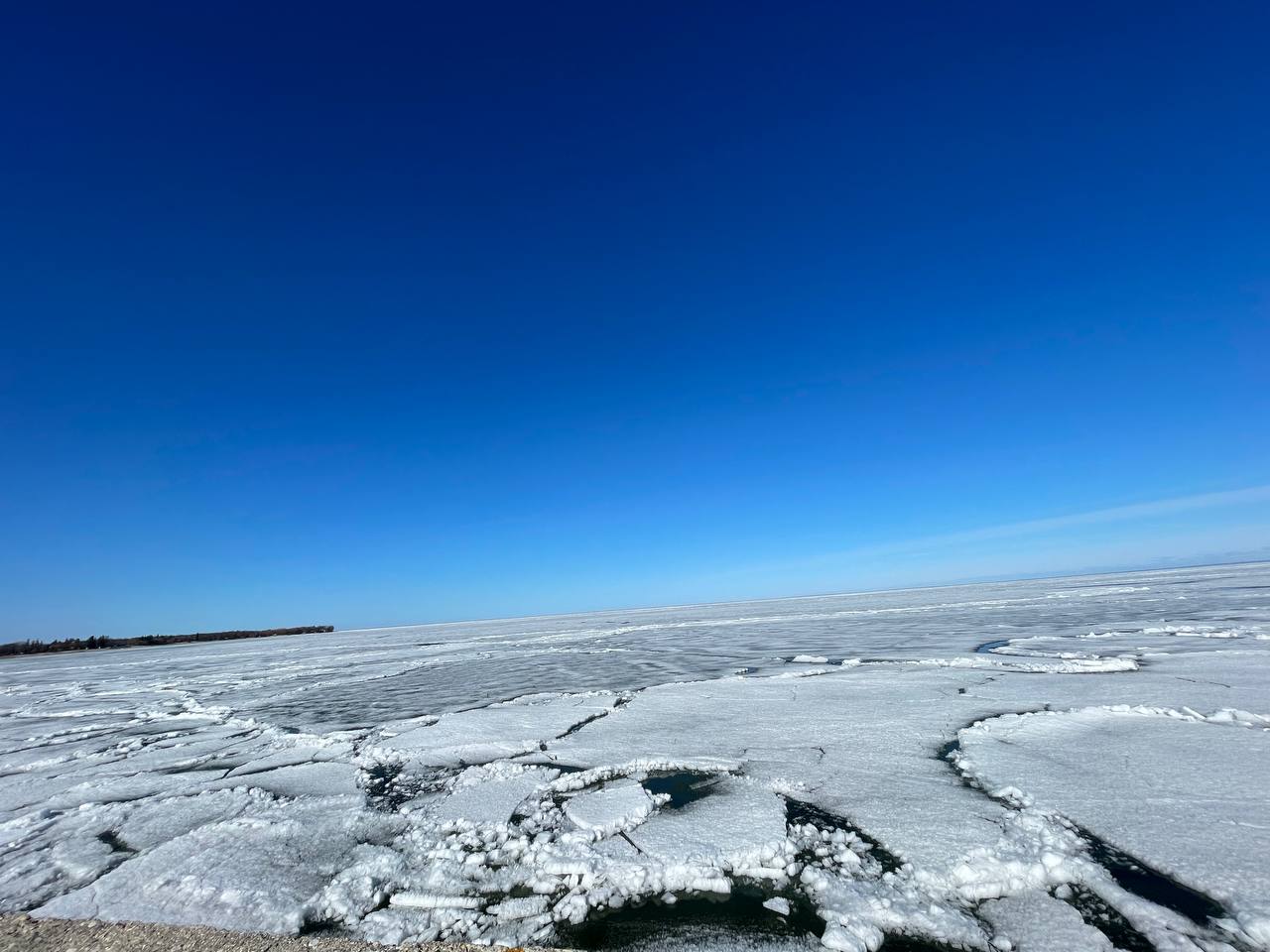
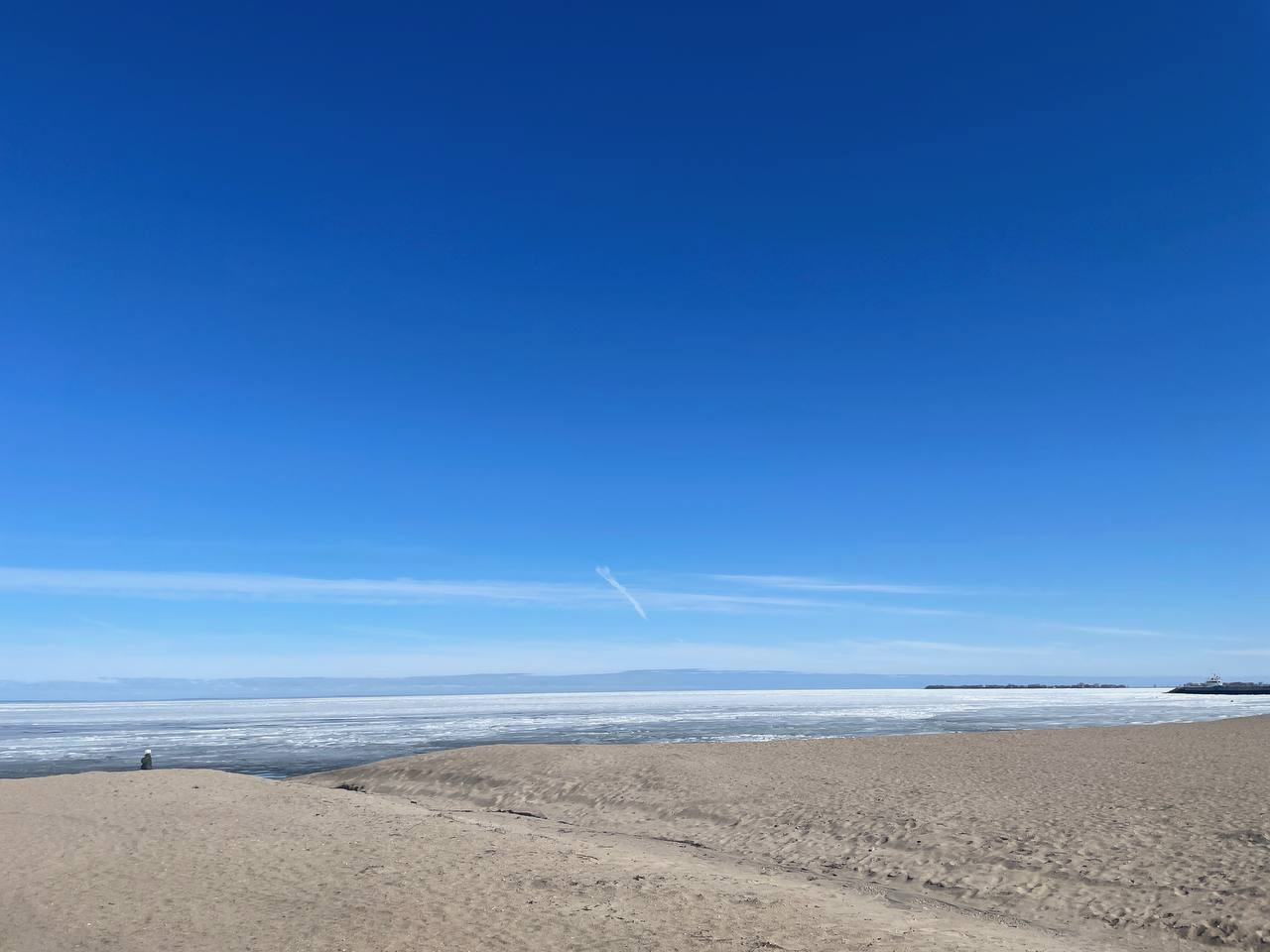
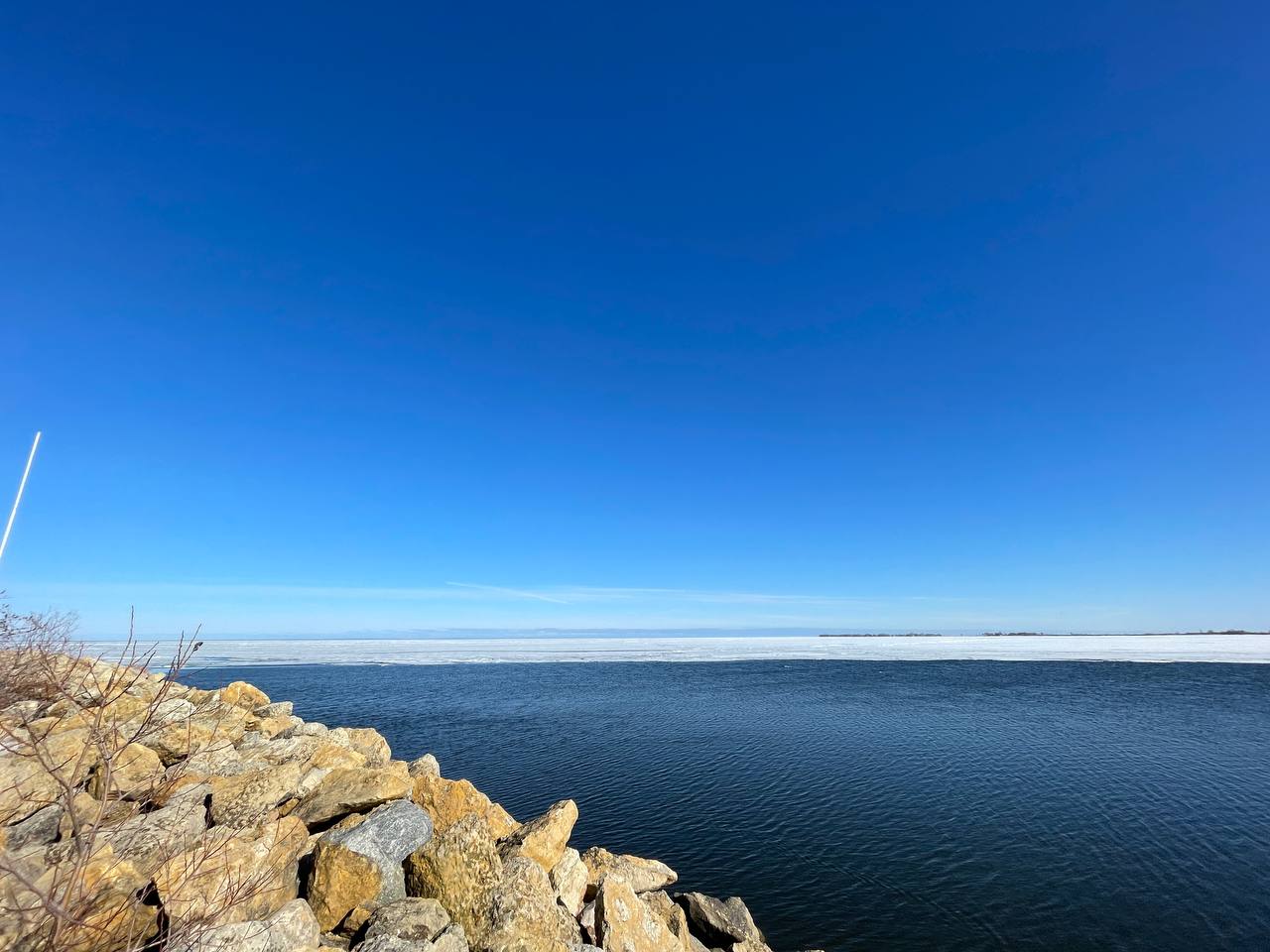
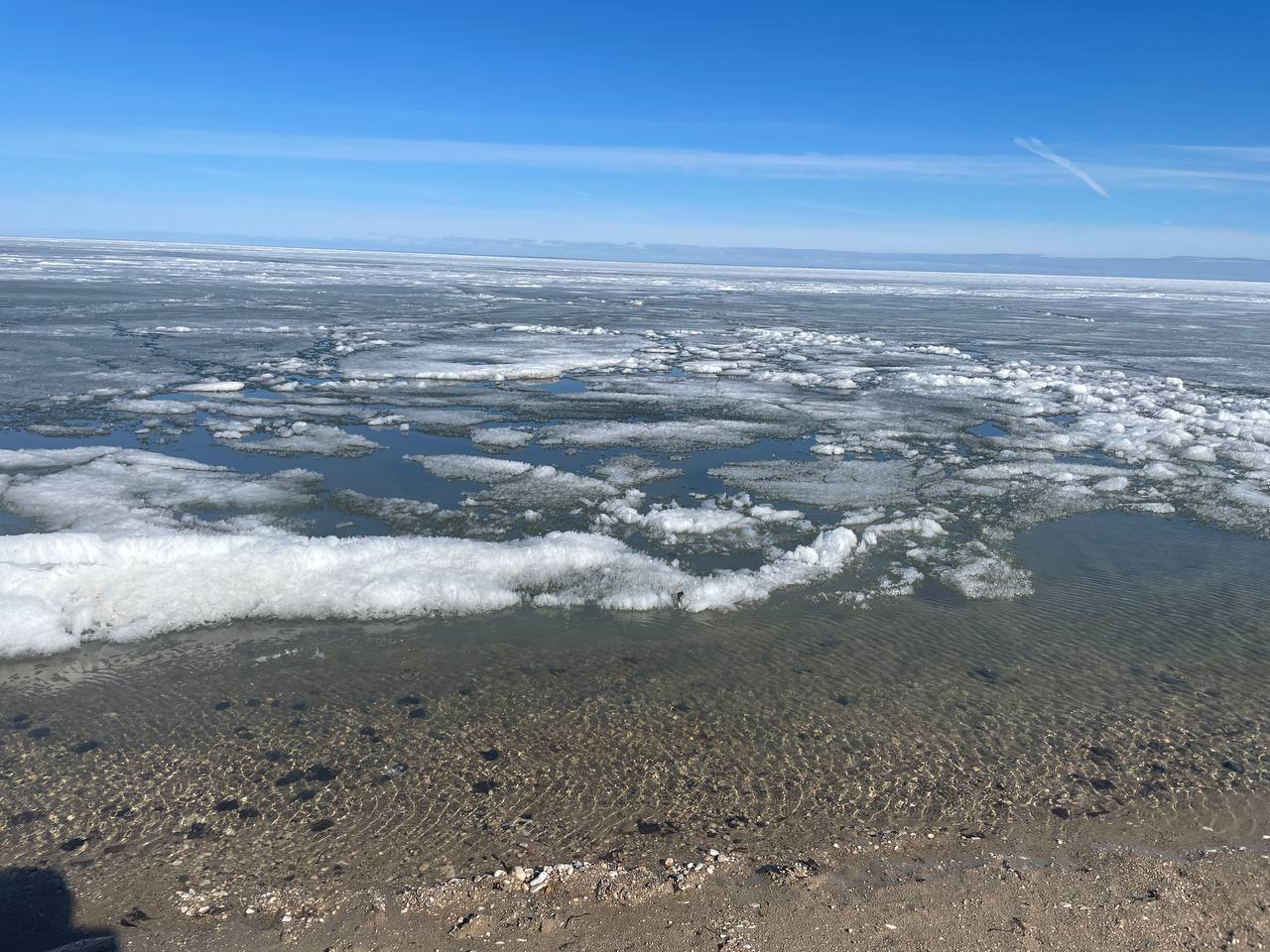
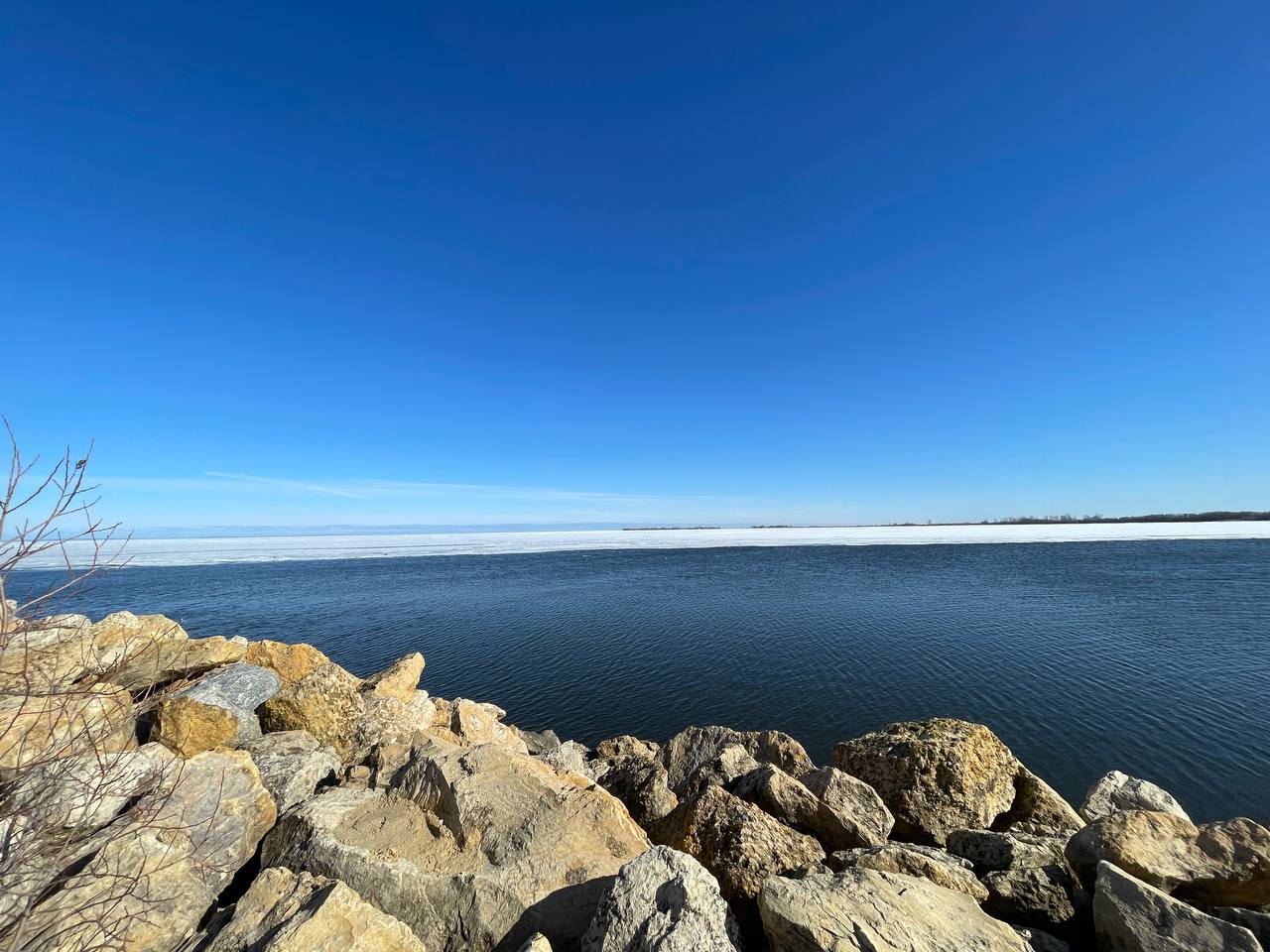
The walk didn’t last long. A fierce, freezing wind came off the lake and cut us short — we took a few photos, finished our coffee, talked a little, and retreated to the car. But it was worth every minute of the half-day it took. It stayed with us. And we promised ourselves we’d come back when the weather was kinder.
November: A Walk Into Town and a Sky on Fire
We kept that promise the following November — though “kinder weather” turned out to mean a soft, still, surprisingly warm late-autumn day, the trees already bare but the air calm and almost windless. This time there were three of us: me, Bohdan, and a friend who’d come to Winnipeg for work. She wasn’t local — wasn’t Canadian at all — and apart from the corner of the city where she worked, she’d seen nothing. When we suggested Gimli, she said yes immediately, glad to see something new. We set off around midday, the car full of conversation — work, rest, dreams, plans — and the time vanished.
This visit we decided to actually walk the town. We parked near the beach and set off on foot, and since no one had eaten, the first order of business was coffee and something to go with it. The cafés and restaurants by the beach were, for some reason, closed — so once again, the reliable answer was Tim Hortons, this one just up the street, with a little terrace where we could sit outside with our coffee and our talk.
Then we walked, and kept walking, right through to evening. We started down the main street, looking at whatever there was to see — and that’s how we came upon the Viking, huge and completely out of place and wonderful for it. (It was only afterward that we read about the town and finally understood why a Norse warrior was standing on a Manitoba shore.) There were more people out than on our first visit — not crowds, but couples strolling, parents with children, older folks taking the air. Behind the statue we found that path of inscribed stones and named benches, and we followed it without knowing where it led — down to the harbour, and its rows of moored boats, and then out onto the boardwalk and the pier, where there were new murals that hadn’t been there in April. And then the view. That endless, impossible view of the lake.
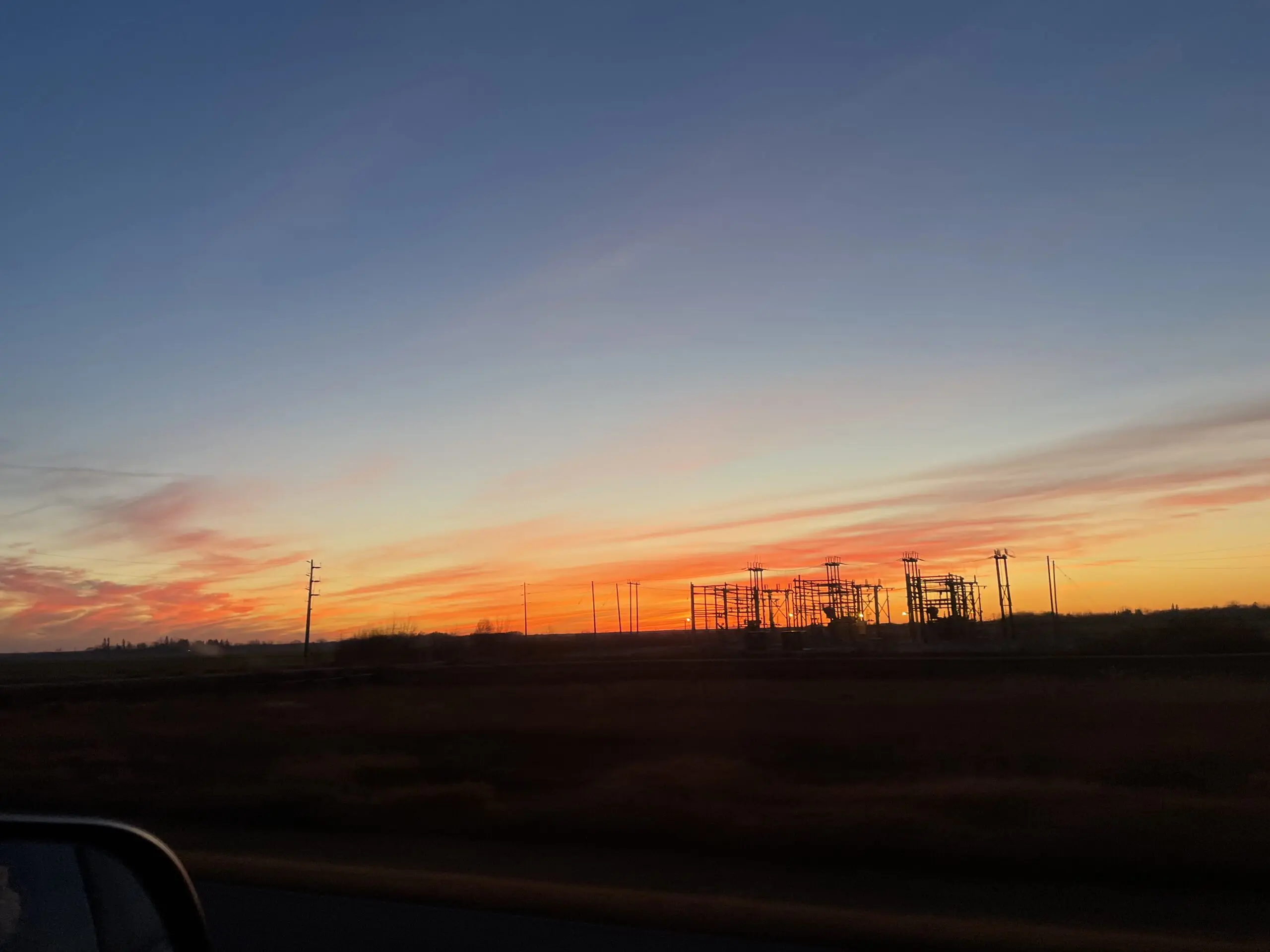
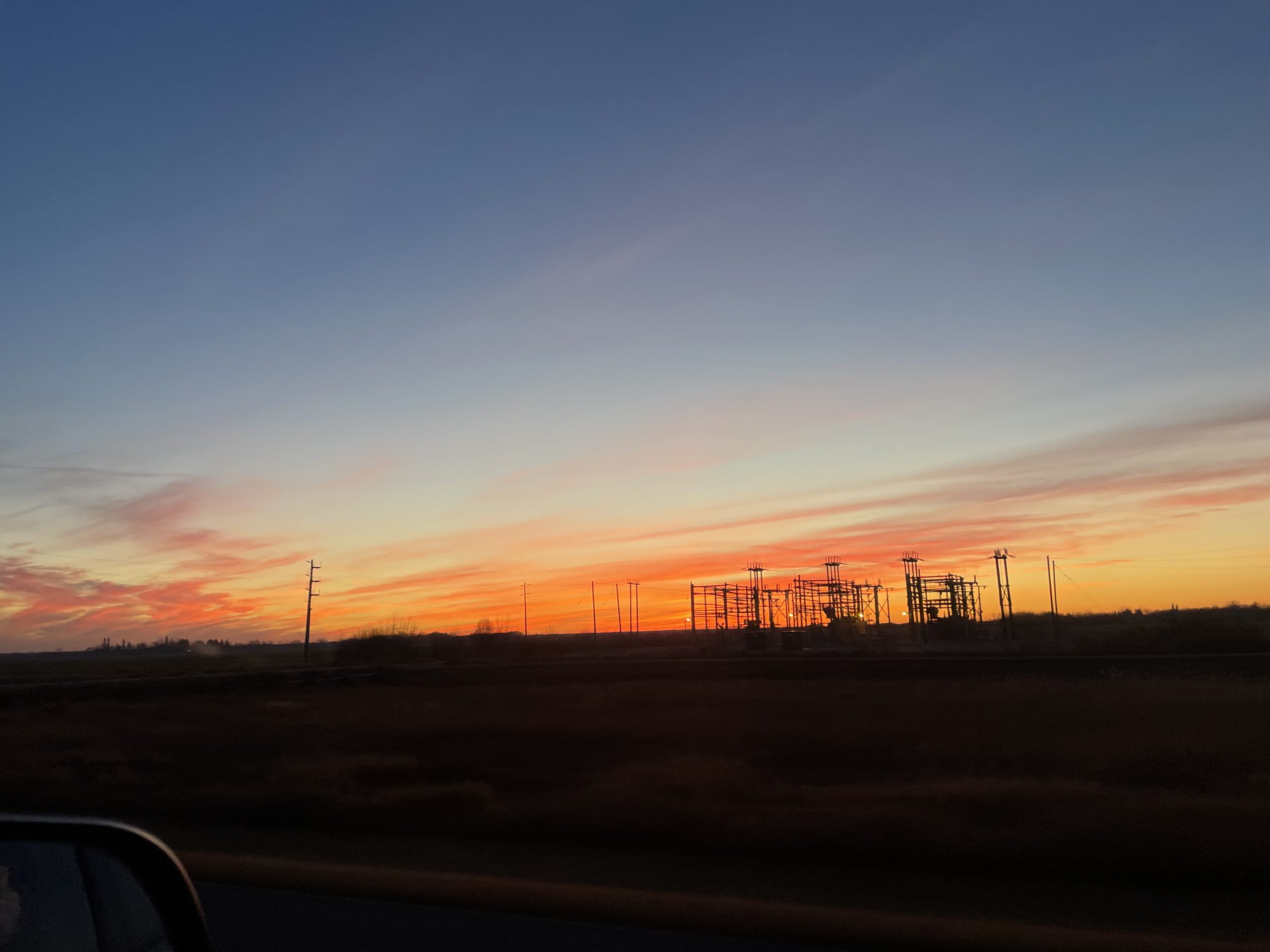
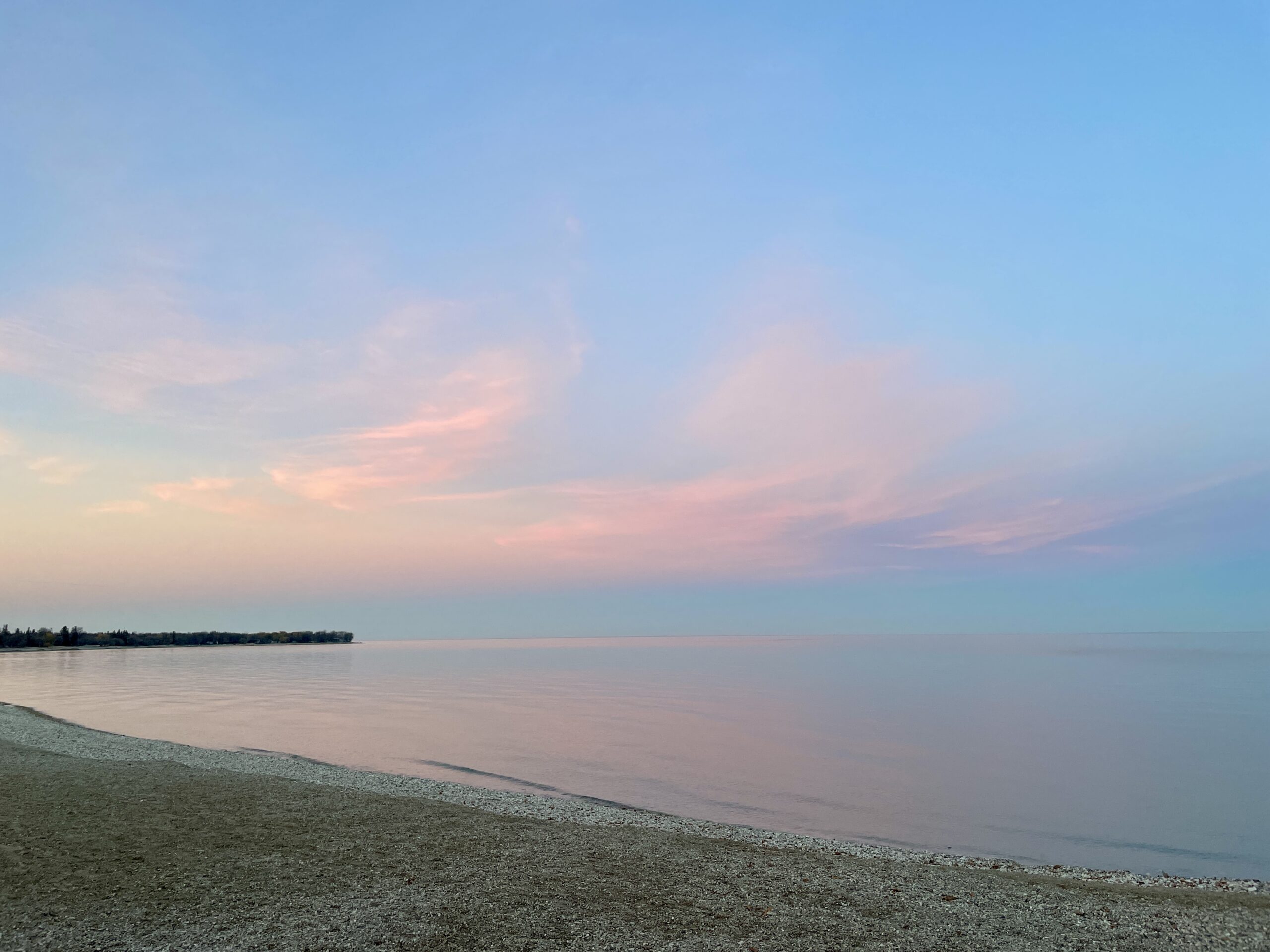
We lingered long enough to catch the very start of the sunset, and the sky turned colours I don’t have good enough words for. It was quiet, and warm, and calm. We even watched a couple of people wade in to swim — I dipped my hand in to test the water out of sheer curiosity, and it was so cold I genuinely can’t imagine how they did it. People who live here, I suppose, are simply made of sterner stuff. We walked the beach, we watched the light go gold and then red, and we lost track of the hour so completely that we drove home almost in the dark, the sun just touching the horizon and turning everything around us crimson.
Through the Year
We’ve only seen Gimli in its quiet seasons, but here’s the fuller picture for whenever you go.
Summer is Gimli at full voice: the beach open and busy, the boardwalk cafés and restaurants serving on their terraces, and a calendar packed with events. The big one is Íslendingadagurinn, the Icelandic Festival of Manitoba, held over the August long weekend — parades, Viking reenactments, traditional Icelandic food, the lot. There’s also the beloved Gimli Film Festival, which screens films on a giant screen set up right out on the water. This is the version of Gimli we still haven’t met — and we’re told the beachside café at the Lakeview Gimli Resort is the place to sit when we finally do.
Fall is the calm, golden, off-season Gimli of our November visit — mild days, bare trees, empty boardwalks, and long low light over the lake.
Winter turns Lake Winnipeg to ice, and the town leans into it: the Gimli Ice Festival in March brings ice sculptures and winter gatherings, and out on the frozen lake, locals are known to take to the ice with their cars for racing and drifting (best admired from a safe distance, and left to those who know the ice).
Spring is the in-between season we caught in April — the ice breaking up and drifting, the wind still sharp, and a brief, beautiful window before the lake opens up for summer.
What to Bring
- Layers, and then more layers — the wind off Lake Winnipeg is the deciding factor in how your day feels, in any season.
- A warm drink — half the pleasure of off-season Gimli is a coffee warming your hands on the pier.
- A camera — for the seawall murals, the Viking, the boats, and especially the sunsets.
- Water shoes — in summer, for the rockier stretches of the beach.
- Time — more than you think you’ll need. The town is small, but it has a way of stretching an afternoon into evening.
Who This Place Is For
- Anyone who loves the quiet — off-season Gimli is one of the most peaceful places we’ve found near Winnipeg.
- Photographers and sunset chasers — the lake, the light, the murals, the boats.
- History and heritage lovers — New Iceland, the Viking, the museum, the painted seawall.
- Beach and swimming families — in summer, with the full boardwalk in season.
- Foodies — fresh Lake Winnipeg fish and waterfront cafés.
- Anyone who just needs to reset — which, honestly, is why we keep going back.
Quick Reference
| What | Details |
|---|---|
| Location | Gimli, on Lake Winnipeg’s western shore, in Manitoba’s Interlake |
| From Winnipeg | ~75 km / about 1 hour north via Highway 8 or 9 |
| The beach | 600 m of Blue Flag sandy shore between the harbour pier and Barney Thomas Drive, with a boardwalk |
| Don’t miss | the Viking statue & Viking Park, the working fishing harbour, the painted Seawall Gallery, the pier lighthouse |
| Heritage | heart of “New Iceland” (settled 1875); New Iceland Heritage Museum in town |
| Summer events | Íslendingadagurinn (Icelandic Festival, Aug long weekend); Gimli Film Festival (films on the lake) |
| Winter | Gimli Ice Festival (March); frozen lake |
| Good to know | northern lake beach — cold water, some rock, real wind; dress for it |
| Our visits | April (ice still on the lake) and November (warm, calm, sunset) |
Why It’s Worth Visiting
I’ve loved Gimli ever since — and especially since that second visit. Every time we’ve gone, it has given us the same things: quiet, calm, impossible views, and that big lake wind that somehow clears your head instead of wearing you down. It’s a town that leaves you with good memories and a settled kind of feeling. I go there to walk, and to breathe, and to reset.
We still owe it a summer — the festivals, the open cafés, the warm water, the café on the beach everyone keeps telling us about. But even in its coldest, quietest seasons, Gimli has been one of the most generous places we’ve found near home: a beach named after heaven, a Viking on the shore, a harbour full of working boats, and a sunset over an inland sea. Go for the day. Bring a coffee. Stay until the light turns red.