



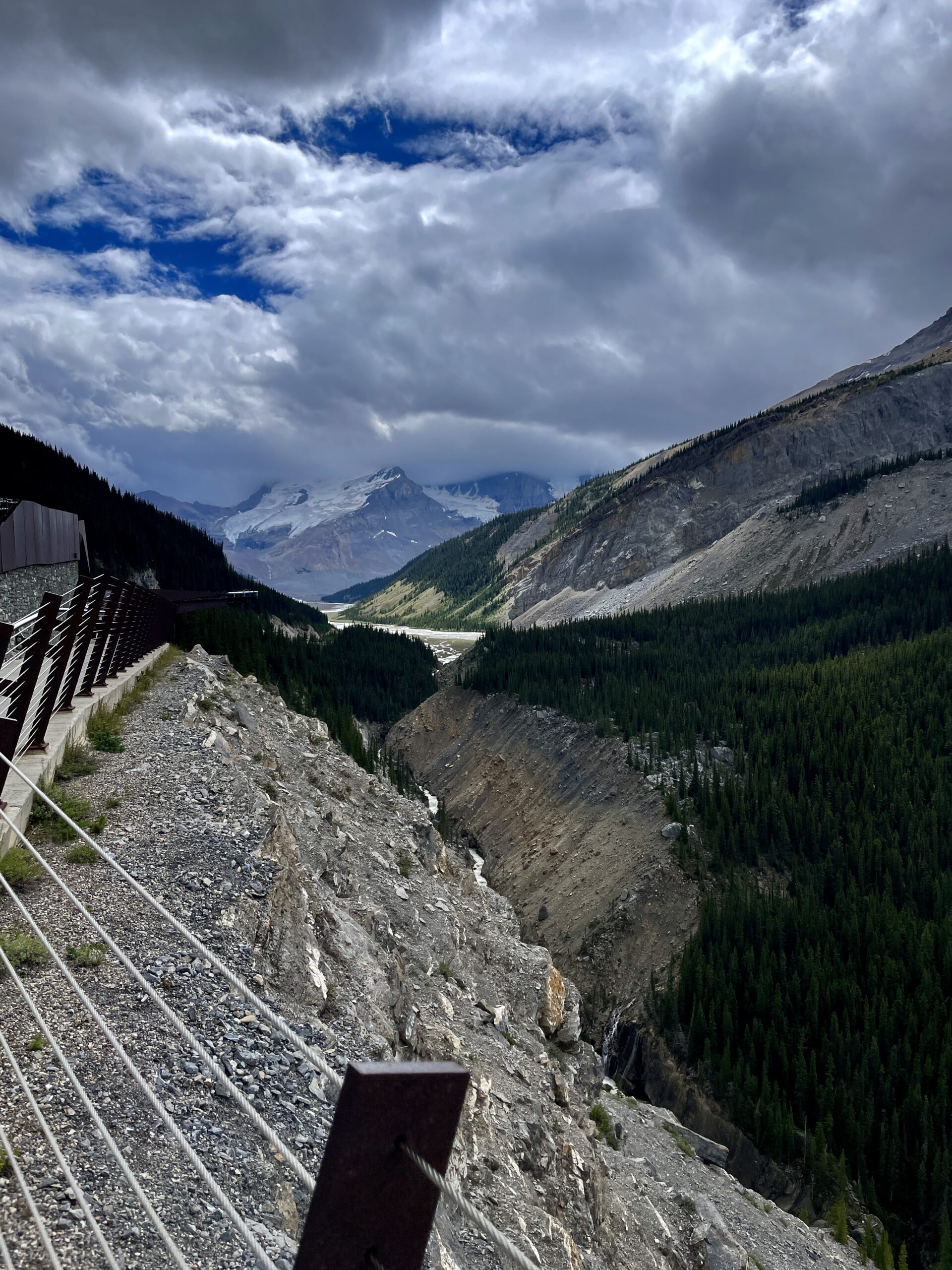
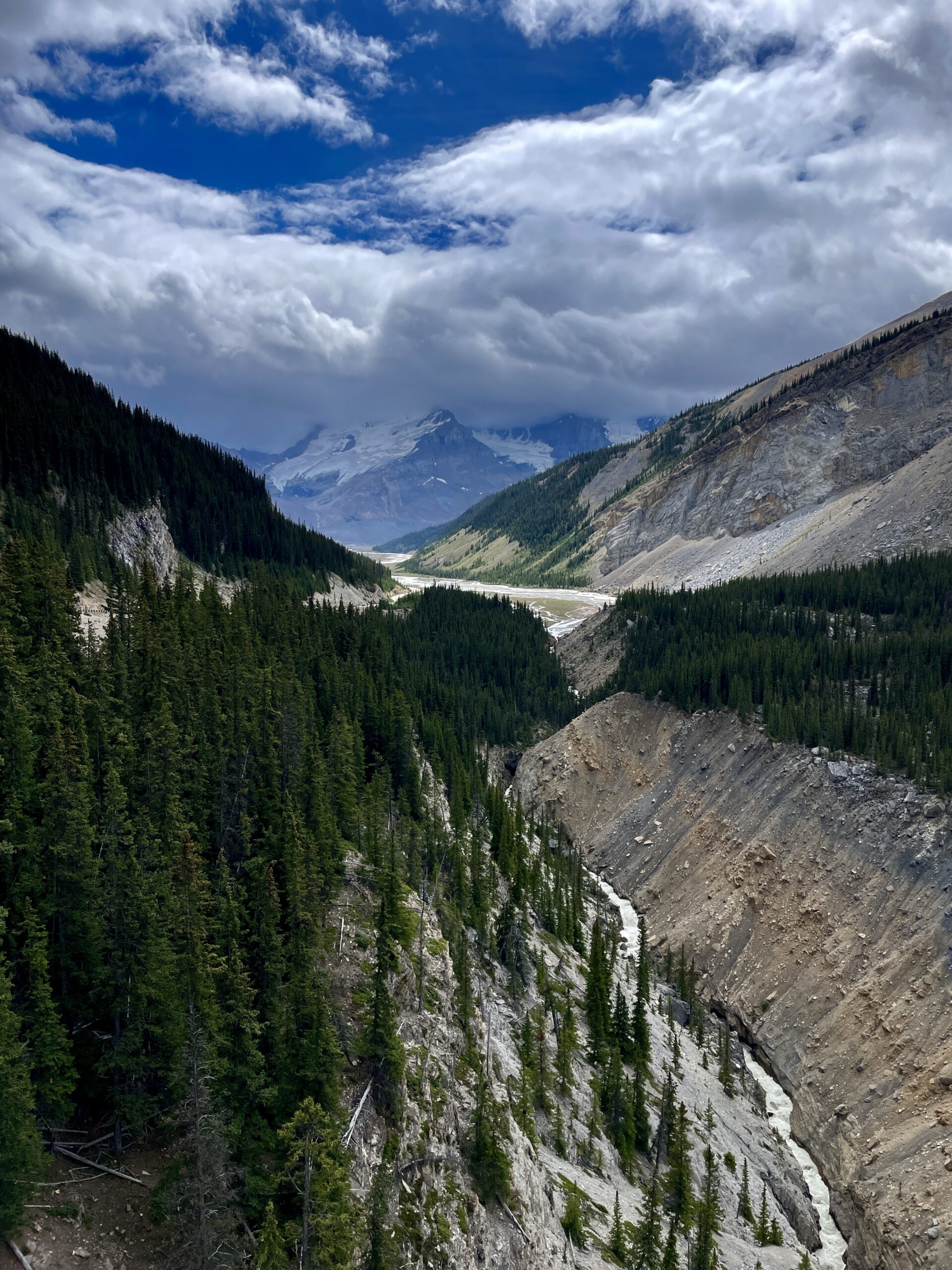
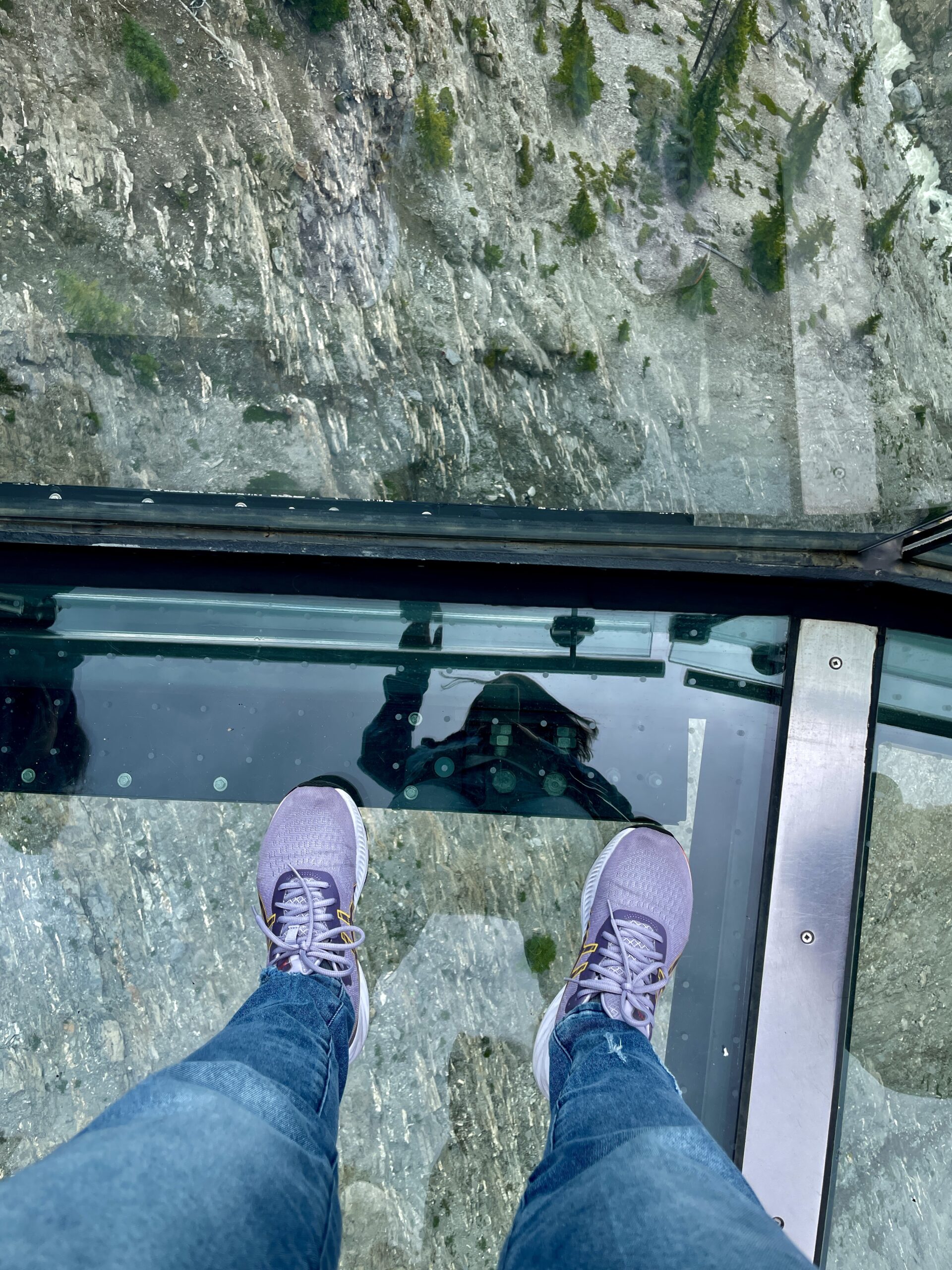
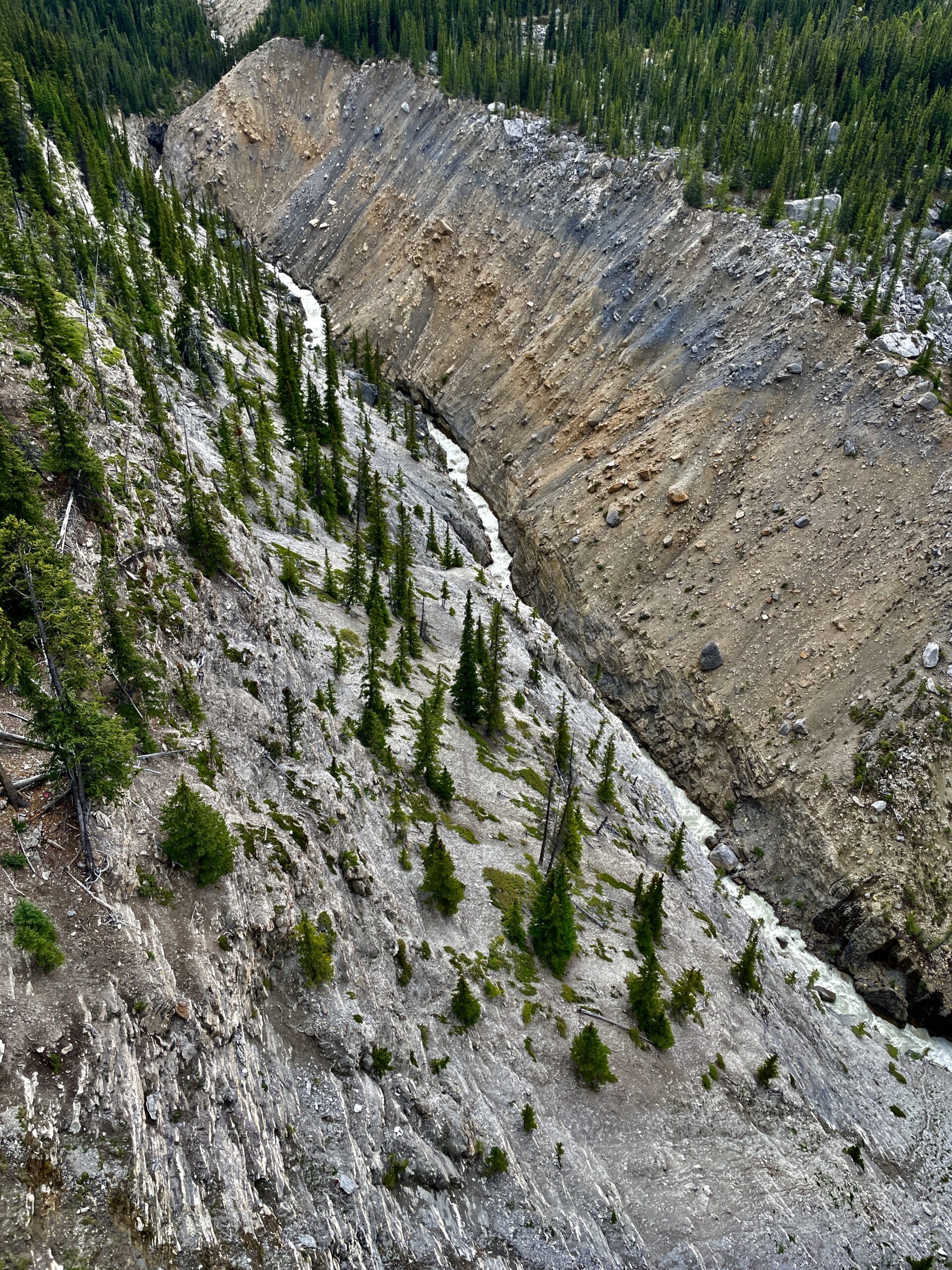
A glass floor with 280 metres of nothing beneath it — the Sunwapta Valley, and one of the Rockies’ great glaciers.
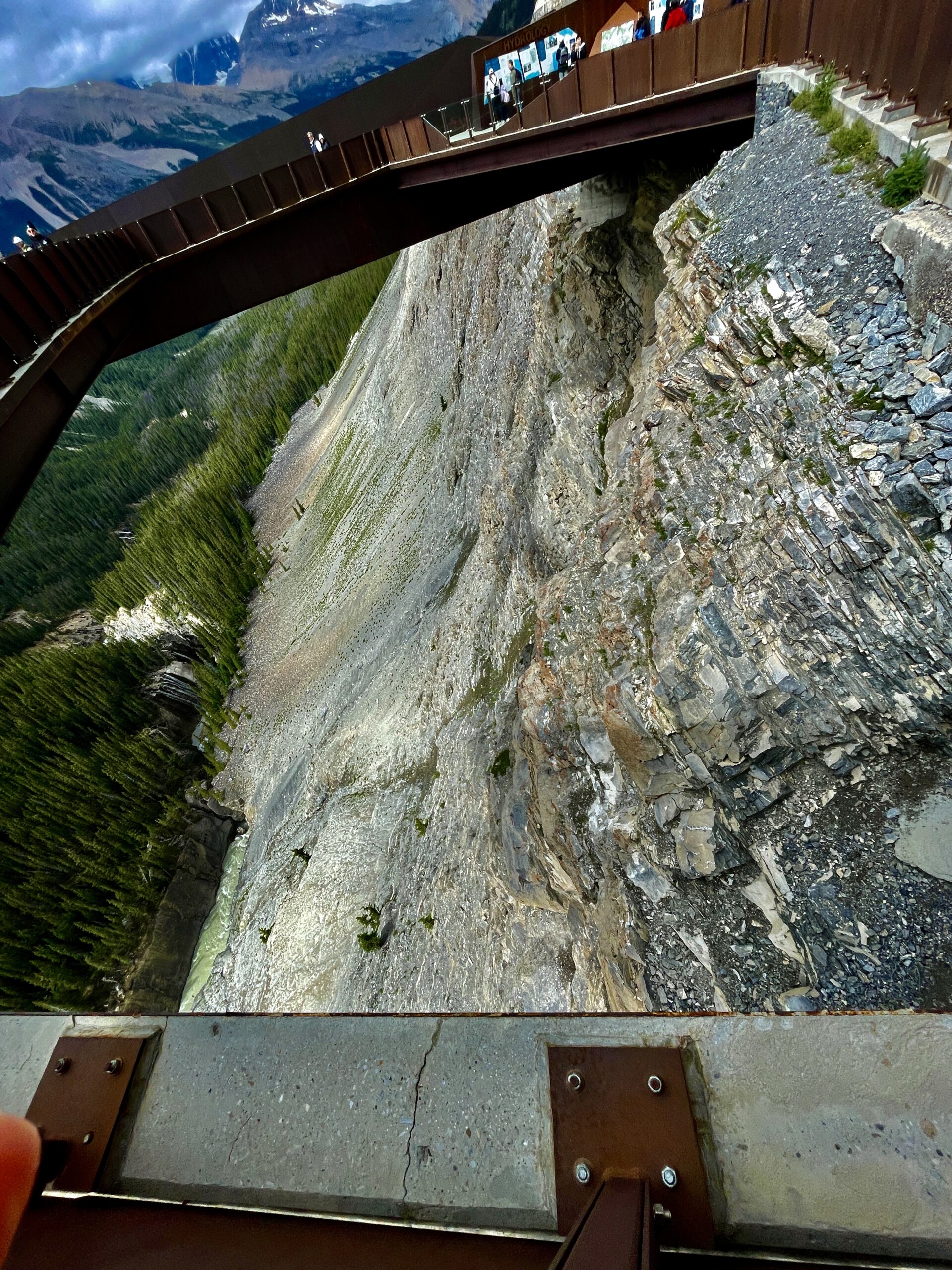
The Columbia Icefield Skywalk is the stop on the Icefields Parkway that we planned the second day of our Winnipeg-to-Banff road trip around. Technically it’s a horseshoe-shaped, glass-floored observation platform (called the Discovery Vista) that juts out from the cliff above the Sunwapta Valley at about 280 metres (918 feet), reaching 35 metres out from the edge. You stand on a transparent “floor” with a chasm beneath you — a thread of river far below, waterfalls streaking the far slopes, glaciers hanging in the side valleys. It’s the kind of view you normally have to earn with a long climb; here, you’re gently walked up to it.
What it really is — not just glass
Many people picture the Skywalk as just a “glass photo bridge,” but it’s more like a short open-air museum. The whole structure is a one-kilometre interpretive walkway along the cliff edge, lined with displays on the region’s geology, ecology, palaeontology and Indigenous history; along the way you pass fossils, waterfalls and panoramas, all narrated by a hand-held audio guide available in nine languages. The glass platform is the finale, not the whole show. The Skywalk opened in the spring of 2014 (first under the Brewster brand, now operated by Pursuit).
The glacier people really come for
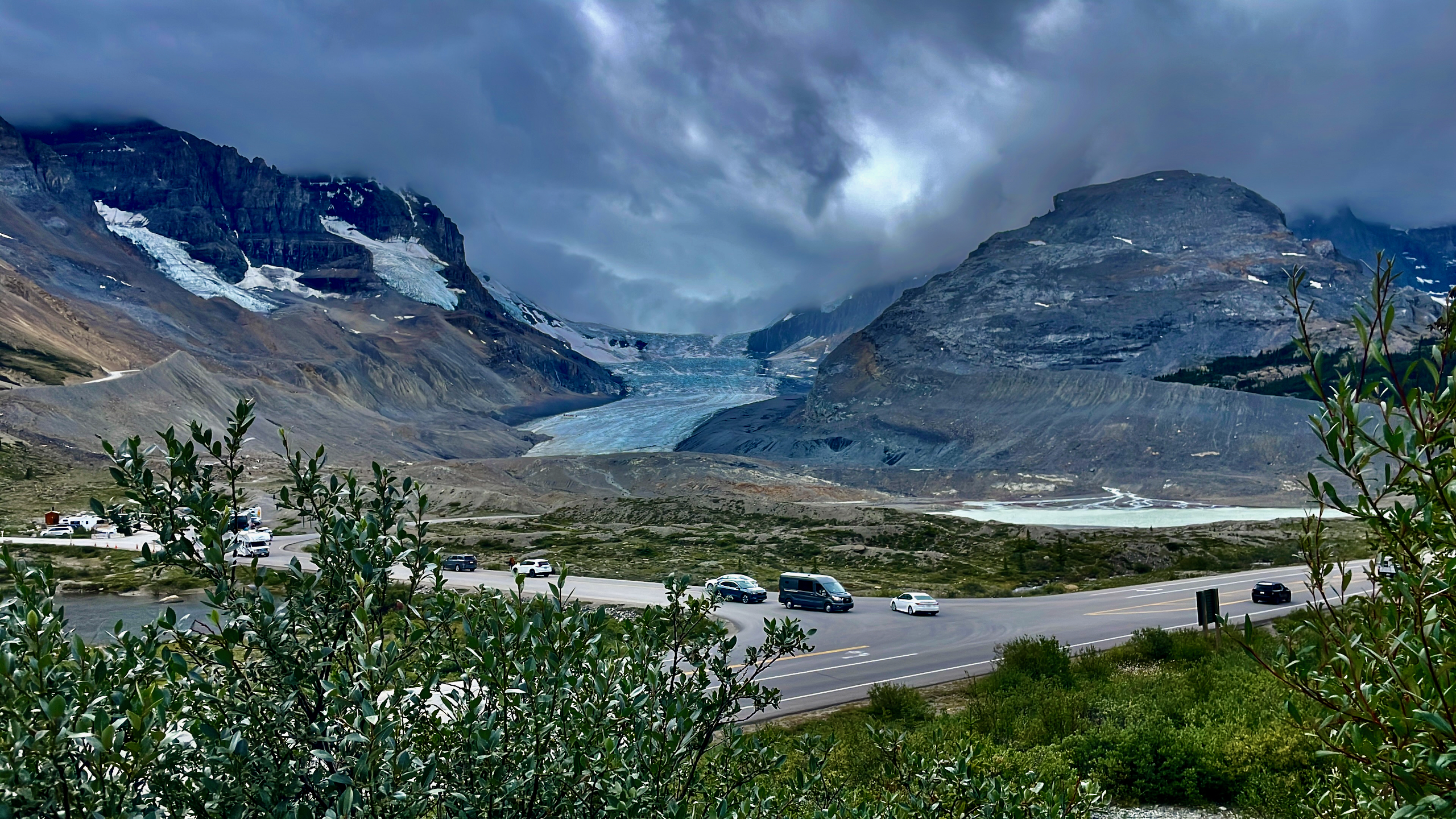
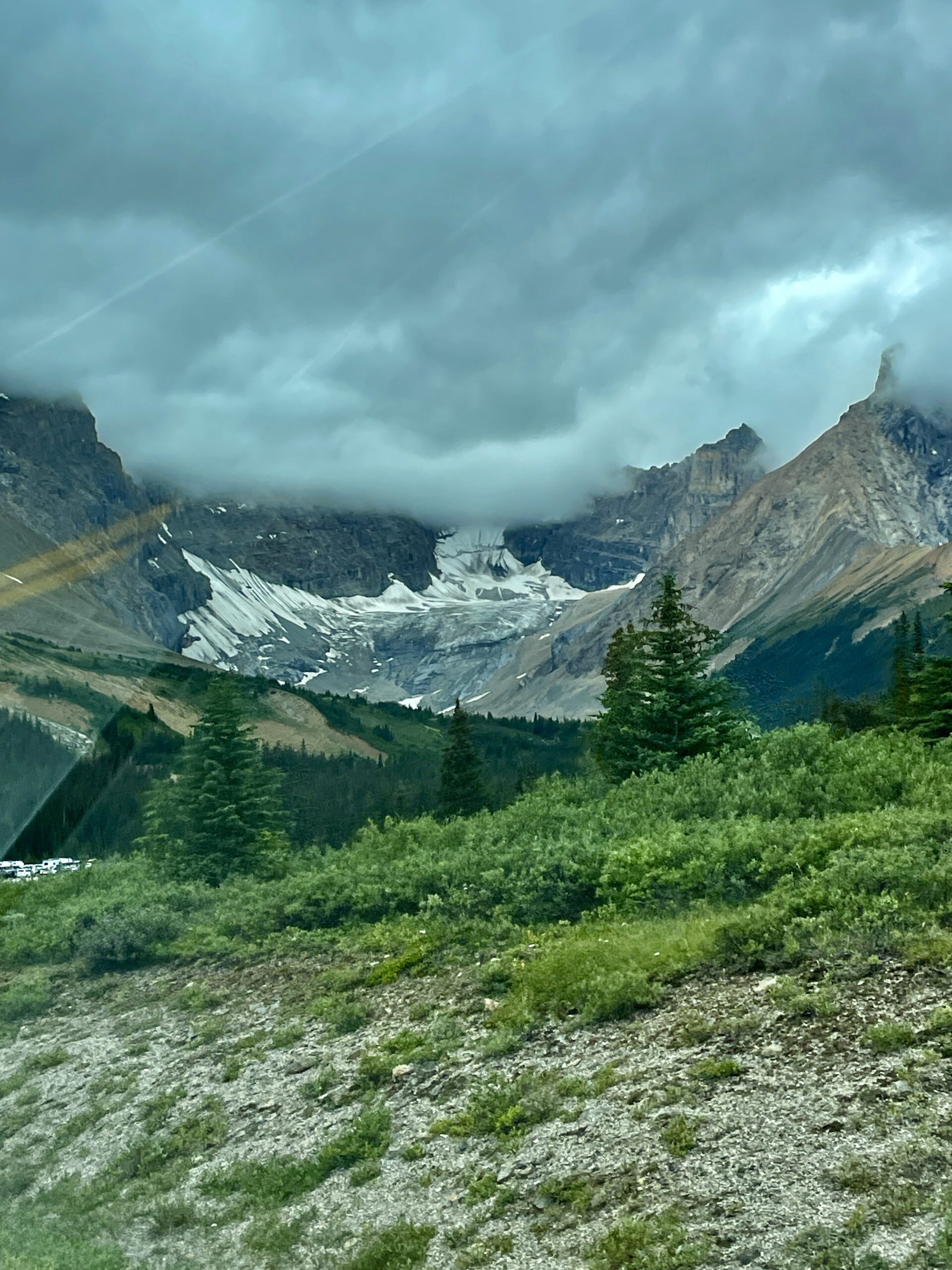
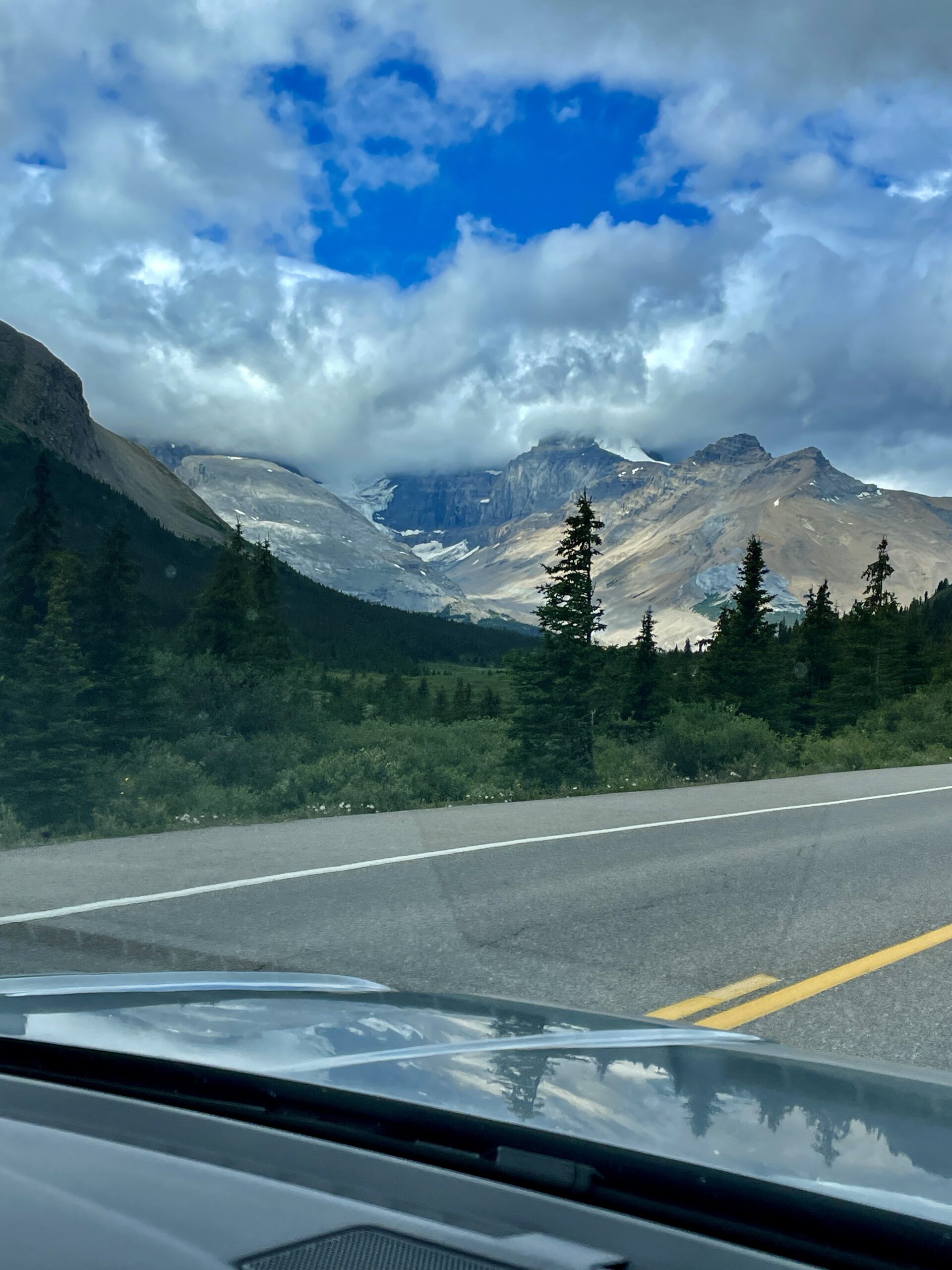
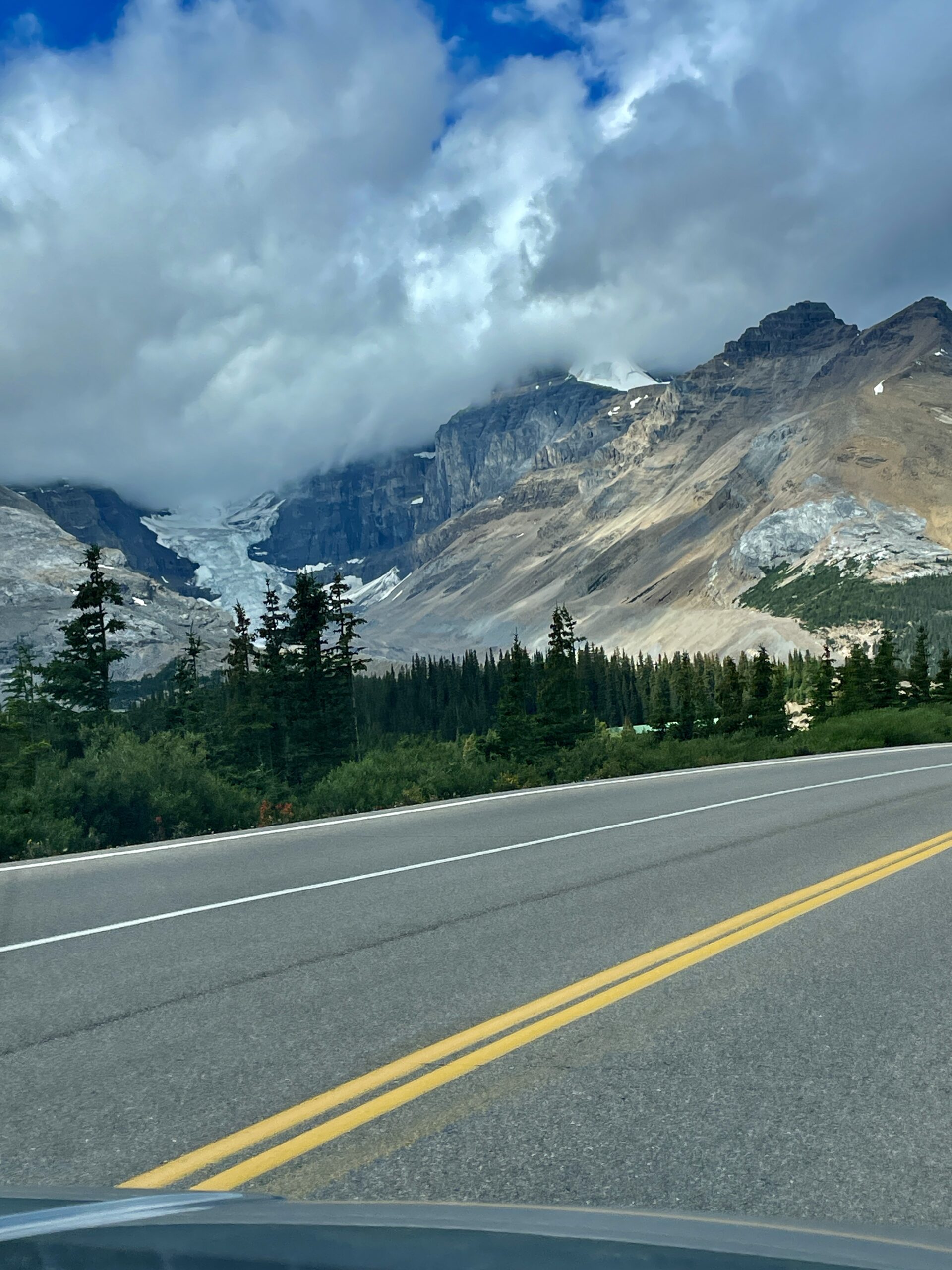
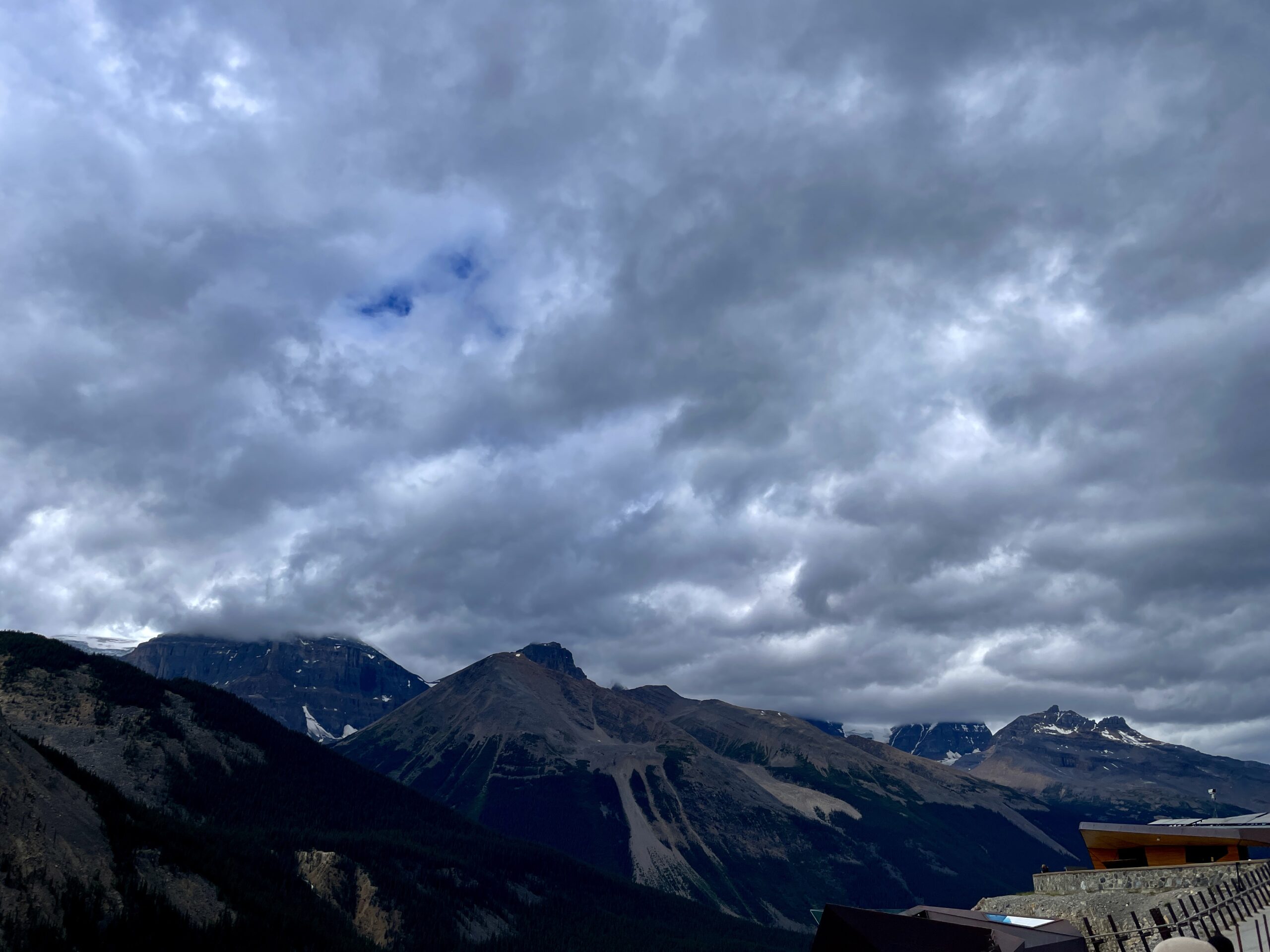
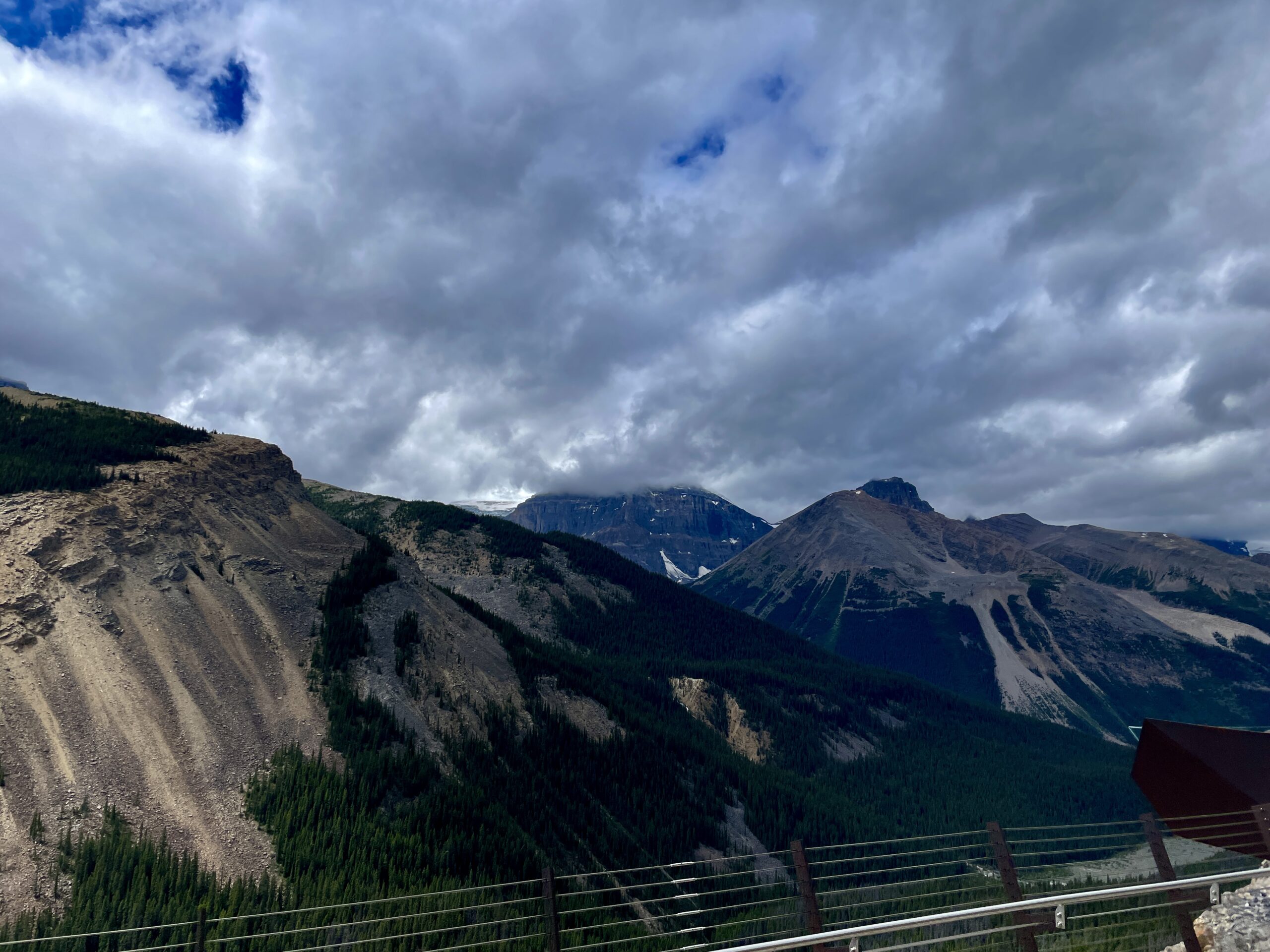
The Skywalk sits on the edge of the Columbia Icefield — the largest icefield in the Rockies, lying right on the Continental Divide on the border of Banff and Jasper national parks. The field itself sprawls across roughly 325 square kilometres and is up to 365 metres thick in places. It feeds eight major glaciers, and its meltwater drains to three oceans — the Atlantic, Pacific and Arctic; this rare “triple” point converges on the summit of Snow Dome, and you’ll see its like in few places on Earth. Its most famous tongue is the Athabasca Glacier, estimated at roughly ten to thirteen thousand years old; thanks to its proximity to the highway, it’s the most visited glacier in North America. Europeans first came upon the Columbia Icefield when Norman Collie and Hermann Woolley spotted it from the summit of Mount Athabasca in 1898.
There’s a sombre note worth being honest about: the glacier is retreating fast due to climate change, and the Discovery Centre shows photos of just how much it has shrunk over the past century. It’s one of those places worth seeing sooner rather than later.
How a visit works
The key practical point: you can’t drive to the Skywalk itself. Everyone parks at the Columbia Icefield Glacier Discovery Centre, and a free shuttle runs the roughly six kilometres out to the platform. Tickets are time-slotted, so in peak season it’s best to book ahead — it does sell out. Allow about 40–45 minutes for the visit, though you can stay until closing, when the last coach heads back. For anyone uneasy with heights, there’s also a non-glass section — the panoramas from there are no worse.
The Skywalk is often bought together with the Columbia Icefield Adventure — a ride in a giant Ice Explorer vehicle right onto the Athabasca Glacier. The vehicle first grinds down a steep moraine slope, and once on the ice you get about 15–25 minutes to stand on ice thousands of years old, take photos and even fill a bottle with pure meltwater. If budget or time is tight, there’s a free alternative: from the parking lot by the Discovery Centre, a short “Toe of the Glacier” trail leads right up to the glacier’s tongue, and the views from the Centre’s café and restaurant are free too.
The Discovery Centre — the hub of it all
The Columbia Icefield Glacier Discovery Centre isn’t just a parking lot and a ticket desk. Inside you’ll find museum exhibits on how glaciers form, move and melt, a theatre, a café, a restaurant and gift shops, and its panoramic windows give a free view straight onto the tongue of the Athabasca Glacier. So even if you buy no paid attraction at all, it’s worth stepping in — if only to warm up, grab a coffee and see for yourself how far the ice has retreated over recent decades.
Dogs and our experience
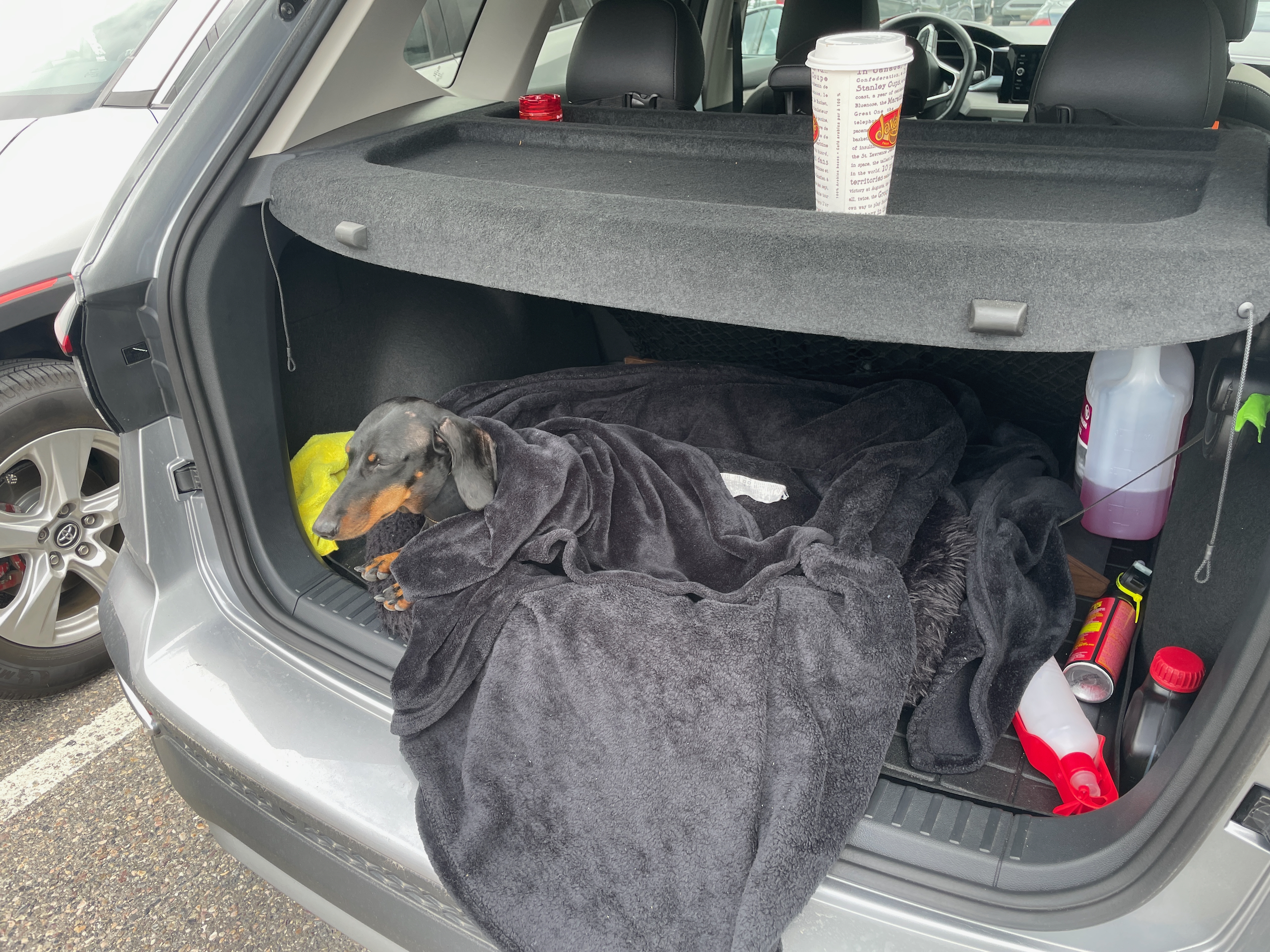
Now for what was the dealbreaker for us dog owners: no pets are allowed on the shuttle or the platform (the buses are enclosed, and there are allergy concerns; accredited service dogs are the exception). That’s why only my wife went up to see it, while Nika and I stayed below. We were also a little late for our slot (hunting for parking), but at the desk they moved us to the next departure without fuss — the ticket is valid for any departure that day. A tip for next time: arrive with time to spare, because in the middle of the day the queue for the bus can push you back by hours.
Practical tips
- Clothing. Even in summer it’s genuinely cold and windy here (it can be about 15°C colder up by the glacier than below) — bring a warm layer. Wear closed-toe shoes with grippy soles; no flip-flops.
- Tickets. Book online ahead in peak season, and arrive early to catch an earlier bus.
- Washrooms. There are none on the Skywalk or the glacier (to limit the footprint) — only at the Discovery Centre.
- Weather. In serious weather (lightning, storms) the attraction closes for safety.
- Accessibility. The platform and walkway are wheelchair-accessible, and there’s an Ice Explorer with a lift.
Is it worth it?
Honestly: if you’re okay with heights, it’s a vivid, well-designed and safe experience with fine views and genuinely interesting displays. But it’s more a tourist attraction than a “wild” discovery, so if you’re a purist about nature or watching your budget, the free walk to the glacier toe and the views from the Discovery Centre give you the same mountains without a ticket. We didn’t regret stopping — but the reason to come is really the whole Columbia Icefield, not just the glass floor.
When to go
The Skywalk runs seasonally, roughly May through October, usually 10 a.m.–6 p.m. (hours vary). Best is a clear mid-summer day, when visibility is greatest and the roads are open.
| Detail | Info |
|---|---|
| What it is | Glass platform ~280 m above the Sunwapta Valley (35 m cantilever) |
| Where | Icefields Parkway, at the Columbia Icefield (Jasper NP) |
| Opened | Spring 2014; operated by Pursuit |
| Access | Free shuttle only, from the Discovery Centre (~6 km) |
| Tickets | Time-slotted; book ahead |
| Dogs | Not allowed (service animals excepted) |
| Clothing | Warm layers + closed-toe, grippy shoes |
| Free alternative | “Toe of the Glacier” trail, views from the Discovery Centre |
| Season | Roughly May–October |
Read next: the Icefields Parkway itself, nearby Peyto Lake and the whole Winnipeg-to-Banff road trip.