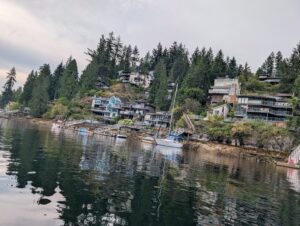

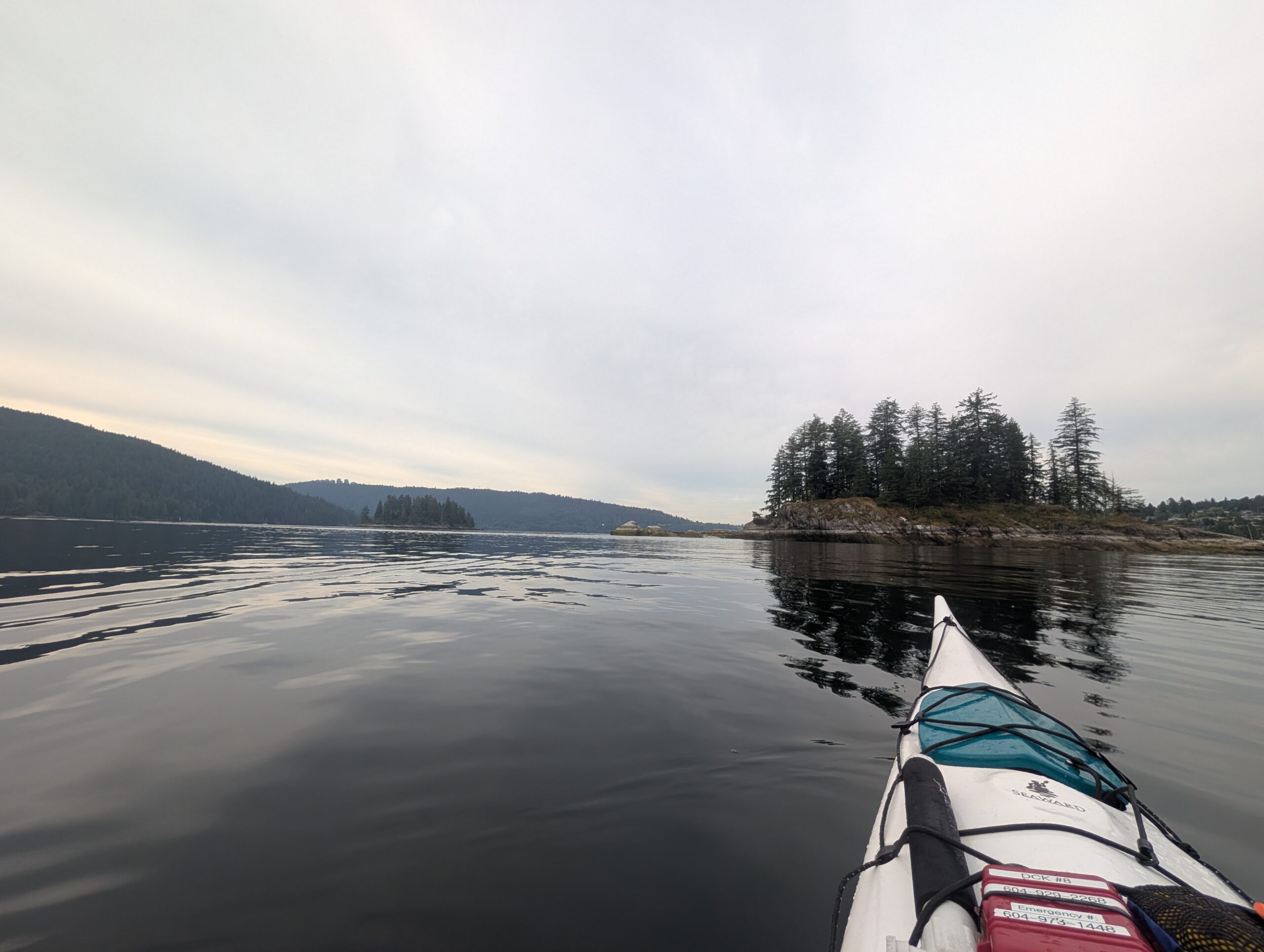
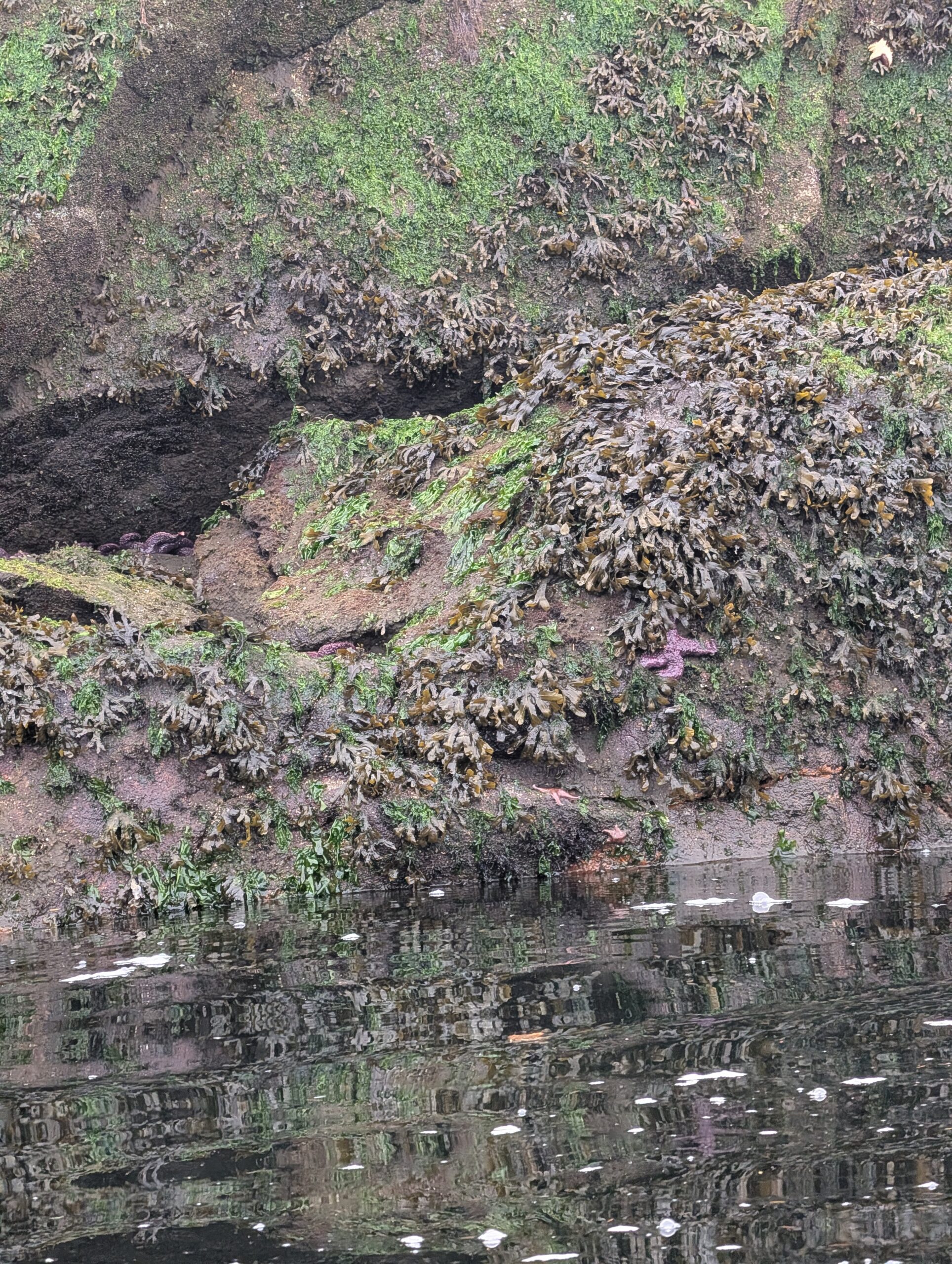
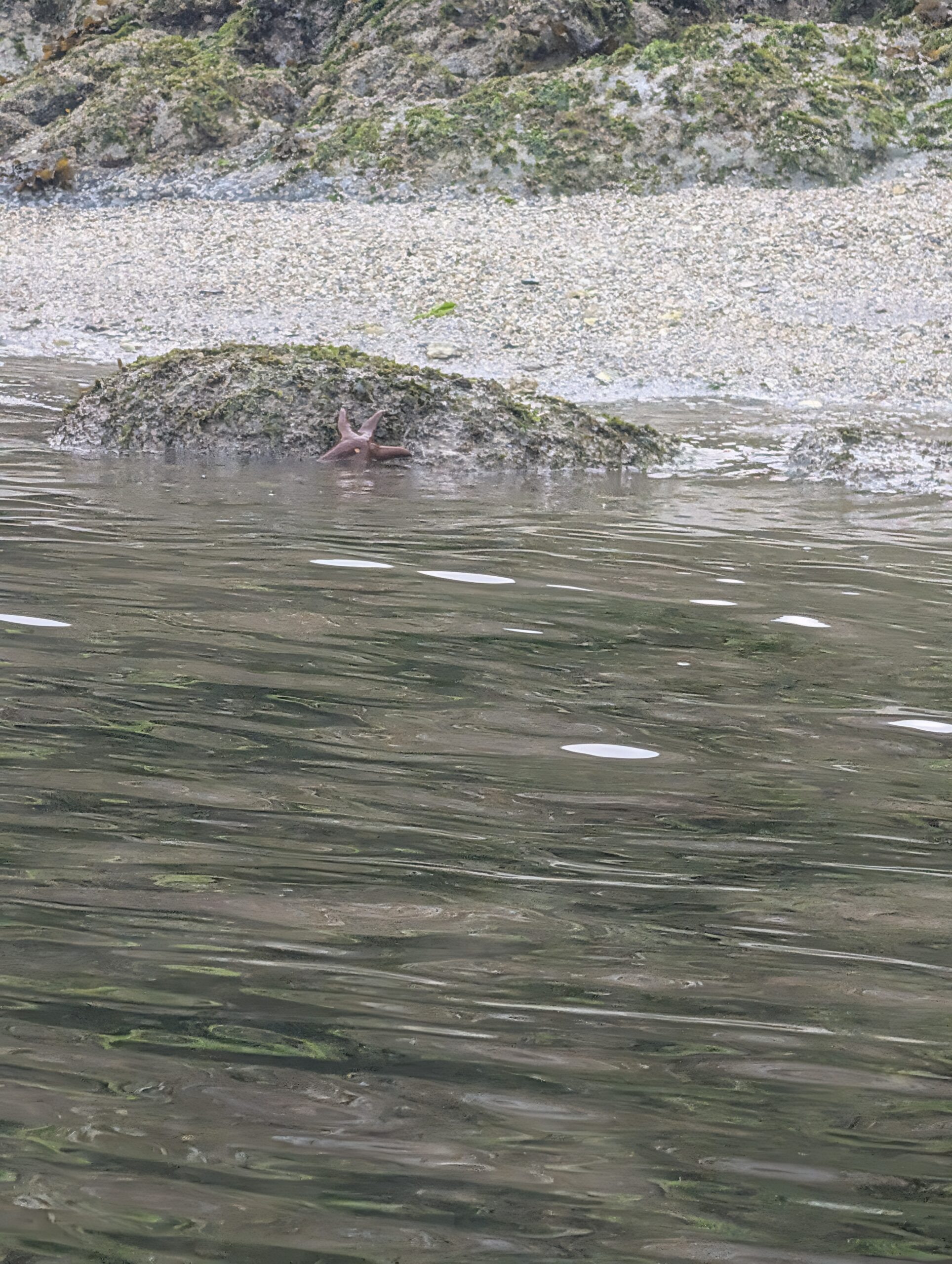
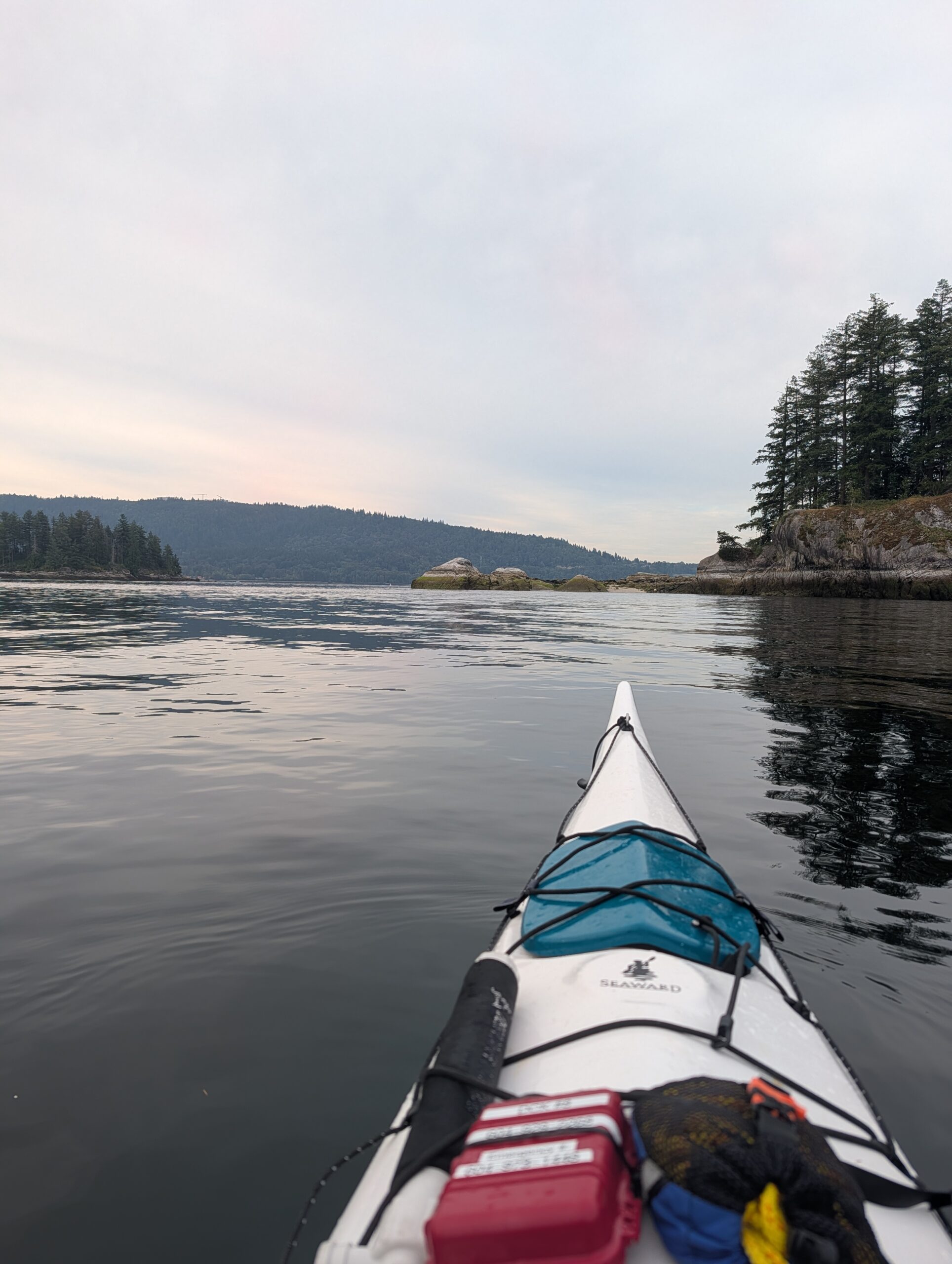
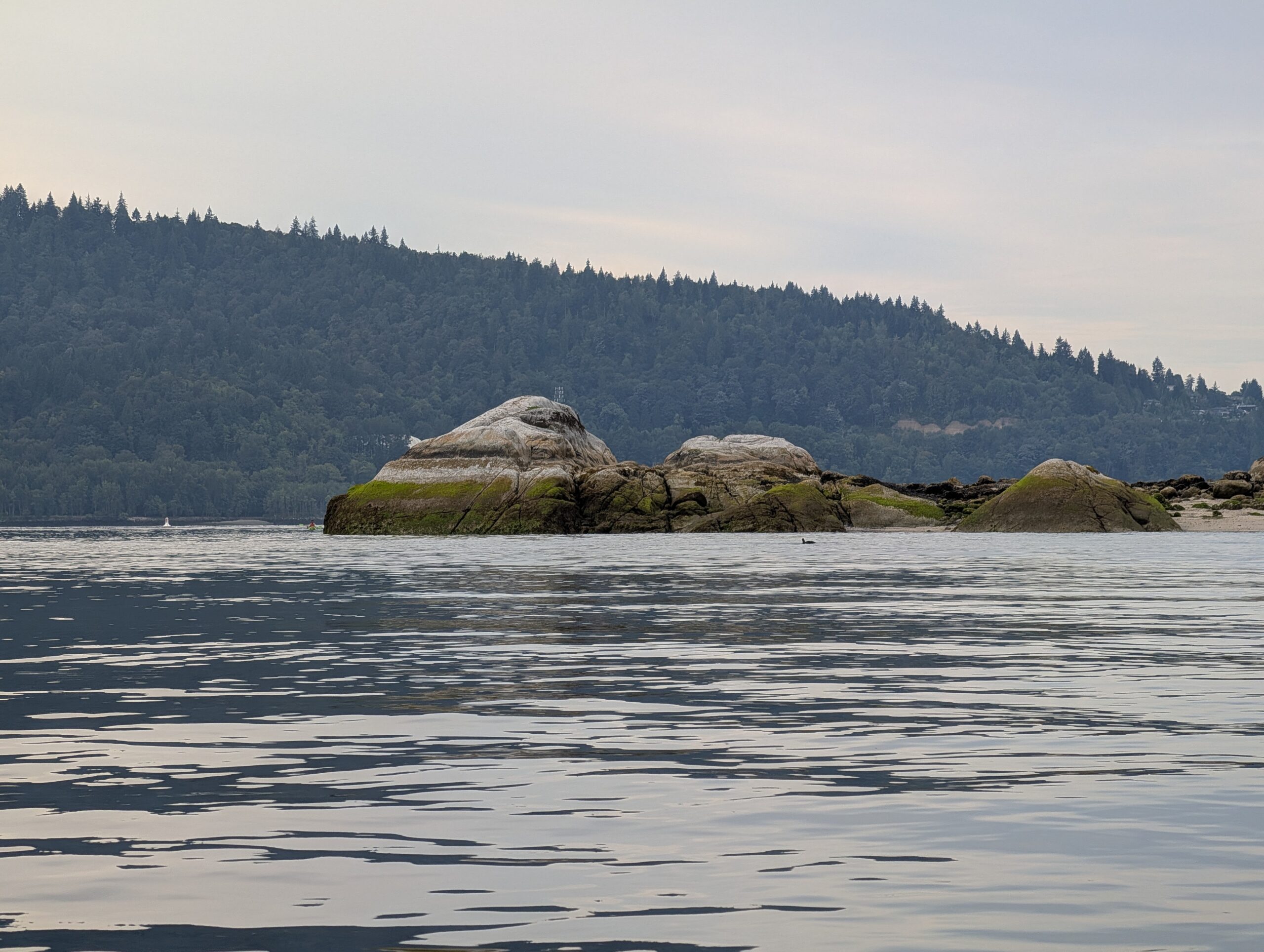
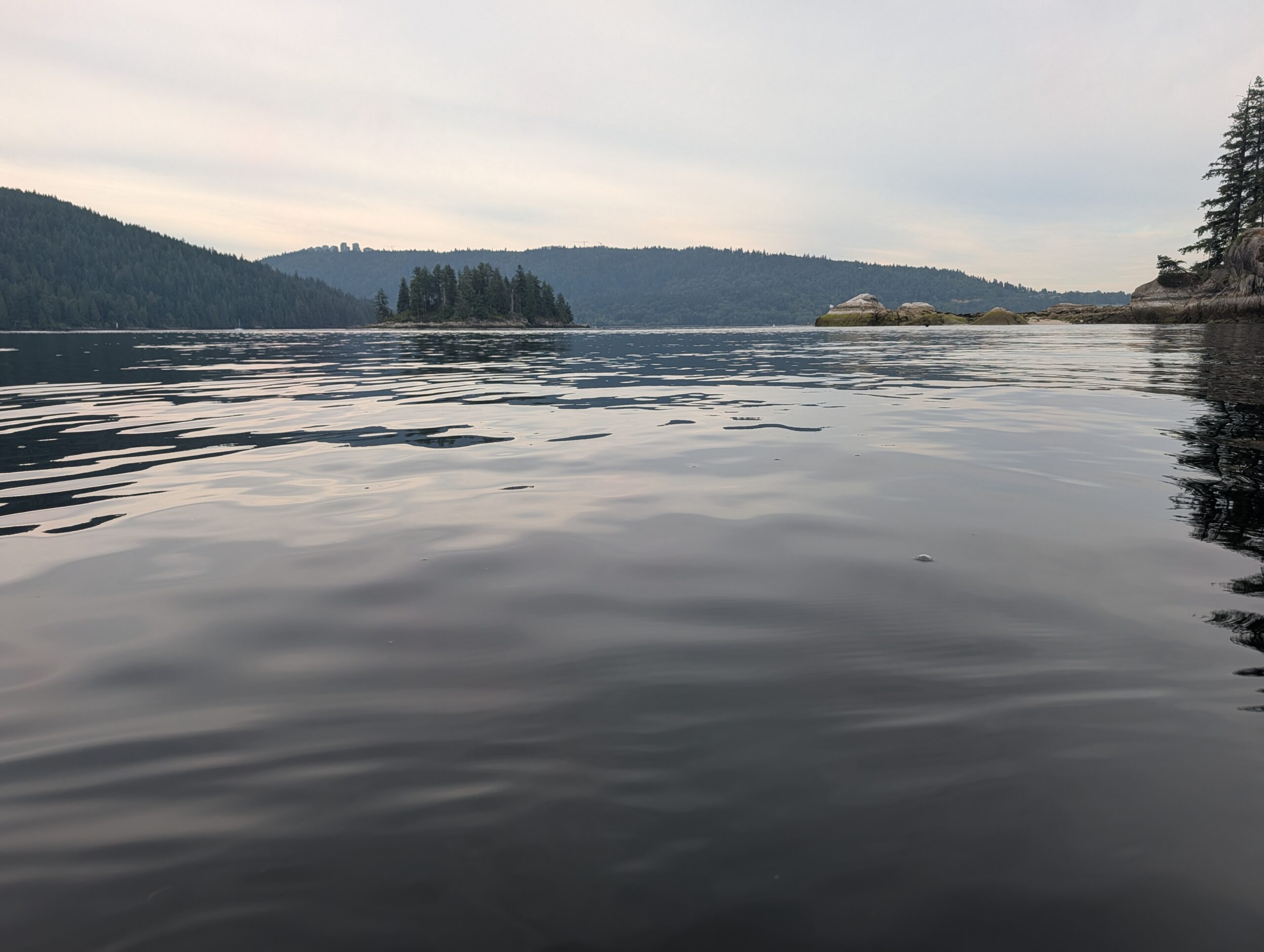
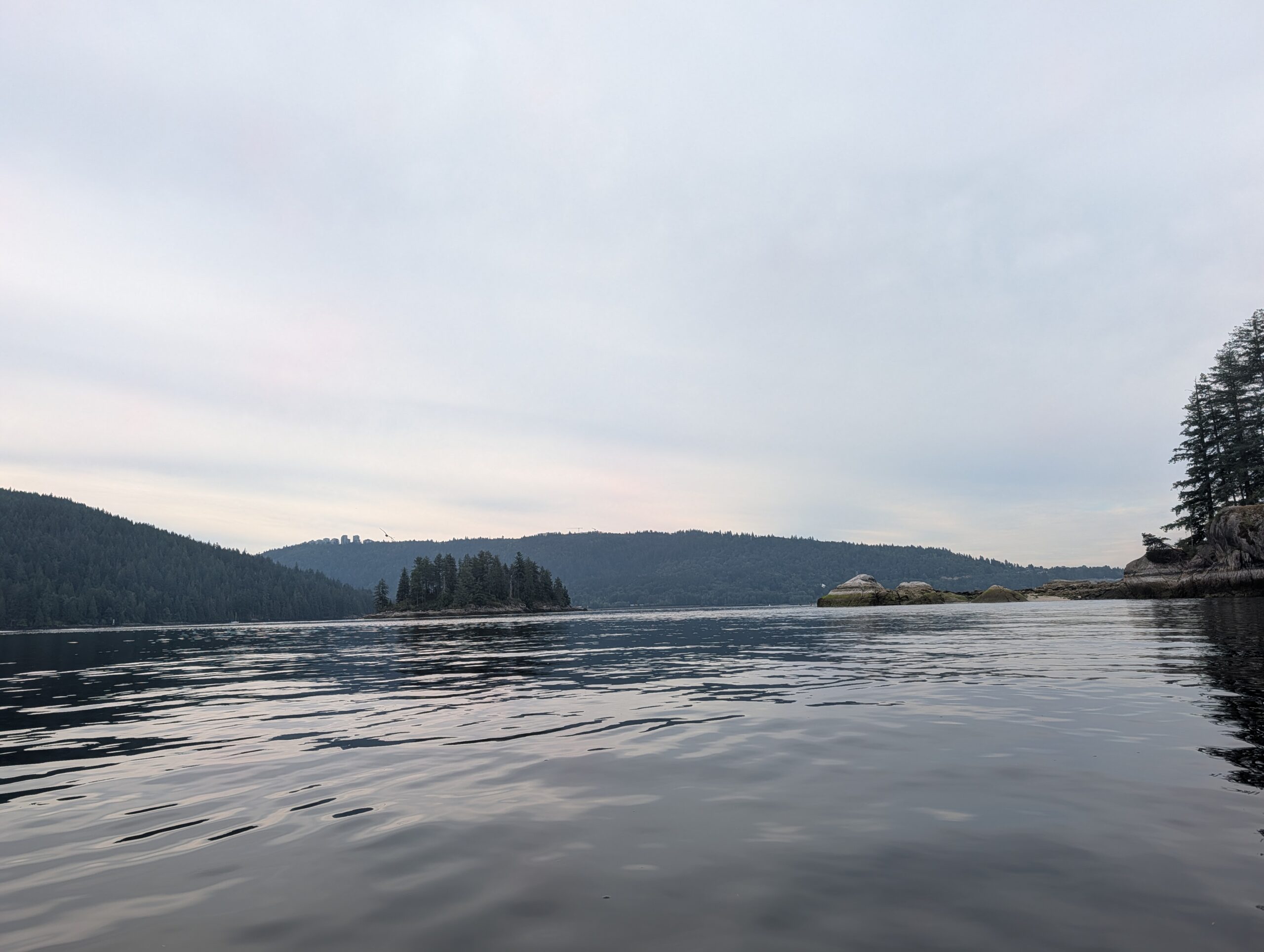
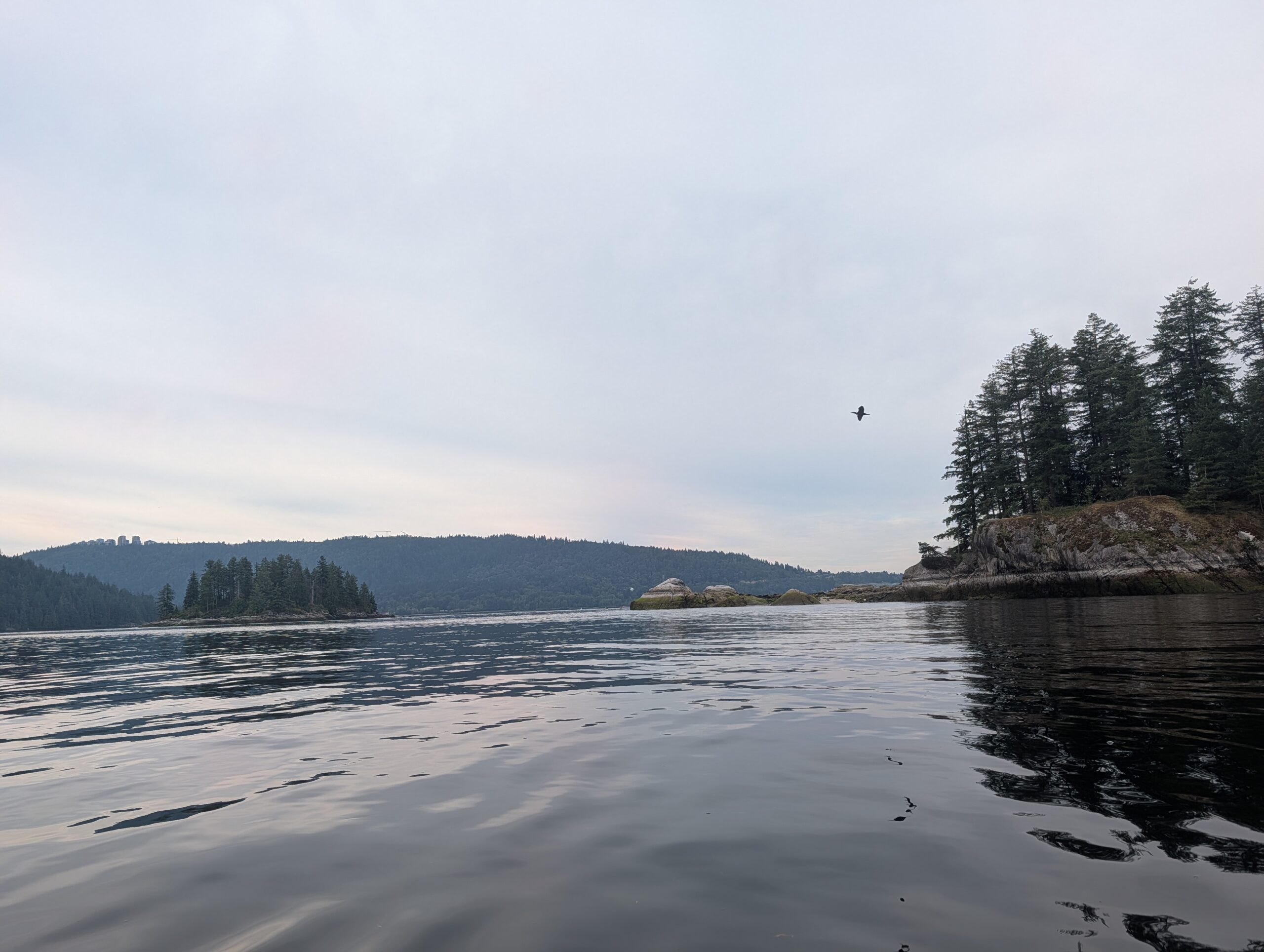
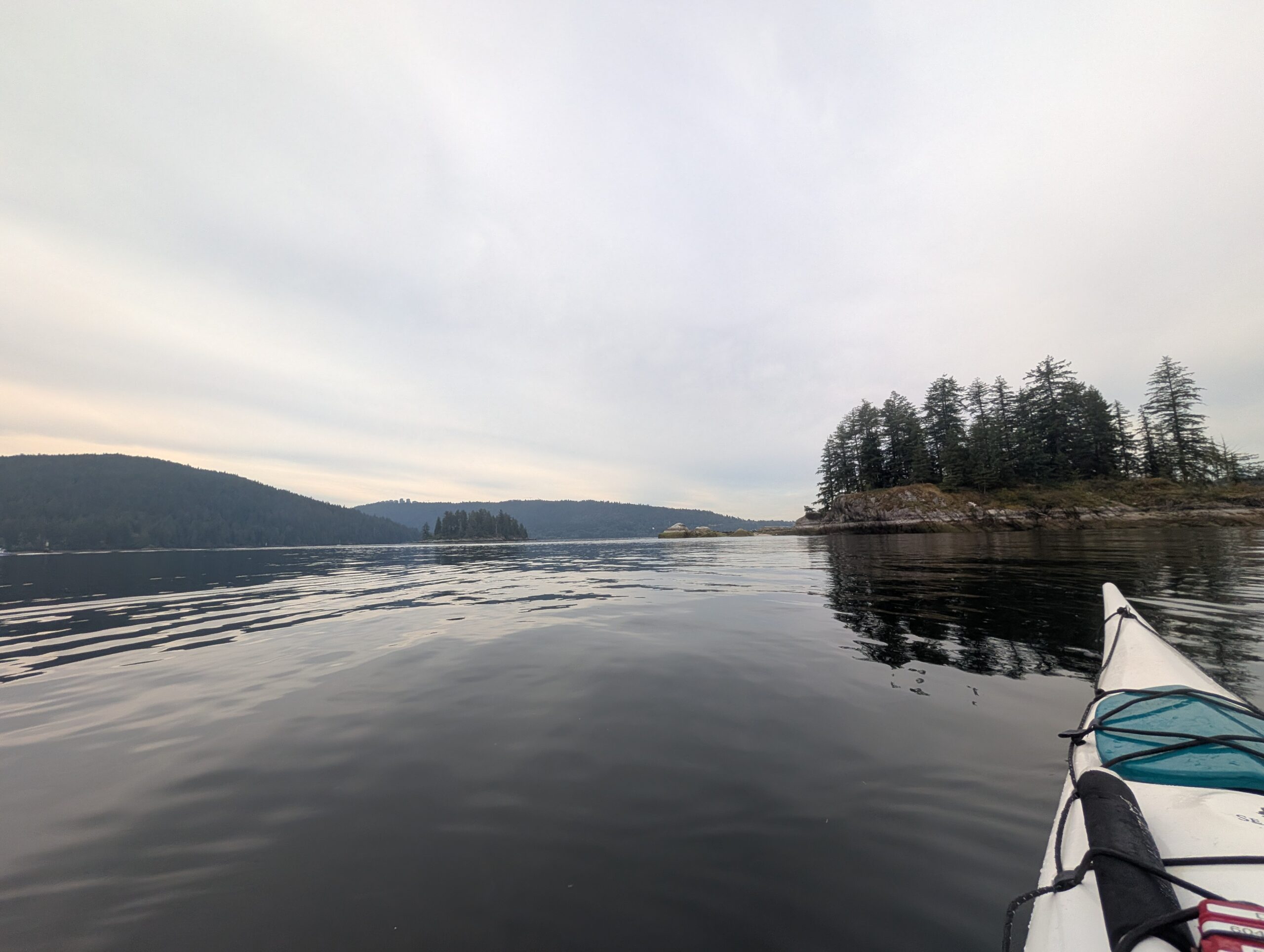
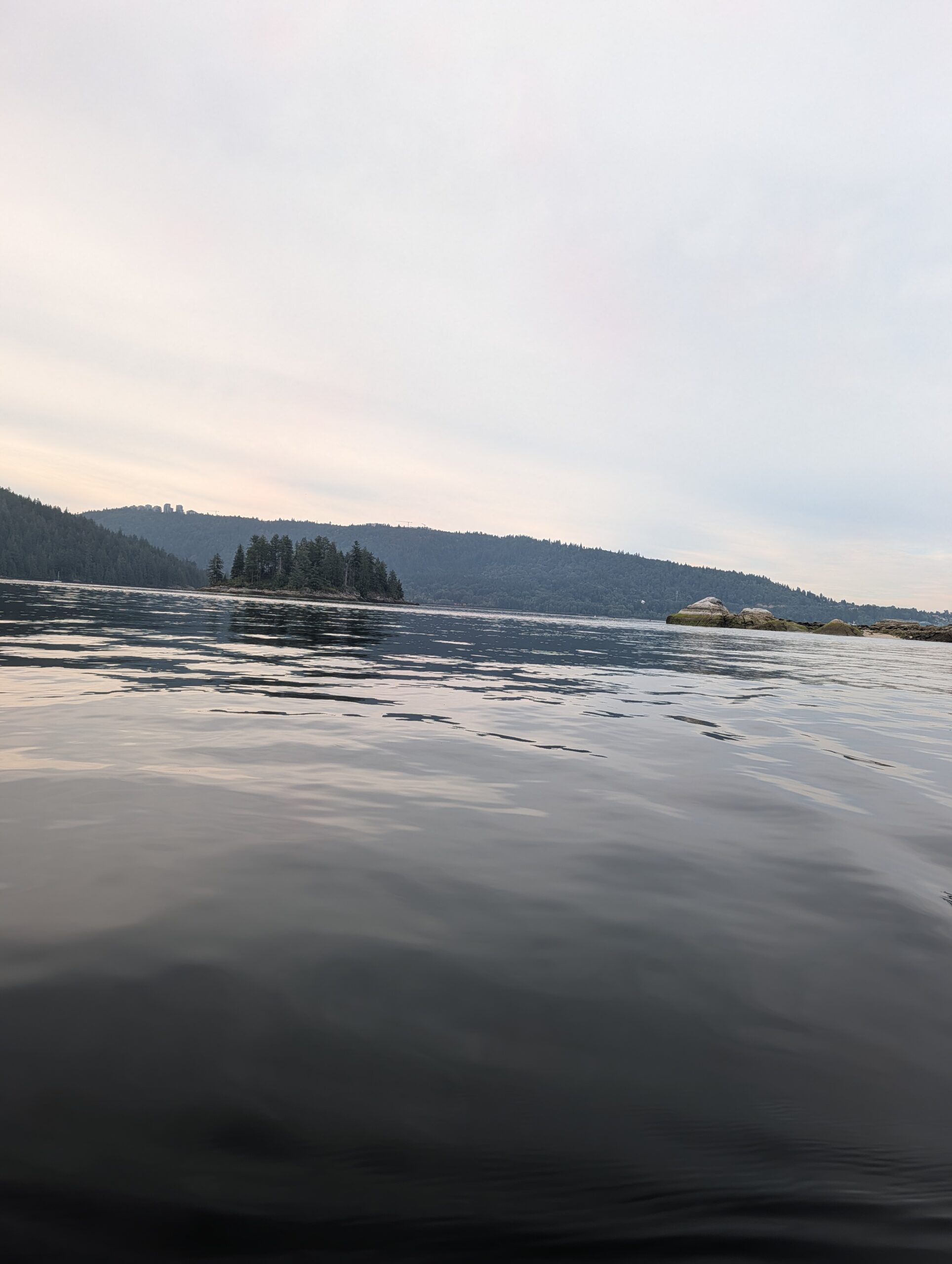
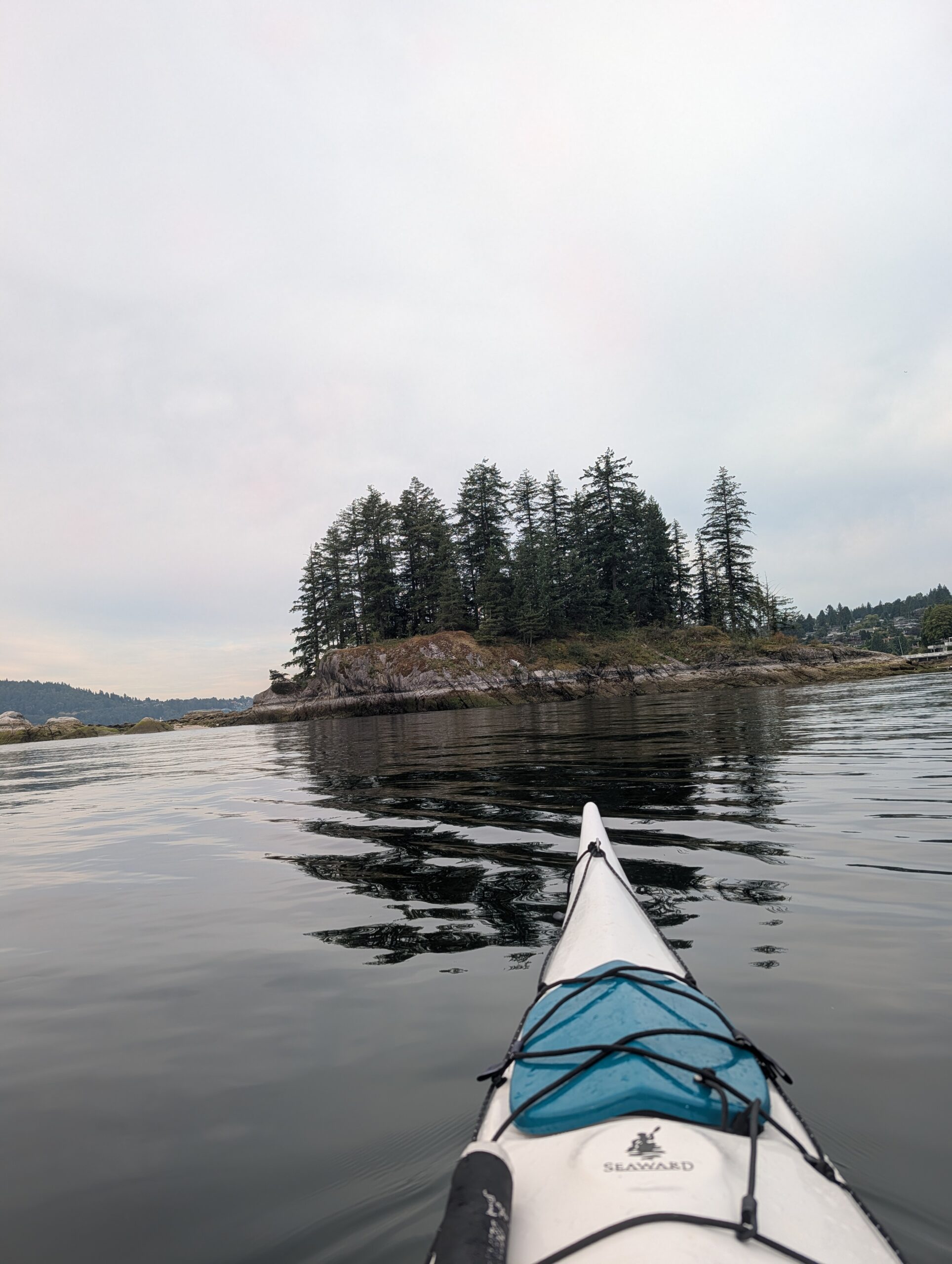
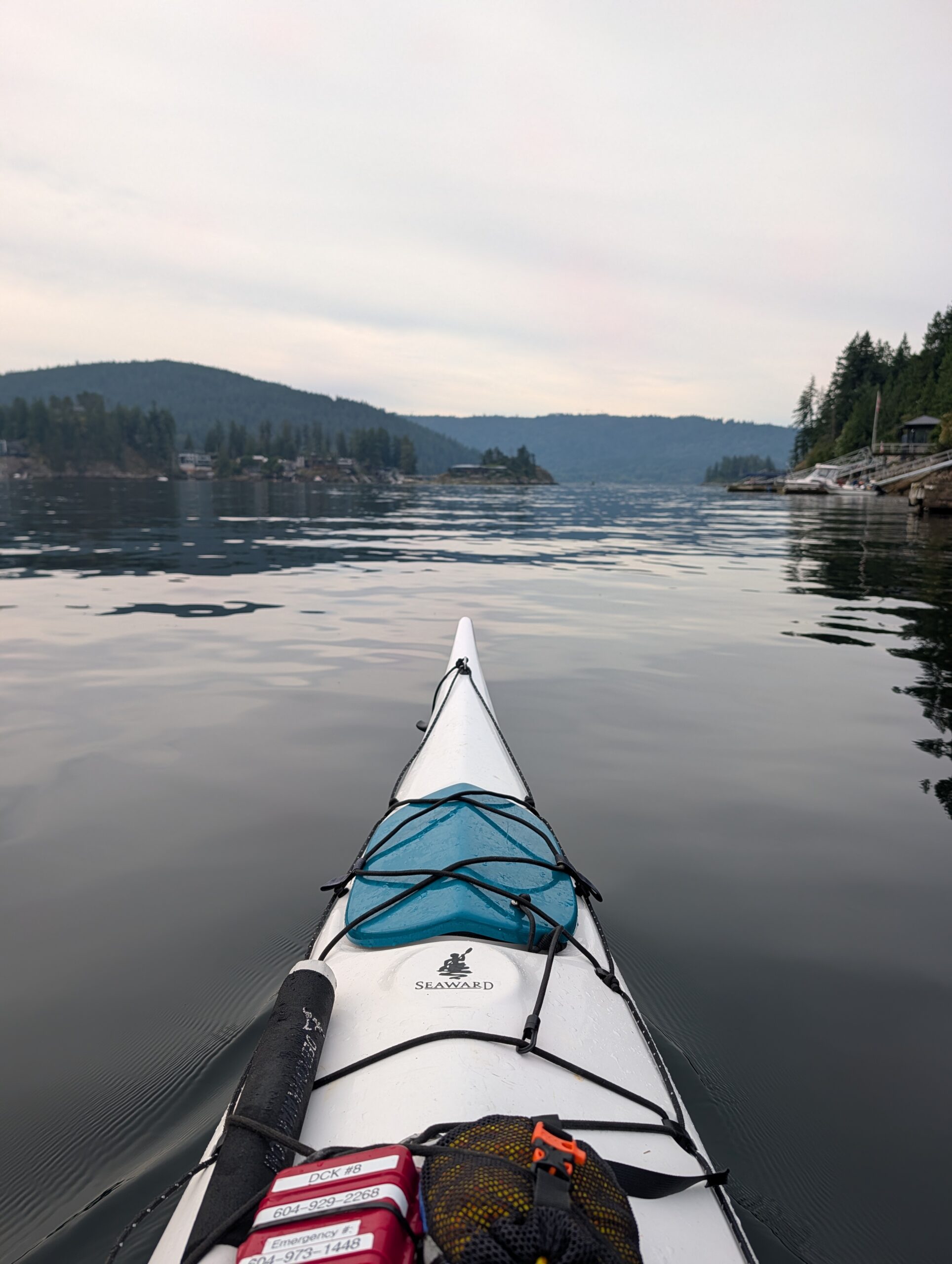
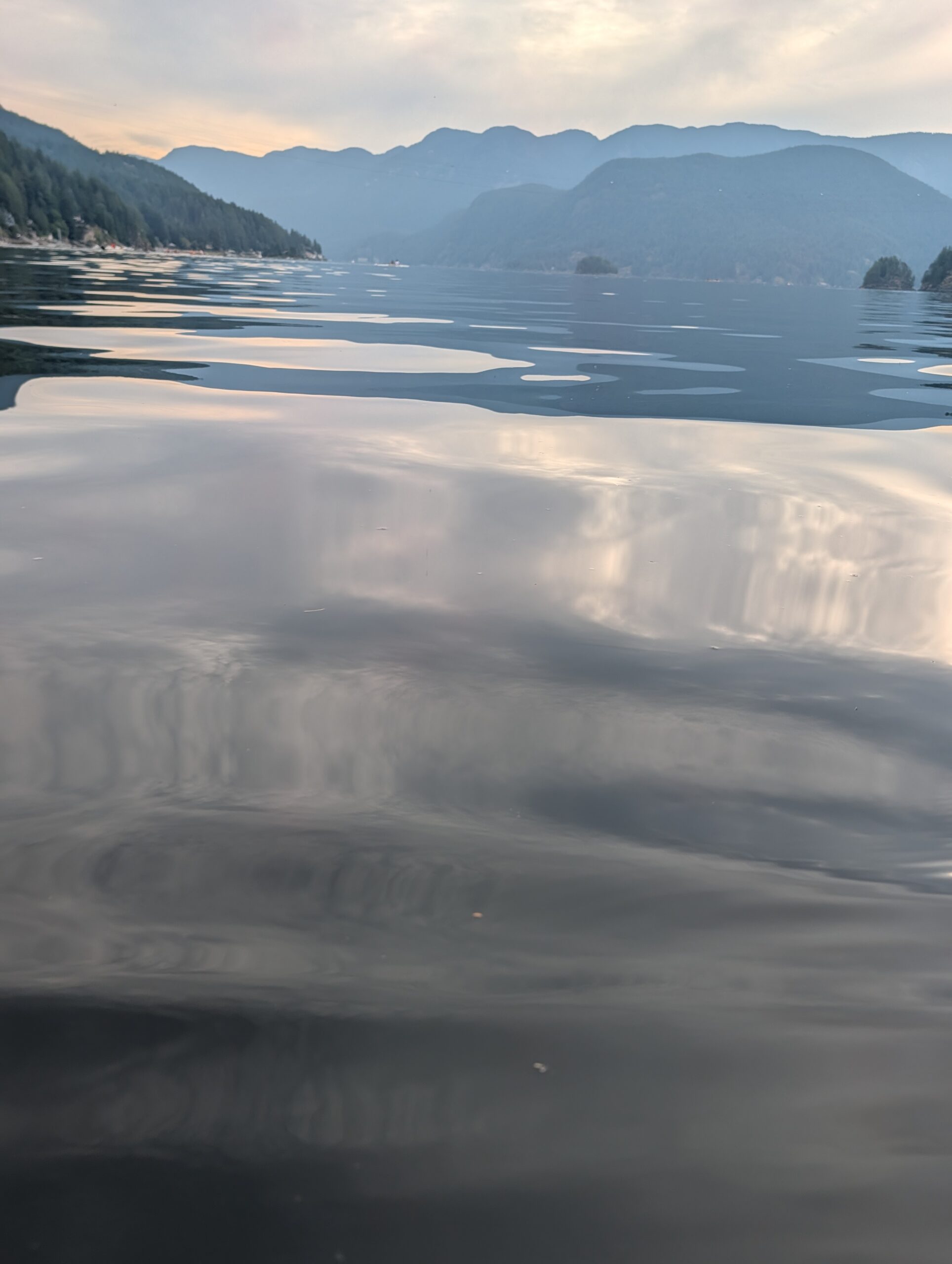
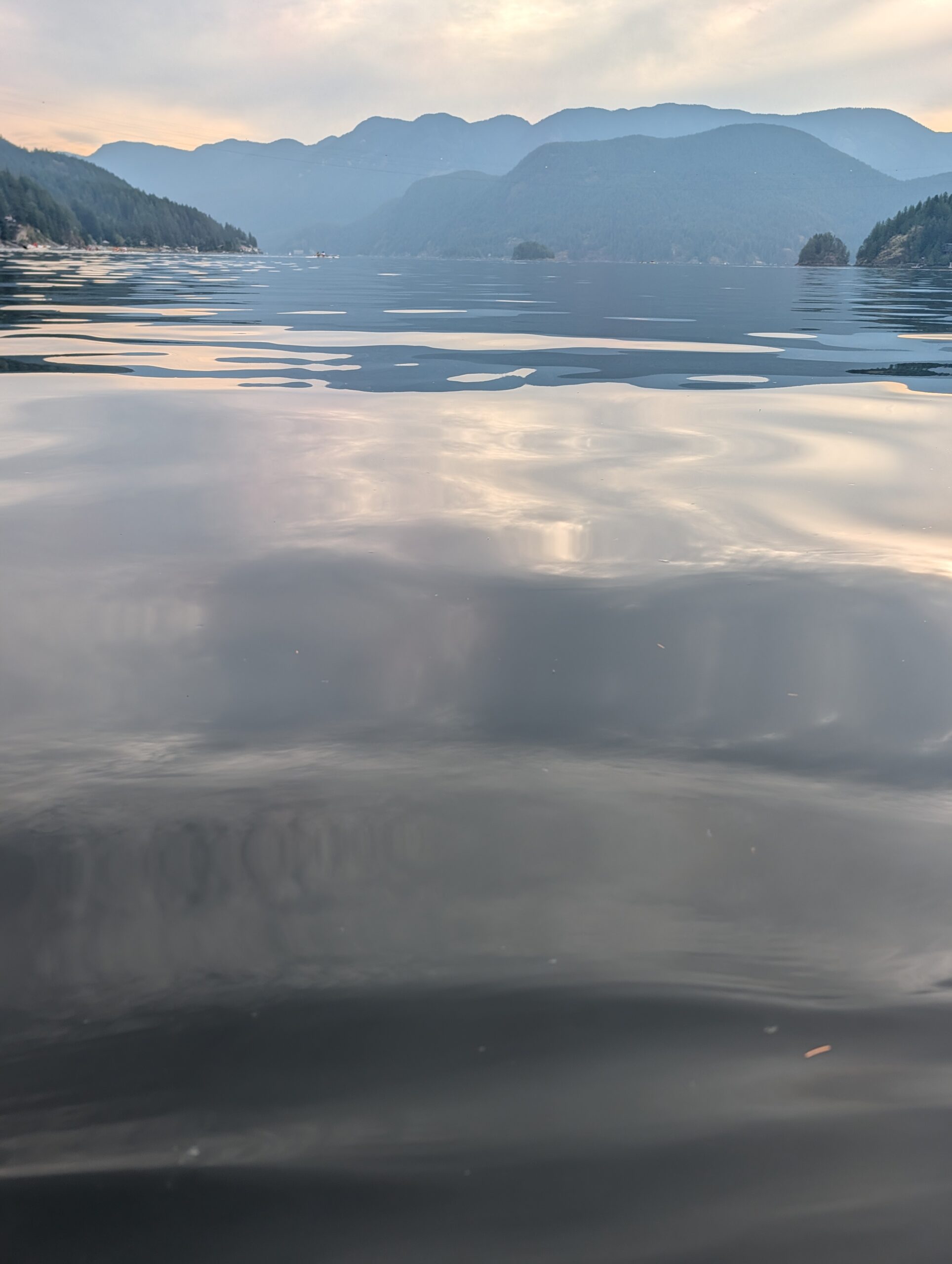
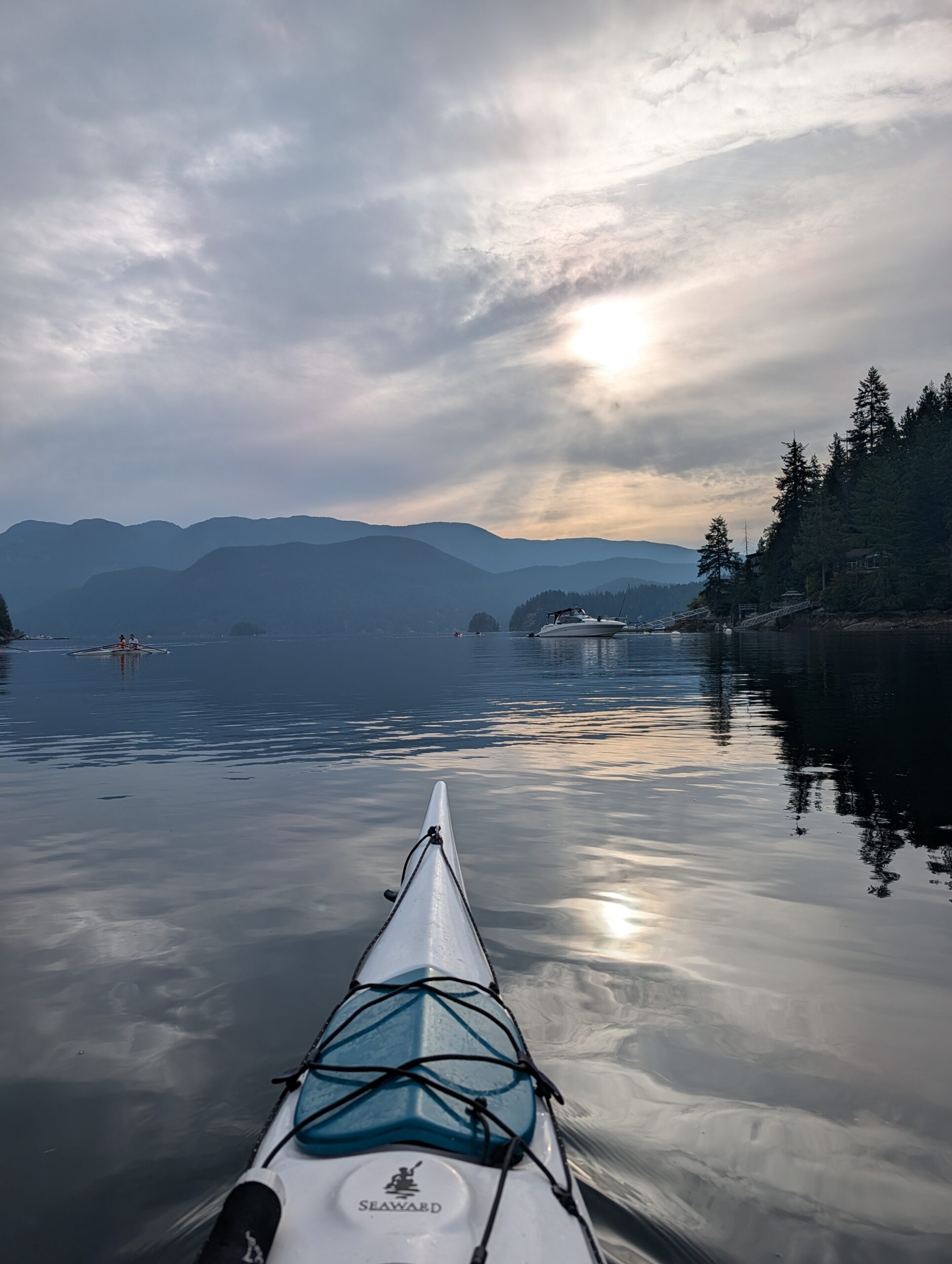
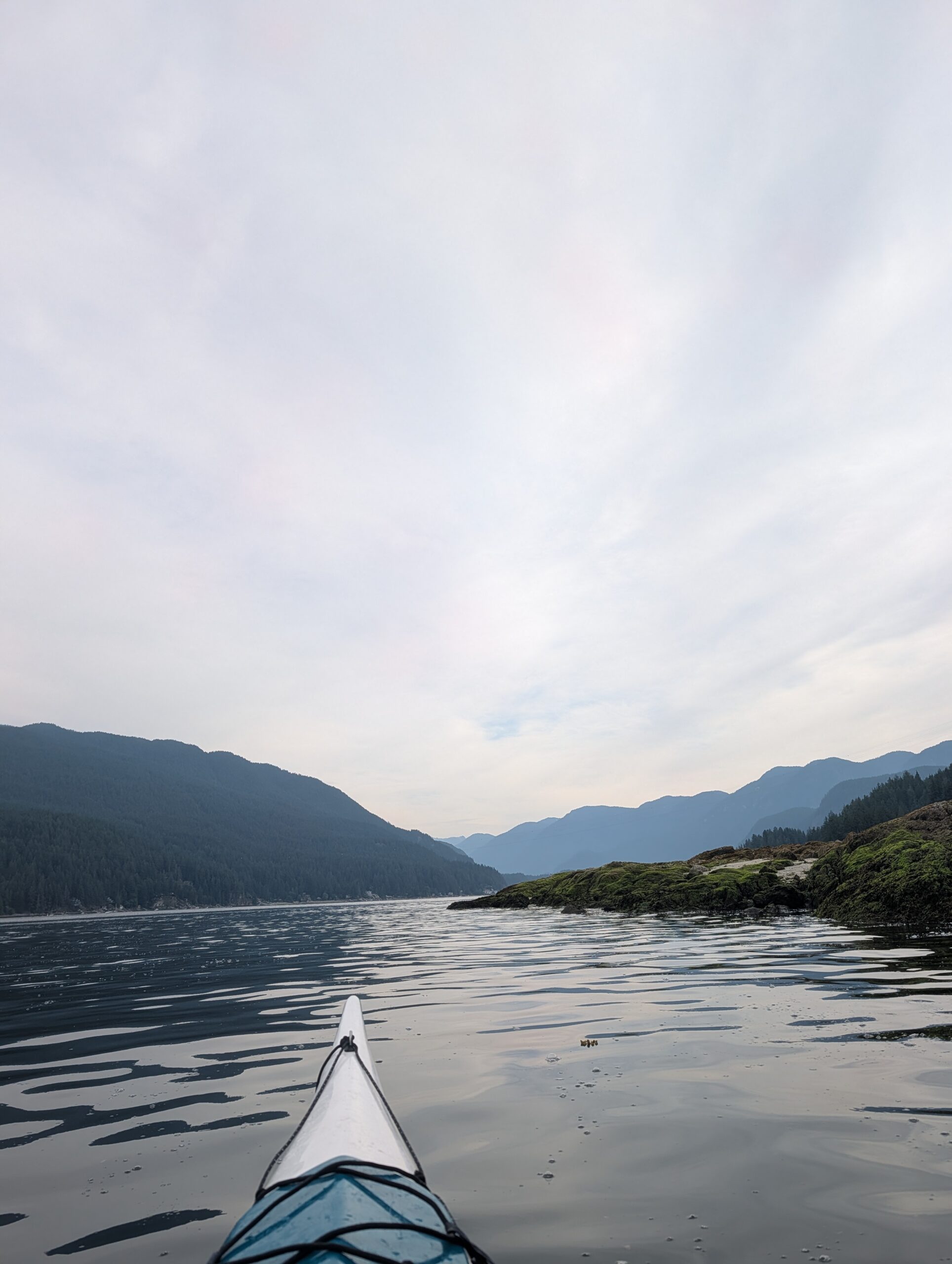
Calm water, forested islands and purple sea stars clinging to the rocks right at the shoreline — Deep Cove from a kayak, taken in turns so our dog never waited alone.
We were here on August 11, 2026, and spent about six hours — the longest stop of that day. The whole day’s route is in our trip Deep Cove and Lynn Canyon in one day.
What It Is
Deep Cove is a small waterfront village in North Vancouver, on the shore of Indian Arm. It’s a narrow fjord running north from Burrard Inlet into the mountains, and here, near its entrance, the water is at its calmest.
The forest comes right down to the water, the shores drop steeply into the inlet, and small islands lie scattered not far from the village. One of the closest is Racoon Island. All of this makes Deep Cove one of the most popular paddling spots near Vancouver: half an hour from the city, and you’re on the water among the mountains.
Further north up the inlet begins Say Nuth Khaw Yum Provincial Park — that’s where people head out for several days, camping on the shore.
Getting There
From Vancouver you reach Deep Cove by crossing the Ironworkers Memorial Bridge to the North Shore and heading east along the water. Without traffic it’s about half an hour. You can also get to the village by public transit — which is exactly what locals recommend, and the next section explains why.
Parking: The Main Problem
Know this before you leave home. Street parking in Deep Cove is very limited and always taken. There are a few lots in the village, but in summer they fill up early and stay full all day. That makes parking here an easily long and frustrating business.
Locals suggest coming by public transit, by bike or by carpooling. There’s a pay lot at Panorama Park, where the Quarry Rock trail starts — paid from March 1 to October 31, 8 a.m. to 6 p.m.
We simply left at five in the morning — and found a spot with no trouble at all. If you’re coming by car too, that’s probably the most reliable approach.
Kayak Rentals
We rented from Deep Cove Kayak, right in the village. Prices before tax:
| Duration | Single | Double |
|---|---|---|
| 2 hours | $49 | $76 |
| 3 hours | $72 | $108 |
| Full day | $115 | $145 |
A two-hour single kayak comes to $55.88 with taxes and fees ($49 plus $6.88).
Rentals include a paddle, life jacket, whistle, spray skirt, bailer and tow line, and single kayaks have two sealed bulkheads in case of a capsize. The shop operates from April to October, and hours depend on weather and daylight — it’s worth calling ahead to confirm.
In April and October, and until the water warms above 13 degrees Celsius, a cold-water policy applies: everyone must wear immersion gear. Wetsuits come free with the rental.
Book ahead. The shop says plainly that walk-ins may not get a boat. Online booking has one quirk: each start time has a limited number of kayaks. If the system says “max capacity”, shift your time by 15 minutes and try again. Groups on the water are capped at eight people.
Plans change — the shop sets out its cancellation terms separately: Deep Cove Kayak, cancellation policy.
Rental page: Deep Cove Kayak, Kayak Rentals.
With Kids
Children are allowed in the kayaks, with conditions. Under 16, a child must be in a double kayak with an adult aged 19 or over. With children under 5, two adults must be on the water. If in doubt, the shop suggests calling ahead.
With a Dog: Take Turns
Dogs aren’t allowed in the regular sea kayaks — single or double. If you want your dog on the water, it’s a paddleboard or a sit-on-top kayak only.
We did it differently: one single kayak for two hours, taken in turns, an hour each. While one of us was on the water, the other walked the shore with Nika. That way we both got out on the water, and the dog was never alone for a minute. It’s also half the price of two kayaks.
One thing to bear in mind if you do the same: each of you is paddling alone. For solo paddlers the shop requires Paddle Canada Level 1 certification, or being able to explain or demonstrate a solo capsize and recovery. Two adults who stay together can take single kayaks without those conditions.
What We Saw
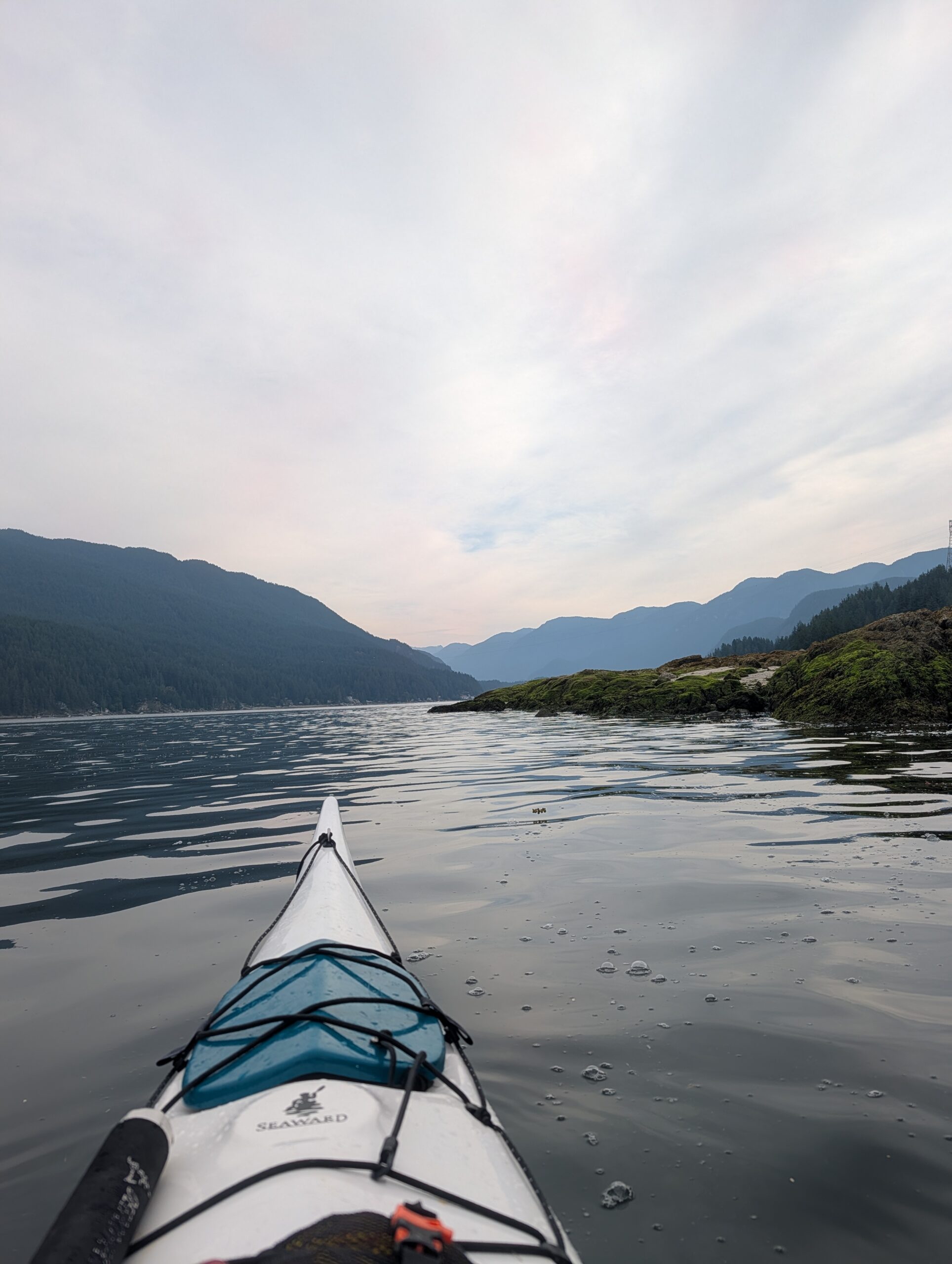
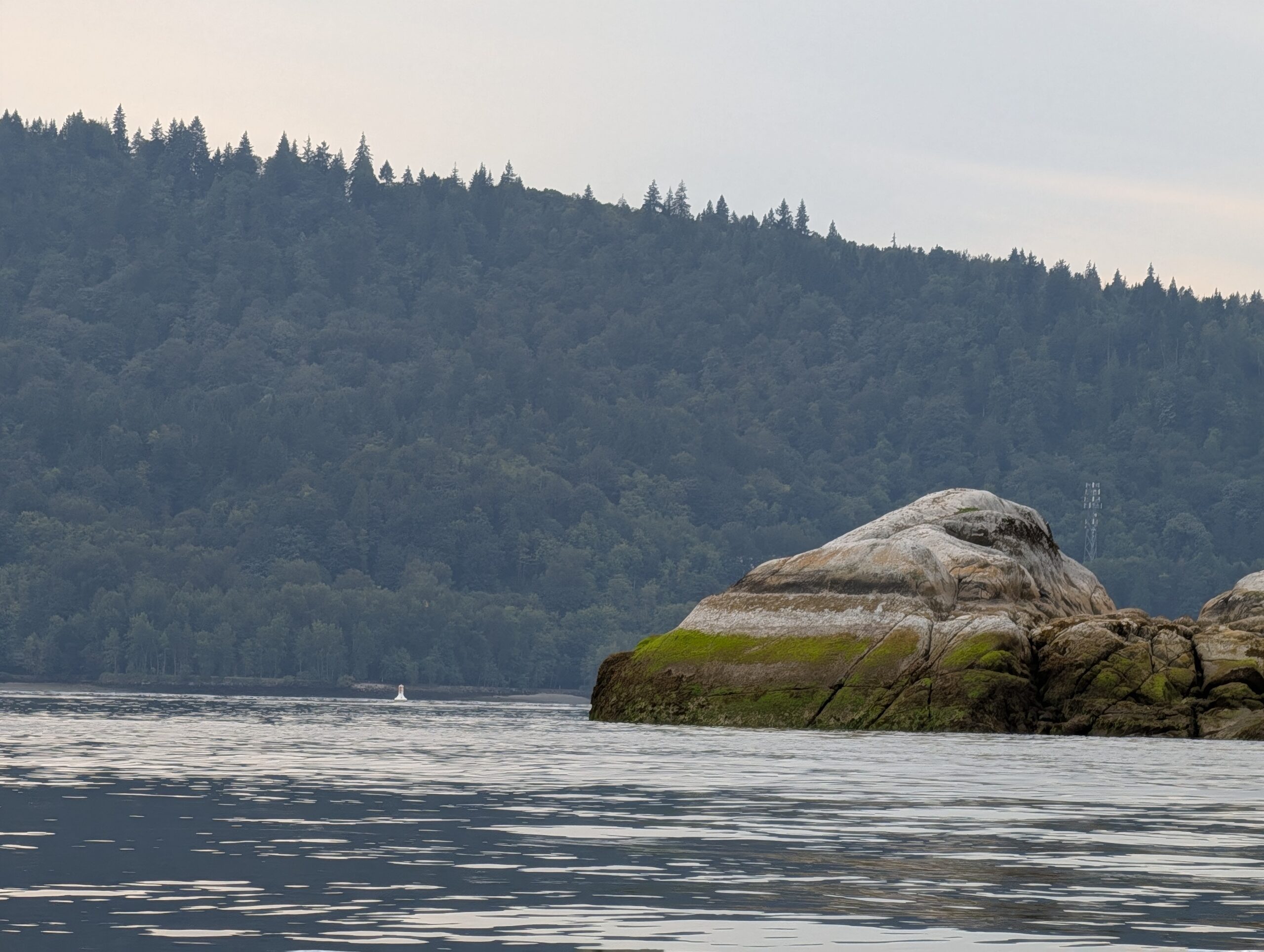
The sky that morning was grey and the water almost still. That’s Deep Cove’s main advantage: even without sun, it’s calm paddling here, because the inlet is sheltered from wind and waves.
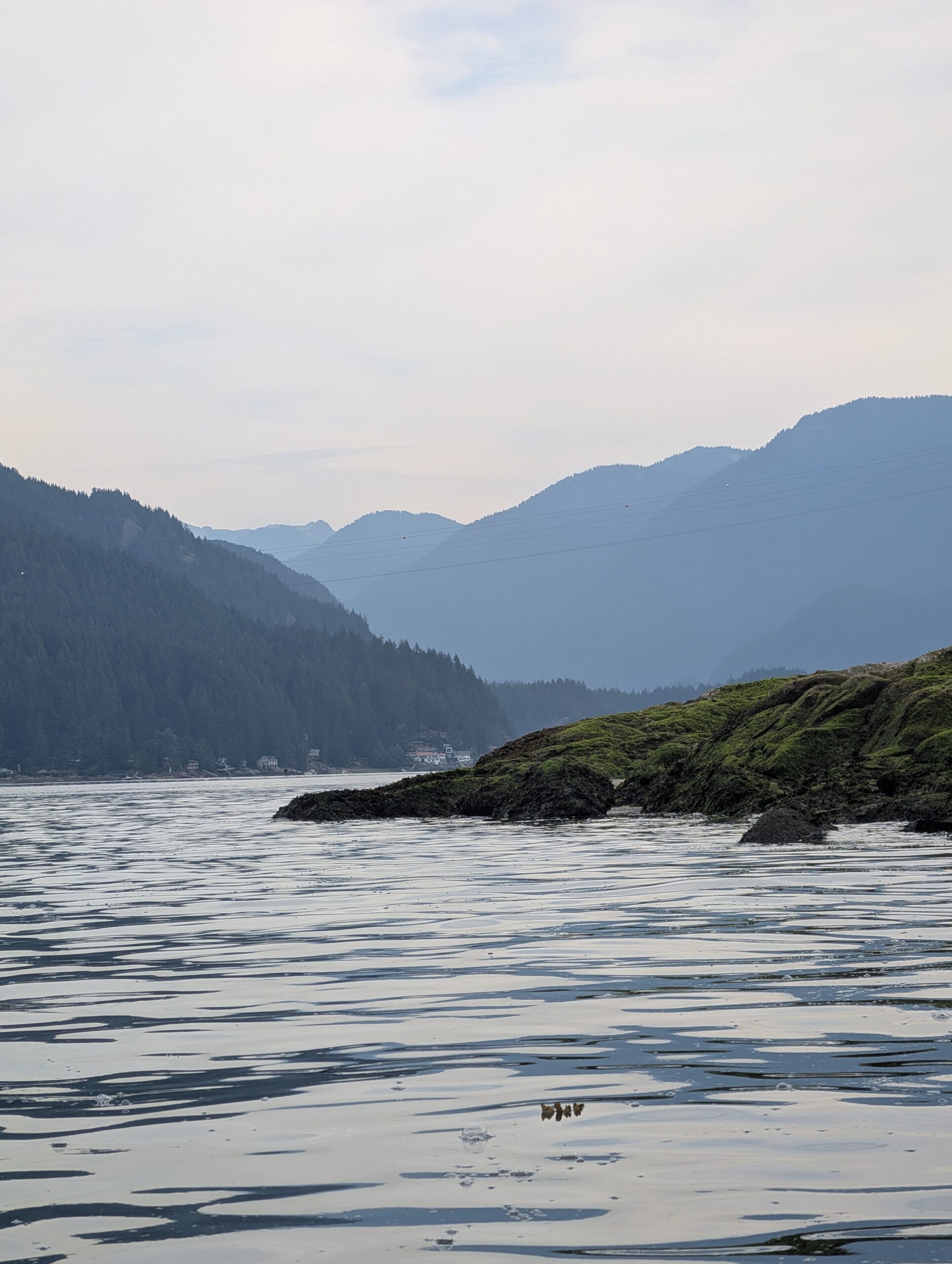
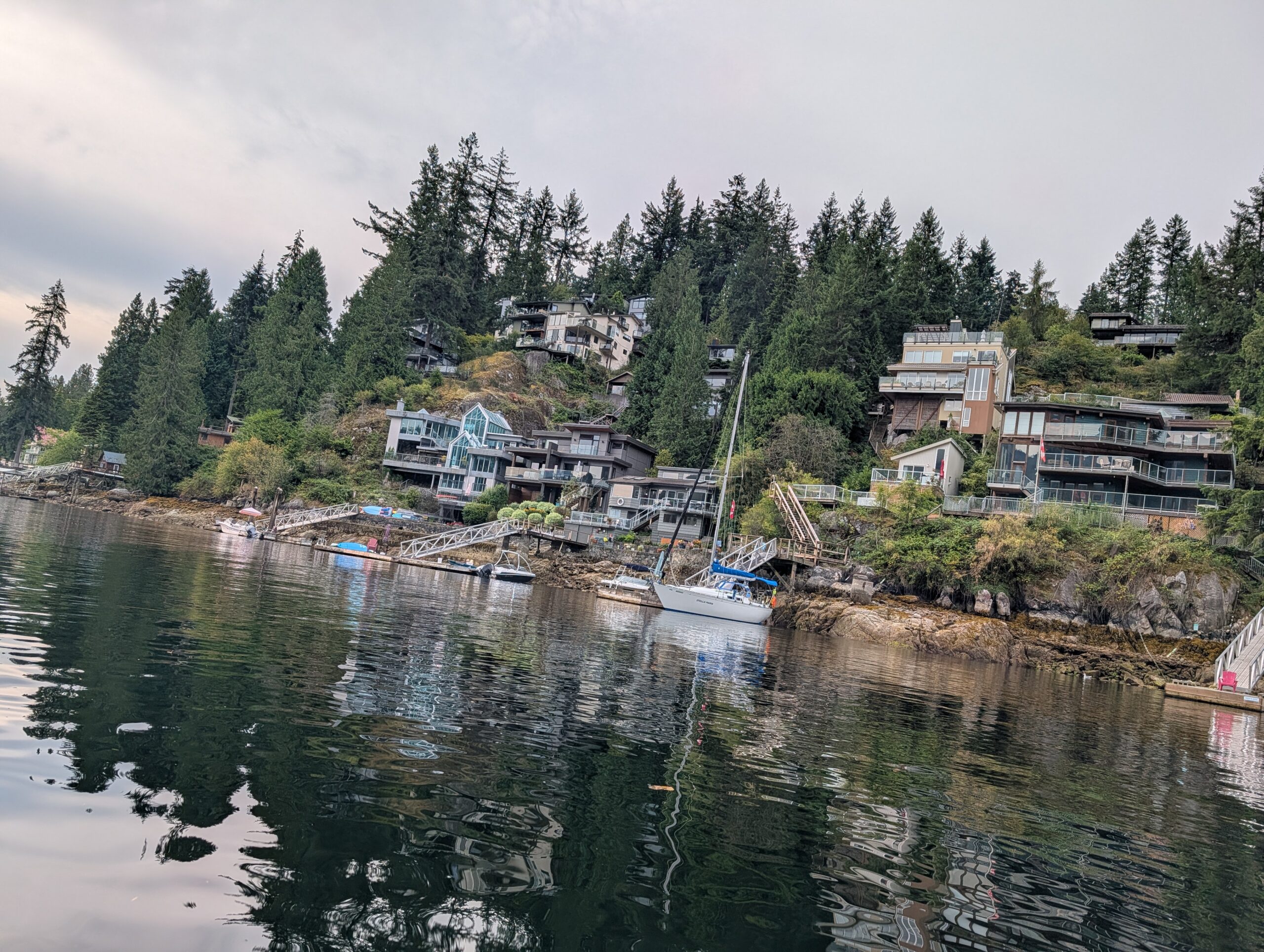
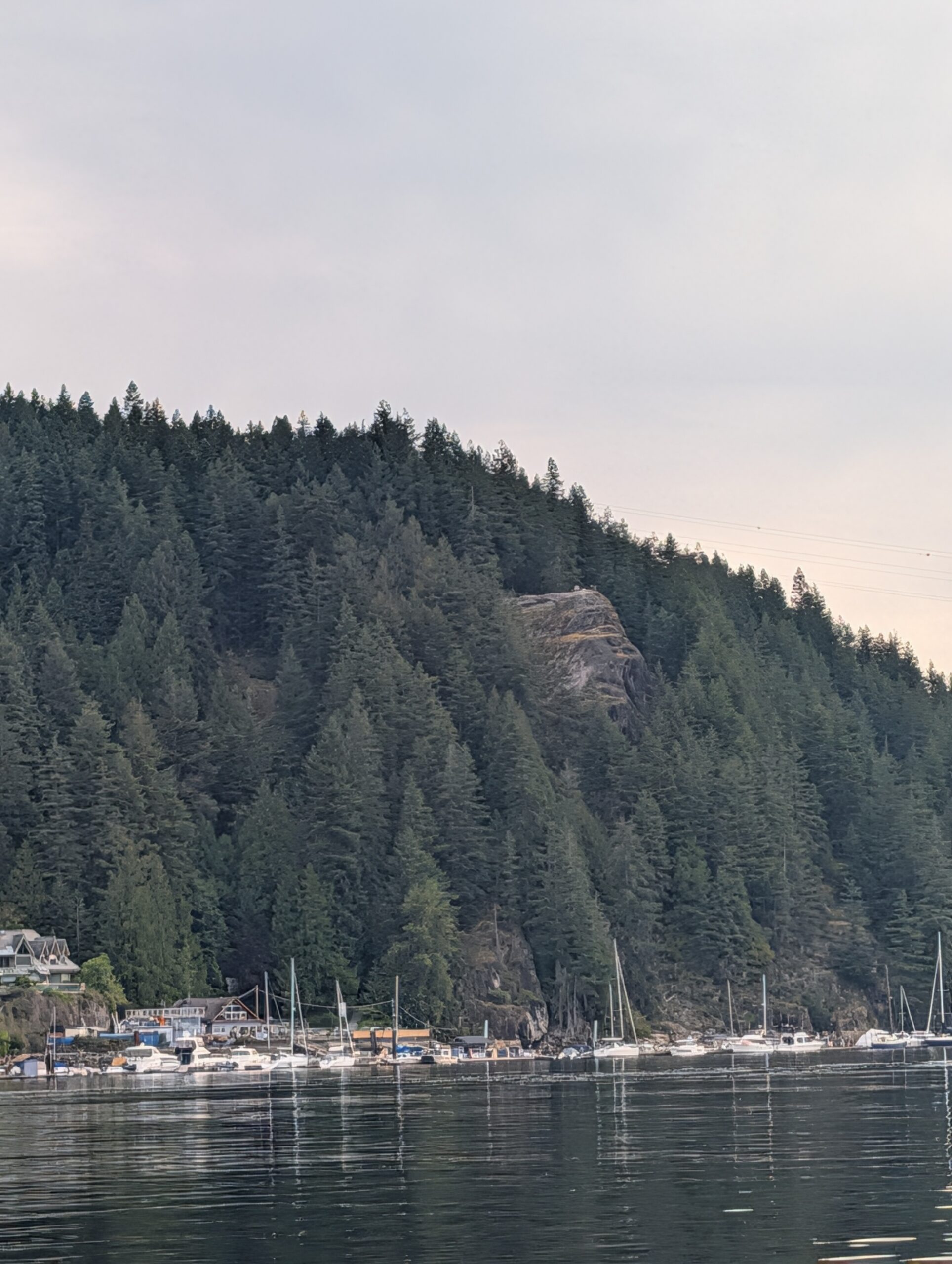
From the kayak you see small forested islands, and the shores drop steeply straight into the water — the forest grows almost to the waterline.
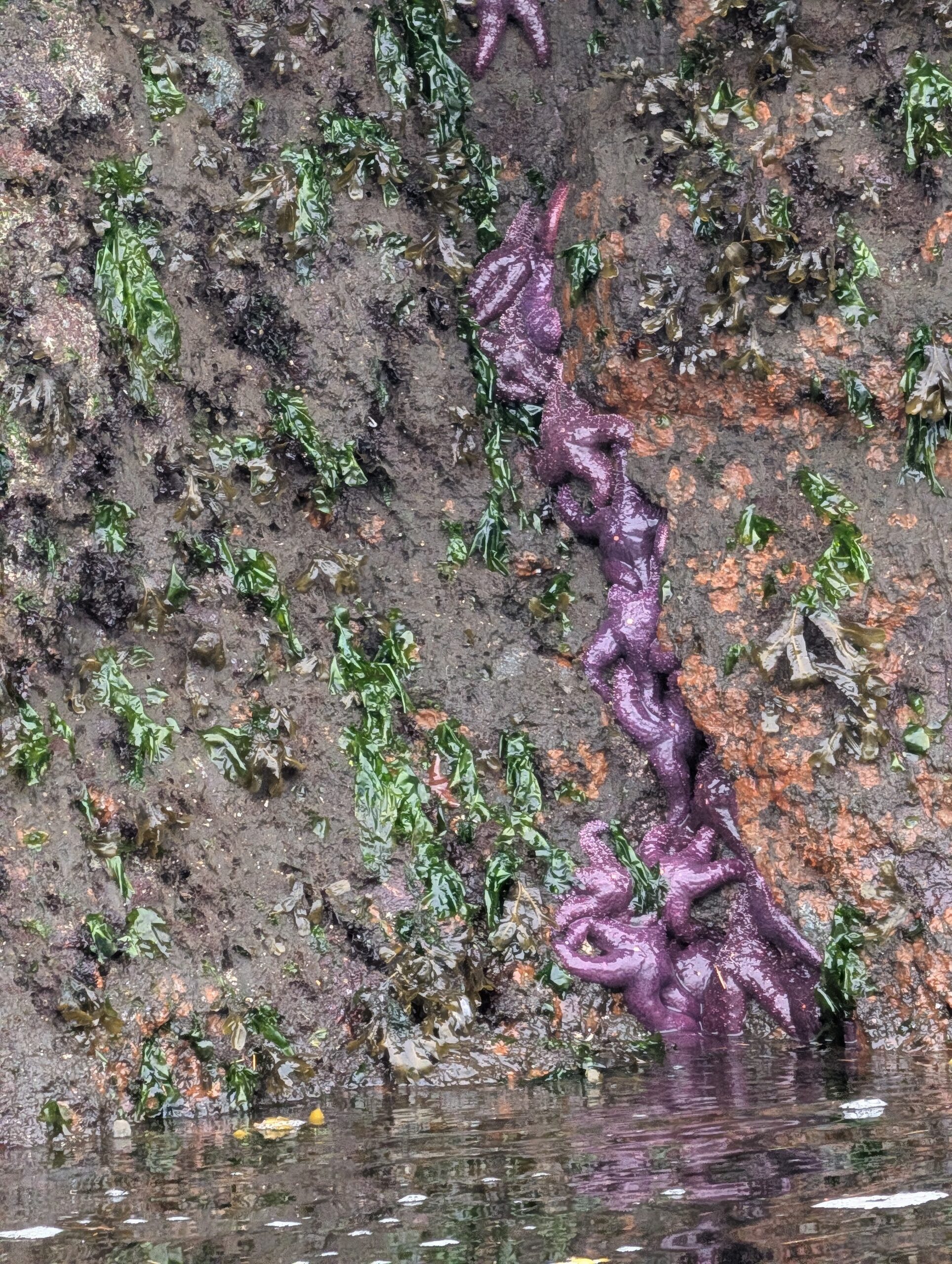
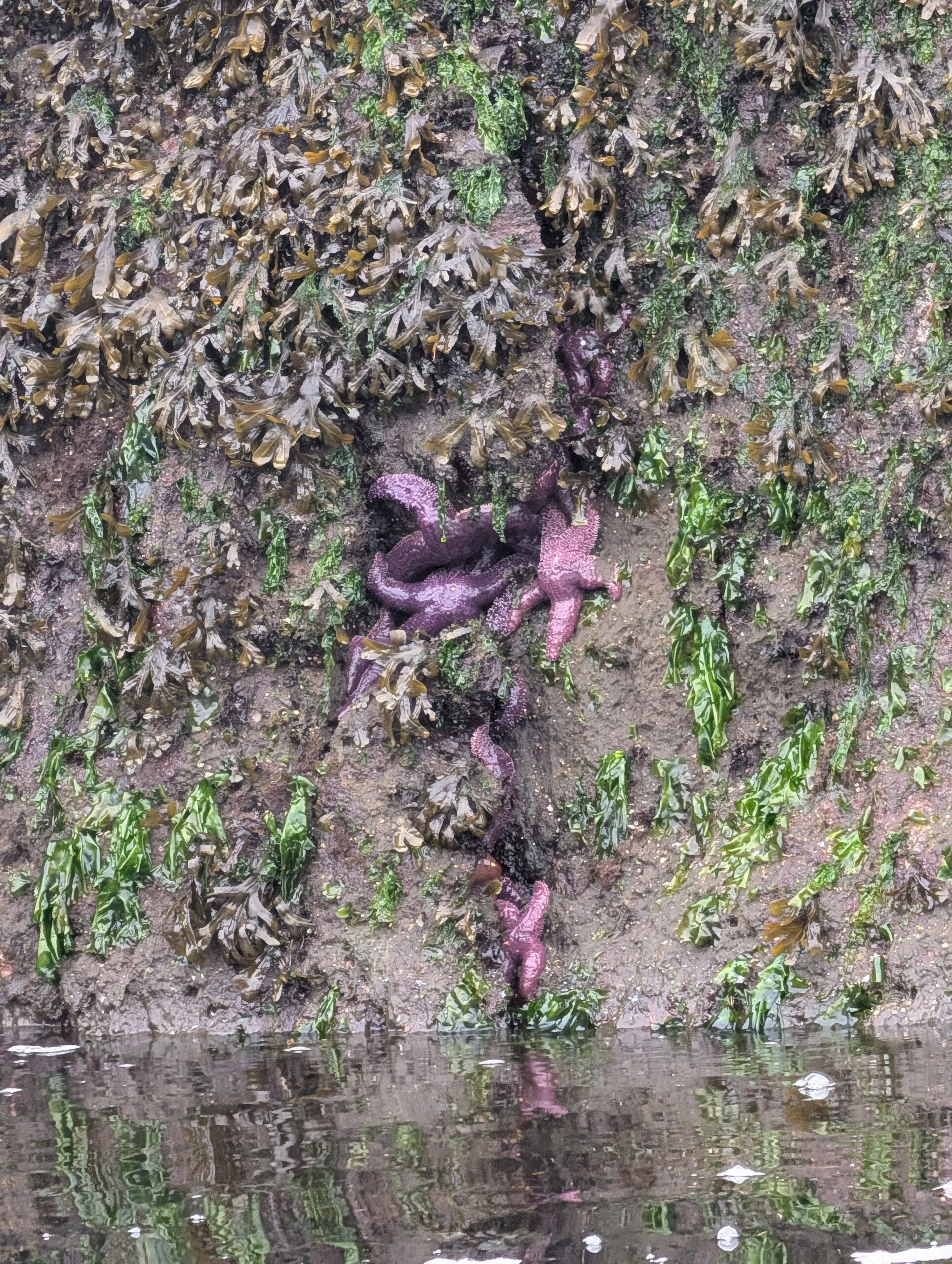
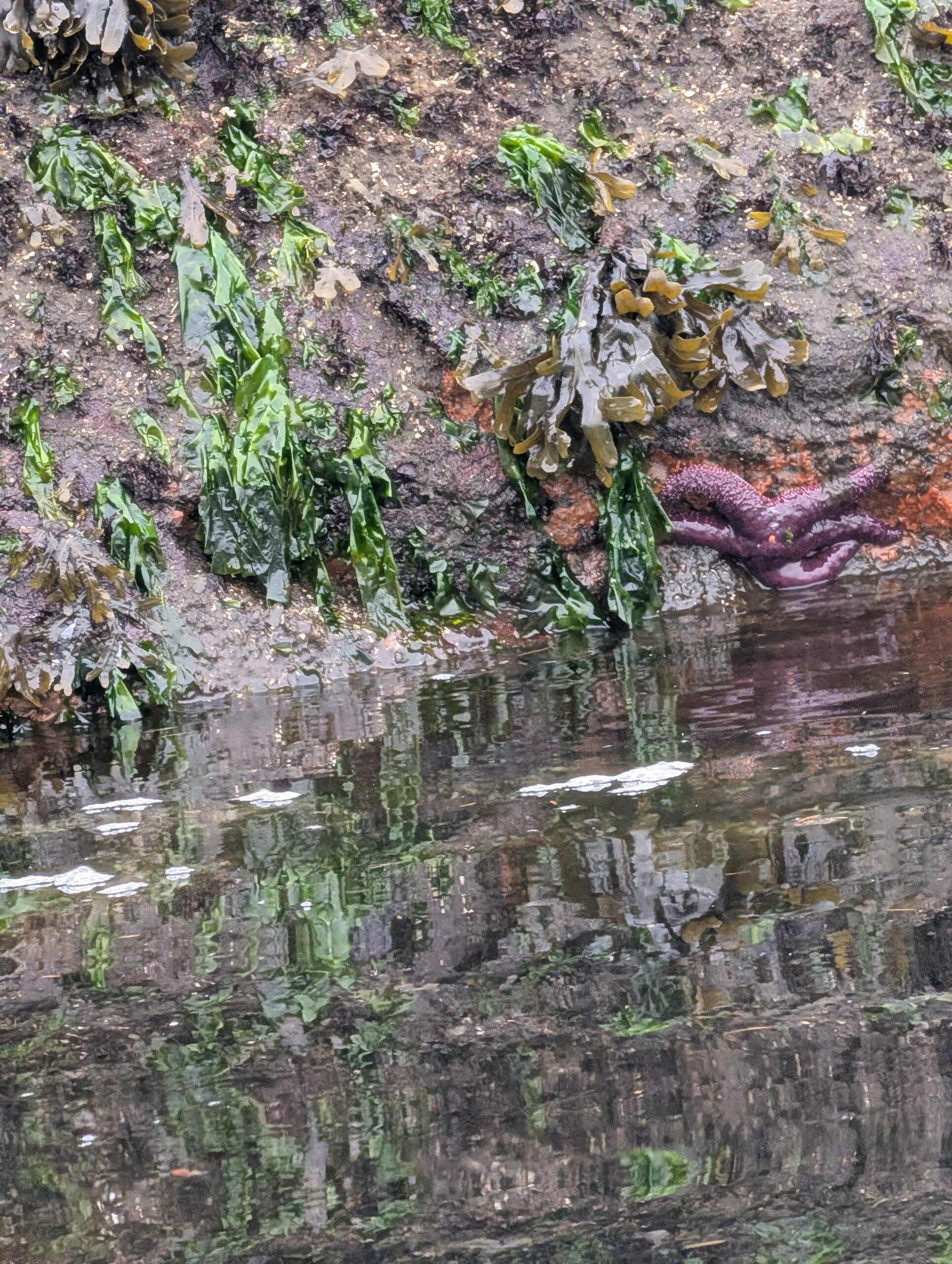
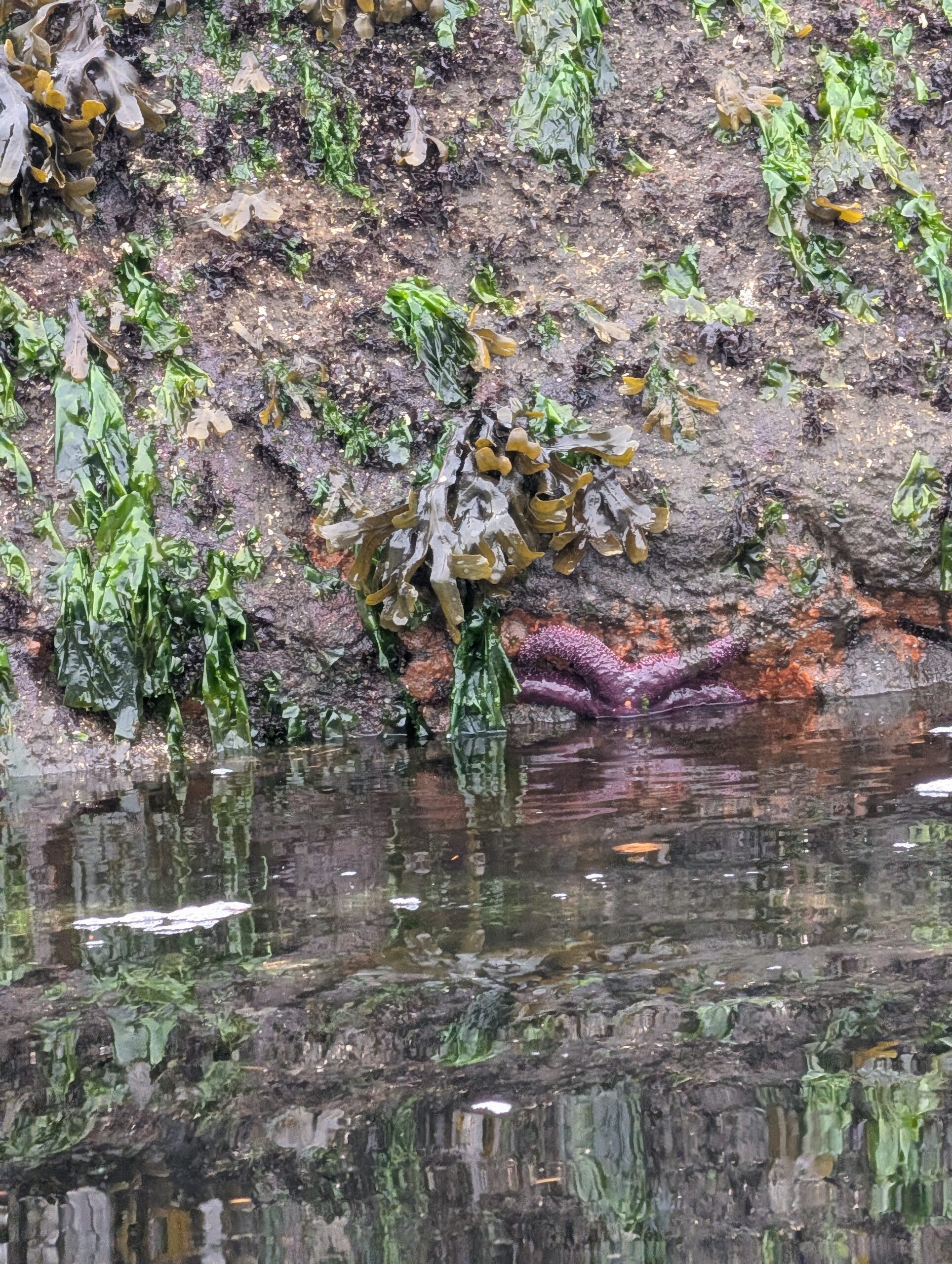
What stayed with us most were the sea stars. Purple, several at a time, they clung to the rocks among the seaweed right at the waterline. You can see them from the shore, not just from the kayak, so whichever of us was walking Nika saw them just as well.
Quarry Rock: Deep Cove’s Most Popular Trail
We didn’t hike Quarry Rock this time — the day was long enough already. But it’s Deep Cove’s best-known walk, so for completeness:
- Distance: about 3.8 km return
- Time: about an hour and a half
- Elevation gain: roughly 100 metres
- Start: Panorama Drive, by Panorama Park
The trail follows the first two kilometres of the Baden-Powell Trail — a route of about 48 km that crosses the whole North Shore from Deep Cove to Horseshoe Bay. It finishes on a broad granite outcrop overlooking Indian Arm and the mountains around Belcarra. Dogs are allowed.
If you’re here on foot rather than with a kayak, it’s the best way to see Deep Cove from above.
Honey Doughnuts & Goodies
There’s one place in the village that nearly everyone who’s been to Deep Cove mentions — Honey Doughnuts & Goodies, a bakery doing doughnuts, baked goods, breakfast and coffee. For many people it’s the traditional end to the Quarry Rock walk.
If Deep Cove Is Full
The same rental company has two other locations. Cates Park is five minutes from Deep Cove, with views of Say Nuth Khaw Yum Provincial Park. And Jericho Beach in Vancouver’s Kitsilano neighbourhood has views of the city and mountains and, according to the shop, plenty of parking. If you arrive late and can’t squeeze into Deep Cove, these are your fallbacks.
How Much Time to Allow
We spent about six hours in Deep Cove, including walks along the shore. Two or three hours is enough for the kayak itself, plus an hour and a half for Quarry Rock. But come early — because of the parking.
Quick Reference
| What | Details |
|---|---|
| Where | Deep Cove, North Vancouver, on Indian Arm |
| From Vancouver | About 30 minutes via the Ironworkers Memorial Bridge |
| Parking | Very limited; fills up by morning in summer |
| Rentals | Deep Cove Kayak; single 2 h $49 ($55.88 with tax), double 2 h $76 + tax |
| Booking | Strongly recommended; on “max capacity”, shift by 15 min |
| Season | April – October; free wetsuits in cold water |
| Dogs | Not in the sea kayaks; paddleboard or sit-on-top only |
| Our fix | One kayak for 2 hours, taken in turns |
| What you’ll see | Islands, steep forested shores, sea stars at the waterline |
| Quarry Rock | 3.8 km return, about 1.5 hours |
| Time needed | About six hours including walks |
Last checked: October 2026. We visited Deep Cove on August 11, 2026. The early arrival for parking, the kayak in turns, the weather on the water, the islands and the sea stars are firsthand. We didn’t hike Quarry Rock or visit Cates Park or Jericho Beach, and we mention Honey Doughnuts & Goodies as a local bakery, without a review.
Sources checked: Deep Cove Kayak’s rental page (prices, rules, solo-paddling requirements, dog and kids policies, other rental locations), parking information for Deep Cove, and Quarry Rock and Baden-Powell Trail data. Prices change — confirm before you travel.