



How small Lockport became the stage for Manitoba’s longest culinary feud — and why, after finally sitting in both rooms, we can give you the honest verdict.
There are places people return to not just for the food.
They return for a feeling. The same feeling their parents and grandparents had. The smell of frying fries that reminds them of childhood. The sound of a door opening exactly the way it did fifty years ago. An interior so unchanged that time itself seems to move differently inside.
In small Lockport, Manitoba, there are not one but two such places. And they have been standing across from each other for almost a hundred years.
I knew none of this when we drove up there on an October evening, with no plan and no reservations. We just wanted dinner. We did not know that by choosing “this restaurant,” we were actually picking a side in a war that has been going on since 1929.
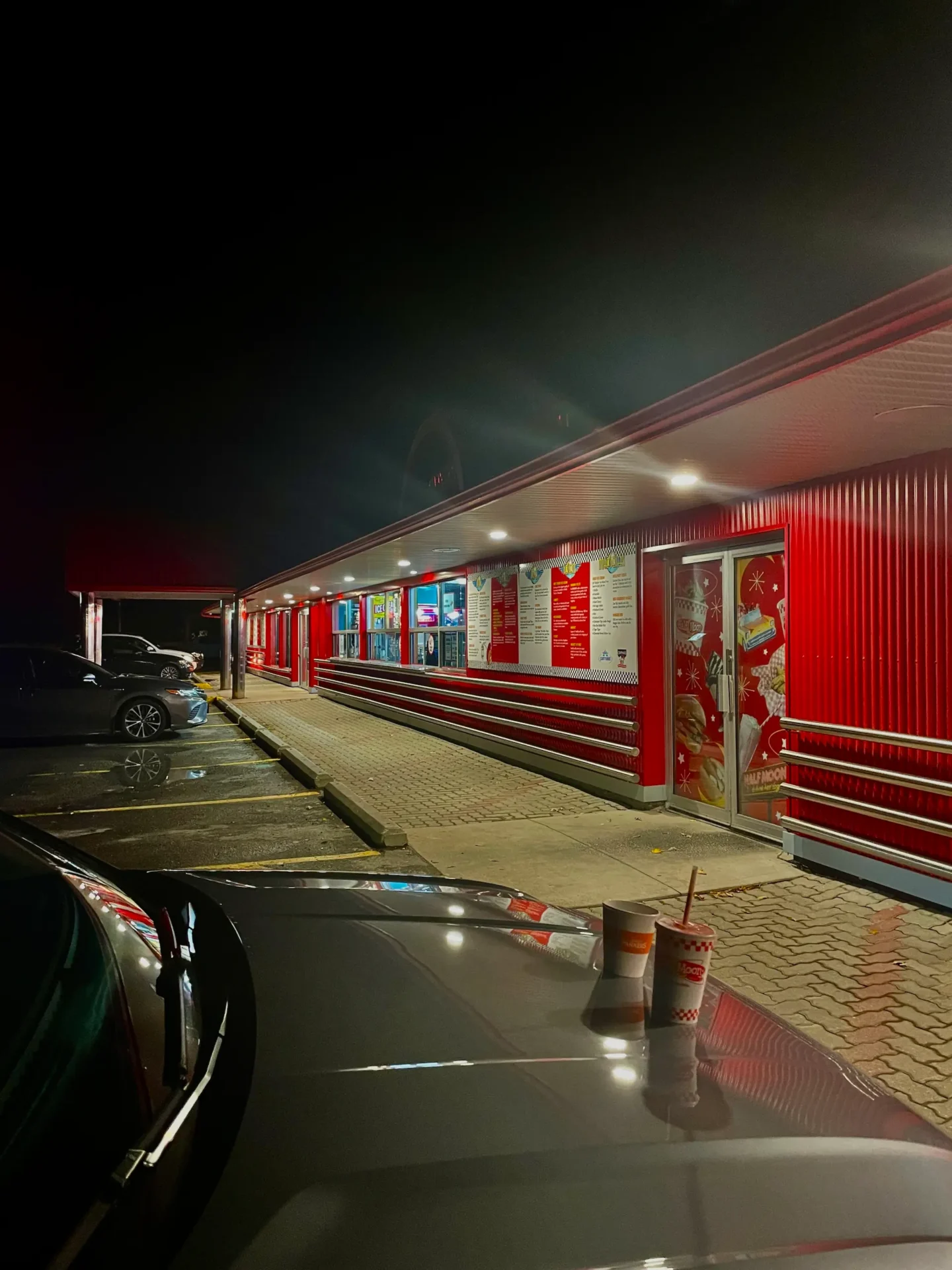
It was only when we were already sitting on the patio at Half Moon Drive In, and I started reading about the place, that I realized what we had walked into.
Half Moon or Skinner’s: The Question That Divides Manitoba
In Manitoba, this question can split a group of friends faster than an argument about hockey teams.
Some swear there is no better hot dog than Skinner’s. Others look at them with pity and quietly drive to Half Moon for a milkshake and a river view. The debate has been going on for decades — quiet, fierce, and very delicious.
We landed in the middle of it by accident. We came to Lockport spontaneously (the story is in our 40-minute rule post), had dinner at Half Moon, wanted to stop by Skinner’s too — and it was closed. For a while our verdict stayed one-sided. Then, on a Sunday evening in the summer of 2026, we drove back to Lockport — and this time the door on River Road was open. What we found there is at the bottom of this post, in the update.
But even before that, there was a lot to tell. Because when I started digging into the history of these two places, I realized this is not really about two restaurants. It is about two small films. Just in different genres.
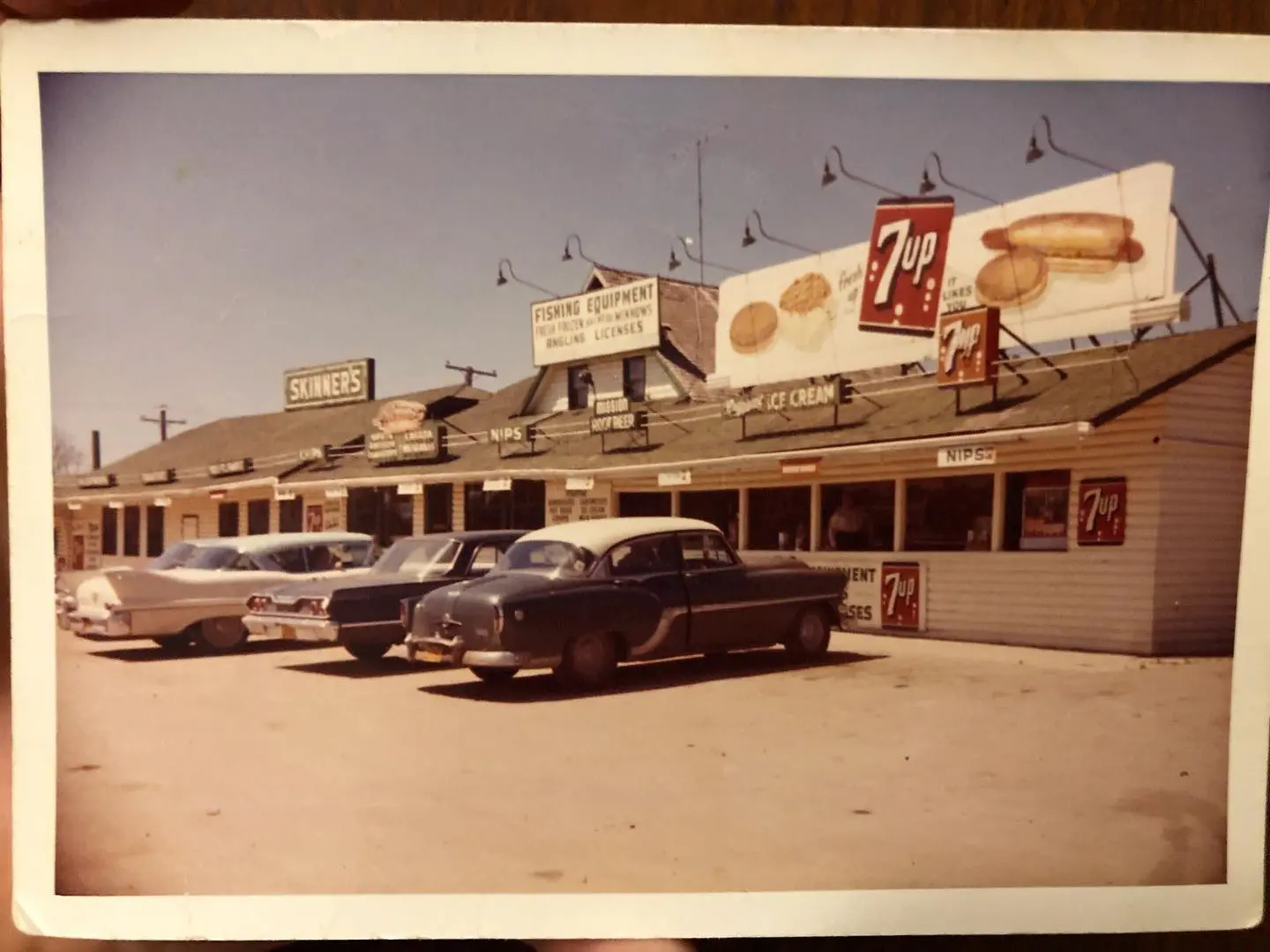
Skinner’s: 1929, Ten Cents, and the Road to the Stanley Cup
Skinner’s is older. Not by a little — by a full decade.
It all started in 1929. The same year the Great Depression began. Picture this: people are losing jobs, banks are failing, prices are crashing, nobody has money for anything. And in that exact moment, Selkirk merchant Jim Skinner Sr. decides — I am going to open a hot dog stand in Lockport.
Hot dogs cost ten cents. Fries five cents. A dime for hot food.
It sounds almost naive. But a dime hot dog was exactly what people needed back then. A small, accessible joy in a brutal year. Skinner’s did not close during the Depression, did not close during World War II, did not close in any decade since. It just kept going, day by day, making its hot dogs.
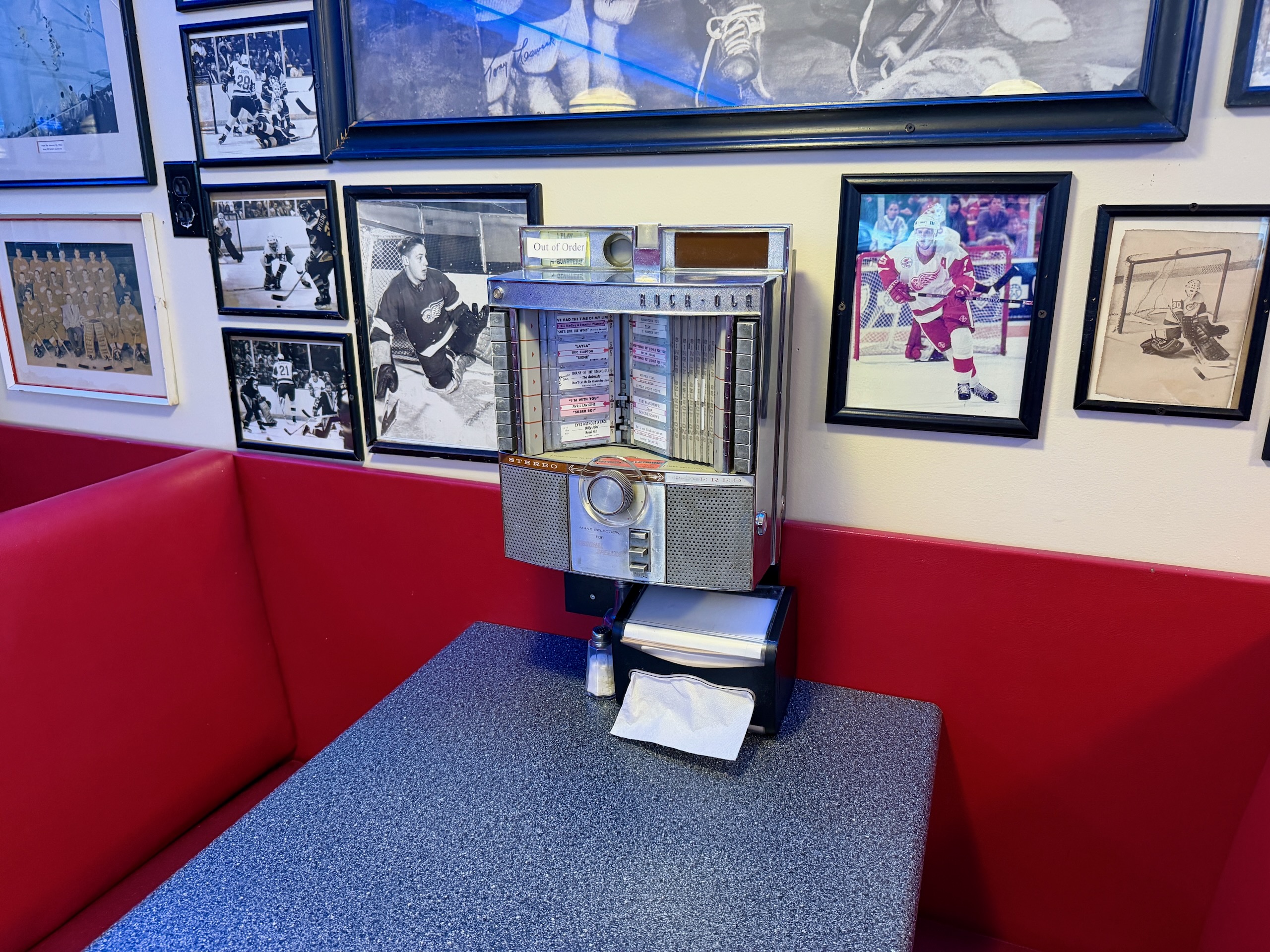
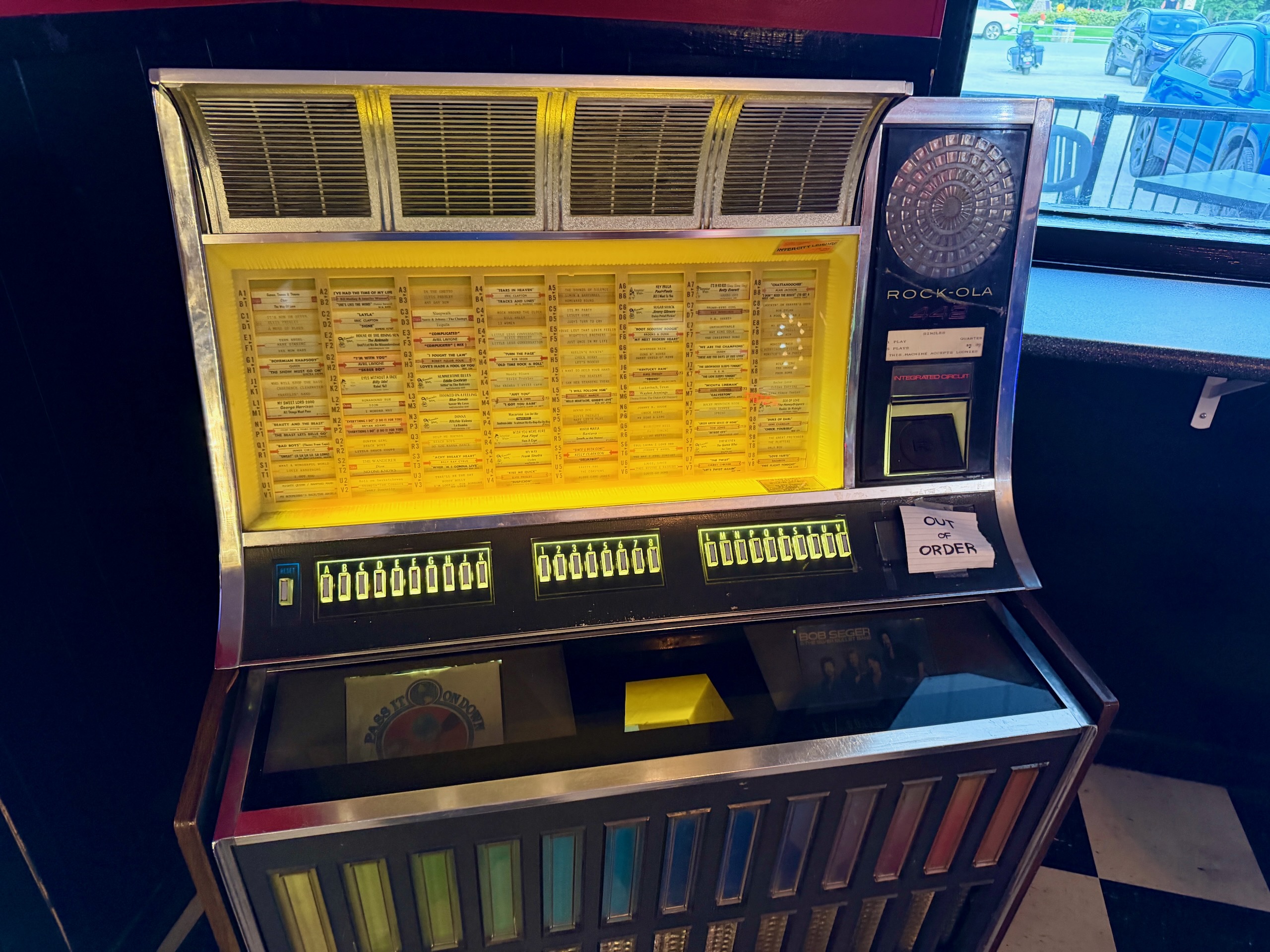
Over time, the stand became a full restaurant with its own dance hall, which later became an arcade with game machines. Every booth got its own wall-mounted music box, connected to a central jukebox with old 45 rpm vinyl records. Families started driving here every Sunday — and passing the ritual on to their kids, who passed it on to theirs.
Skinner’s stopped being just a restaurant. It became a ritual.
But the most unbelievable thing about Skinner’s is not the hot dogs. It is hockey.
The Kid From the Hot Dog Stand Who Raised the Stanley Cup
Jim’s sons grew up obsessed with hockey. One of them — Jimmy Skinner Jr. — worked his way up from junior leagues to the pros. He played for the Selkirk Fishermen, the Winnipeg Rangers, the Winnipeg Falcons. He turned down a contract with the New York Rangers. He won a Saskatchewan championship with the Flin Flon Bombers.
And then he became a coach. Not just any coach.
In his very first season as head coach of the Detroit Red Wings, Jimmy Skinner led the team to victory in the 1955 Stanley Cup Final, beating the Montreal Canadiens.
Stop on that sentence for a second. A rookie head coach. In his very first season. Won the Stanley Cup. This is not a fairytale. This is a man whose father sold ten-cent hot dogs in a small town on the Red River.
And it was the last Stanley Cup the Detroit Red Wings won for the next 42 years. Until 1997.
Now the detail that genuinely gives chills.
Jimmy Skinner is credited with starting the tradition of kissing the Stanley Cup after winning it.
Yes. That tradition. The one every winning NHL team has performed ever since. Every captain. Every player. Every photographer waiting for that moment. All of it traces back to a guy from Selkirk, Manitoba. A man whose family sold ten-cent hot dogs in a small town. This is recorded in the Windsor Essex County Sports Hall of Fame, the Detroit Red Wings Hall of Fame, and the relevant NHL historical sources.
I had to read it a few times to believe it.
And then I learned another detail that genuinely moved me.
When NHL Legends Served Fries at a Roadside Diner
During NHL summer breaks, Jim brought his players to work alongside him at the restaurant. Not for a hockey camp. Not for promotional photoshoots. To work at the restaurant.
Gordie Howe. Ted Lindsay. Terry Sawchuk. Alex Delvecchio. Red Kelly. These are not random names — these are legends. People who would later be inducted into the NHL Hall of Fame. People whose photographs hang in hockey museums today. In the 1950s, they may very well have been serving fries and hot dogs to customers at Skinner’s in Lockport.
Picture this. You walk into a roadside diner. You order a dime hot dog. And the guy handing it to you is a future Hall of Famer. And you have no idea.
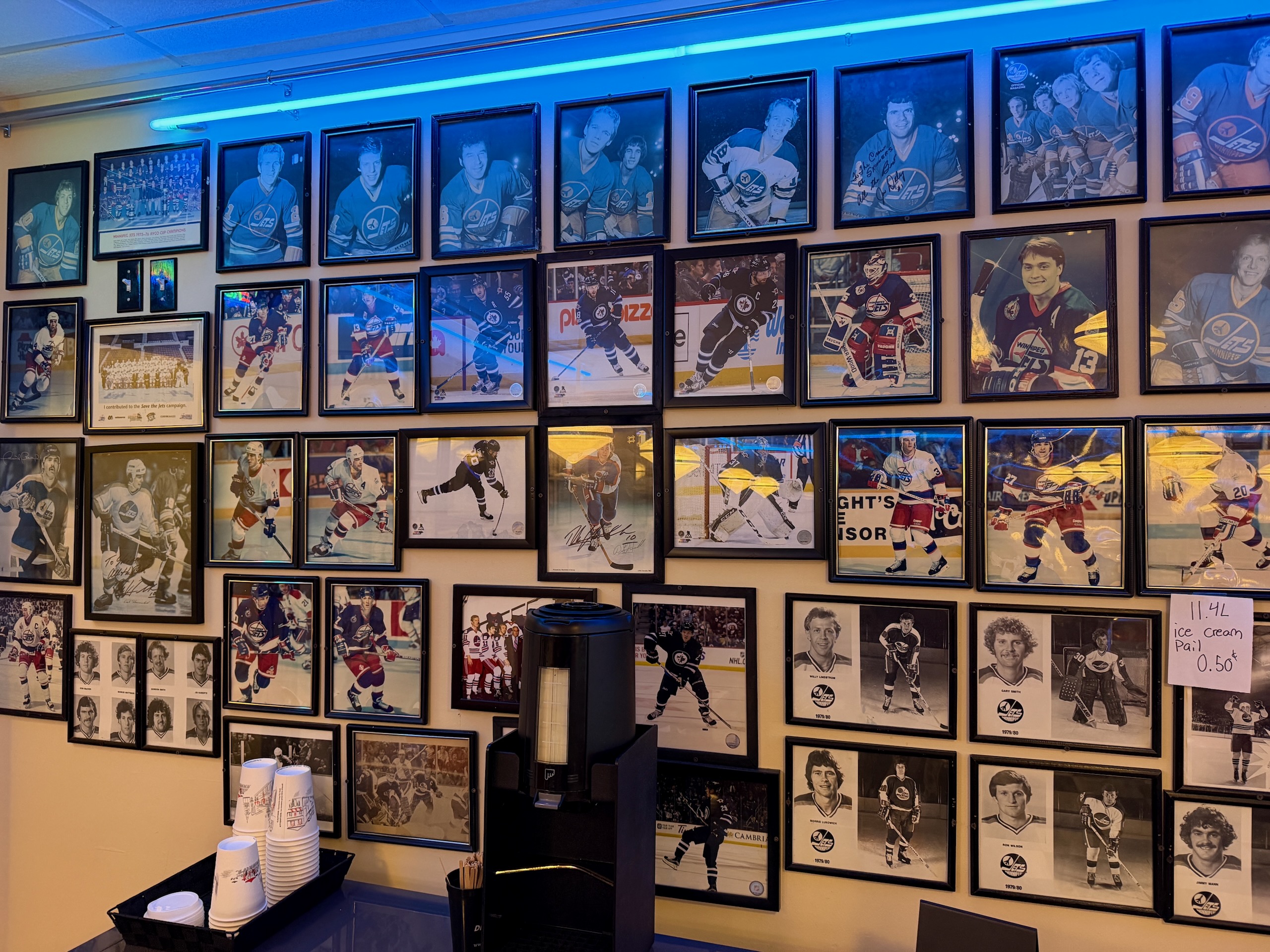
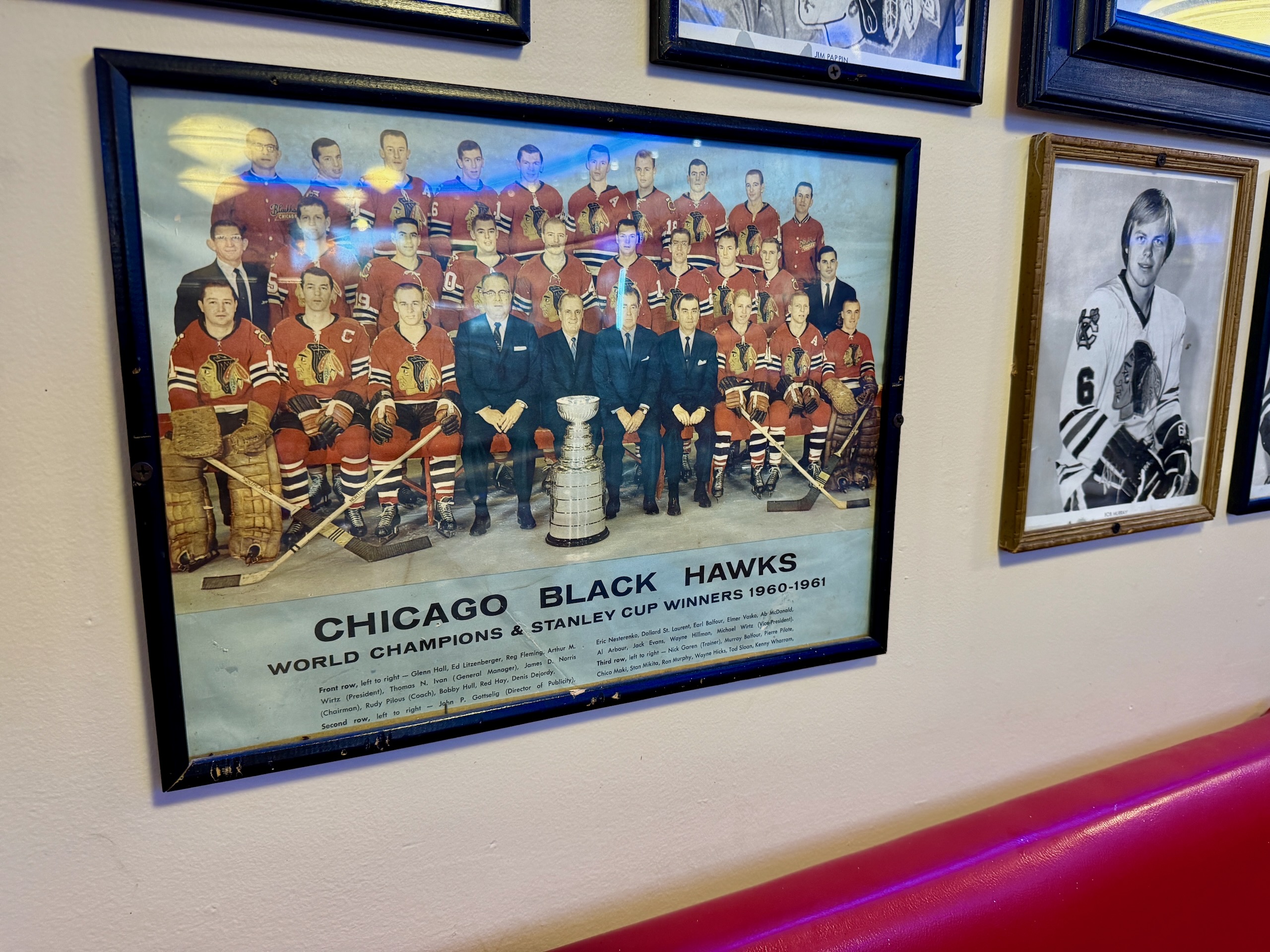
Their photographs still hang on the walls today, many of them signed by some of the greatest players in hockey history. You walk in — and you look history in the eye.
This is why Skinner’s gets called the “hockey” restaurant. It is not branding. It is not styling. It is literally in the DNA.
Skinner’s Today
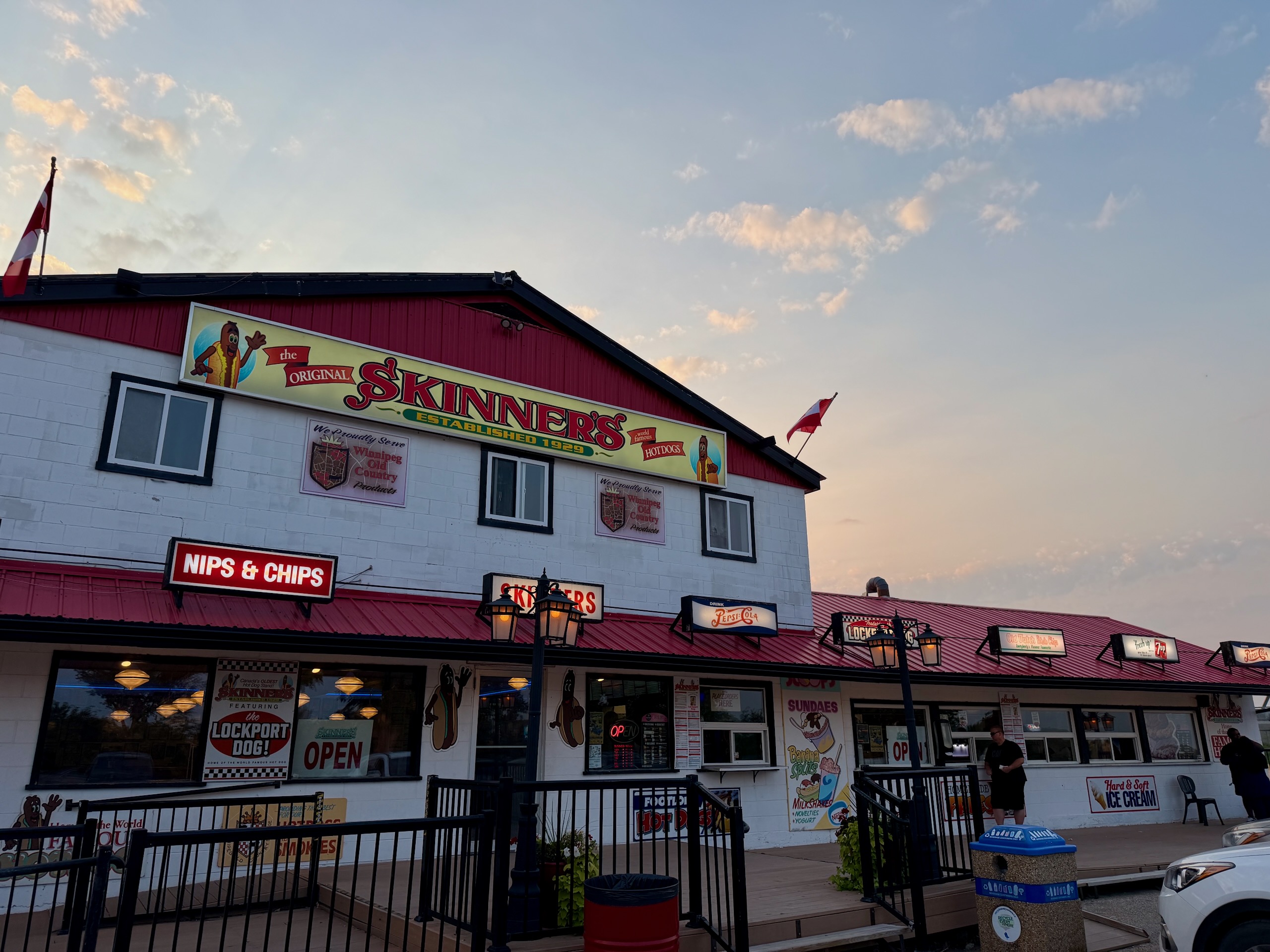
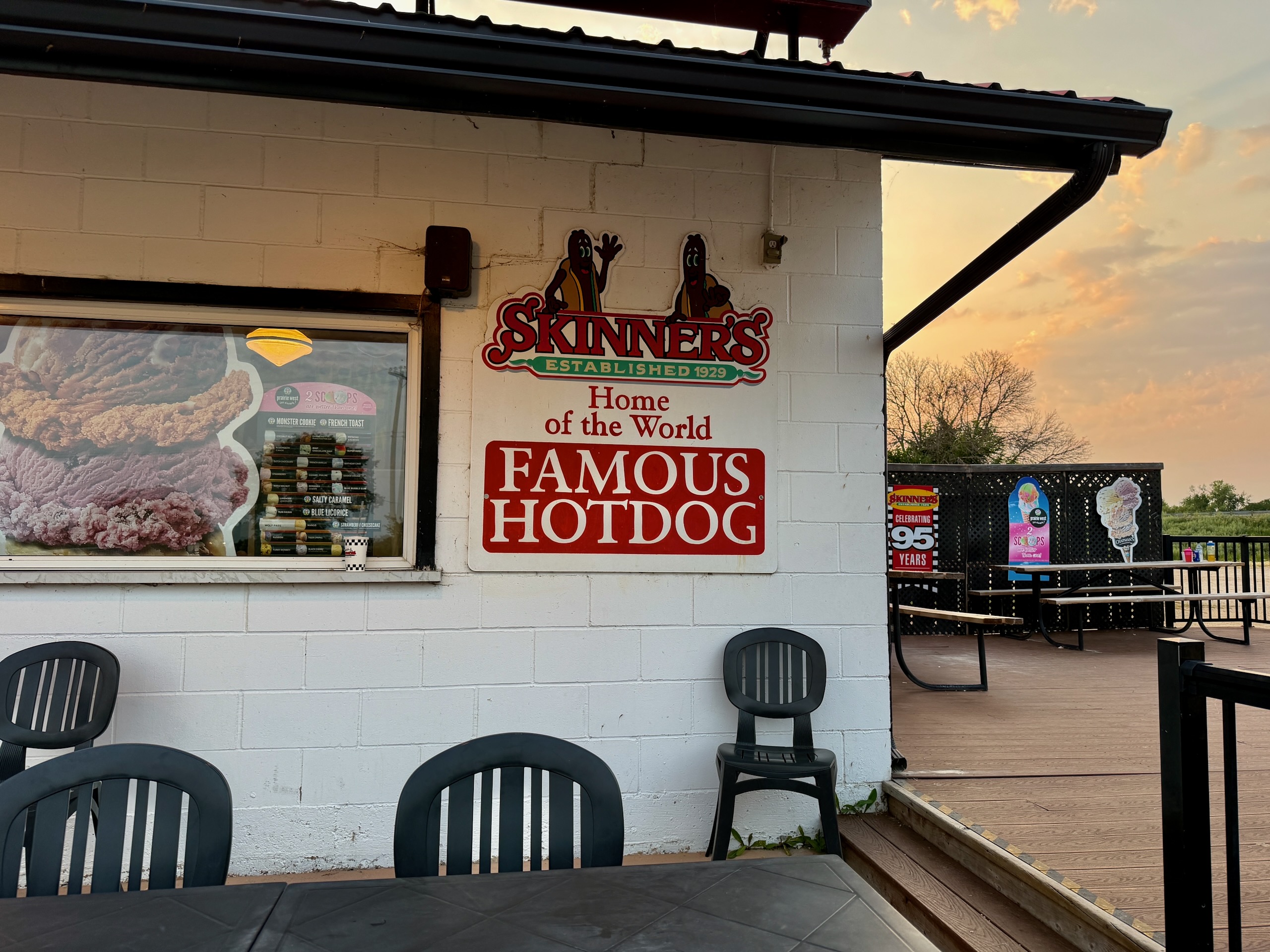
Today, Skinner’s is considered the oldest continuously operating hot dog restaurant in Canada. Almost a hundred years without a single break.
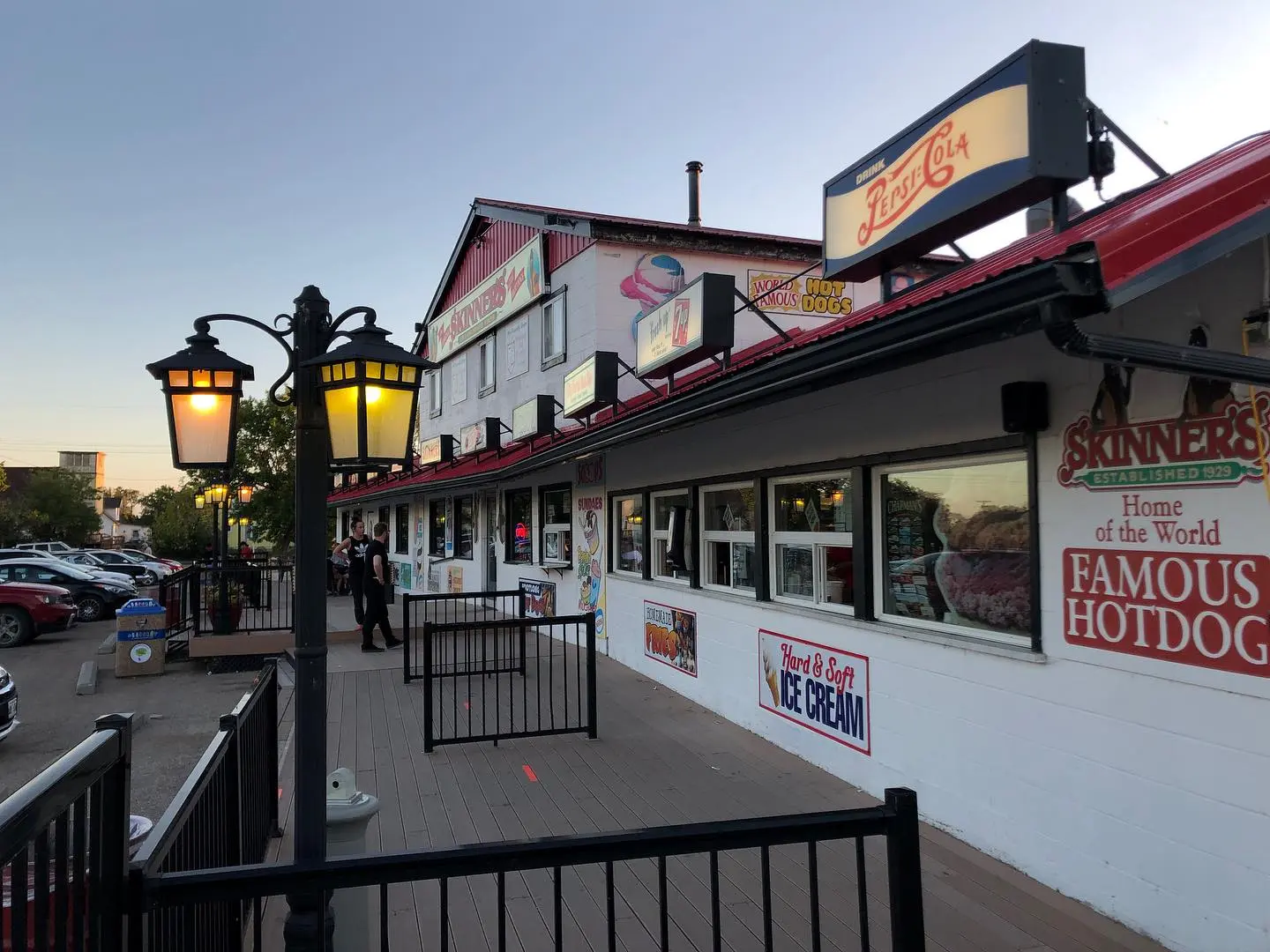
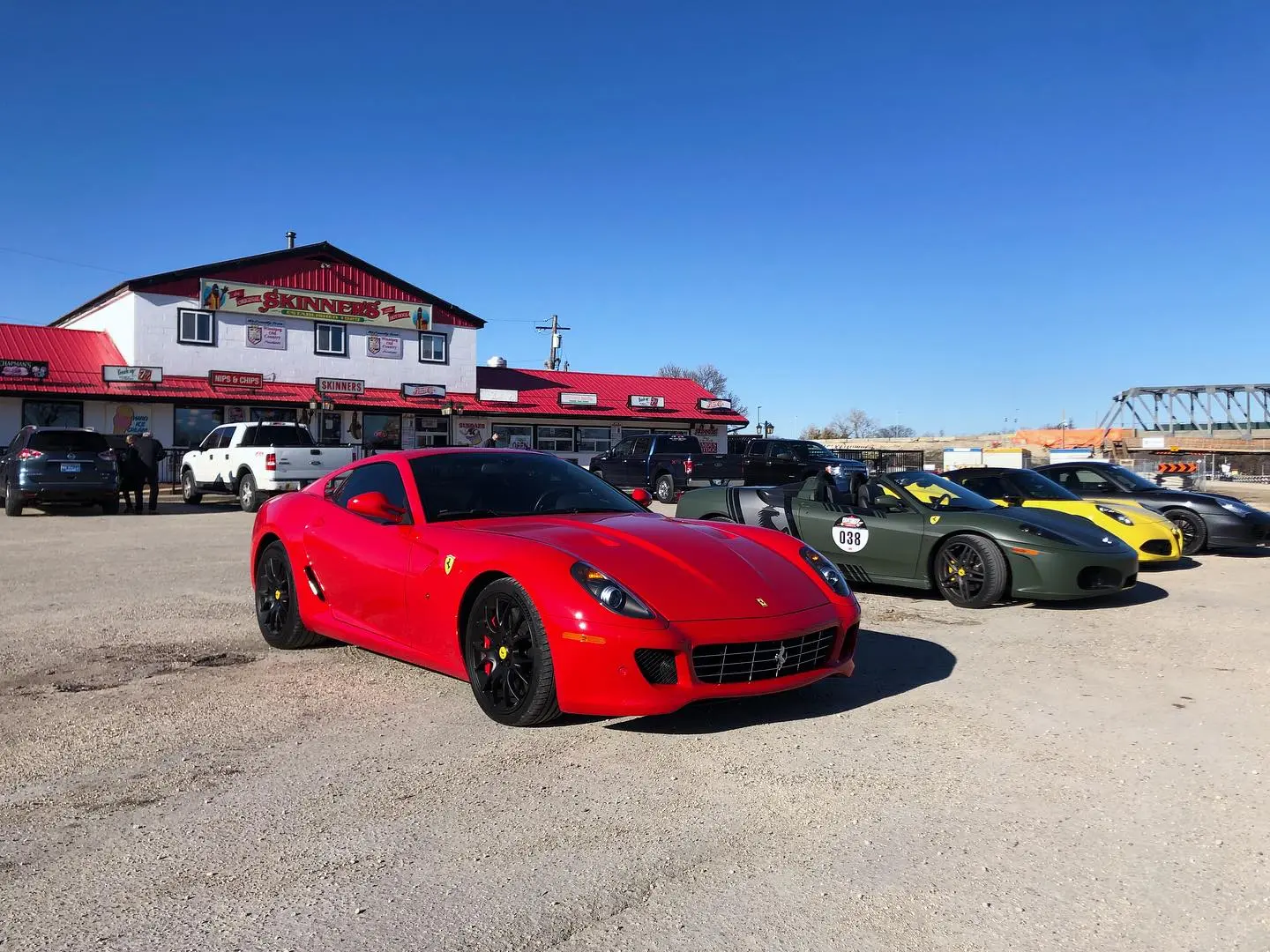
It has two locations in Lockport. The original on River Road, near the dam — the one with signed photographs on the walls and the original jukebox. And a younger one on Highway 44 with a drive-thru, opened in the late 1940s for the post-war traffic.
One practical note we learned the slow way: the original Skinner’s on River Road is seasonal — it runs roughly from late March to early November, not year-round, and closes around 10 PM. That is almost certainly why we found a closed door on our first spontaneous evening. If you want the original by the dam, come in the warm months and check the current hours on their site first, because they shift with the season.
There used to be a third location — at The Forks Market in Winnipeg. But it closed in 2019, along with other local businesses that no longer fit the market’s “new concept.” It caused real backlash among regulars. The Forks without Skinner’s is like Lockport without the Red River. Possible, but somehow off.
Half Moon: 1938, Half-Circle Buildings, and Hollywood
Half Moon is nine years younger. But if Skinner’s is a hockey drama, Half Moon is cinema. Literally.
The story began in 1938, when William (Louis) Kosowich founded a small place on Henderson Highway in Gonor — right across from the Red River. And from day one, it was different.
The original building had a unique design: three wooden structures shaped like half-circles. Hence the name — Half Moon. One served takeout orders. One was for dine-in meals. And the third was an actual dance hall with oak floors and live music.
A Family Business in the Most Literal Sense
This was a family business in the most literal sense of the word. Louis’s father Alexander, brother Stephen, and cousin Walter Makelson helped build the structures. Sister Olga worked in the kitchen and served customers. Later, brother Peter joined as general manager.
The brothers gave first jobs to dozens of young people from Gonor and the surrounding communities. Half Moon quickly became famous for its European-recipe wieners. Word spread by mouth — across Manitoba, across Canada, and even into the US. People did not need ads. They just needed one bite.
And there were dances. And bootleggers.
During dance nights, sellers hung around the hall offering bottles of alcohol for 25 to 50 cents. Mixed with soda bought at the counter, people drank behind the building or in their cars. Simpler times — looser, closer to the ground.
Half Moon was not just a restaurant. It was the heart of the local community.
Stolen Name, Robbery, and Closure
But Half Moon’s story was not all smooth.
In the 1980s, taking advantage of the fact that the name “Half Moon” had never been officially trademarked, a former employee registered it for himself and opened a restaurant in Transcona. The brothers settled it with a handshake — a gentleman’s agreement not to expand the business.
Then things got worse. An armed robbery of the original restaurant. Serious health issues for Louis.
In the spring of 1983, the original Half Moon closed its doors. For good.
That could have been the end of the story. A beautifully sad ending in the spirit of “there was a lot, but time moved on.” And in many other towns, that is probably exactly what would have happened.
But not here.
Revival and Cinema
A new, larger restaurant soon opened — this time closer to the historic St. Andrews Dam. The original half-circle buildings were demolished on November 2, 1998. Louis Kosowich passed away in 1995 at the age of 82. Peter passed in 2021 at 94.
But the business they built is still alive.
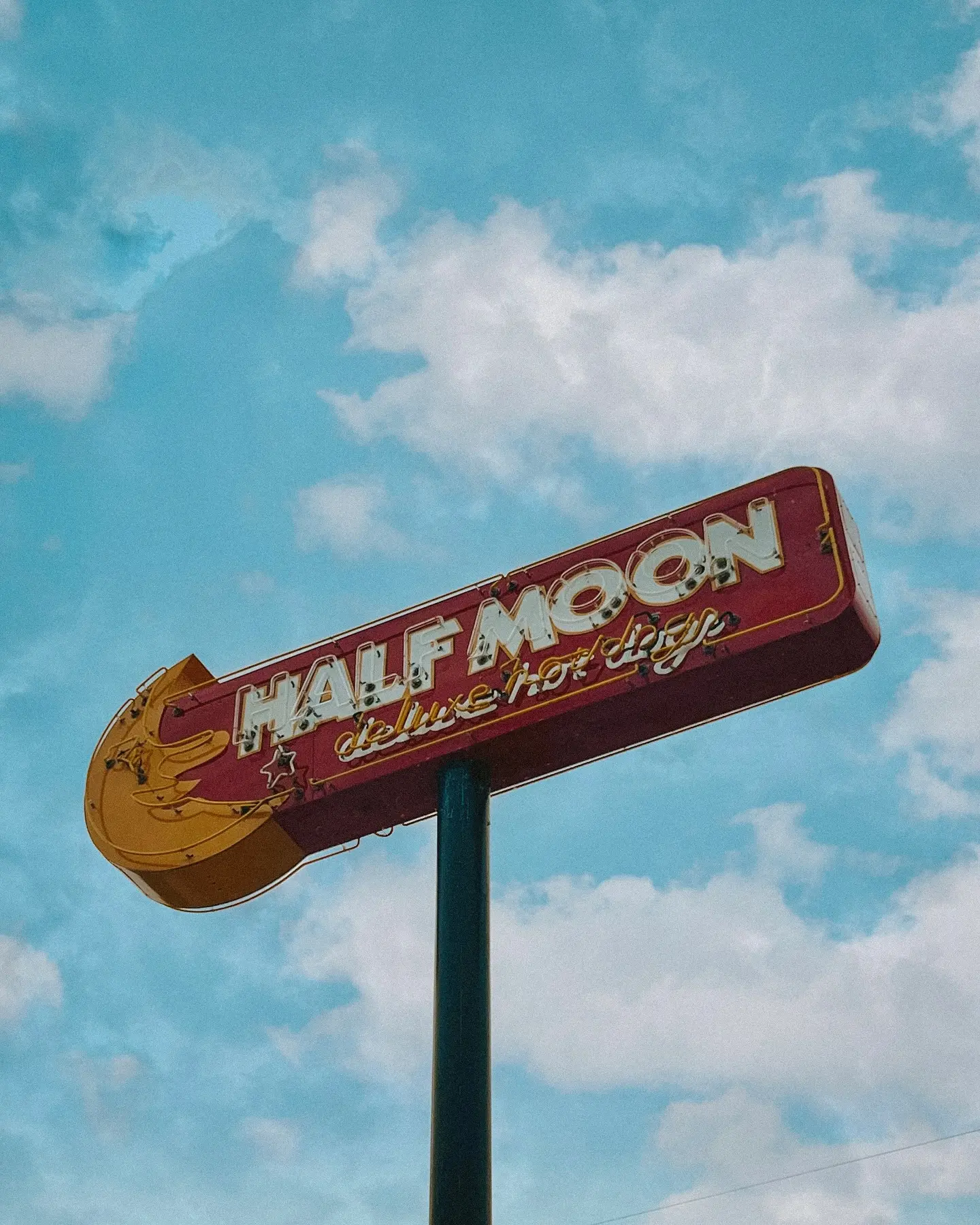
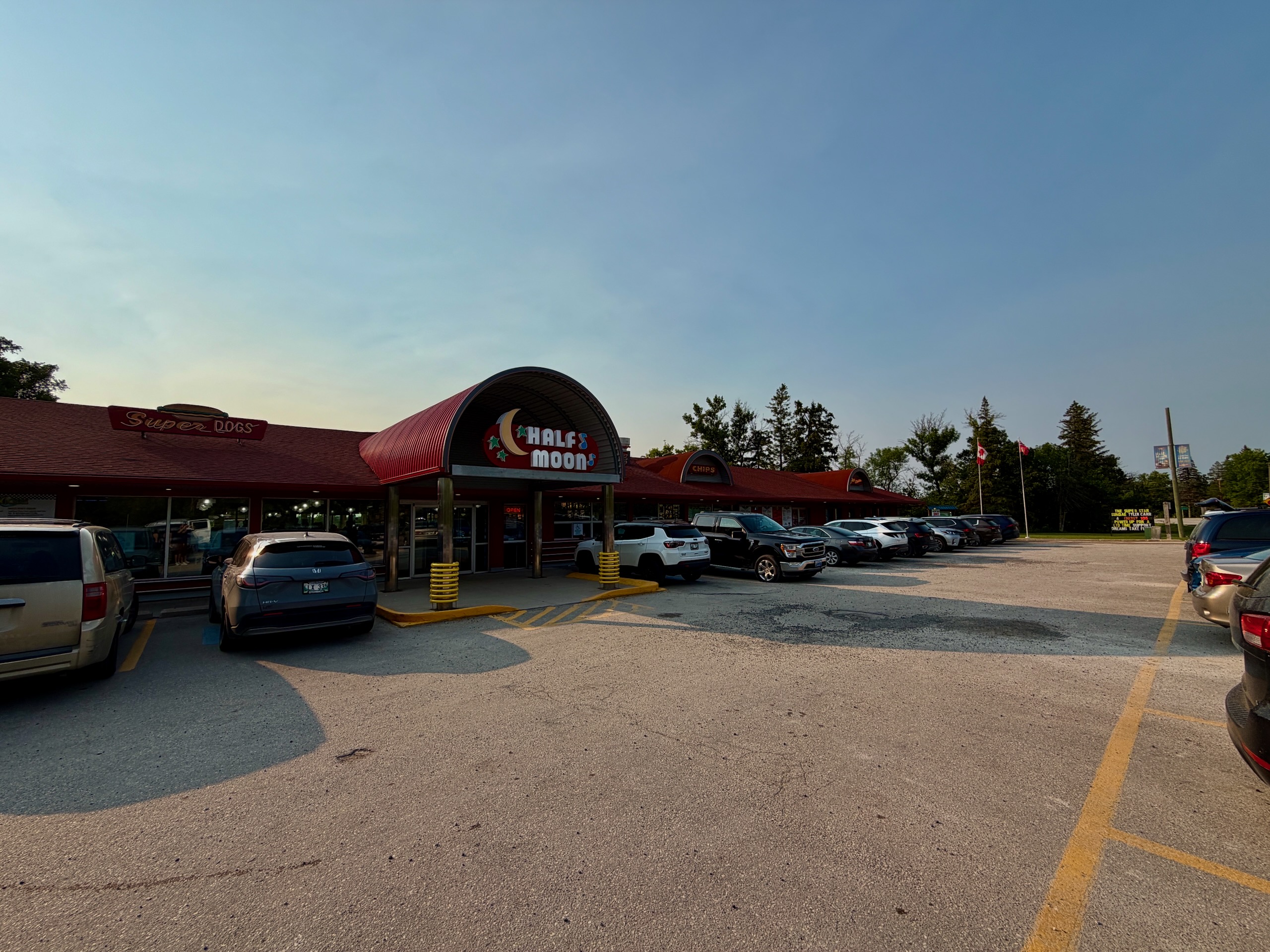
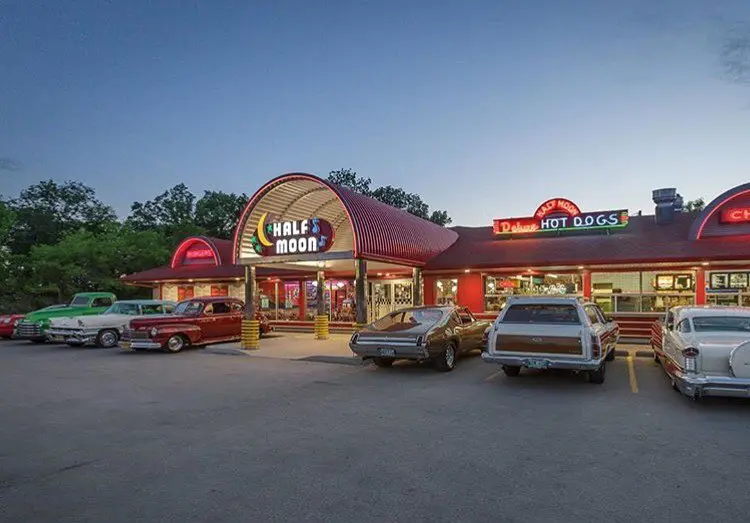
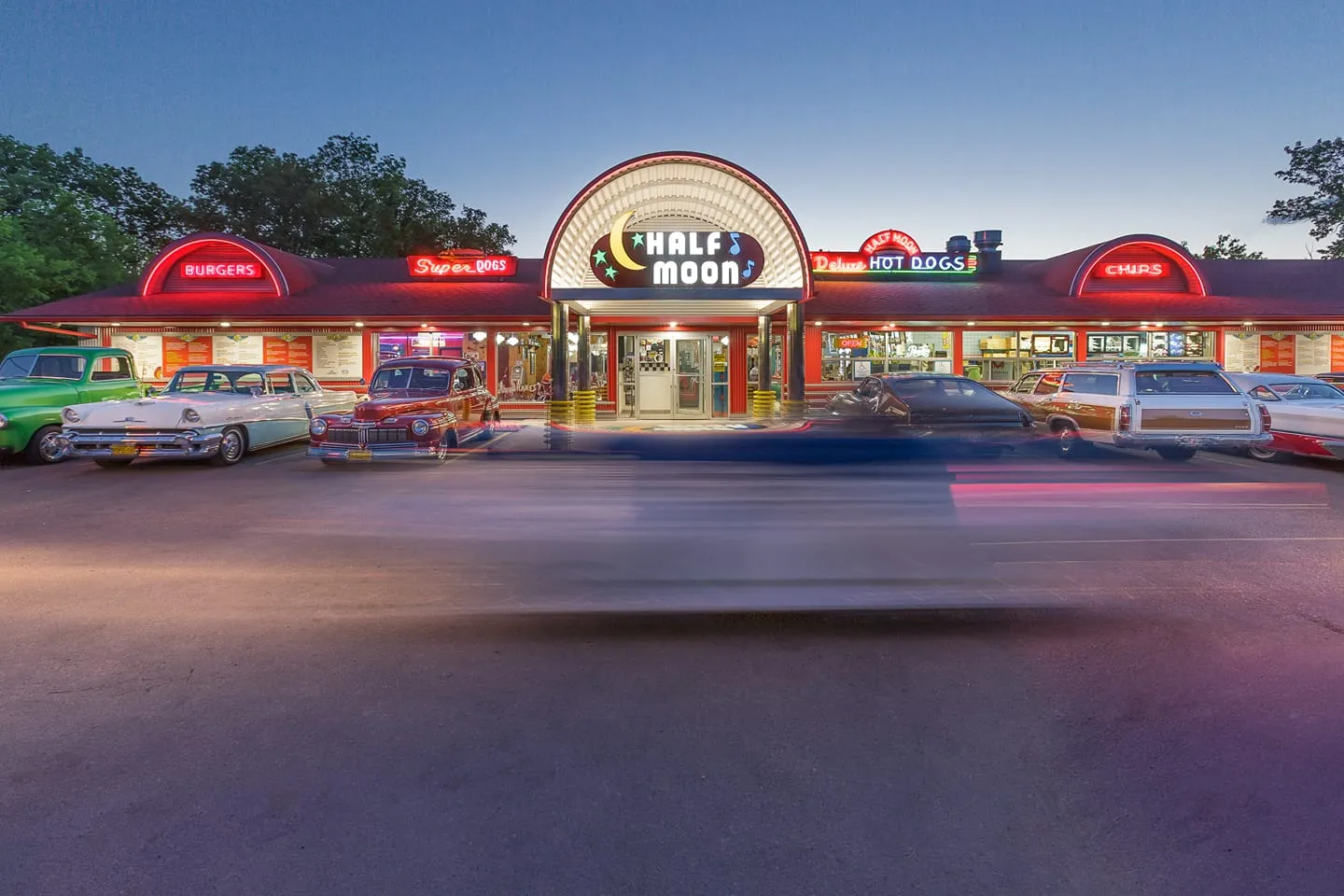
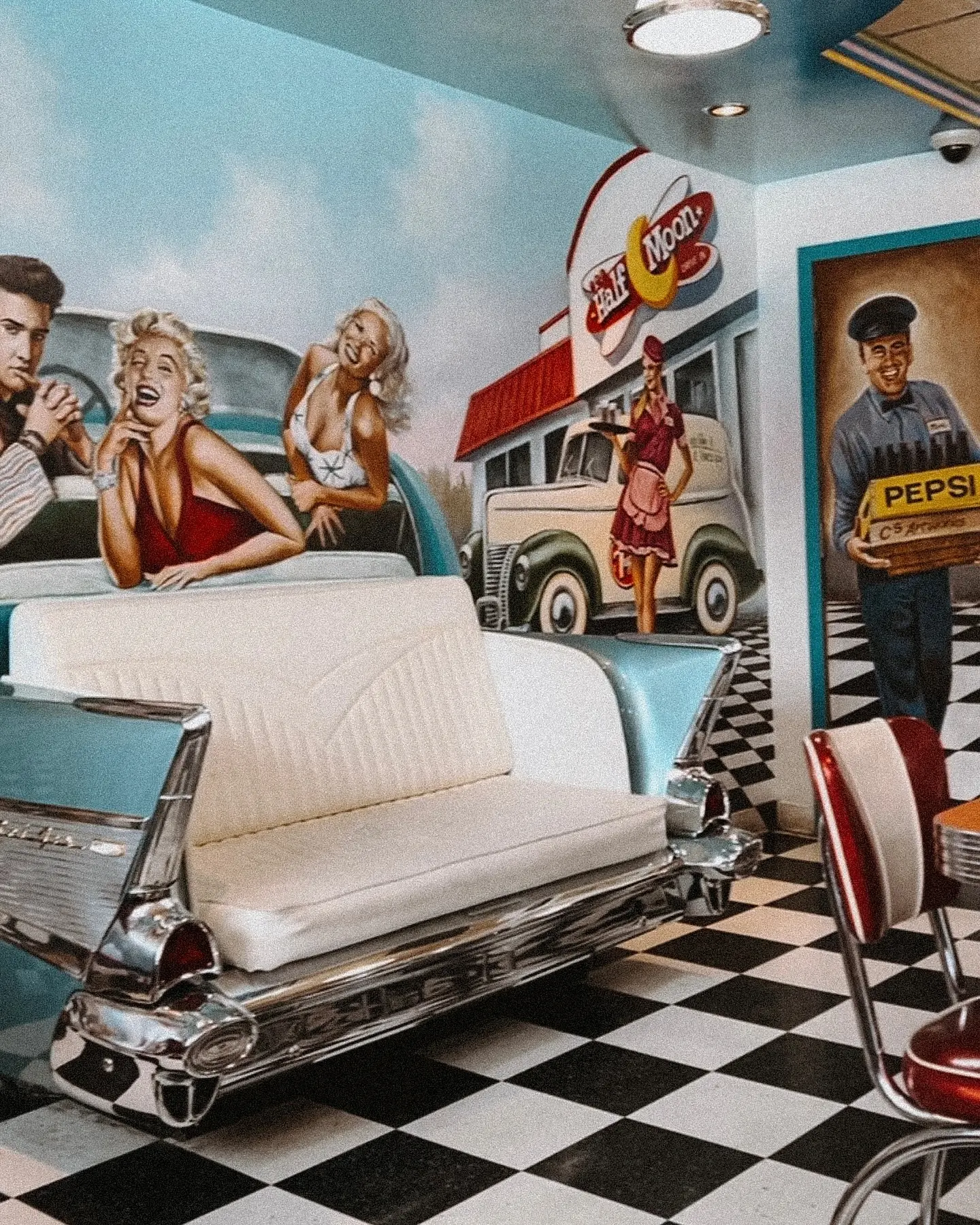
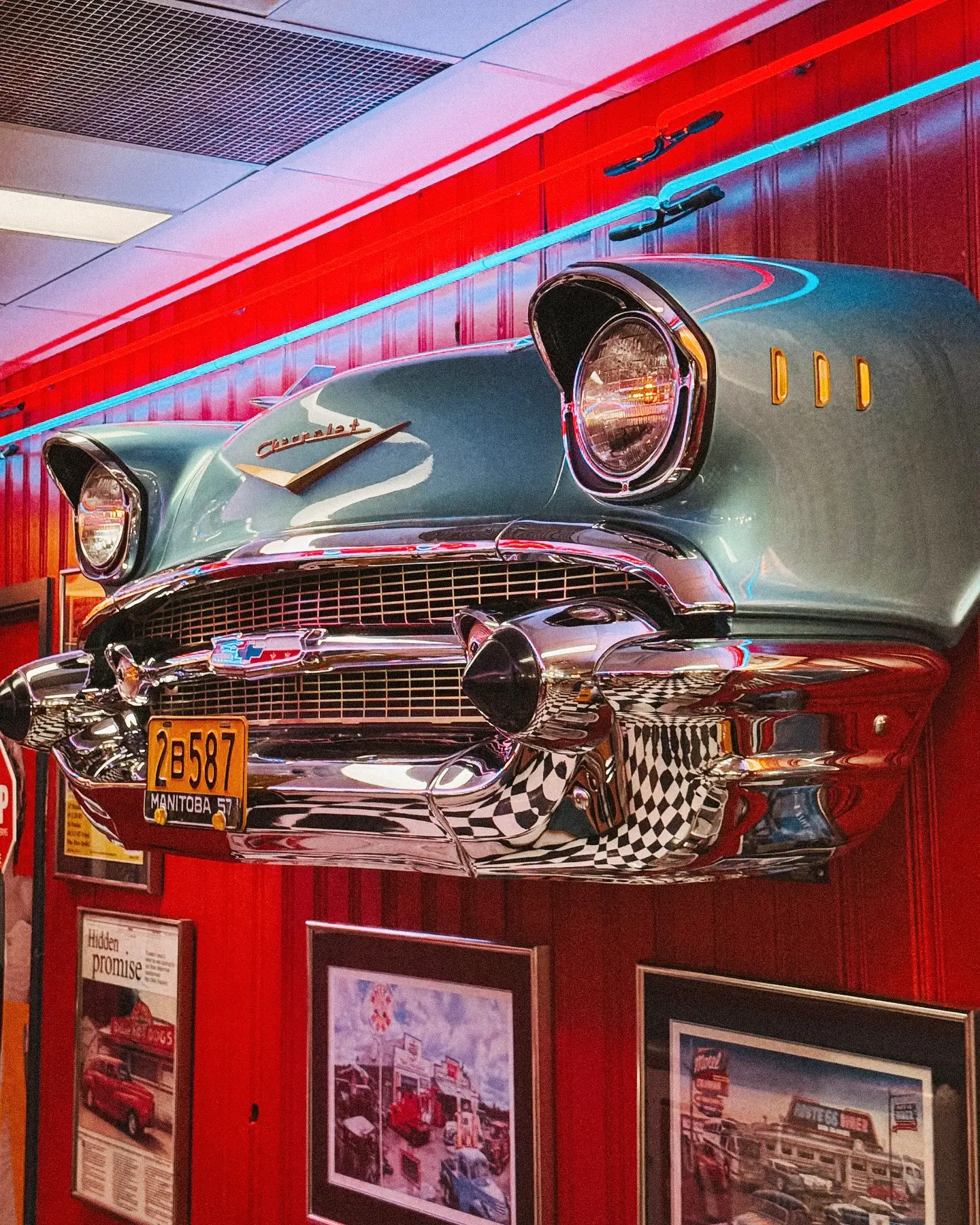
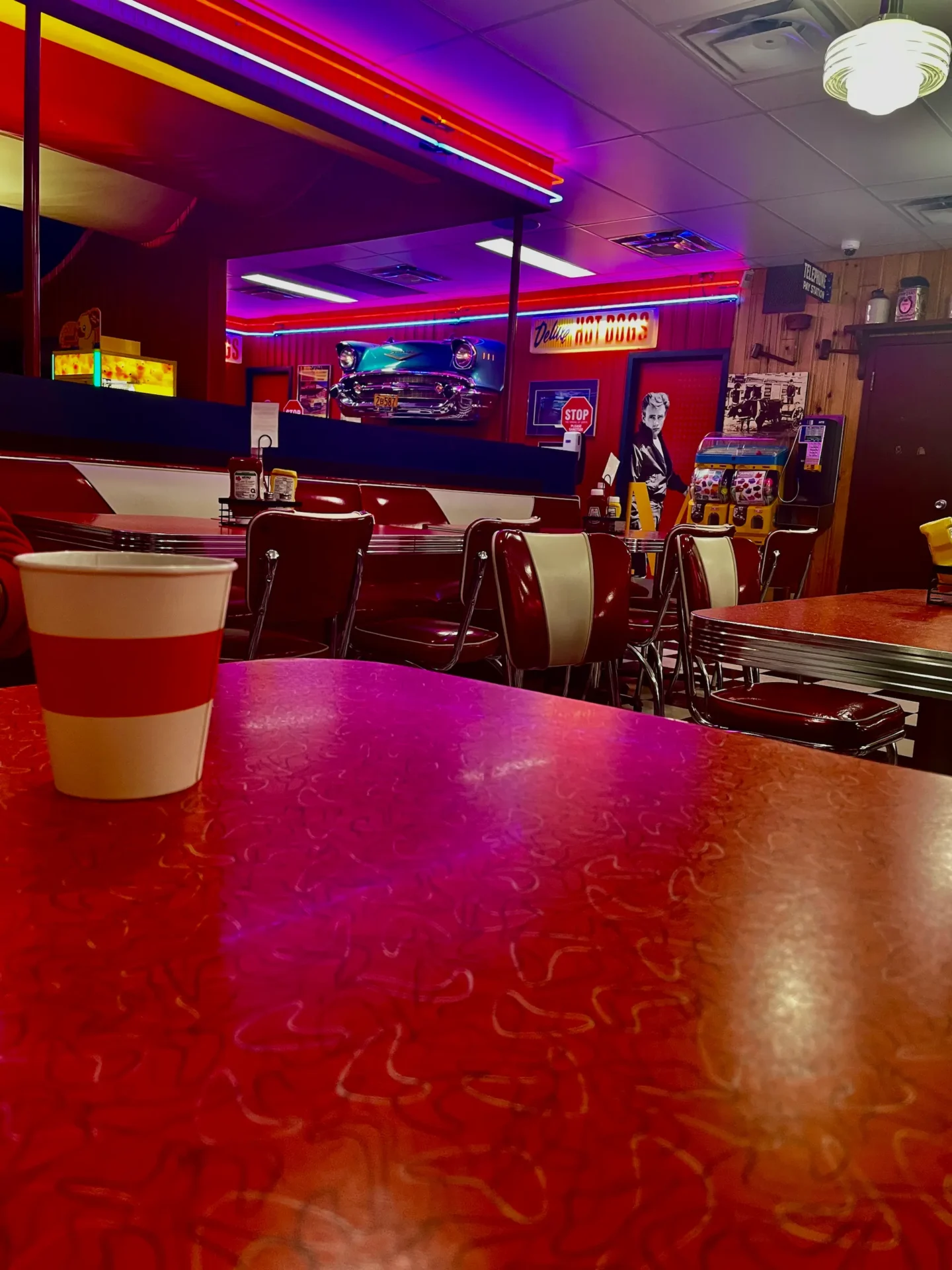
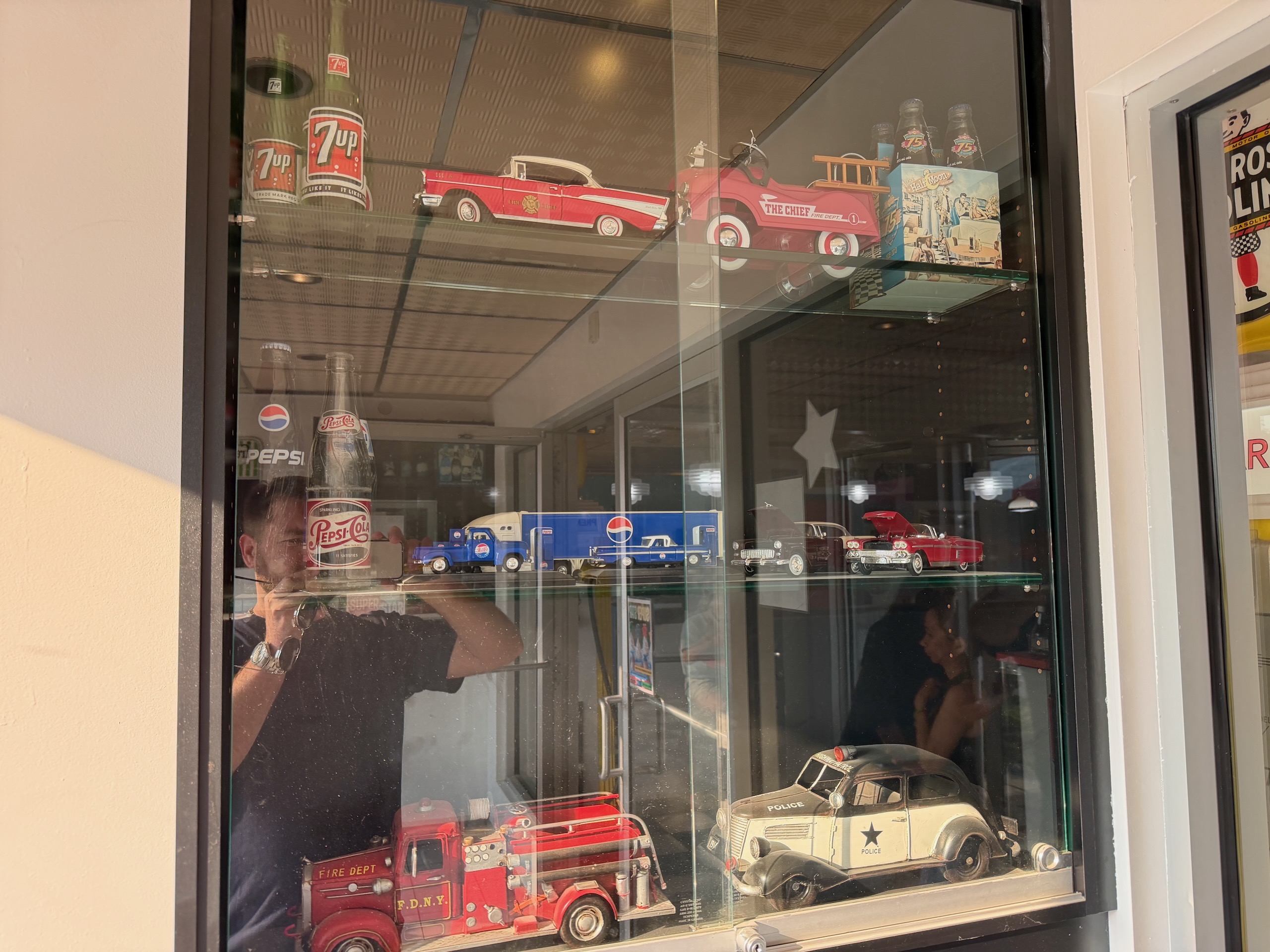
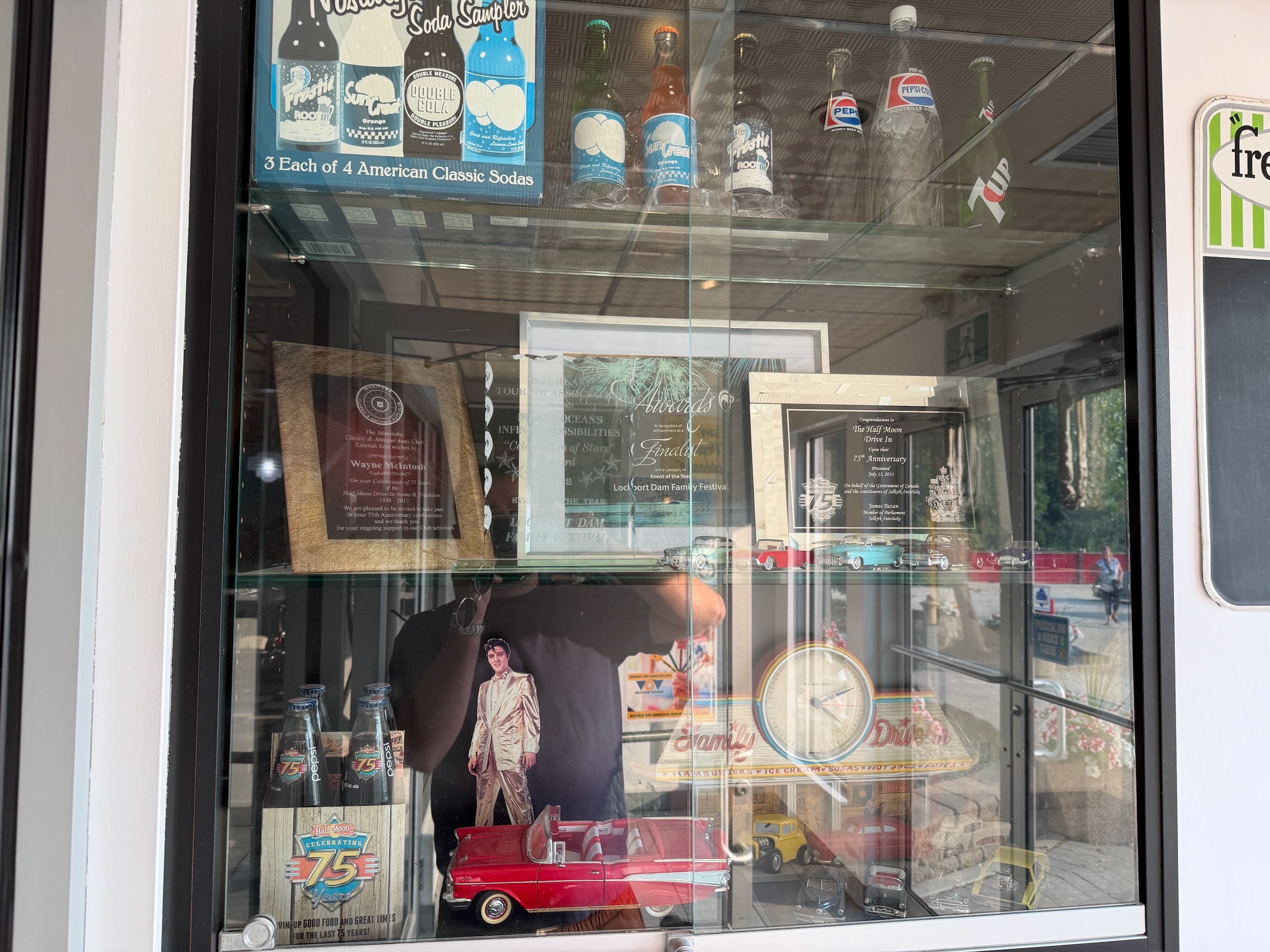
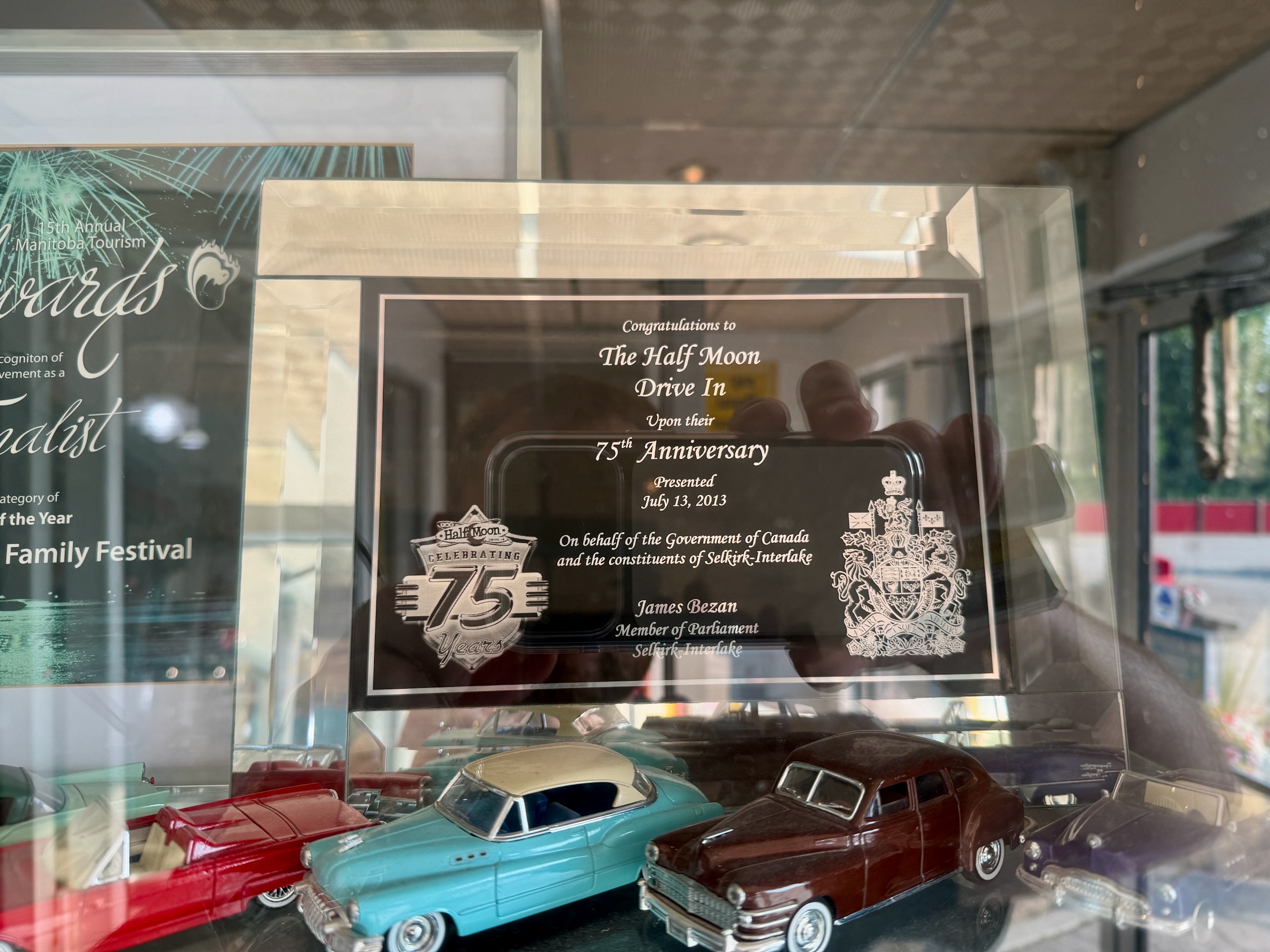
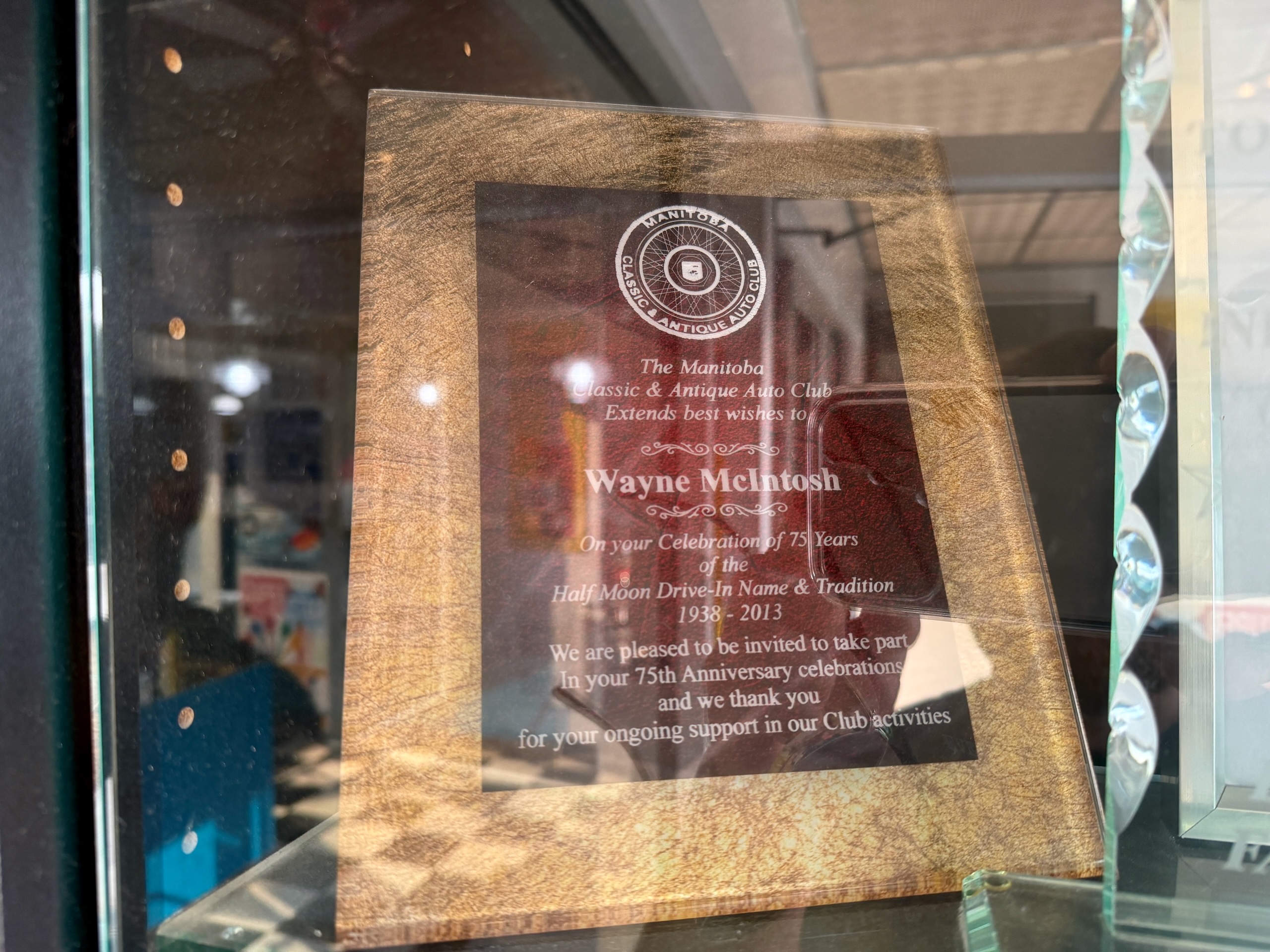
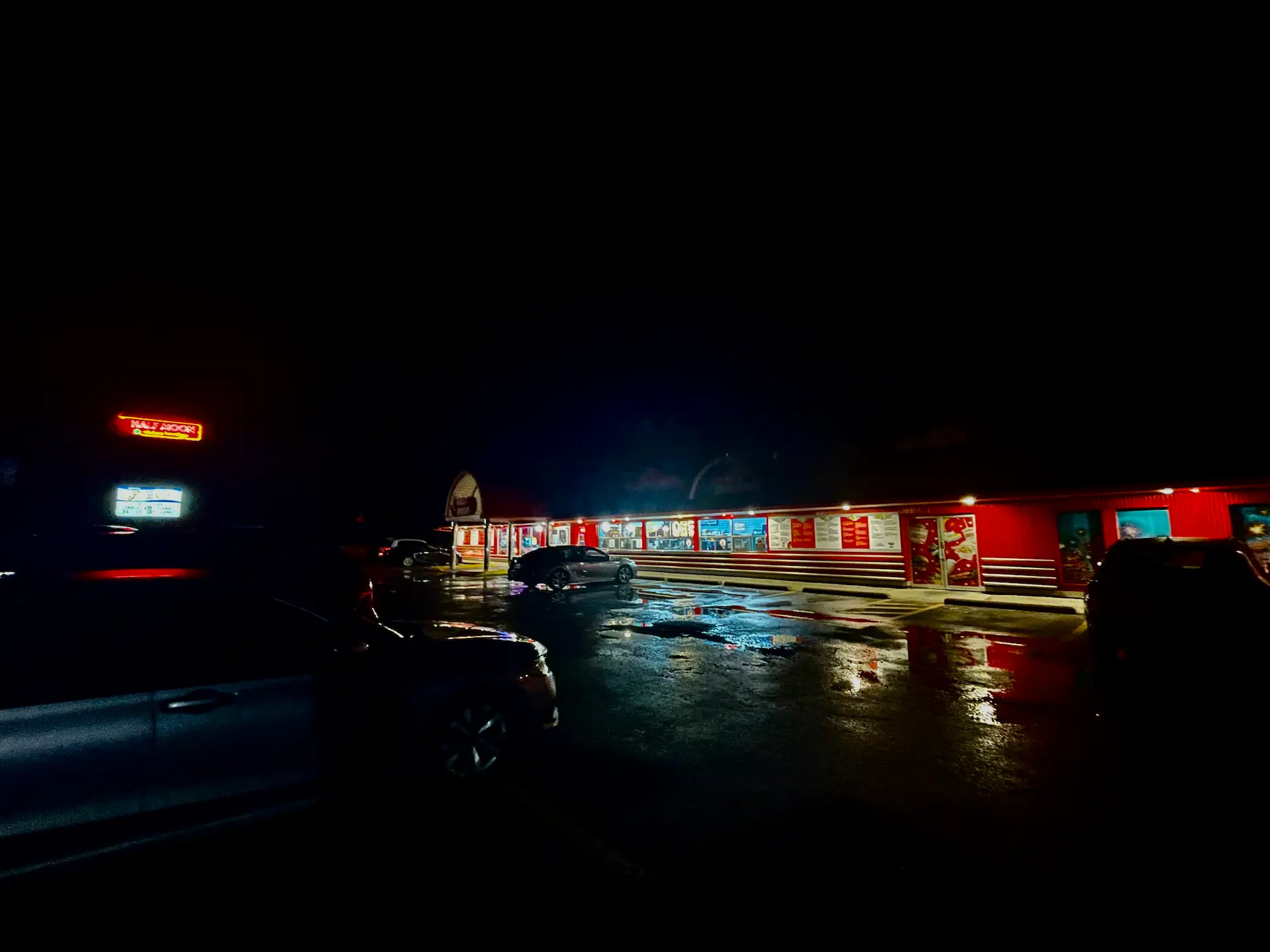
Today’s Half Moon is a portal to the past. The façade honours the demolished original: vintage signs, original neon lighting, polished metal accents. Inside — boomerang Formica tables, black-and-white photographs, a collection of miniature retro cars, the restored original jukebox, newspaper clippings from years of history, and classic arcade games — pinball, racing simulators.
In 2017, the restaurant went through a major renovation. But the updates were done as if it were 1957, not 2017.
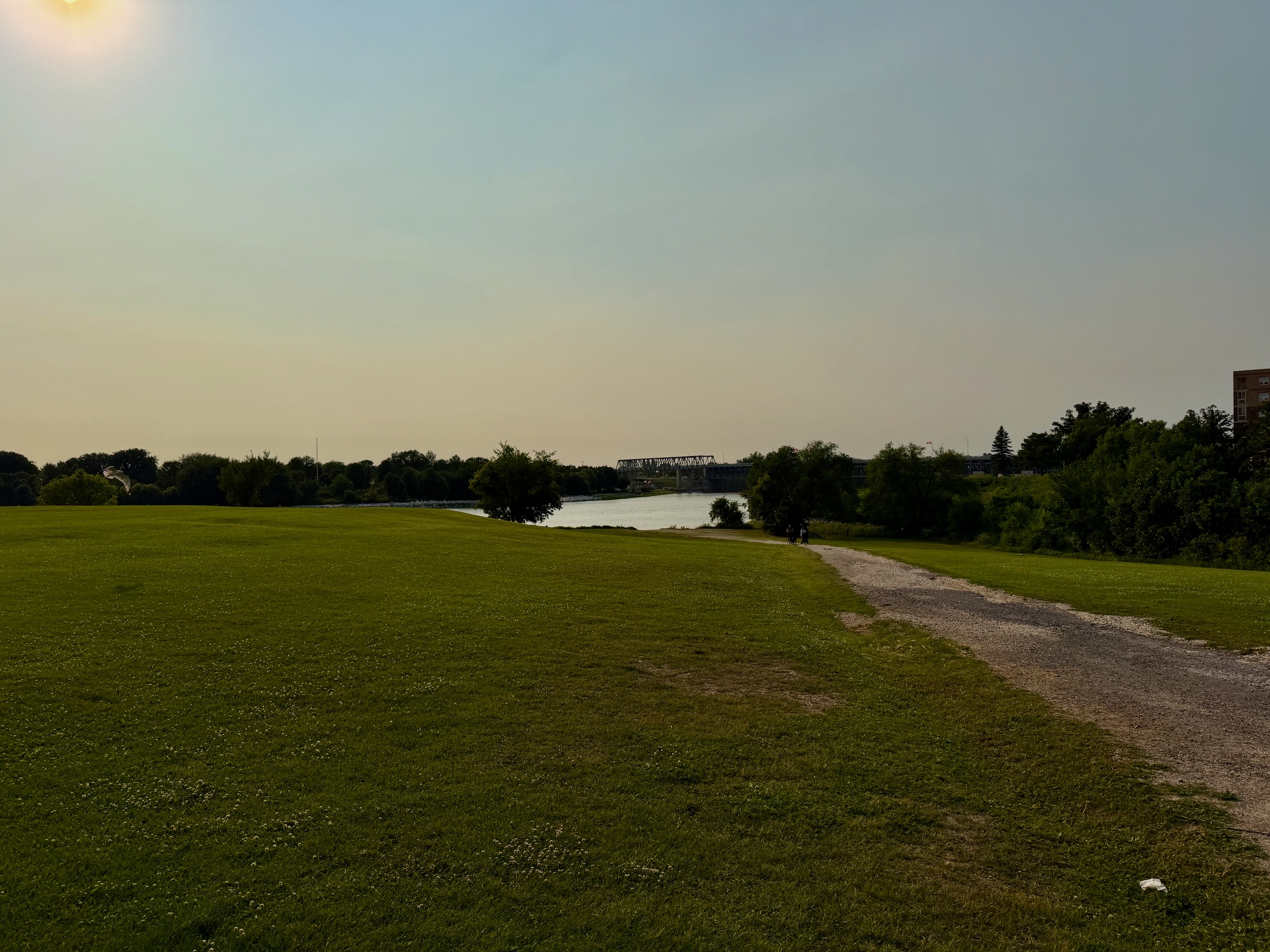
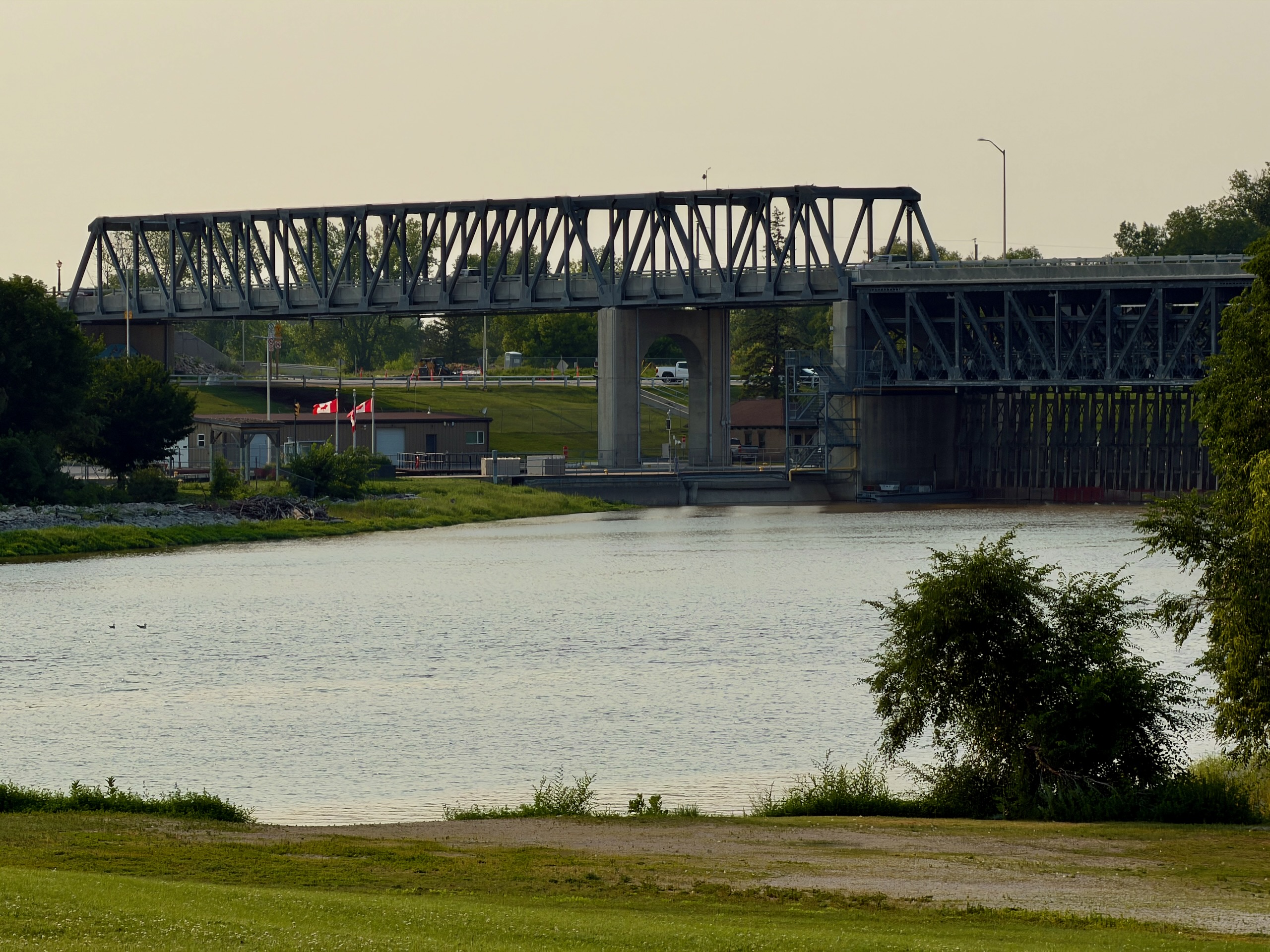
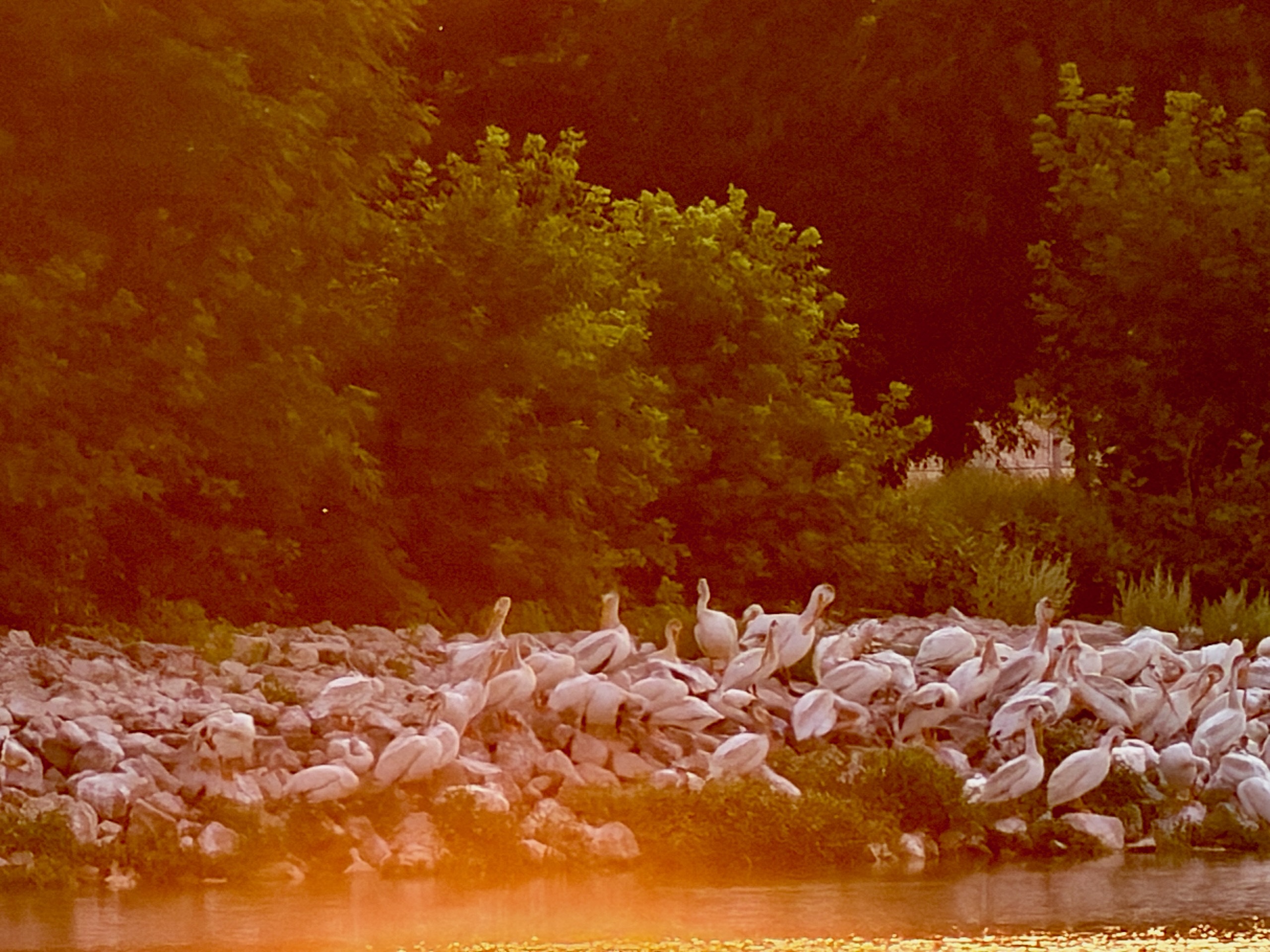
In summer, customers carry their trays out to the back patio with picnic tables overlooking the Red River. In the evening, when the Lockport bridge lights come on and geese drift quietly down the river, it becomes one of the most peaceful spots in the province.
And here is my favourite detail in this whole story.
In 2015, DreamWorks shot scenes for the Hollywood film “A Dog’s Purpose” here — the one with Dennis Quaid and Josh Gad. This is confirmed by the restaurant’s official site and IMDb.
So Lockport is not just “a place where people fish.” It is also a Hollywood film location. Who would have thought.
Two Characters, One Town
Now let’s compare. Break it down — now that we have finally been inside both.
Age
Skinner’s is older — 1929 versus 1938. Almost a century of continuous operation. In this round, Skinner’s is the clear winner, and Half Moon does not even argue.
Atmosphere
Both are retro diners, but with completely different characters.
Half Moon is the bright, neon, cinematic 1950s style. Boomerang Formica, polished surfaces, black-red-white decor — like an episode of “Happy Days” come to life. You can see the renovation in every surface.
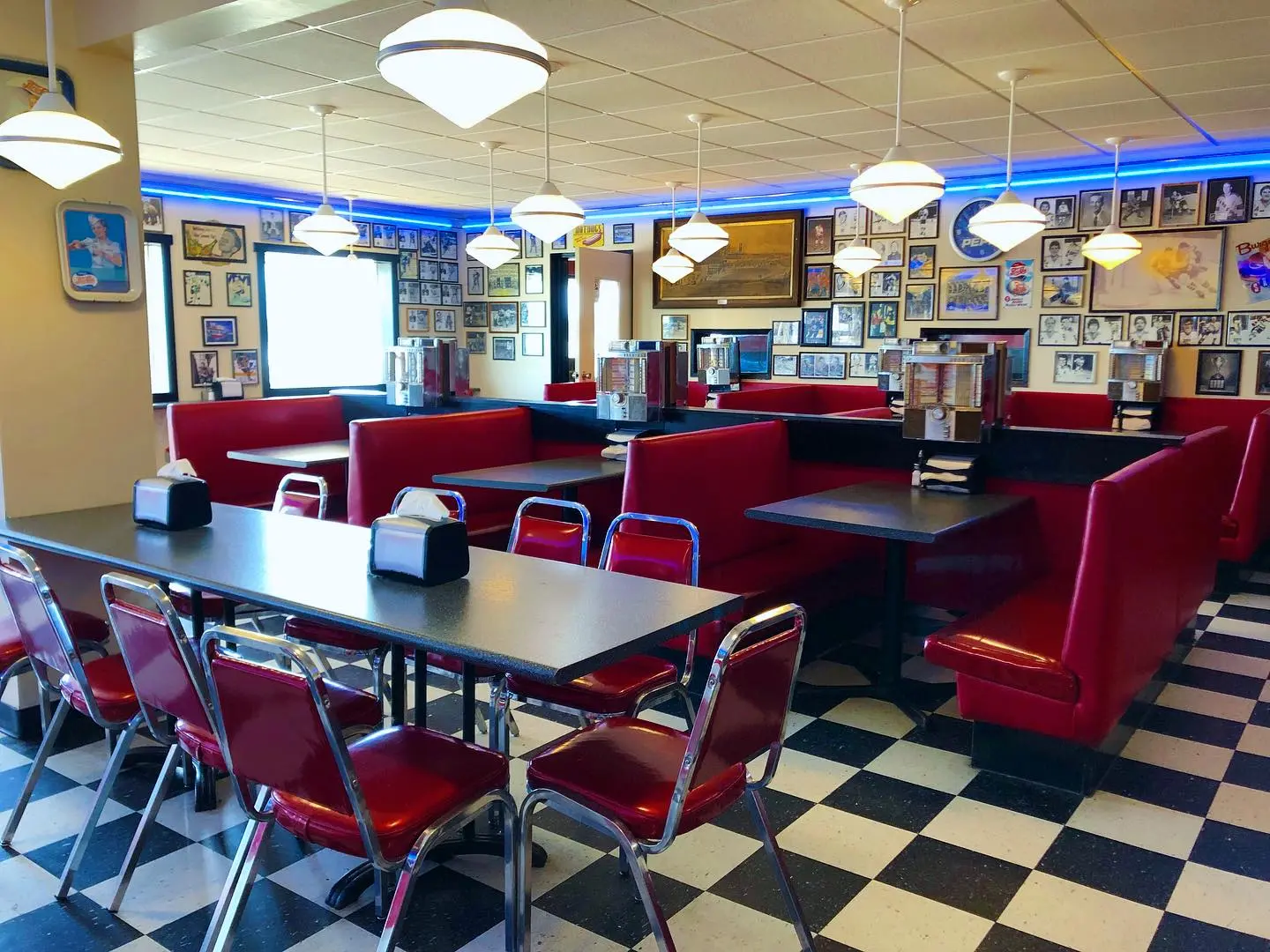
Skinner’s is rawer and more lived-in — and that is exactly its charm. Signed hockey photographs cover the walls. The old table jukeboxes are still there, though they no longer play; they are decoration now, but a good kind of decoration. There is a separate room full of arcade machines, old and new, and a small photo spot. It is the feeling that your parents probably came here too.
Half Moon is like an evening in a Hollywood film. Skinner’s is like an evening at the house of a grandfather who played hockey with Gordie Howe.
The question is not “which is better.” The question is what mood you are in tonight.
Food
Both are famous for hot dogs. Both claim the crown.
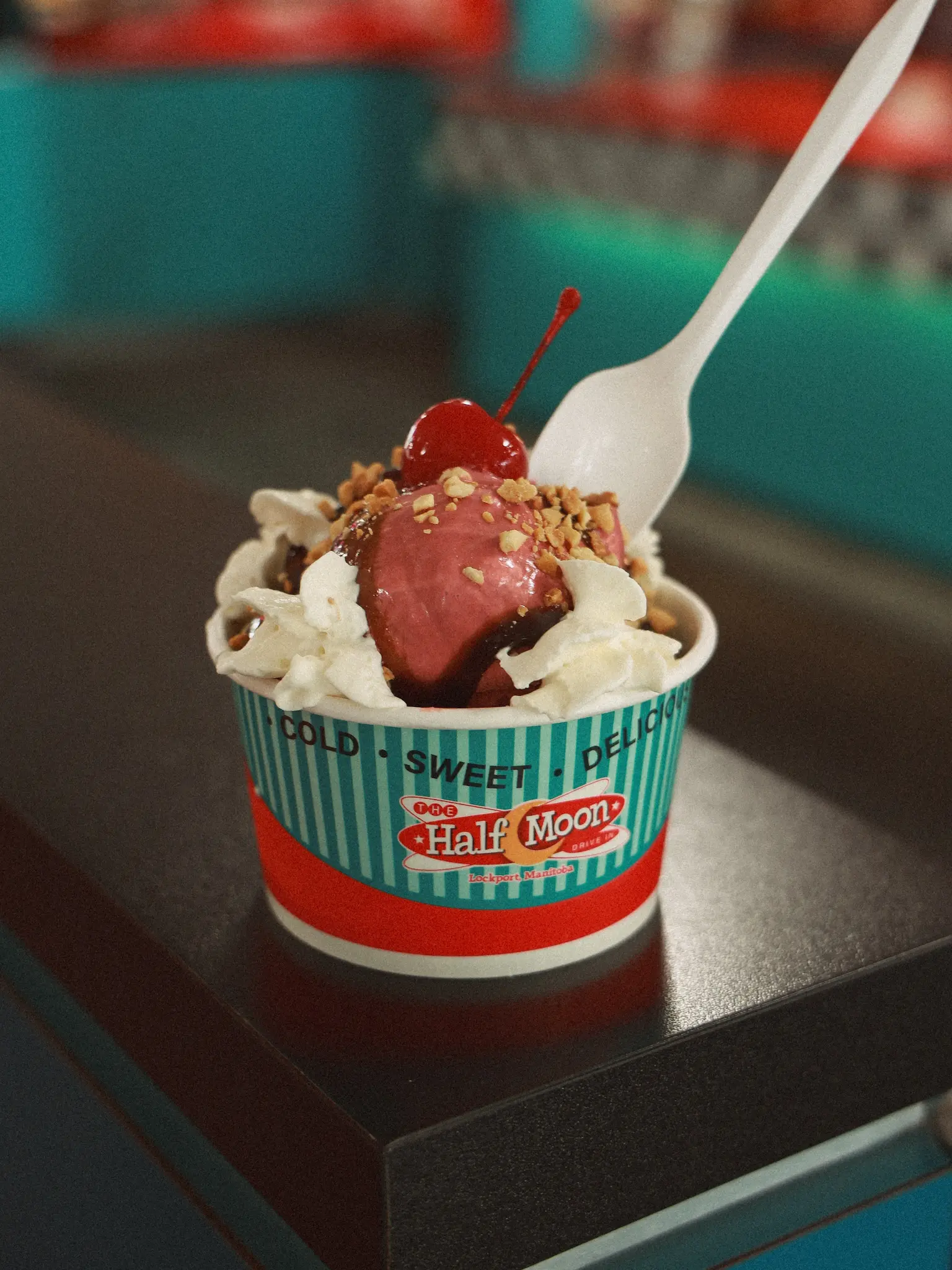
Half Moon says they serve “Canada’s Best Hot Dogs.” Their European-recipe wieners are what the place was built on in 1938. The menu is huge: fifteen kinds of hot dogs and burgers, including vegetarian, chicken, and turkey options. The pride of the place is the foot-long wiener (30 cm), and of course the ice cream with an impressive flavour list.
Skinner’s answers simply: “We are the oldest hot dog place in Canada.” And that, apparently, is enough. Their hot dog is described as the kind that crunches with every bite. Plus homemade fries — thick, properly cooked, fresh from the fryer.
We have now tried both. Our honest take on the hot dog itself is in the verdict below.
View
Half Moon wins unconditionally here. A patio with a panoramic view of the Red River, picnic tables, geese on the water, evening lights on the bridge — that is its own level. Skinner’s on River Road also sits near the river and the dam, which is not bad, and it has less outdoor seating than Half Moon. But that Half Moon patio is one of those places where you want to sit longer than the meal lasted.
History
And this is where it gets interesting. Because both histories are not just “the restaurant opened in such-and-such year.” They are little films. Just in different genres.
Skinner’s is a sports drama. A small hot dog stand in a town on the river. The owner’s son becomes an NHL coach. Wins the Stanley Cup. Starts the tradition of kissing the trophy. Brings hockey stars to work summers at the family restaurant. Their signed photographs still hang on the walls.
Half Moon is a family drama with a happy ending. Two brothers build a restaurant from half-circle wooden structures. A dance hall, bootleggers, fame across the province. Then — a stolen name, an armed robbery, illness, closure. And revival. A new restaurant, a new façade that honours the old. A renovation done as if it were 1957. And DreamWorks even shows up to make a movie.
Two brothers may no longer be with us. But the work they created lives on.
Our Verdict — Updated After We Finally Got Into Skinner’s
Update, summer 2026: the closed door from our first visit is no longer closed. We came back on a Sunday evening and walked into the original Skinner’s on River Road. Here is the honest, no-longer-one-sided version.
Getting in was easy this time. We reached Half Moon around 6 PM and it was packed — the main lot nearly full, a real summer-Sunday crowd. We ate there anyway (more on the logistics in our Lockport evening trip guide), then drove the five minutes over to Skinner’s by the dam around 7:30 PM — and there was almost no line at all. By evening it had gone quiet.
On atmosphere, the two really are different animals. Half Moon is the polished one — you can see the renovation in every surface, the neon, the boomerang tables, the river-view patio. Skinner’s is rawer and more lived-in, and that is exactly its charm. The walls are covered in signed hockey photographs, and standing in front of them is the whole point — if you have any love for the game, this room alone is worth the drive. The old table jukeboxes are still there too, though sadly they no longer play. There is a separate room full of arcade machines, old and new, and a small photo spot. What Skinner’s does not have is Half Moon’s outdoor space or its view: fewer seats outside, and no patio that competes with looking out over the Red River.
So where does that leave the score? For us, on style and setting, Half Moon still edges ahead — better decor, better seating, a better view. Skinner’s wins on something Half Moon can’t buy: authenticity you can touch, a hockey shrine that is real and not styled. The one honest caveat is the crowd — this Sunday, Half Moon was very busy, which it wasn’t on our first, quieter, almost family-feeling visit. Come on a weekday and that changes completely.
And the hot dog itself — the “first bite” this whole post was built around?
We tried it. It’s good — genuinely worth trying if you’re in Lockport. But honestly, I couldn’t say it stood miles apart from other hot dogs we’ve had. That comes with a big asterisk, though: this kind of verdict is deeply subjective, and mood matters as much as the food itself. If I’m being fully honest, the hot dog I still think about most is a random one from a gas station in Lithuania, during our drive to the Transfăgărășan — and that’s probably less about the hot dog and more about being hungry, mid road trip, still hours from the mountains we were chasing. So take the “legendary crunchy hot dog” claim as: yes, worth trying, yes, satisfying — but don’t expect it to rewrite your idea of what a hot dog can be.
If you want to see Lockport itself as a whole — the town where all this is happening — I wrote a complete Lockport guide separately. And if you are curious how we ended up there in the first place — our full Lockport evening trip has the route, the timing, and the budget.
What to Do With This
If you are going to Lockport and both places are open — try both.
Seriously. Do not pick a side. Get a hot dog at one, ice cream at the other. Or the other way around. Sit on the Half Moon patio before sunset. Then walk over to Skinner’s to look at the hockey photographs. This is not betrayal. This is fairness.
And then tell us whose side you are on.
Because Bohdan and I have long suspected the right answer is simply “both” — and after finally sitting in both rooms, we’re more sure of it than ever.
For almost a hundred years, these two restaurants on the banks of the Red River have been proving the same simple truth. You do not have to be fancy to be unforgettable. You do not have to be big. You do not have to be trendy.
You just have to do your thing with love. From day one to today.
Last checked: July 2026. We’ve visited Half Moon twice (fall and summer) and Skinner’s River Road once, in summer 2026. Sources checked: Half Moon Drive In official site (halfmoondrivein.com), Skinner’s official site (skinners.ca), Manitoba Historical Society. Hours and payment policies change seasonally — confirm on each restaurant’s own page before you go.